
Weak Yen Impact on Japan Property Investment for Foreigners

Learn how Japan's weak yen creates major buying advantages for foreign property investors. Discover real savings, rental yields, legal framework, and key risks to navigate in 2025.
Weak Yen Impact on Japan Property Investment for Foreigners
The weakening Japanese yen has fundamentally transformed the landscape for foreign property investors in Japan. With the yen trading at 150+ to the US dollar — levels not seen since the early 1990s — foreigners now enjoy unprecedented purchasing power in one of Asia's most desirable real estate markets. This guide explains exactly how the weak yen affects your investment, which risks to watch, and how to build a smart Japan property strategy in the current currency environment.
How the Weak Yen Creates a Property Buying Advantage
Currency depreciation directly translates into real estate discounts for foreign buyers. The math is straightforward: the weaker the yen, the fewer dollars, euros, or Australian dollars you need to purchase the same property.
Consider this concrete example. A ¥100 million property in Tokyo changes dramatically in foreign-currency terms depending on the exchange rate:
| Exchange Rate (¥/$) | Cost in USD | Effective Discount vs. 110 ¥/$ |
|---|---|---|
| 110 ¥/$ | $909,091 | Baseline |
| 130 ¥/$ | $769,231 | -15.4% |
| 150 ¥/$ | $666,667 | -26.7% |
| 160 ¥/$ | $625,000 | -31.3% |
At 160 yen to the dollar, that same property costs $284,000 less than it would have at the 110 rate seen in 2021. This is not a minor market fluctuation — it represents a structural shift in purchasing power that has made Japan one of the most affordable developed-nation property markets in the world for foreign buyers.
The yen has depreciated over 35% against the US dollar between 1994 and 2024. For investors holding strong currencies, this is a generational opportunity. Foreign real estate investment in Japan reached ¥2.3 trillion (approximately $15.7 billion) in 2024, a 12% increase year-over-year, reflecting this influx of overseas capital.
For a deeper overview of the broader market context, see our Japan Real Estate Market Overview and Trends.
Current Market Statistics: Foreign Investment Surge
The numbers tell a compelling story about how the weak yen has reshaped Japan's property market.
Foreign buyers now account for approximately 27% of all national real estate transactions in Japan — up from 21% just five years ago. In high-end central Tokyo districts like Minato and Shibuya, this figure rises to around 40% of new apartment sales. Real estate investment totaled ¥3,193.2 billion in the first half of 2025 alone, a 22% jump from the same period the prior year.
Tokyo property prices rose 12.62% year-on-year as of mid-2025. Meanwhile, Fukuoka has recorded 13 consecutive years of price increases, with 9% growth in 2025 driven by its expanding tech sector. Despite these gains, Japanese properties remain dramatically cheaper than comparable assets in cities like Hong Kong, Singapore, London, or New York — even before accounting for the currency advantage.
Regional cities offer another compelling angle. Markets like Sapporo, Nagoya, Sendai, and Osaka offer properties at 40-50% below Tokyo prices, with rental yields of 4.4–6.0%. For investors seeking yield over capital appreciation, buying property in Osaka or Fukuoka deserves serious consideration.
For a detailed breakdown of what properties are available at various price points, see our Types of Properties Available in Japan guide.
Rental Yields in the Weak Yen Environment
Japan's rental market offers stable, predictable income — an important counterbalance to currency volatility risk.
| Location | Typical Price Range | Expected Gross Yield |
|---|---|---|
| Tokyo core 5 wards | ¥50M+ | 3.0–4.5% |
| Tokyo 23 wards | ¥20–80M | 4.0–5.5% |
| Osaka / Nagoya | ¥15–60M | 4.5–6.0% |
| Regional cities | ¥5–30M | 5.0–8.0% |
| Rural / akiya | Under ¥10M | Highly variable |
Tokyo one-room apartments in the ¥10–30 million range benefit from occupancy rates around 96.6%, driven by strong demand from young professionals, students, and inbound workers. The combination of low vacancy risk and consistent rent growth makes these assets particularly attractive to overseas landlords.
When calculating net returns, account for Japan's property management fees (5–10% of rent), property taxes, building maintenance fees, and non-resident withholding tax. Non-residents face a 20.42% withholding tax on rental income, though this is recoverable through annual tax filing with deductible expenses such as management fees, maintenance costs, and insurance premiums.
For full details on costs, visit our guide on Property Taxes and Annual Costs and Hidden Costs and Fees When Buying Property in Japan.
For deep-dive investment strategy guidance, Gaijin Buy House's weak yen investment analysis and Living in Nihon's investment property guide are excellent resources covering yield calculation, financing, and due diligence.
Legal Framework: Why Japan Is Foreigner-Friendly
Japan is one of the most open real estate markets in the world for foreign investors. You do not need citizenship, permanent residency, or any special visa to buy property. There are no restrictions on foreigners purchasing land or buildings, and ownership rights are perpetual and legally protected.
Key legal requirements for non-residents:
- Report acquisitions to the Bank of Japan within 20 days under foreign exchange regulations (for large transactions)
- Register the property in the Land Registry (Touki) — this protects your ownership rights
- Comply with Japan's tax system for rental income (file an annual return even as a non-resident)
- Note that property ownership does not grant visa status or permanent residency
This transparent legal structure contrasts sharply with markets like Thailand (foreigners cannot own land), Indonesia (complex leasehold-only options), or parts of Southeast Asia where ownership is restricted to joint ventures. Japan's stability makes it highly attractive to international capital seeking secure long-term holdings.
See our complete guide on Can Foreigners Buy Property in Japan? and Foreigner Property Ownership Rights in Japan for full details on the legal framework.
For employment-related immigration context that can affect your Japan property plans, For Work in Japan covers visa categories and residency pathways for foreign workers.
Currency Risks: What Could Go Wrong
The weak yen is a powerful investment tailwind — but it creates real risks that every investor must understand.
Yen Appreciation Risk If the Bank of Japan raises interest rates aggressively (as it began doing in 2024–2025) while the US Federal Reserve cuts rates, the interest rate gap narrows and the yen could strengthen significantly. A yen recovery from 150 to 120 would eliminate a substantial portion of the currency discount on your investment, and if you sell the property in that environment, your returns in home currency terms could be lower than expected.
Timing Risk Many foreign investors are entering the market now precisely because of the weak yen. If you are a late entrant and the yen has already begun appreciating, you may be buying at the top of the currency advantage. The Institute for International Monetary Affairs notes the dollar-yen exchange rate is already showing signs of peaking as policy gaps narrow.
Price Inflation Risk Strong foreign demand has pushed up prices in popular areas like central Tokyo and Niseko. The weak yen advantage is partly offset by property price appreciation — you get a cheaper yen, but the properties in yen terms have also become more expensive.
Exchange Transfer Costs International money transfers involve fees and potentially unfavorable exchange rates. For large property purchases, using specialized foreign exchange services rather than standard bank transfers can save thousands of dollars.
Recommended Mitigation Strategies
- Use yen-denominated loans if you can access Japanese financing — this eliminates currency risk on the debt side
- Stagger your investment timing across multiple transactions to average your exchange rate
- Reinvest rental income in Japan rather than converting it immediately
- Consider forward contracts for large scheduled transfers to lock in rates
- Focus on properties with strong rental yield fundamentals so you earn returns even if capital appreciation is muted
For guidance on financing, see our Mortgages and Home Loans for Foreigners in Japan guide. Additional market context and investment strategies are covered in the wagaya Japan analysis of weak yen real estate impact and the Japan Luxury Realty Group's weak yen market report.
Best Property Types and Locations in the Weak Yen Era
Not all property types benefit equally from the weak yen environment. Here is how to think about asset selection.
Urban Condominiums (Mansion) One-room and 1LDK apartments in Tokyo's 23 wards remain the most liquid, most rental-demand-driven segment. They are easy to manage remotely, have strong tenant demand, and can be listed on platforms like Airbnb under Japan's minpaku laws. Prices range from ¥10–30 million in secondary areas to ¥50M+ in prime central wards. See our guide on Buying a Condominium in Japan.
Resort and Leisure Properties Niseko, Furano, and other Hokkaido ski resorts have seen massive foreign investment, particularly from Australian and Southeast Asian buyers. Hokkaido properties offer a unique combination of seasonal rental income and lifestyle appeal. Okinawa beach properties are another popular option for leisure investment.
Akiya (Vacant Houses) Japan's millions of vacant properties — available from under ¥5 million — offer extreme value in the weak yen context. Many are in rural areas with low rental demand, so due diligence is critical. See our Akiya guide for foreigners.
Multi-Unit Buildings Whole apartment building purchases offer diversified rental income and are favored by professional investors. Capital requirement is higher (¥30M–¥200M+), but yield is typically 5–8% on regional properties.
For a complete breakdown of options, visit our Japan Real Estate Investment Guide and the comprehensive Rental Property Investment guide for foreign landlords.
Step-by-Step: How to Act on the Weak Yen Opportunity
Ready to move forward? Here is the practical sequence.
- Set your budget in home currency — Decide how much you want to deploy, then calculate the yen equivalent at current rates plus a buffer for exchange rate movement
- Choose your investment objective — Rental yield, capital appreciation, lifestyle use, or diversification
- Select a target location — Urban core (Tokyo, Osaka), growth city (Fukuoka, Sapporo), resort (Niseko, Okinawa), or regional
- Find an English-speaking real estate agent — Essential for navigating Japanese-language contracts and procedures
- Arrange financing — Cash is simplest for non-residents; explore Japanese bank options if you have residency
- Conduct due diligence — Property inspection, seismic compliance (post-1981 standards), flood maps, management fees
- Handle the purchase contract and registration — With a licensed judicial scrivener (shiho-shoshi)
- Set up property management — Unless you live in Japan, you will need a local management company
For the complete walkthrough, see our Step-by-Step Home Buying Process in Japan and First-Time Home Buyer Guide for Foreigners in Japan.
Conclusion: Is Now the Right Time to Buy?
The weak yen has created the most favorable entry conditions for foreign property investors in Japan in decades. The combination of yen depreciation (30%+ from 2021 highs), stable property fundamentals, open legal ownership, and rising rental demand is genuinely compelling.
However, the window may not stay open indefinitely. As Japan normalizes interest rates and the US Federal Reserve eases, the yen could gradually strengthen, reducing the currency advantage. Investors who act with a clear strategy in the next 12–24 months are well-positioned to capture a meaningful portion of this opportunity.
The key is not to rely solely on the currency trade. Buy properties with strong rental fundamentals in locations with genuine demand, manage your currency risk actively, and approach Japan property as a long-term portfolio asset rather than a short-term speculation.
Japan's stable political environment, rule of law, world-class infrastructure, and aging-society demographics create durable demand for quality rental housing. The weak yen is the catalyst — Japan's underlying fundamentals are the foundation.
Start with our Complete Guide to Buying Property in Japan as a Foreigner to understand the full process from search to settlement.

Originally from Vietnam, living in Japan for 16+ years. Graduated from Nagoya University, with 11 years of professional experience at Japanese and international companies. Sharing information about buying property in Japan for foreigners.
View Profile →Related Articles
Japan vs Other Asian Countries: Real Estate Market Comparison
Compare Japan's real estate market against Hong Kong, Singapore, Thailand and other Asian countries. Full analysis of prices, ownership rights, yields, and transaction costs for foreign buyers in 2025.
Read more →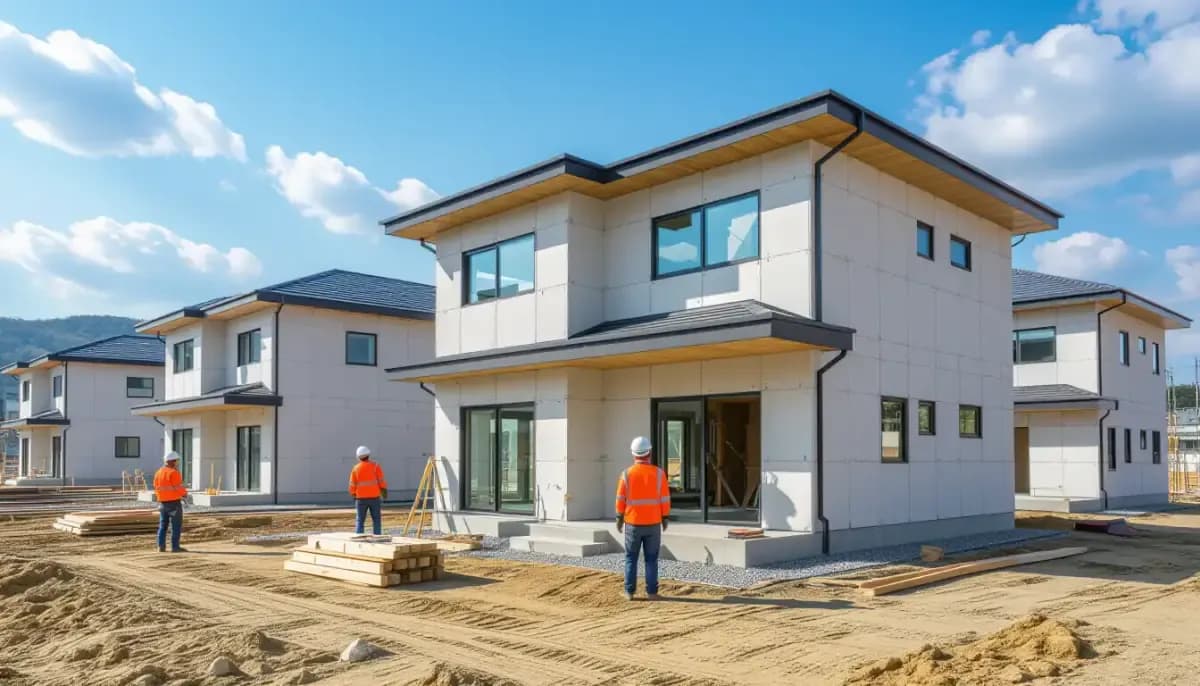
Japan Construction Industry Trends and New Home Development
Understand Japan's construction industry trends, new home development statistics, prefab housing growth, labor challenges, and what it means for foreign buyers planning to purchase or build in Japan.
Read more →
Best Cities to Invest in Japan Real Estate in 2026
Discover the top Japanese cities for real estate investment in 2026. Compare Tokyo, Osaka, Fukuoka, Sapporo rental yields, prices, and tips for foreign buyers entering the market.
Read more →
Japan Property Market Bubble History: Lessons for Today's Buyers
Learn from Japan's 1991 property bubble collapse — when prices fell 90% — and apply those hard-won lessons to buying property in Japan as a foreigner in 2025's rising market.
Read more →
Japan Luxury Real Estate Market Trends for High-Net-Worth Buyers
Discover Japan's luxury real estate market trends for 2026. Tokyo prices, Niseko resort properties, foreign buyer rules, financing tips, and strategic insights for high-net-worth buyers.
Read more →
Japan New Build vs Used Housing Market Comparison
Compare new build (shinchiku) vs used (chuko) housing in Japan. Prices, depreciation, pros and cons, mortgage access, and which option suits foreign buyers best in 2025.
Read more →