
Japan Construction Industry Trends and New Home Development

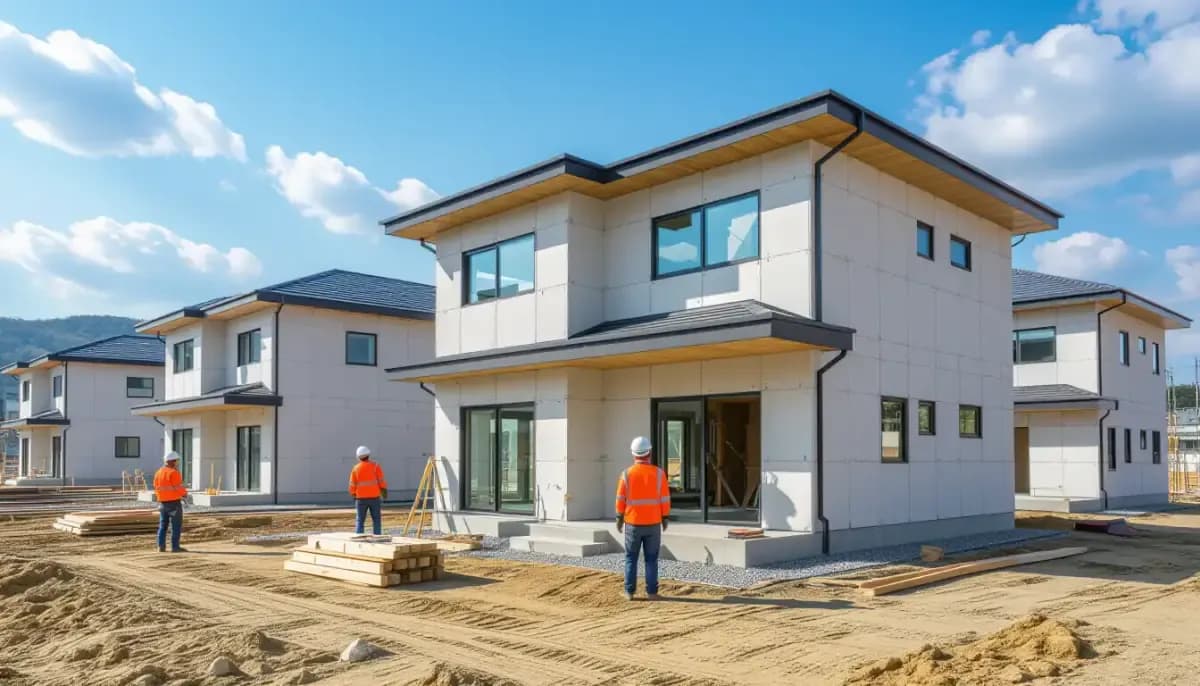
Understand Japan's construction industry trends, new home development statistics, prefab housing growth, labor challenges, and what it means for foreign buyers planning to purchase or build in Japan.
Japan Construction Industry Trends and New Home Development: What Buyers Need to Know
Japan's construction industry is at a pivotal crossroads. With a market valued at USD 528.4 billion in 2025 and projected to reach USD 621.83 billion by 2030, the sector is simultaneously booming and under serious strain. For foreigners considering buying or building a new home in Japan, understanding these industry dynamics is essential — the trends shaping construction today will directly affect your property options, timelines, and costs.
This guide breaks down Japan's construction industry trends, the state of new home development, and what it all means for foreign buyers looking to enter the market.
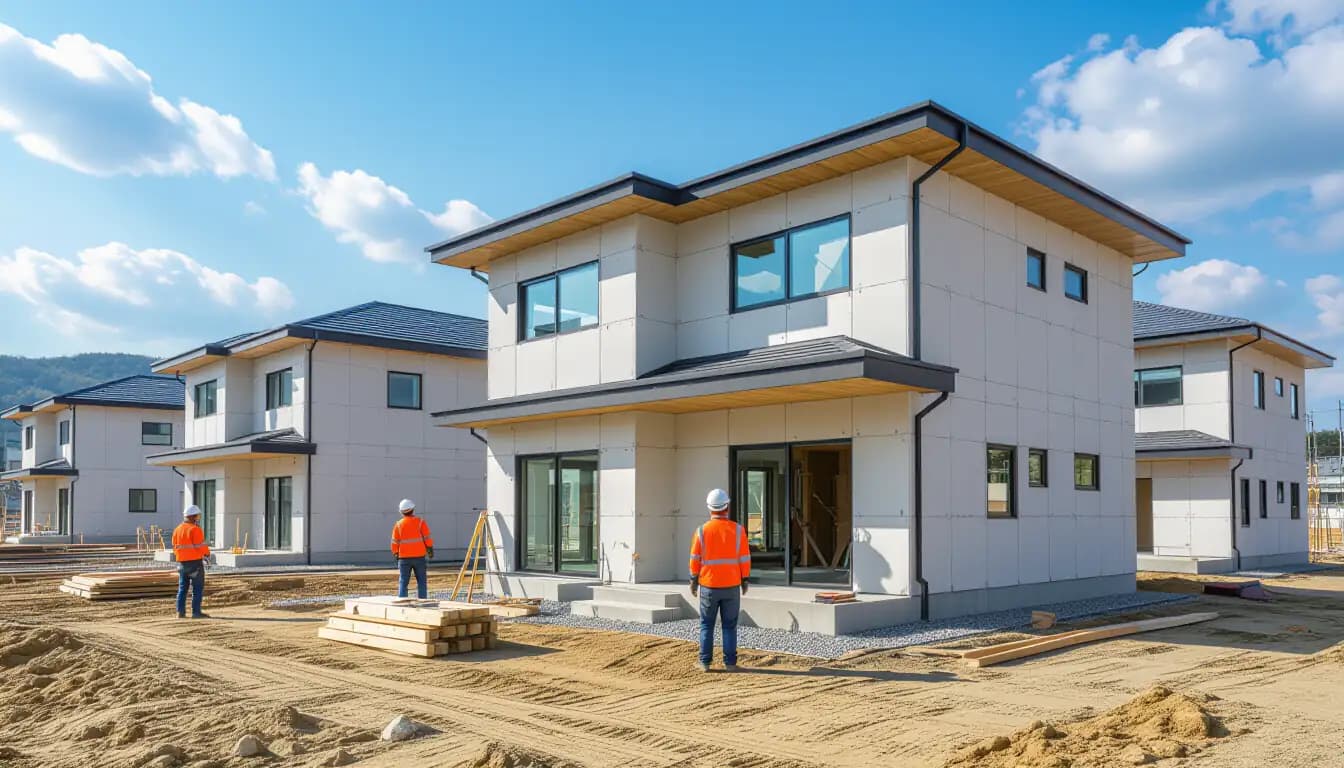
Japan's Construction Market: Size, Growth, and Key Challenges
Japan's construction market is one of the largest in Asia-Pacific, but its growth story is complicated. The overall sector is expected to expand by approximately 1.6% in real terms in 2025, supported by infrastructure investment, industrial development, and renewable energy projects.
However, the residential segment tells a different story. Housing starts have been declining for years:
- 2024: Annual housing starts fell 3.35% year-on-year to 792,195 units — the first time in 15 years that starts dipped below 800,000
- FY2025 forecast: Further decline to approximately 780,000 units (-4.4% YoY)
- Long-term driver: Japan's shrinking population means overall housing demand is structurally declining in many regions
Despite falling starts, the residential sector still captured 32.37% of total Japan construction market share in 2024, with growth concentrated in dense urban centers like Greater Tokyo. Residential building is projected to grow at a 4.60% CAGR through 2030 in value terms — driven more by rising costs than by volume.
What This Means for Buyers
Fewer new homes being built means less supply in desirable locations. Combined with rising construction costs, this is pushing up new-build prices, particularly in Tokyo, Osaka, and other major cities. Buyers who want a newly built home need to act decisively in competitive markets.
For broader context on how these trends intersect with the overall property market, see our Japan Real Estate Market Overview and Trends.
Construction Costs and Inflation: The New Reality
Perhaps the most significant challenge facing new home development in Japan is cost inflation. Construction material and labor costs are now 25–29% higher than in early 2021 — a structural shift that shows no signs of reversing quickly.
Key cost inflation statistics:
| Year | Projected Construction Inflation |
|---|---|
| 2025 | 5.6% |
| 2026 | 5.3% |
| 2027 | 5.0% |
Wage growth has accelerated sharply: worker wages across the construction sector have risen approximately 23% since 2021. This is partly welcome — construction workers have historically been underpaid — but it directly raises the cost of building new homes.
Supply chain constraints, rising raw material prices (particularly steel and lumber), and strong demand from major infrastructure projects are compounding cost pressures.
Impact on New Home Prices
These cost pressures are reflected in average new home prices:
- Ready-built houses (建売住宅): National average approximately ¥35 million
- Custom-built homes (注文住宅): National average approximately ¥44 million
Both categories have risen significantly from pre-2021 levels. Buyers on tight budgets are increasingly looking at older resale properties, with home inspections jumping approximately 160% year-on-year in 2024 as buyers accepted older properties amid new-build shortages.
For a detailed look at financing options in this environment, see our Mortgages and Home Loans for Foreigners in Japan.
The Labor Shortage Crisis: Japan's Biggest Construction Challenge
Japan's construction industry is facing a severe and worsening labor shortage that is stalling projects nationwide. Some key statistics:
- Over $100 billion worth of construction projects are currently stalled or delayed due to labor shortages
- 92% of general contractors are refusing to accept competitive bidding on projects scheduled to begin before 2029
- 100% of subcontractors are similarly unwilling to take on new projects at competitive prices
- Shortages are particularly acute in skilled trades: carpenters, steel fixers, MEP (mechanical, electrical, plumbing) specialists, and site foremen
This crisis stems from Japan's well-documented demographic decline. The construction workforce is aging rapidly, and young Japanese workers are not entering the trade in sufficient numbers to replace retirees. While the government has expanded programs to bring in foreign construction workers, the gap remains enormous.
The practical implications for new home buyers:
- Longer timelines: Custom-built homes that previously took 8–10 months may now take 12–14 months or more
- Higher costs: Subcontractor operating profits jumped 34% in FY2023-2024 despite only 6% revenue growth — indicating near-capacity operations and pricing power
- Reduced availability: Less competitive bidding means less price competition among builders
For guidance on navigating timelines in the buying process, see our Step-by-Step Home Buying Process in Japan for Foreigners.
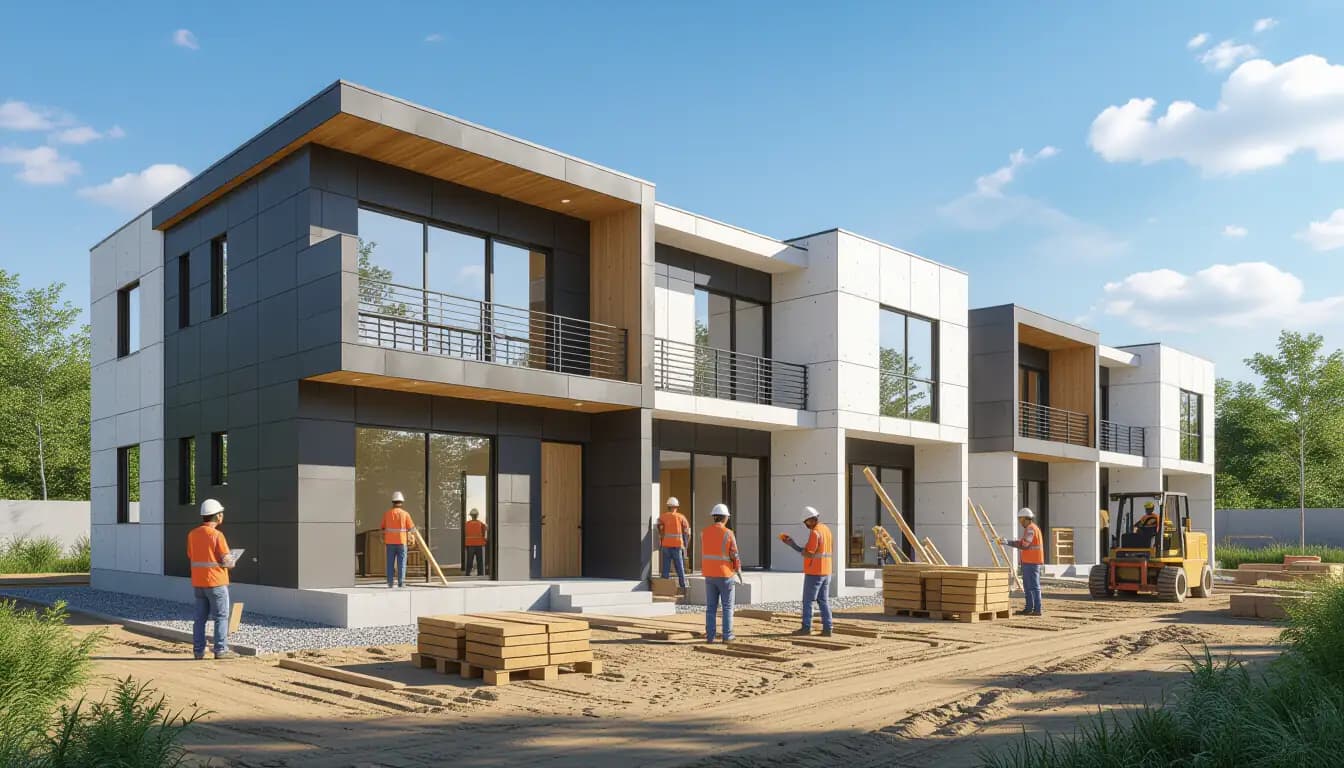
Prefabricated Housing: Japan's Answer to the Labor Challenge
One of the most important trends in Japanese new home construction is the rapid growth of prefabricated (prefab) housing. Japan is already a world leader in prefab construction, and demand is accelerating as builders seek to manage labor shortages and cost inflation.
Key facts about Japan's prefab housing market:
- Approximately 103,400 prefabricated housing units were started in 2023
- Prefab represents 12.6% of total new housing construction starts
- Japan's Prefabricated Construction Market is valued at USD 17.47 billion in 2025, projected to reach USD 23.38 billion by 2030 at a 6% CAGR
- Major players include Sekisui House, Daiwa House Group, Panasonic Homes, Toyota Housing Corporation, and Shimizu Corporation
Modern prefab construction in Japan has evolved far beyond the basic modular homes of the 1970s. Today's prefab offerings include:
- Modular high-rise systems that can be adapted for multi-story residential use
- Wood-based Cross-Laminated Timber (CLT) towers, combining traditional Japanese wood culture with modern structural engineering
- Integrated smart-home packages with automation, energy management, and barrier-free design for aging households
- Energy-efficient systems compliant with new codes mandating zero-energy homes
For foreign buyers, prefab homes offer several advantages: faster construction timelines, more predictable costs, high quality control, and increasingly sophisticated design options.
New Home Types in Japan: What's Being Built Today
Understanding what the market is actually producing helps buyers make informed decisions. Here is a breakdown of the main types of new construction:
| Property Type | Market Share | Avg. Price | Key Features |
|---|---|---|---|
| Apartments/Condominiums (新築マンション) | 57.8% | ¥40–80M (Tokyo) | High density, central locations, managed buildings |
| Ready-built Houses (建売住宅) | ~30% | ¥35M national avg | Land + completed house, move-in ready |
| Custom Houses (注文住宅) | ~44% of single-family | ¥44M national avg | Built to specifications, longer timeline |
| Prefabricated Homes | 12.6% of starts | ¥28–45M | Factory-built components, faster delivery |
Note: Percentages reflect different classification methodologies; some categories overlap.
For foreigners, custom-built homes offer particular advantages because they can be designed to accommodate non-standard preferences — open floor plans, Western-style kitchens, higher ceilings, or larger bathtubs. Japanese architects excel at maximizing space, often pushing ceiling heights beyond the standard 2.4 meters and creating flowing open spaces within compact footprints.
For a comprehensive overview of property types available to foreign buyers, see our Types of Properties Available in Japan: A Complete Guide.
Government Policies Supporting New Home Development
The Japanese government is actively supporting new home construction through several policy initiatives:
Energy Efficiency Standards
- New homes must meet updated energy efficiency codes, with zero-energy home (ZEH) standards expanding
- Government subsidies available for energy-efficient retrofits and new construction
- Housing-loan tax credits extended through 2030
Affordability Measures
- New 50-year mortgage products introduced to ease affordability for first-time buyers
- Extended loan terms help buyers manage monthly payments as prices rise
Infrastructure Investment
- The National Resilience Plan's ¥20 trillion (approximately USD 137.9 billion) allocation supports construction of water, sewage, and disaster-mitigation infrastructure — indirectly benefiting residential areas
- Disaster-resistant construction subsidies encourage earthquake and flood-safe home building
Urban Regeneration
- Incentives for development in select urban regeneration zones
- Tax benefits for purchasing and renovating older properties, particularly in regional cities
For details on how visa status affects your ability to access mortgages and purchase property, see our Visa and Residency Considerations for Property Buyers in Japan.
Tokyo vs. Regional Markets: Where New Construction Is Concentrated
New home development in Japan is highly uneven geographically. The market is polarized:
Strong Markets (Active New Construction):
- Greater Tokyo: Continued new-build activity, vertical development, strong demand driven by domestic and foreign buyers
- Greater Osaka: Recovery supported by Expo 2025 legacy infrastructure and regional growth
- Fukuoka: Strong population inflow and developer activity
- Sapporo/Hokkaido: Growing resort and remote-work demand
Weaker Markets (Limited New Construction):
- Rural areas and distant suburbs facing population decline
- Low-tier locations with disaster risk facing price corrections
- Mid-sized cities with shrinking populations seeing fewer developer launches
For foreign buyers, this geographic concentration matters. New homes in central Tokyo or Osaka are genuinely competitive assets. New builds in rural areas may be easier to acquire but may also face long-term value erosion. For regional guidance:
- Buying Property in Tokyo as a Foreigner
- Buying Property in Osaka as a Foreigner
- Buying Property in Hokkaido as a Foreigner
What Foreign Buyers Need to Know About Building a New Home
If you are a foreigner interested in commissioning a new custom home in Japan, here is what you need to know:
Legal Rights: Foreigners have the same legal rights as Japanese citizens to purchase land and property in Japan. You can build a custom home, commission an architect, and hire contractors — all with identical tax treatment.
The Building Process Timeline:
- Finding land: 1–3 months
- Design and permits: 2–4 months
- Construction: 6–8 months (longer in current market)
- Total from land search to move-in: 12–20 months
Loan Approval: Expect 2–4 weeks for mortgage approval. Terms vary by visa status, income verification, and the bank. Permanent residents and long-term visa holders generally have better access to competitive rates.
Finding Builders: There are four main approaches to building a custom home:
- Architectural firm: Maximum design freedom, highest cost
- General contractor (ゼネコン): Project management included, suitable for complex builds
- Major housing developer (ハウスメーカー): Standardized but high-quality, with established processes
- Franchise builder: Materials sourced at scale, directed by local contractors — often the most cost-effective
For a deeper dive into the legal process and documentation involved, see our Legal Procedures and Documentation for Japan Property Purchase.
Additional Resources for Foreign Buyers
The Japan construction and housing landscape can be complex to navigate without local knowledge. These resources offer valuable perspectives:
- Living in Nihon — Practical guides for foreigners living and buying property in Japan
- For Work in Japan — Resources for expats navigating Japanese systems including housing
- Gaijin Buy House — Specialized guidance for foreigners buying property in Japan
- Turner & Townsend Japan Construction Market Report — Professional market intelligence on Japan's construction trends
- Japanese Architects: Buy or Build Guide — Expert guidance on the buy-vs-build decision for foreigners
- E-Housing Japan Market Outlook 2026 — Forward-looking market analysis
Conclusion: Navigating Japan's Construction Market as a Foreign Buyer
Japan's construction industry is simultaneously strong and strained. The market is growing in value, but falling in volume. Costs are rising, labor is scarce, and timelines are extending — yet quality remains high and innovation in prefab and sustainable construction is genuinely exciting.
For foreign buyers, the key takeaways are:
- Act decisively in desirable locations — new supply is genuinely limited
- Budget generously for construction cost inflation — prices are not going down soon
- Consider prefab — it offers faster timelines and predictable costs without sacrificing quality
- Factor in extended timelines for custom builds — 14–20 months is realistic in today's market
- Leverage government incentives — energy efficiency subsidies and extended mortgage products can meaningfully reduce costs
- Get pre-approved for financing early — mortgage capacity affects what you can realistically build or buy
Japan remains an exceptional place to own property. Despite the challenges, the combination of legal openness to foreign buyers, architectural excellence, and long-term urban stability makes Japan's new home market a compelling destination for international investors and homeowners alike.
Start your journey with our Complete Guide to Buying Property in Japan as a Foreigner.

Originally from Vietnam, living in Japan for 16+ years. Graduated from Nagoya University, with 11 years of professional experience at Japanese and international companies. Sharing information about buying property in Japan for foreigners.
View Profile →Related Articles

Weak Yen Impact on Japan Property Investment for Foreigners
Learn how Japan's weak yen creates major buying advantages for foreign property investors. Discover real savings, rental yields, legal framework, and key risks to navigate in 2025.
Read more →
Japan vs Other Asian Countries: Real Estate Market Comparison
Compare Japan's real estate market against Hong Kong, Singapore, Thailand and other Asian countries. Full analysis of prices, ownership rights, yields, and transaction costs for foreign buyers in 2025.
Read more →
Best Cities to Invest in Japan Real Estate in 2026
Discover the top Japanese cities for real estate investment in 2026. Compare Tokyo, Osaka, Fukuoka, Sapporo rental yields, prices, and tips for foreign buyers entering the market.
Read more →
Japan Property Market Bubble History: Lessons for Today's Buyers
Learn from Japan's 1991 property bubble collapse — when prices fell 90% — and apply those hard-won lessons to buying property in Japan as a foreigner in 2025's rising market.
Read more →
Japan Luxury Real Estate Market Trends for High-Net-Worth Buyers
Discover Japan's luxury real estate market trends for 2026. Tokyo prices, Niseko resort properties, foreign buyer rules, financing tips, and strategic insights for high-net-worth buyers.
Read more →
Japan New Build vs Used Housing Market Comparison
Compare new build (shinchiku) vs used (chuko) housing in Japan. Prices, depreciation, pros and cons, mortgage access, and which option suits foreign buyers best in 2025.
Read more →