
Japan Property Market Bubble History: Lessons for Today's Buyers

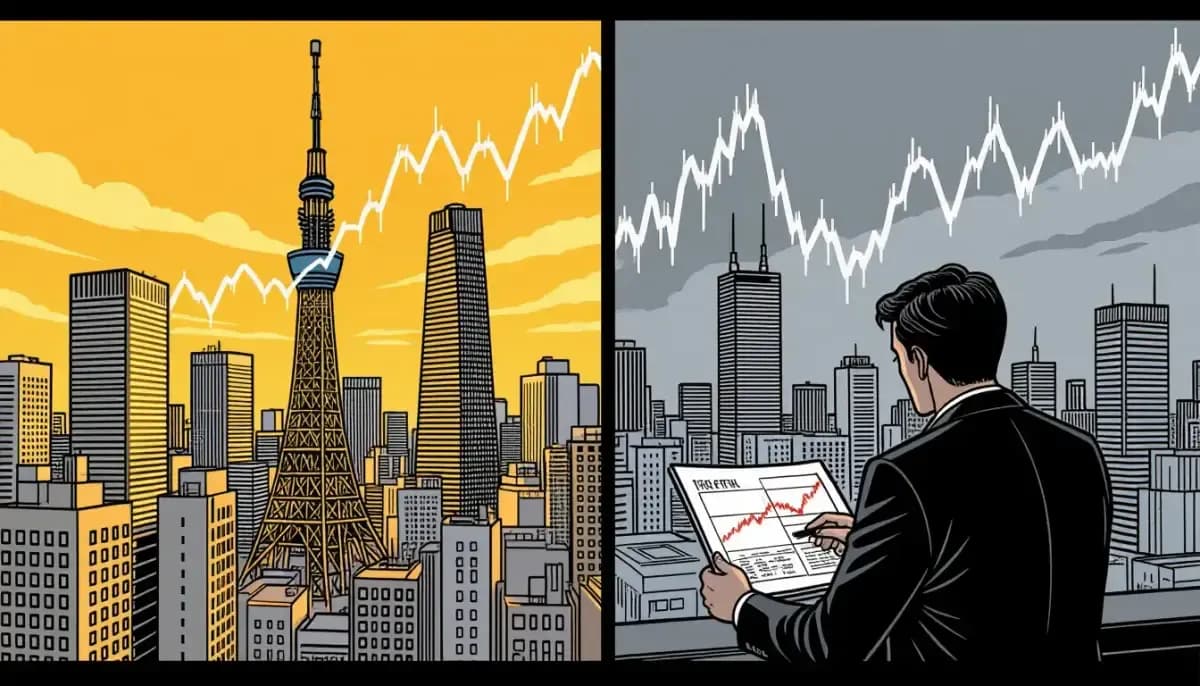
Learn from Japan's 1991 property bubble collapse — when prices fell 90% — and apply those hard-won lessons to buying property in Japan as a foreigner in 2025's rising market.
Japan Property Market Bubble History: Lessons for Today's Buyers
Japan's property bubble of the late 1980s remains one of the most dramatic real estate collapses in modern history. At its peak, the land beneath Tokyo's Imperial Palace was said to be worth more than all of California's real estate combined. Then, between 1991 and 2004, prices fell by as much as 90% in some areas — wiping out trillions of dollars in wealth and triggering decades of economic stagnation. For foreigners considering buying property in Japan today, understanding this history is not just academic. It is essential context for making a sound investment decision in a market that is once again seeing rapid price increases.
This guide walks you through the full arc of Japan's bubble economy, the causes of the collapse, and the hard-won lessons that smart buyers are applying to the current market.
The Rise of the Bubble: 1985–1991
The seeds of Japan's property bubble were planted in a conference room in New York in September 1985. The Plaza Accord — an agreement between the G5 nations to depreciate the US dollar — caused the Japanese yen to appreciate sharply. This squeezed Japan's export-dependent economy, and the Bank of Japan responded by cutting interest rates to historically low levels to stimulate domestic demand.
Cheap credit flooded the system. Banks, with few restrictions on lending, extended loans backed by land as collateral. Because land values were rising, more borrowing was secured, which pushed prices higher still, enabling yet more borrowing. It was a classic feedback loop.
Between 1985 and 1991:
- Commercial land prices in Tokyo tripled
- Residential land prices in major cities nearly doubled
- The Nikkei 225 stock index tripled, peaking at approximately 39,000 in December 1989 — representing over one-third of global equity market capitalization at the time
By 1990, total Japanese land value exceeded an estimated ¥2,000 trillion — more than four times the real estate value of the entire United States. Prime commercial land in Tokyo's Ginza district reached valuations 350 times higher than comparable parcels in Manhattan. A single square meter of Ginza land was worth more than an entire luxury Manhattan apartment.
Corporate Japan joined in enthusiastically. At the peak, 40–50% of many companies' earnings came from speculative financial and real estate activity, a practice known as zaitech (financial engineering). Cross-shareholdings within Japan's powerful keiretsu business groups amplified stock and land price gains across the economy.
For a broader overview of how the Japanese real estate market works today, see our Japan Real Estate Market Overview and Trends for Foreign Investors.
The Crash: 1991 and the Lost Decades
The Bank of Japan began raising interest rates in 1989 to cool what officials recognized as unsustainable speculation. The effect was swift and devastating. Equity values plunged roughly 60% from late 1989 to August 1992. Land values followed, declining throughout the 1990s and well into the 2000s.
| Asset | Peak Year | Decline by 2004 |
|---|---|---|
| Nikkei 225 | December 1989 | ~75% from peak |
| Tokyo prime residential land | 1991 | ~90% from peak |
| Ginza commercial land | 1991 | ~99% from peak |
| Nationwide land prices | 1991 | ~50% from peak |
| GDP annual growth (1991–2003) | — | 1.14% average |
The human and economic consequences were severe. Over $1 trillion in non-performing loans accumulated in Japan's banking system by the late 1990s. Banks and corporations that were technically insolvent were kept alive by government support, earning the labels "zombie banks" and "zombie companies." This prevented healthy capital reallocation and contributed to prolonged stagnation.
Japan's so-called "Lost Decades" lasted from roughly 1991 to the early 2010s. GDP growth averaged just over 1% per year. Deflation became entrenched. Wages stagnated. The population — already aging — began to shrink in absolute terms, reducing demand for housing across much of the country.
The policy failures that worsened the aftermath are well documented. Early denial by authorities delayed intervention. Near-zero interest rates, maintained for almost two decades, failed to spur meaningful demand growth. Japan accumulated the highest public debt-to-GDP ratio in the developed world through repeated stimulus spending. The US Federal Reserve later cited Japan's experience as a direct lesson when crafting its faster, more aggressive response to the 2008 financial crisis.
For a full breakdown of what these structural issues mean for foreign buyers today, Living in Nihon offers practical expat perspectives on navigating Japanese society and economy.
Why the Current Market Is Different — and Where the Risks Remain
Japan's property market has undergone a significant recovery in recent years, particularly in Tokyo and other major urban centers. Tokyo condominiums rose approximately 64% over a four-year period through 2025, with year-on-year price increases of around 12.62% as of mid-2025. Foreign investors now account for roughly 27% of nationwide transactions and approximately 40% of central Tokyo new apartment sales.
This naturally raises the question: are we seeing another bubble?
Most analysts draw a clear distinction between the current situation and the 1980s bubble, for several reasons:
Supply constraints are genuine. Urban land in Tokyo is genuinely scarce. Zoning regulations, earthquake-resistant construction requirements, and limited buildable area create real supply limitations that did not exist in the same way during the bubble era, when development sprawled across the entire country.
Growth is geographically concentrated. The 1980s bubble affected land prices nationwide. Today's price increases are concentrated in specific urban neighborhoods — Minato, Shibuya, Shinjuku — while vast swaths of rural Japan continue to experience price declines and the proliferation of akiya (vacant, abandoned homes). Millions of akiya now exist outside major cities.
Demand has new, structural drivers. Tourism, international corporate relocation, and a weaker yen making Japanese assets attractive to foreign capital are all real demand drivers. These differ fundamentally from the pure credit-fueled speculation of the 1980s.
That said, risks exist. The Bank of Japan raised interest rates for the first time in decades in 2024, and further hikes are anticipated. Rising borrowing costs could reduce affordability and slow price growth. The demographic headwind — an aging, shrinking population — remains a long-term challenge for the market outside major cities.
For employment and income considerations as a foreigner, For Work in Japan covers visa and job-hunting topics that affect your ability to qualify for a mortgage.
Key Lessons for Foreign Buyers in 2025
The history of Japan's property bubble offers practical guidance for anyone considering a purchase today.
1. Understand what is driving prices, not just that prices are rising. The 1980s bubble was driven by credit expansion and speculation, not by genuine increases in the productive value of land. Before buying, ask whether the property's price is supported by rental income potential, location fundamentals, and replacement cost — or primarily by recent price momentum.
2. Monitor the Bank of Japan's rate policy carefully. The unwinding of ultra-low interest rates was the trigger for the 1991 collapse. Japan is now, for the first time in two decades, in a rate-hiking cycle. This does not necessarily mean a crash is coming, but it does mean that financing costs are increasing and properties acquired with high leverage at peak prices carry greater risk.
3. Distinguish between Tokyo and the rest of Japan. The current bull market is essentially a Tokyo (and to a lesser extent Osaka and Fukuoka) phenomenon. Buying rural or small-city properties as an investment carries very different risk profiles. For details on regional markets, see our guides to Buying Property in Tokyo as a Foreigner, Buying Property in Osaka as a Foreigner, and Buying Property in Fukuoka and Kyushu as a Foreigner.
4. Do not rely on capital appreciation as your primary return. In a market that experienced a 90% price decline and took 30+ years to partially recover, buying purely for capital gains is a high-risk strategy. Model your purchase on rental yield and personal utility value first. Capital gain should be a bonus, not a plan.
5. Avoid over-leveraging. The single biggest amplifier of losses in Japan's bubble collapse was leverage. Buyers who purchased with significant debt were wiped out when prices fell; those who owned outright or with conservative loan-to-value ratios survived and eventually recovered. Our guide to Mortgages and Home Loans for Foreigners in Japan covers how foreigners can access financing — along with the important cautions around doing so.
6. Factor in all costs — not just purchase price. Japan has significant transaction costs, annual property taxes, and maintenance fees that affect your real return. Read our detailed breakdown of Hidden Costs and Fees When Buying Property in Japan and Property Taxes and Annual Costs of Owning Property in Japan before committing.
The Akiya Opportunity: A Silver Lining of the Bubble's Legacy
One underappreciated legacy of Japan's demographic decline — itself a product of the lost decades — is the explosion in akiya (vacant homes). Japan now has an estimated 8–9 million akiya, many of which are available at very low prices or even for free in rural areas. Some municipalities offer cash incentives and renovation subsidies to attract new residents.
For the right buyer — someone seeking a lifestyle property in rural Japan, a holiday home, or an affordable entry into the market — akiya can represent genuine value. The key is understanding the renovation costs, legal procedures, and community integration requirements that often come attached. Our guide to Rural and Countryside Properties in Japan for Foreign Buyers covers this in detail.
For comprehensive guidance on the complete purchase process, Gaijin Buy House provides one of the most thorough English-language resources available for foreign buyers navigating Japanese real estate.
The Historical Price Cycle: A Visual Reference
| Period | Phase | Key Driver | Typical Price Direction |
|---|---|---|---|
| Pre-1985 | Stable growth | Normal economic expansion | Moderate upward |
| 1985–1989 | Bubble inflation | Plaza Accord, cheap credit, zaitech | Rapid upward (+200–300%) |
| 1990–1991 | Bubble peak | Maximum speculation, BoJ rate hikes begin | Peak / turning point |
| 1992–2000 | Sharp decline | Credit tightening, bank insolvencies | Rapid downward (−50 to −80%) |
| 2001–2012 | Continued weakness | Deflation, demographics, zombie economy | Slow downward / flat |
| 2013–2019 | Abenomics recovery | QE, currency depreciation, policy stimulus | Moderate upward |
| 2020–2022 | Pandemic resilience | Low rates, urban demand, foreign interest | Stable to upward |
| 2023–2025 | Strong bull market | Foreign capital, supply limits, weak yen | Strong upward (+12–15% annually) |
Understanding where in this cycle the market sits — and what conditions would cause the current phase to end — is the most important analytical exercise any buyer can undertake.
Starting Your Purchase Journey
If you are a foreigner ready to begin exploring property in Japan, start with the fundamentals: understand your legal rights, the step-by-step purchase process, and how to protect yourself through due diligence. Our Complete Guide to Buying Property in Japan as a Foreigner and Step-by-Step Home Buying Process in Japan for Foreigners provide the foundation you need.
Japan's property market offers genuine opportunity for informed, patient buyers. The history of the bubble is not a reason to avoid the market — it is a reason to approach it with clear eyes, realistic expectations, and a strategy built on fundamentals rather than momentum.
Further reading:

Originally from Vietnam, living in Japan for 16+ years. Graduated from Nagoya University, with 11 years of professional experience at Japanese and international companies. Sharing information about buying property in Japan for foreigners.
View Profile →Related Articles
Weak Yen Impact on Japan Property Investment for Foreigners
Learn how Japan's weak yen creates major buying advantages for foreign property investors. Discover real savings, rental yields, legal framework, and key risks to navigate in 2025.
Read more →
Japan vs Other Asian Countries: Real Estate Market Comparison
Compare Japan's real estate market against Hong Kong, Singapore, Thailand and other Asian countries. Full analysis of prices, ownership rights, yields, and transaction costs for foreign buyers in 2025.
Read more →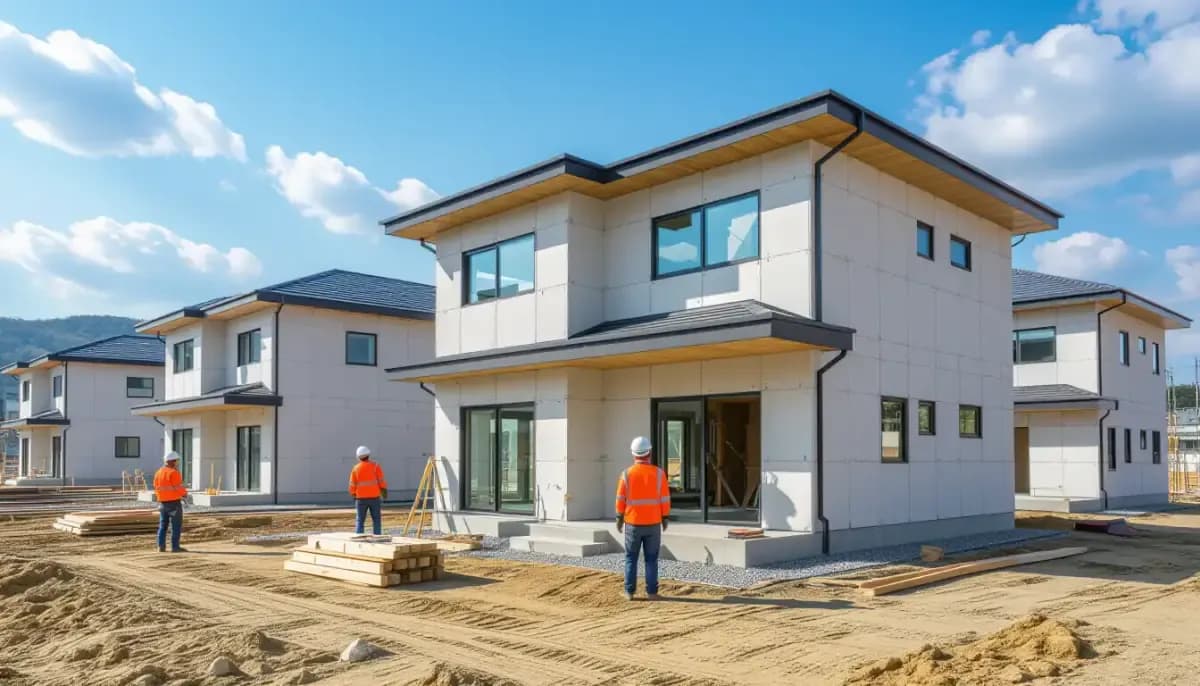
Japan Construction Industry Trends and New Home Development
Understand Japan's construction industry trends, new home development statistics, prefab housing growth, labor challenges, and what it means for foreign buyers planning to purchase or build in Japan.
Read more →
Best Cities to Invest in Japan Real Estate in 2026
Discover the top Japanese cities for real estate investment in 2026. Compare Tokyo, Osaka, Fukuoka, Sapporo rental yields, prices, and tips for foreign buyers entering the market.
Read more →
Japan Luxury Real Estate Market Trends for High-Net-Worth Buyers
Discover Japan's luxury real estate market trends for 2026. Tokyo prices, Niseko resort properties, foreign buyer rules, financing tips, and strategic insights for high-net-worth buyers.
Read more →
Japan New Build vs Used Housing Market Comparison
Compare new build (shinchiku) vs used (chuko) housing in Japan. Prices, depreciation, pros and cons, mortgage access, and which option suits foreign buyers best in 2025.
Read more →