New Construction vs Used Properties in Japan: Buyer's Guide
Compare new construction vs used properties in Japan for foreign buyers. Pricing, warranties, depreciation, taxes, financing, and investment returns — complete guide.
13 articles
New Construction vs Used Properties in Japan: Buyer's Guide
Whether you're planning to buy your first home in Japan or add to an investment portfolio, one of the most consequential decisions you'll face is whether to purchase a brand-new property (shinchiku, 新築) or a pre-owned one (chuko, 中古). Japan's real estate market has unique characteristics that make this choice more complex than in most countries — from steep new-build depreciation to a surprisingly robust market for renovated older homes, and a cultural preference for new construction that distorts pricing in ways foreign buyers can exploit.
This guide breaks down every key dimension of the new construction vs. used property debate in Japan — pricing, warranties, depreciation, financing, taxes, and long-term investment potential — so you can make the right call for your budget and goals.
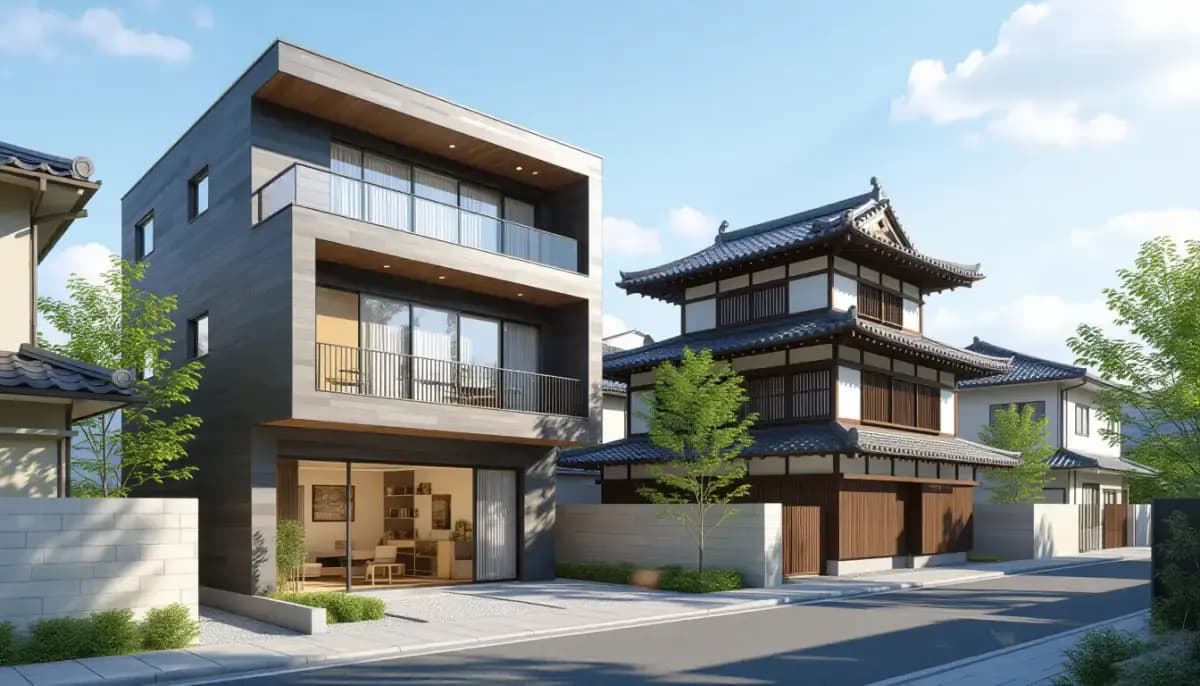
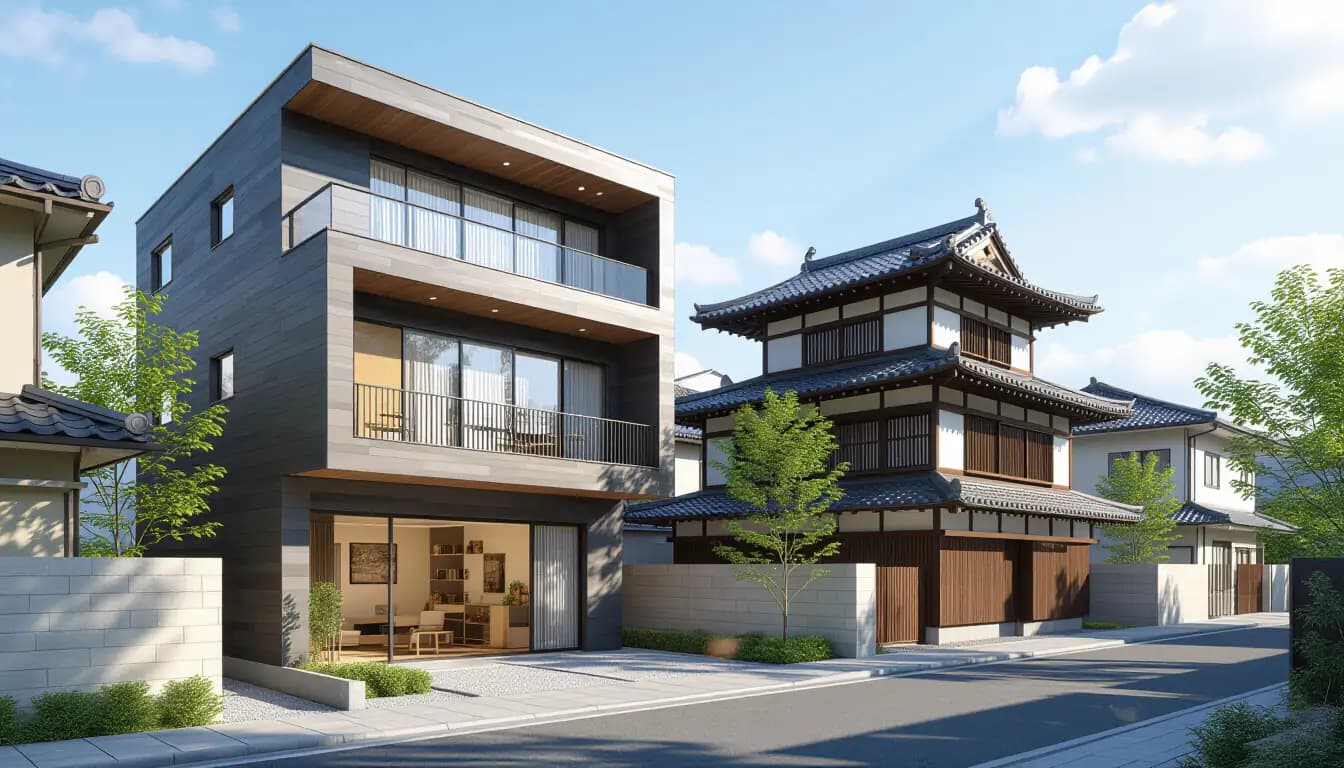
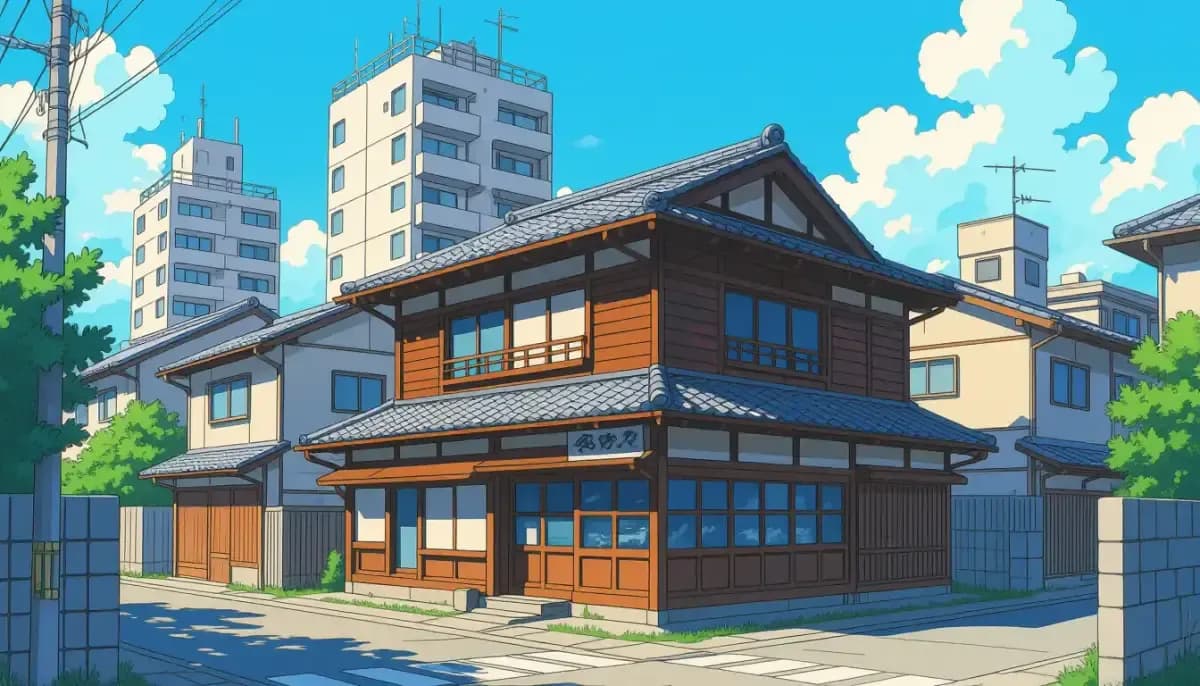
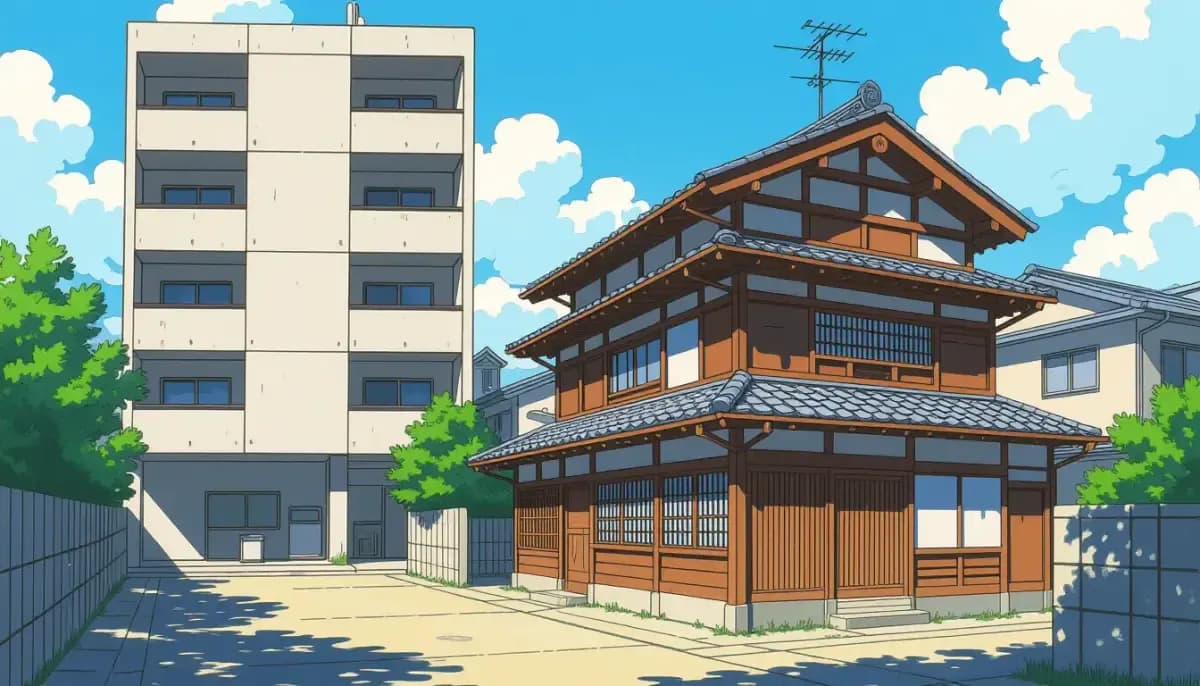
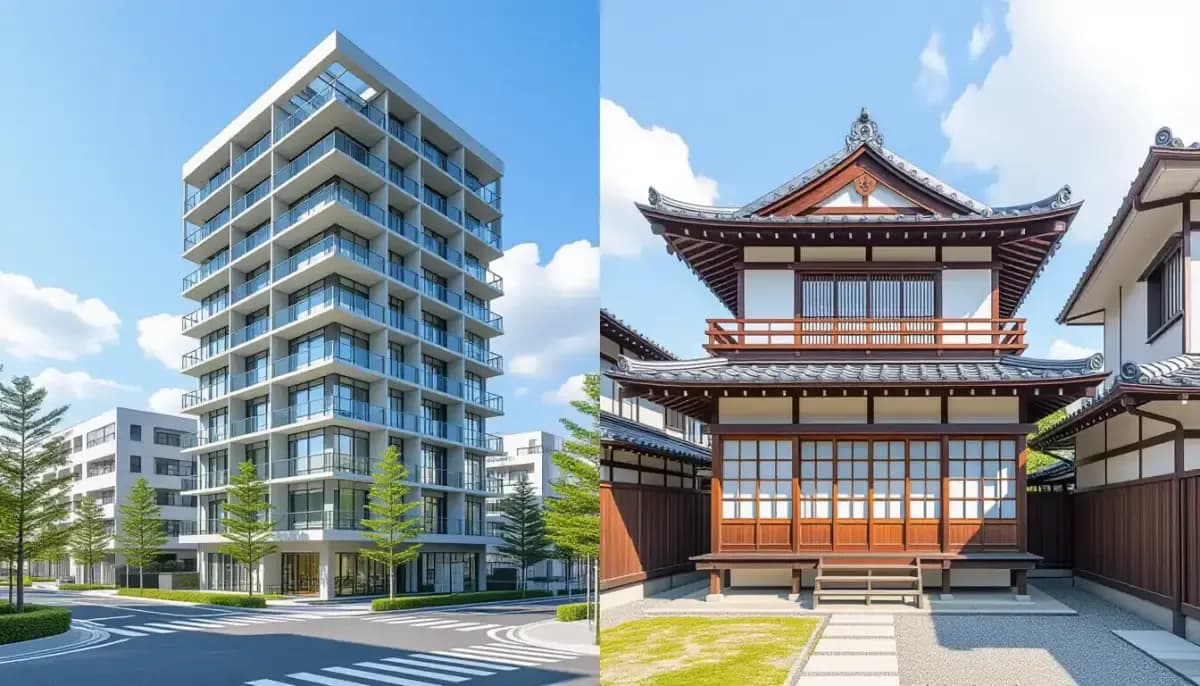
New construction apartment tower next to older residential buildings in Tokyo neighborhood
Understanding the Japanese Market: Why This Choice Is Different
Japan's real estate market behaves differently from Western markets in two critical ways that affect the new vs. used property comparison.
First, buildings depreciate in Japan while land holds or appreciates in value. A house built 30 years ago may be worth almost nothing as a structure — but the land beneath it can be extremely valuable. This is especially true in major cities like Tokyo, Osaka, and Fukuoka.
Second, Japan has a strong cultural bias toward new construction. Unlike in the UK or US, where a century-old home can command a premium, Japanese buyers traditionally prefer brand-new homes, believing older properties are inferior or unlucky. This cultural preference inflates prices for new builds and creates genuine bargains in the used market for buyers willing to look past superficial age.
A third and increasingly relevant factor: Japan has approximately 9 million vacant homes (akiya, 空き家), representing a 13.8% national vacancy rate as of 2023. This glut of unused properties in many regions creates extraordinary opportunities for buyers willing to purchase and renovate.
Price Comparison: How Much Can You Save With a Used Property?
The price gap between new and used properties in Japan is substantial and varies by property type and location.
Property Type
New Construction (Avg.)
Pre-Owned (Avg.)
Savings
Condo — Greater Tokyo
¥64.14 million
¥35.99 million
~44% cheaper
Condo — Tokyo 23 Wards (2025)
¥104.85 million
¥44.51 million
~58% cheaper
Detached House — Major Cities
¥60–80 million
¥25–45 million
~40–50% cheaper
Detached House — Regional
¥25–45 million
¥5–20 million
~50–70% cheaper
Akiya (abandoned homes)
N/A
¥100k–¥5 million
Extreme discount
Note: Tokyo new condo prices hit a historic average of ¥104.85 million in March 2025 — a 37.5% year-on-year increase and only the second time monthly averages have exceeded ¥100 million. Used condos in Tokyo's 23 wards averaged ¥44.51 million in April 2025, up 28.3% YoY, marking nine consecutive months of record growth.
The practical implication: at the same budget, you can often access a better location with a used property than with a new build.
New buildings in Japan come with cutting-edge earthquake resistance technology, energy-efficient insulation, smart home integrations, and premium common facilities like gyms, concierge services, and rooftop gardens. Most importantly, Japanese law mandates a 10-year structural defect warranty on all new construction. Developers are legally liable for any major structural, waterproofing, or foundation defects for a decade after completion.
This warranty provides genuine peace of mind and is backed by insurance — if the developer goes bankrupt, the insurance policy kicks in. There is no equivalent legal protection for used properties (though voluntary inspection-backed warranties exist).
Lower Registration Taxes and Government Incentives
New properties qualify for significantly reduced registration taxes:
New buildings: 0.4% registration tax (ownership transfer)
Used buildings: 2.0% registration tax (ownership transfer)
New construction also qualifies for additional government tax incentives, including reductions in acquisition tax and property tax for the first few years. These savings can amount to several hundred thousand yen, partially offsetting the higher purchase price.
Financing Advantages
Banks and lenders prefer new condominiums from established developers. Because valuations are straightforward and structural risk is minimal, lenders often offer:
Higher loan-to-value ratios (up to 90–100% in some cases)
Longer mortgage terms (up to 35 years for RC construction)
New condo supply in Greater Tokyo is declining sharply — projected to fall approximately 17% to around 22,239 units in FY2024, the lowest level since 1973. This supply compression combined with strong demand from both domestic and international buyers is supporting new condo prices and may continue to do so.
Used Properties: Advantages in Detail
Location Access at Lower Cost
The single most important advantage of used properties is that you can access premium locations at significantly lower prices. In areas like central Tokyo, Osaka's Namba district, or Kyoto's Higashiyama ward, new construction simply doesn't exist or commands extraordinary premiums. Used properties are often the only way to own in these desirable areas.
Slower Depreciation After the Initial Drop
New construction loses up to 20% of its value the moment someone moves in, as the developer premium evaporates and the property is reclassified as "pre-owned." After this initial drop, depreciation slows significantly — typically around 2% per year for condominiums. Pre-owned properties, having already absorbed this initial decline, tend to depreciate more gradually.
Crucially, property value stabilizes around the 30-year mark in many markets. Very old properties in good locations often appreciate as land value dominates.
Higher Investment Yields
For investors focused on rental income, used properties typically generate higher yields:
New condos: 3–5% gross yield (common in Tokyo)
Used condos (10–20 years old): 5–7% gross yield
Used condos (30+ years old): 6–9% gross yield
A ¥20 million used apartment generating 7% annual yield often outperforms a ¥45 million new apartment at 4% yield, even accounting for higher maintenance costs.
Renovation Potential and the Renovation Market
Japan has developed a sophisticated renovation culture driven by the abundance of used properties. High-quality renovation (reform, リフォーム) can transform a 1980s condominium into a modern, attractive home at a fraction of new-build costs. The renovation market in Japan reached over ¥7 trillion annually, and the quality of contractors and materials is excellent.
Buying a used property and renovating to your taste is a popular strategy that combines location advantages with modern interior finishes. For more information on rural renovation opportunities, see Rural and Countryside Properties in Japan for Foreigners.
The 30-Year Lifespan Myth: What You Need to Know
A common misconception — held even by many Japanese people — is that Japanese homes only last 30 years before demolition. This myth deserves careful examination, because it affects how buyers value used properties.
The actual lifespans by construction type:
Construction Type
Government Statutory Lifespan
Modern Expected Lifespan
Reinforced Concrete (RC)
47 years
60–80 years
Steel Frame
34 years
50–60 years
Wooden Frame
21 years
30–60 years (varies widely)
The "30-year average" cited for Japanese homes reflects actual demolition patterns driven by cultural preference, not structural necessity. Historically, Japanese families preferred to demolish and rebuild rather than renovate — this is changing rapidly among younger generations.
Modern RC condominiums built since the 1990s (after major building code revisions following the 1995 Kobe earthquake) are structurally sound for 60–70 years or more. The buildings facing demolition pressure are primarily wooden homes from the 1960s–1980s, many in rural areas.
The practical takeaway: don't be afraid of a well-maintained concrete condominium from the 1990s or 2000s. Check the building's long-term repair reserve fund (長期修繕計画), maintenance history, and management quality — these matter far more than age alone.
Financing and Mortgage Considerations
Used properties, particularly older ones, face tighter lending conditions in Japan:
Properties over 20 years old (wood) or 25 years old (concrete) traditionally lose mortgage tax deduction eligibility — though properties with seismic compliance certificates (耐震基準適合証明書) or existing home defect insurance (既存住宅瑕疵担保責任保険) can restore eligibility
Lenders may require higher down payments (20–30%) for older properties
Loan terms may be shorter, increasing monthly payments
Some properties from before the 1981 earthquake code revision may be rejected outright
Foreign buyers face additional hurdles regardless of property type. Our guide to Mortgages and Home Loans for Foreigners in Japan covers lender requirements for non-residents and non-permanent residents in detail.
Tax Comparison: New vs. Used Properties
Tax/Fee
New Construction
Used Construction
Ownership Registration Tax
0.4%
2.0%
Real Estate Acquisition Tax
Reduced/exempt for first home
3–4% of assessed value
Property Tax (Annual)
Reduced for 5 years (condos)
Standard rate immediately
Consumption Tax
10% on building portion
Exempt (private seller)
Fixed Asset Tax
Reduced for 3 years (new)
Full rate
Note: Consumption tax (10%) applies to new construction purchased from developers and to used properties purchased from companies. Private seller transactions are consumption-tax exempt — an important saving when buying used.
Location trumps everything when it comes to resale value in Japan. Properties within 10 minutes walking distance of a major train station consistently hold or appreciate in value in urban areas, regardless of property age. Properties in less accessible areas can lose significant value even if new.
Key resale value factors:
Station proximity: Under 10 minutes walk is the gold standard
Line popularity: On major commuter lines vs. local/branch lines
You're buying in an area with active new development
Choose used property if:
You want to maximize location quality for your budget
Investment yield is your primary goal
You're comfortable with renovation or management complexity
You're targeting a neighborhood where new construction doesn't exist
Foreign Buyer Basics
Regardless of which type you choose, key legal facts for foreign buyers in Japan:
Equal ownership rights: Foreigners can buy any type of property with the same rights as Japanese citizens
No visa required: You can purchase property on a tourist visa
No golden visa: Property purchase does not grant residency, PR, or citizenship
Property register matters: Your name must appear in the official property register (登記簿) for ownership to be legally secure — a signed contract alone is insufficient
Short-term rentals: Airbnb-style rentals are capped at 180 days/year nationally; many condo buildings prohibit them entirely
The new construction vs. used property decision in Japan ultimately comes down to your priorities. New builds offer peace of mind, modern features, and financing advantages — but at a premium that can take years to justify through appreciation. Used properties offer superior location access, higher investment yields, and dramatically lower entry costs — at the expense of complexity, potential maintenance surprises, and tighter lending conditions.
For most foreign buyers entering the Japanese market, used properties in prime locations represent the better value proposition — particularly condominiums from the 1990s–2010s that have already absorbed initial depreciation and are priced well below new-build equivalents. The key is thorough due diligence on the building's management, maintenance reserve fund, and seismic compliance status.