
Japan New Build vs Used Property: Complete Comparison Guide

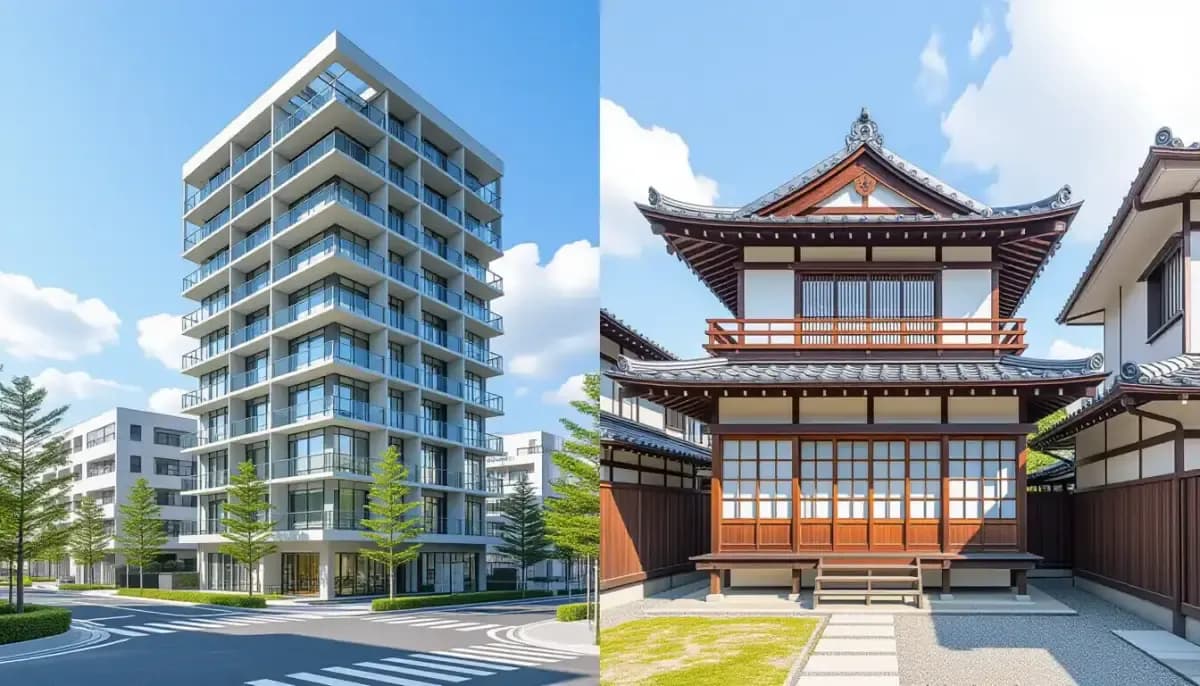
Compare new build (shinchiku) vs used property (chuko) in Japan. Prices, warranties, earthquake compliance, depreciation, mortgages, and which is better for foreign buyers in 2025.
Japan New Build vs Used Property: Complete Comparison Guide for Foreign Buyers
Choosing between a brand-new property (shinchiku, 新築) and a used or secondhand property (chuko, 中古) is one of the most consequential decisions you will make when buying real estate in Japan. Both options offer genuine advantages and real trade-offs, and the right choice depends on your budget, lifestyle priorities, renovation appetite, and long-term investment goals. This guide breaks down every major dimension of the new build vs. used property debate so you can make an informed decision — whether you are buying in Tokyo, Osaka, or a regional city.
For a broader introduction to the buying process, see our Complete Guide to Buying Property in Japan as a Foreigner and our overview of Types of Properties Available in Japan.
New Build vs. Used Property: At a Glance
The Japanese property market draws a sharp distinction between shinchiku and chuko properties. In most other countries, a home retains most of its value even after years of use; in Japan, the cultural preference for new construction has historically caused used homes to depreciate steeply, sometimes to near-zero building value within two decades. Understanding this dynamic is essential before you commit to either path.
| Factor | New Build (Shinchiku) | Used Property (Chuko) |
|---|---|---|
| Typical price premium | Higher — 30–100% above equivalent used | Lower — 50–70% of new build price |
| Broker commission | None (direct from developer) | ~3% + ¥60,000 + tax |
| Structural warranty | 10 years (legally mandated) | 3 months (seller's limited warranty) |
| Earthquake compliance | Latest 2000 seismic code | Verify if built before June 1981 |
| Customisation | High (floor plans often flexible) | Limited without renovation |
| Renovation costs | Minimal at purchase | Potentially ¥5–14M+ depending on condition |
| Government subsidies | Energy-efficient new builds eligible | Major subsidies for eco-renovation |
| Depreciation curve | Steep in early years | More gradual and predictable |
| Supply in 2025–2026 | Tight — especially central Tokyo | Growing as more owners sell |
| Waiting time | 6–24 months for completion | Can move in within 1–3 months |
Understanding Japanese Property Depreciation
Japan's approach to building depreciation is unlike most developed countries, and it directly shapes the new build vs. used debate.
Statutory Useful Life and Tax Depreciation
Under Japanese tax law, buildings are assigned a statutory useful life that determines how quickly they depreciate for accounting and tax purposes:
- Wooden structures: 22 years
- Light-gauge steel: 19 years
- Heavy-gauge steel frame: 34 years
- Reinforced concrete (RC): 47 years
This means a standard wooden house (the most common type outside major cities) has its building value written down to almost zero on paper within 22 years. The land beneath it retains its value — and in cities, land typically represents 70–80% of the total property value — but the building component is treated as nearly worthless after two decades.
For buyers, this creates a paradox: a 25-year-old wooden house that is structurally sound and perfectly liveable may be sold at a significant discount simply because its "book value" has expired. Astute foreign buyers who understand this can acquire excellent properties at prices that reflect cultural bias rather than physical reality.
Resale Value Considerations
New builds depreciate rapidly in the first few years — sometimes losing 10–20% of their market value after the first owner moves in. After that initial drop, depreciation tends to slow. Used properties, having already absorbed most of that initial depreciation, often show a more stable price trajectory, particularly in high-demand urban locations.
Location is consistently the single strongest predictor of long-term value in Japan. Properties within a 10-minute walk of a major train or subway station in Tokyo, Osaka, or Nagoya have historically held or appreciated in value regardless of building age. For investment-focused buyers, prioritising location over newness is often the more rational strategy.
For more on market trends, see our Japan Real Estate Market Overview and Trends.
Price Comparison: New Build vs. Used Property
Detached Houses (Ikkodate)
Nationally, a used detached house averages ¥25–35 million in regional cities, compared to ¥30–50 million for an equivalent new build. In the greater Tokyo area, that gap widens considerably: new build detached houses in suburban Tokyo regularly exceed ¥60–80 million, while comparable used homes (post-2000 construction) can be found for ¥35–55 million.
Condominiums (Mansion)
New condominiums in central Tokyo now average over ¥110 million — a record high driven by construction cost inflation and limited land supply. The Tokyo metropolitan area is projected to see only approximately 23,000 new condominium units in 2026, a 50-year low, which is pushing more buyers toward the used market.
A comparable used condominium in the same Tokyo neighbourhood might cost ¥60–85 million, representing a substantial saving. Outside Tokyo, the price gap between new and used condominiums is typically ¥5–20 million for equivalent floor space.
Total Purchase Costs Including Fees
The sticker price is not the full story. Transaction costs differ significantly:
- New condominium (from developer): 3–5% above property price (no broker fee, registration taxes, management fund reserves)
- New detached house (through agent): 6–8% above property price (broker fee applies to land component)
- Used property: approximately 8–10% above property price (3% broker fee + registration taxes + inspection costs)
See our detailed breakdown in Hidden Costs and Fees When Buying Property in Japan.
Quality, Safety, and Earthquake Compliance
The 1981 and 2000 Seismic Code Dividing Lines
Japan operates under a tiered earthquake-resistance standard that creates two important cut-off dates:
- June 1981: The "new seismic standard" (shin taishin kijun) took effect, requiring all new buildings to withstand a major earthquake (up to M6.5 directly beneath a building) without collapse. Properties built before this date under the "old seismic standard" (kyu taishin kijun) may lack adequate resistance and typically cannot be mortgaged without an inspection confirming structural integrity.
- June 2000: Further revisions to the Building Standards Act tightened wood-frame construction requirements, improving resistance to the kind of soft-soil amplification that caused widespread damage in the 1995 Kobe earthquake. Properties built after June 2000 are generally considered the safest tier.
For used properties, always request documentation of the building's seismic standard compliance. Pre-1981 properties should have undergone an official seismic retrofit inspection (taishin shindan) and, ideally, a retrofit (taishin hokyou koujii) before purchase.
New builds automatically comply with the current 2000-era standards and the most recent 2025 enforcement guidelines, providing buyers with maximum structural assurance without the need for independent verification.
10-Year Warranty vs. 3-Month Warranty
Under Japan's Housing Quality Assurance Act, sellers of new homes must provide a mandatory 10-year structural warranty covering defects in the main structural components and water-tightness systems. This warranty transfers to subsequent owners and provides meaningful legal protection.
Used property sellers are only required to provide a 3-month limited warranty in standard "as-is" (genjo hikiwatashi) transactions, though some sellers and agencies offer extended inspection-backed warranties for an additional fee. Independent home inspections (jūtaku inpekushon) are strongly recommended for any used property purchase and typically cost ¥50,000–¥100,000.
New Build Advantages in Detail
Customisation and Modern Layouts
Many new build condominiums and detached houses in Japan offer buyers the ability to select interior finishes, floor plans, and fittings before construction is complete. This is especially common in large-scale condominium developments (tower mansions) where buyers contract 12–24 months before the building is finished.
New builds are designed to modern Japanese living standards: open-plan kitchens, unit bath/shower systems, energy-efficient heating and cooling (often inverter-based), and smart home connectivity are standard. Older used properties may lack these features entirely, requiring costly upgrades.
Energy Efficiency Certifications
From April 2025, all newly constructed homes in Japan must meet minimum energy efficiency standards under the revised Building Energy Conservation Act. New builds typically carry an energy performance certificate (enerugī seino hyōji), and many qualify for the ZEH (Zero Energy House) subsidy programme, which can offset up to 1.1 million yen of the purchase price.
No Broker Commission (For Developer-Direct Sales)
When purchasing a new condominium directly from the developer (as is standard in Japan), buyers pay no agent commission. This alone saves approximately ¥2–4 million on a ¥70–100 million property compared to an equivalent used purchase. For new detached houses sold through agents, however, the standard 3% commission still applies to the land component.
For guidance on navigating the purchase process, visit Living in Nihon's property buying guide and For Work in Japan's relocation resources.
Used Property Advantages in Detail
Lower Entry Price and Better Value for Location
The most compelling case for used property is straightforward: you can often access better locations for significantly less money. In Tokyo's most desirable inner wards (Shibuya, Minato, Shinjuku), new build condominiums are largely out of reach for buyers without substantial equity or very high incomes. A used condominium built after 2000 in the same area may offer similar commuting convenience at 40–60% of the new build price.
Renovation Potential and Personalisation
Japan's renovation (reform) market has matured considerably. Full "skeleton" renovations that strip a used condominium to bare concrete before rebuilding the interior are increasingly popular, producing homes that look and perform like new builds at a fraction of the cost. A comprehensive renovation of a 70m² apartment typically costs ¥10.5–14 million in regional cities and ¥14–20 million in Tokyo. Combined with a used purchase price, the total investment can still be well below a new build equivalent.
Government subsidies make used property renovation more attractive than ever:
- Up to ¥2 million for energy efficiency (eco-renovation) upgrades
- Approximately ¥1 million for earthquake-resistance retrofits
- Additional municipality-level subsidies covering up to 80% of costs in some rural or depopulating areas
For foreign buyers interested in renovation projects, Gaijin Buy House's new construction guide and their used property renovation guide offer practical bilingual resources.
Faster Move-In Timeline
Used properties in Japan can typically be occupied within 1–3 months of contract signing, subject to the seller's timeline. New build condominiums often require buyers to wait 6–24 months for construction to complete. If you are relocating to Japan on a fixed schedule, used property usually offers more timing flexibility.
Established Neighbourhoods and Infrastructure
Used properties exist in neighbourhoods with established schools, shops, transport links, and community infrastructure. New build developments, particularly in suburban areas, are sometimes built in newly reclaimed land or outer suburban zones where daily life infrastructure may still be developing.
Financing: Mortgages for New Build vs. Used Property
Both new and used properties are eligible for Japanese mortgages, but there are some important differences in how lenders assess them.
Lenders apply collateral valuations based on the statutory useful life of the building. For wooden used homes approaching or exceeding 22 years of age, some banks will offer loans only against the land value, which may limit the loan-to-value ratio available. Post-1981 properties in good condition generally have fewer financing restrictions.
Current mortgage rates in Japan (2025):
- Variable rate: approximately 0.7% per annum
- Fixed 35-year rate (Flat 35): approximately 1.9% per annum
Foreign buyers without permanent residency typically need a 20–30% down payment for either property type. Some lenders require PR for mortgage eligibility. See our dedicated guide on Mortgages and Home Loans for Foreigners in Japan.
Who Should Buy New vs. Used? A Practical Framework
Choose a New Build If:
- You value peace of mind about structural quality, warranties, and seismic compliance
- You want to customise the interior finishes before move-in
- You are buying a condominium and want to avoid paying the 3% broker commission
- You are eligible for and want to maximise government energy efficiency subsidies
- You plan to live in the property for 10+ years and want low near-term maintenance costs
Choose Used Property If:
- Budget efficiency is your top priority and you want access to better locations for less
- You are comfortable with or excited by renovation projects
- You need to move in quickly (under 3 months)
- You are buying in a mature, well-serviced neighbourhood where new builds are unavailable or unaffordable
- You see long-term value in acquiring already-depreciated assets at structural-value pricing
Investment Buyers
For rental yield-focused investors, used properties — especially post-2000 condominiums in central Tokyo or Osaka — often offer better gross yields (4–6%) than new builds (2–3%), because the purchase price already reflects much of the depreciation. However, new builds offer lower near-term maintenance liability. Many experienced foreign investors in Japan favour post-2000 used condominiums in high-demand urban locations as the optimal balance of yield, risk, and financing eligibility.
Key Questions to Ask Before Deciding
- What year was the building constructed? (Is it pre-1981, 1981–2000, or post-2000?)
- For used properties: has an independent structural inspection been completed?
- What is the renovation scope and budget if you are buying used?
- For new builds: what is the completion date and what happens if you need to move before then?
- Does your lender assess the building's collateral value differently based on age and construction type?
- Are government subsidies available for the specific property and renovation work you are considering?
- What are the long-term resale dynamics for this specific neighbourhood?
For visa and residency considerations that affect your mortgage eligibility, see our Visa and Residency Considerations for Property Buyers guide.
Conclusion
Neither new build nor used property is universally superior for foreign buyers in Japan — the right answer depends on your specific priorities, budget, timeline, and risk tolerance. New builds offer warranty protection, modern design, and no broker fees (for condominiums), but at a significant price premium and with immediate post-purchase depreciation. Used properties offer better value for location, renovation freedom, and faster move-in, but require more due diligence on structural safety and financing eligibility.
The most important insight for foreign buyers is this: Japan's cultural bias toward new construction creates genuine bargains in the used market for buyers who do their homework. A well-located, post-2000 condominium purchased at a used-property discount can outperform a new build on both livability and investment return over a 10–15 year horizon.
Whichever path you choose, ensure you work with an experienced bilingual real estate agent and a qualified property inspector. The step-by-step home buying process guide and the legal procedures and documentation guide will help you navigate the transaction with confidence.
For additional research on Japan's housing depreciation culture, see Mail Mate's guide to Japan housing depreciation and realestate.co.jp's resale value guide.

Originally from Vietnam, living in Japan for 16+ years. Graduated from Nagoya University, with 11 years of professional experience at Japanese and international companies. Sharing information about buying property in Japan for foreigners.
View Profile →Related Articles
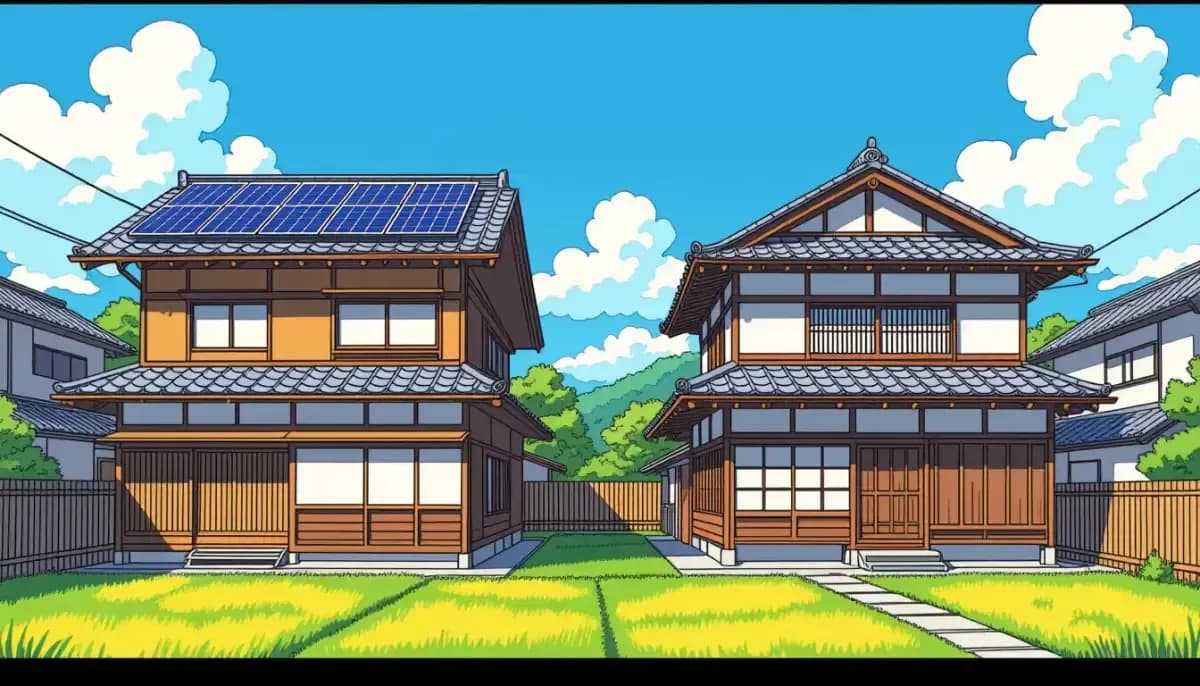
Energy Efficiency: New Homes vs Old Homes in Japan
Compare energy efficiency in new vs old homes in Japan. Learn about insulation grades, ZEH standards, utility costs, subsidies up to ¥2 million, and how to evaluate any property's energy performance as a foreign buyer.
Read more →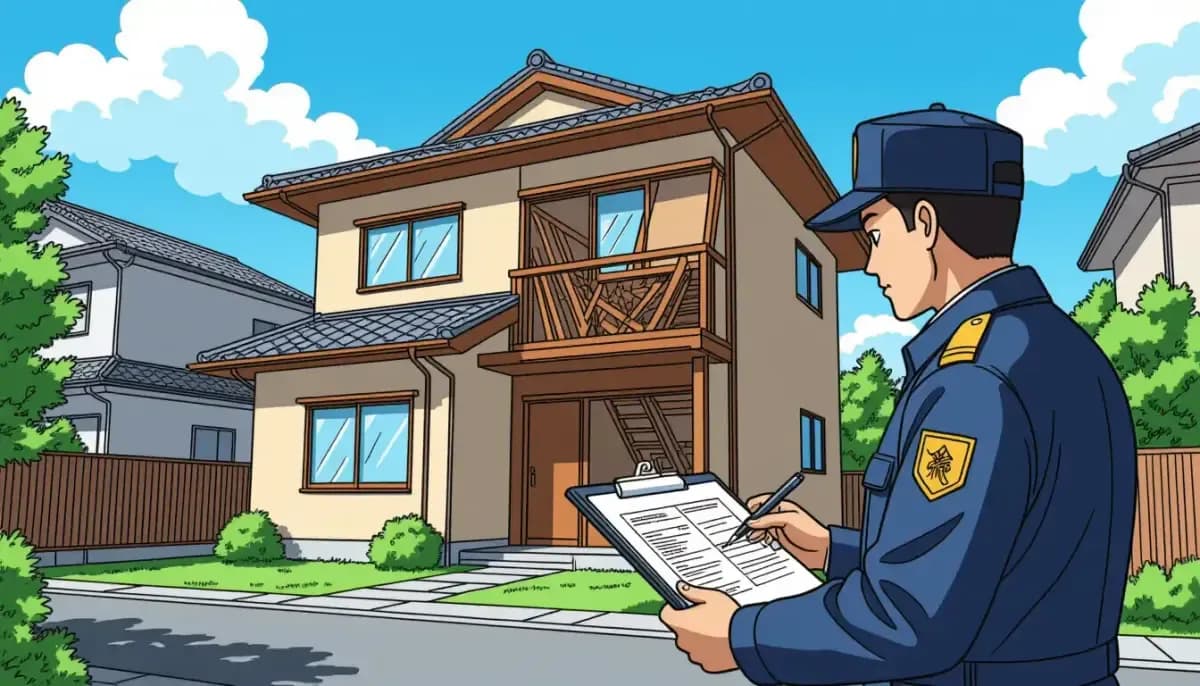
Hidden Problems in Used Properties: What to Check Before Buying
Discover the 4 types of hidden defects in Japanese used properties — physical, psychological, environmental, and legal. Complete inspection checklist, repair costs, and legal protections for foreign buyers.
Read more →
How to Choose a Developer for New Construction in Japan
Learn how to choose the right developer for new construction in Japan as a foreigner. Compare House Makers, local builders, and condo developers with tips on warranties, language support, and red flags.
Read more →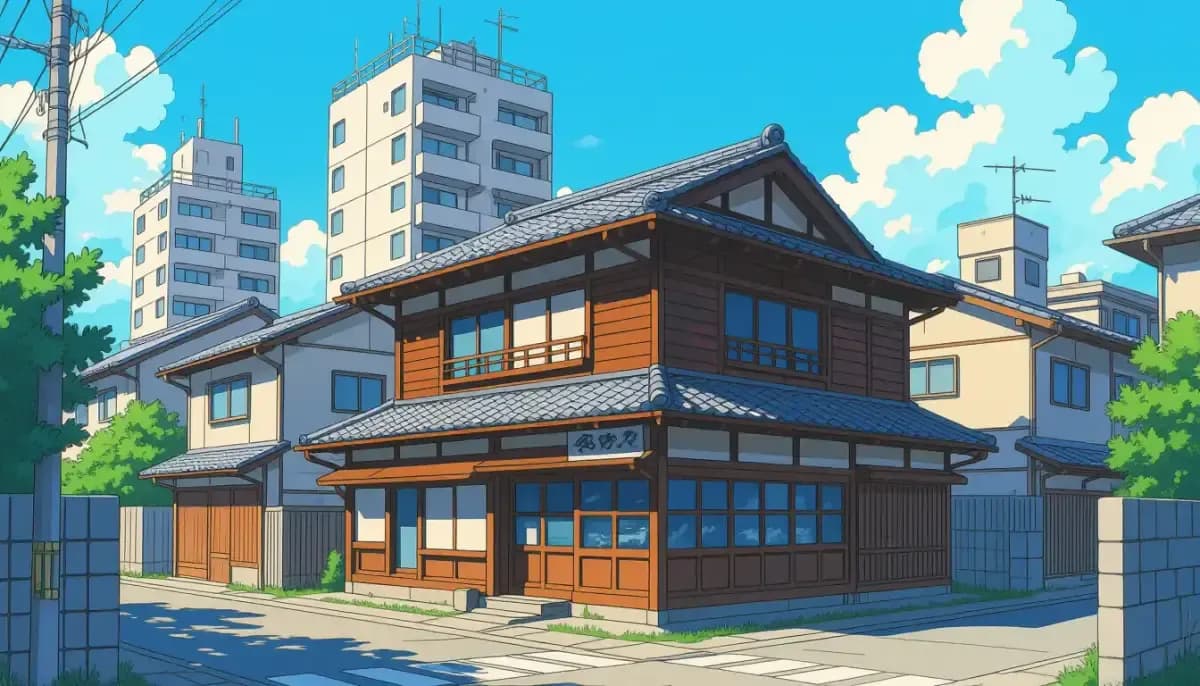
How Property Age Affects Resale Value in Japan
Learn how building age impacts resale value in Japan — statutory depreciation schedules, the critical 1981 seismic code, land vs. building value, and strategies for foreign buyers to maximize returns.
Read more →
How to Negotiate the Price of Used Property in Japan
How to negotiate used property prices in Japan as a foreigner. Covers discount ranges, cultural etiquette, offer strategies, and tips to get the best deal.
Read more →
Buying Off-Plan Property in Japan: Risks and Precautions
A comprehensive guide for foreigners on the financial, legal, construction, and market risks of buying off-plan property in Japan, with a due diligence checklist to protect your investment.
Read more →