
Buying Off-Plan Property in Japan: Risks and Precautions

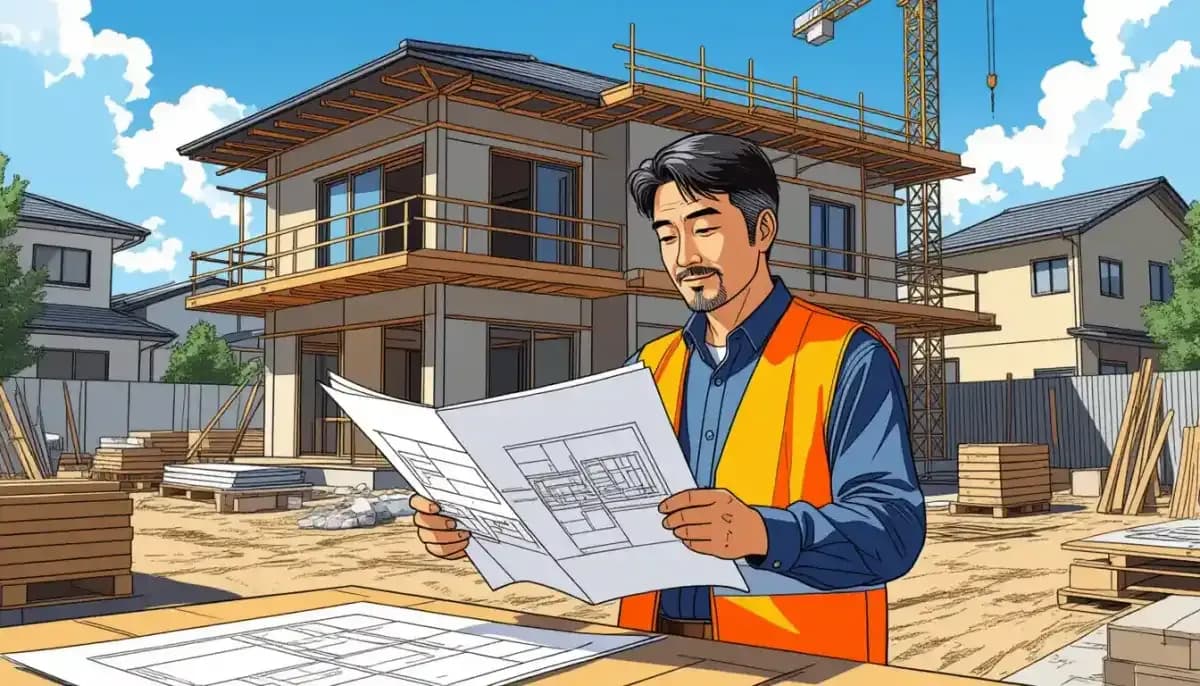
A comprehensive guide for foreigners on the financial, legal, construction, and market risks of buying off-plan property in Japan, with a due diligence checklist to protect your investment.
Buying Off-Plan Property in Japan: Risks and Precautions for Foreigners
Buying off-plan property in Japan — purchasing a home or apartment before it is fully built — can seem like an attractive way to secure a brand-new unit at a pre-launch price. For foreigners navigating Japan's real estate market, however, the off-plan process carries a distinct set of risks that differ from simply buying a finished property. Understanding these risks, and the precautions you can take to mitigate them, is essential before you commit any money.
This guide covers the major financial, legal, construction, and market risks of buying off-plan property in Japan as a foreigner, alongside practical steps to protect yourself throughout the process.
What Is Off-Plan Property in Japan?
Off-plan property (プレセール or 青田売り, aotauuri) refers to units sold before construction is complete — sometimes even before groundbreaking. Buyers sign a purchase agreement based on floor plans, developer renderings, and a model room. The actual handover typically takes place 1 to 3 years later.
Japan's off-plan market is dominated by large condominium towers (manshon) in urban areas, particularly Tokyo, Osaka, and Fukuoka. Developers often sell 60–80% of units before construction begins, using pre-sales revenue to partially fund construction.
For foreigners, Japan's rules permit full property ownership with no residency requirement — a significant advantage compared to many other Asian markets. However, that openness does not eliminate the unique risks of buying off-plan.
Financial Risks of Buying Off-Plan as a Foreigner
Immediate Depreciation After Handover
One of the most important and least discussed risks is that new properties in Japan typically depreciate immediately upon delivery. Once a unit is transferred from developer to buyer, it is no longer "new," and its market value drops accordingly. The premium you pay for a brand-new property evaporates at the moment you take the keys.
This depreciation pattern is deeply embedded in Japanese real estate culture: homes in Japan have an average effective lifespan of only 20–30 years, compared to 50–80 years in Western markets. Buyers who expect a new condominium to hold its value the way a London or Sydney apartment might will be disappointed.
Rising Construction Costs Squeezing Quality
Japan's construction sector faces severe cost inflation. Materials and labor costs have risen approximately 25–29% compared to early 2021, driven by yen depreciation, global supply chain disruptions, and chronic labor shortages. Developers working from pre-sale prices fixed years earlier are under intense margin pressure. The practical result: some developers reduce specification quality, shrink unit sizes, or cut corners on common-area fit-out to protect profitability. Buyers who purchased on the basis of a model room may receive a finished product that falls short.
Currency Conversion Risk During the Build Period
For buyers earning in foreign currencies — USD, EUR, AUD, or other non-yen currencies — the off-plan build period is a currency risk window. If you signed contracts when USD/JPY was 130 and the yen strengthens to 110 by handover, your effective cost in US dollar terms rises by 18%. There is no standard mechanism in Japanese off-plan contracts to hedge this risk, and locking in currency conversion 2–3 years in advance carries its own costs. The Wise guide to buying property in Japan as a foreigner provides an overview of cross-border fund transfer considerations.
Down Payment and Earnest Money at Risk
Off-plan purchases in Japan typically require:
- A reservation fee (申込証拠金, moushikomi shōkokin): ¥50,000–200,000
- Earnest money (手付金, tetsuke kin): 5–10% of the purchase price, paid at contract signing
The earnest money is paid directly to the developer — not held in escrow. If the developer faces financial difficulties or the project is cancelled, recovering this money can be difficult and slow. Unlike some markets (such as Australia), Japan has no mandatory escrow or deposit protection insurance for off-plan purchases.
Limited Mortgage Access for Non-Permanent Residents
Foreigners without permanent residency face a significantly constrained mortgage market in Japan. Most major Japanese banks will not lend to non-PR holders. The handful that do — including PRESTIA, Suruga, and Shinsei — impose stricter conditions:
- Minimum down payment of 30% (vs. 10–20% for residents)
- Stable Japanese income of ¥4–7 million per year as a baseline
- Debt-to-income ratio ceiling of 30–35%
- Visa status review: some lenders include early repayment clauses triggered by visa expiry
For off-plan purchases, you must confirm financing before signing a purchase contract. A mortgage pre-approval is not guaranteed to convert to a full loan offer 2 years later when construction completes, especially if your employment status or visa changes. See our mortgage and home loan guide for foreigners in Japan for more detail.
Legal and Contract Risks
All Documents Are in Japanese
Every contract, legal disclosure, and management document will be in Japanese. English translations carry no legal force. Signing a Japanese-language contract without fully understanding it — even with a summary from your agent — exposes you to significant risk. Clauses around defect liability, cancellation penalties, and change-of-specification provisions in particular need expert review.
The Explanation of Important Matters (重要事項説明)
Before any purchase contract is signed in Japan, a licensed real estate broker must deliver an "Explanation of Important Matters" (重要事項説明, jūyō jikō no setsumei). This document covers property boundaries, existing encumbrances, management rules, known defects, and any other material facts. For foreign buyers, this is your primary legal protection — but only if you understand it.
Always insist on sufficient time to have the document professionally translated before signing. Some brokers will rush this process; push back. For off-plan, check specifically for provisions covering:
- What happens if the project is delayed
- What changes to specifications the developer is permitted to make
- The defect liability period after handover
- Conditions under which the contract can be cancelled
No Standard Completion Guarantee
Japan does not have a statutory completion guarantee for off-plan purchases equivalent to the UK's NHBC or Australia's builders warranty insurance schemes. If a developer goes bankrupt mid-construction, your primary recourse is as an unsecured creditor. The bankruptcy estates of mid-size Japanese developers rarely have sufficient assets to make buyers whole. This makes developer due diligence — covered in the section below — not merely useful but essential.
FEFTA Reporting Obligations
Foreign buyers who are non-residents of Japan are subject to the Foreign Exchange and Foreign Trade Act (FEFTA, 外為法). Key obligations:
- Report the purchase to the Bank of Japan within 20 days of completion
- Transfers of ¥30 million or more require a "Report on Payment or Receipt of Payment" within 10 days
- Offshore fund transfers for settlement: allow 2–3 weeks; anti-money laundering review requires documentation of the source of funds
Since 2024, non-resident foreign property owners must also register a domestic contact person in the property registry. Failure to comply can complicate future sale or transfer of the property.
For legal and regulatory details, review our legal procedures and documentation guide for Japan property purchase.
Construction and Quality Risks
| Risk Category | What to Watch For | How to Mitigate |
|---|---|---|
| Specification changes | Developer reduces ceiling height, substitutes materials, changes floor plan | Request contractual specification freeze; compare final as-built to sales brochure |
| Structural quality | Inadequate seismic reinforcement; hidden defects not visible until years later | Hire an independent inspector for pre-handover walkthrough |
| Build delay | Construction finishes months or years late | Review delay compensation clauses in purchase contract |
| Lottery system | Not selected despite paying reservation fee | Confirm refund terms for reservation fees upfront |
| Developer insolvency | Developer bankrupt before completion | Check developer's financial statements, credit rating, and track record |
| Seismic standard compliance | Building does not meet post-2006 seismic code | Confirm in writing that design meets or exceeds 2006 新耐震基準 |
Seismic Safety Standards
Japan's seismic building codes are among the strictest in the world, but standards have evolved significantly. Buildings completed after 2000 must meet the post-1981 新耐震基準 (new earthquake resistance standard). Buildings completed after 2006 must meet the even stricter 耐震強度 standard following the 2005 Aneha scandal, in which a structural engineer was found to have falsified seismic calculations for dozens of buildings.
For off-plan, always confirm in writing — not just verbally — that the development's structural design meets or exceeds the 2006 standards. For our full guide on building standards and age, see Japan used property age and building standard history.
Market and Location Risks
Tokyo: A Supply-Constrained, High-Price Market
The Tokyo metropolitan new condominium market reached a new price peak in 2025, with average new condo prices exceeding ¥110 million (approximately $800,000 USD) — up roughly 30% from pre-pandemic levels. Simultaneously, supply has collapsed: only approximately 23,000 new condo units are forecast for the Tokyo metro area in 2025, the lowest figure in over 50 years. This supply squeeze benefits early buyers in high-demand projects but reduces overall options and increases competition.
Roughly 31% of market analysts believe Tokyo new condo prices will peak in 2025-2026, suggesting that buyers paying premium prices for off-plan units today may face limited appreciation potential in the years following handover.
Regional Markets: Higher Risk, Lower Prices
Outside the major cities, off-plan investment carries substantially higher risk due to Japan's ongoing population decline. Cities like Fukuoka, Nagoya, and smaller regional centers have seen sharp fluctuations in new condominium supply and prices. Fukuoka new condo sales fell 18% in 2024; Osaka new condo supply surged 15% year-on-year, which could suppress prices post-completion as supply absorbs demand. Purchasing off-plan in a regional market requires careful analysis of local population trends and employer concentration. See our regional buying guides for Fukuoka and Kyushu and Osaka.
Natural Disaster Exposure
Japan experiences approximately 3 earthquakes of magnitude 4 or greater per day. Research published in academic literature finds that earthquake risk is priced into property values at an average discount of approximately 2% on log property prices — but this varies enormously by location. Properties in coastal areas face additional exposure to tsunami and storm surge risk.
For any off-plan purchase:
- Check the municipal hazard map (ハザードマップ) for the specific lot, not just the general neighborhood
- Confirm the development site's elevation and soil liquefaction risk
- For coastal and Okinawa properties, verify RC (reinforced concrete) construction, impact-resistant windows, and typhoon-rated specifications — as detailed in the GaijinBuyHouse Okinawa property guide
- Budget for both fire insurance and separate earthquake insurance; earthquake insurance take-up rates in Japan remain below fire insurance rates despite the country's seismic risk
Precautions: A Due Diligence Checklist for Foreign Off-Plan Buyers
Before committing to an off-plan purchase in Japan, work through the following checklist:
Developer Verification
- [ ] Research the developer's track record: number of completed projects, any history of delays or litigation
- [ ] Review publicly available financial statements or credit ratings (for listed developers)
- [ ] Confirm the developer or general contractor is a licensed construction company (建設業許可)
- [ ] Ask your broker whether the developer has completed projects of a similar scale
Contract and Legal Protections
- [ ] Engage a bilingual real estate attorney or licensed judicial scrivener before signing
- [ ] Review the Explanation of Important Matters with a professional translator
- [ ] Confirm the defect liability period and what it covers
- [ ] Check the contractual provisions on specification changes and permitted alterations
- [ ] Clarify earnest money refund conditions and the developer's deposit protection arrangements
Financing
- [ ] Obtain informal mortgage pre-approval from a lender that works with your visa status
- [ ] Confirm your lender's policy on visa expiry and early repayment clauses
- [ ] Plan currency conversion strategy for the build period; consider engaging a FX specialist
- [ ] Prepare source-of-funds documentation in advance for anti-money laundering review
Building and Site
- [ ] Confirm seismic standard compliance (post-2006 新耐震基準) in writing
- [ ] Review the municipal hazard map for flood, tsunami, landslide, and soil liquefaction risk
- [ ] For condo developments, request the projected maintenance reserve fund schedule
- [ ] Arrange an independent pre-handover inspection before accepting keys
Post-Purchase Compliance
- [ ] Register a domestic contact person in the property registry (required for non-residents since 2024)
- [ ] File FEFTA report with the Bank of Japan within 20 days of closing
- [ ] Engage a Japan-resident tax representative before closing
- [ ] For US citizens: consult a Japan-specialist CPA regarding FATCA/FBAR compliance
For broader context on Japan property investment risks, Tokyo Portfolio's guide to real estate investment risks in Japan and InvestAsian's Japan property risk overview provide useful supplementary reading.
Working with the Right Professionals
Buying off-plan in Japan as a foreigner requires a team, not just an agent:
- Bilingual licensed real estate broker (宅建士): Essential for navigating the legal disclosure process
- Judicial scrivener (司法書士, *shiho shoshi*): Handles property registration; costs ¥100,000–150,000
- Property inspector (ホームインスペクター): Not legally required but strongly recommended for pre-handover walkthrough
- Tax accountant (税理士): For ongoing property tax, rental income, and exit planning
- FX specialist: For cross-border transfers exceeding ¥10 million
The For Work in Japan resource hub can be a useful starting point for foreigners building professional networks in Japan, even outside the property domain. And for a comprehensive overview of the entire buying process, see our step-by-step home buying process guide for foreigners.
Summary: Is Off-Plan Property in Japan Worth the Risk?
Off-plan property in Japan can be a legitimate route to owning a new-build unit in a high-demand location, particularly in Tokyo or Osaka where resale inventory of newly completed buildings is thin. For foreigners, however, the risk profile is materially higher than for Japanese residents:
- Financing is harder to secure and more expensive
- Currency risk during the build period is unhedged
- Legal protections are weaker than in many Western markets
- Developer insolvency protection does not exist in statutory form
- Depreciation after handover is steeper and faster than in most comparable markets
The buyers who navigate off-plan purchases most successfully are those who work with experienced bilingual professionals, verify every aspect of the developer's track record and financial health, and approach the process with the same rigor they would apply to a direct business investment — because in Japan's real estate market, that is precisely what it is.
For related reading, see our guides on how to choose a developer for new construction in Japan and new construction warranties and guarantees in Japan.

Originally from Vietnam, living in Japan for 16+ years. Graduated from Nagoya University, with 11 years of professional experience at Japanese and international companies. Sharing information about buying property in Japan for foreigners.
View Profile →Related Articles
Energy Efficiency: New Homes vs Old Homes in Japan
Compare energy efficiency in new vs old homes in Japan. Learn about insulation grades, ZEH standards, utility costs, subsidies up to ¥2 million, and how to evaluate any property's energy performance as a foreign buyer.
Read more →
Hidden Problems in Used Properties: What to Check Before Buying
Discover the 4 types of hidden defects in Japanese used properties — physical, psychological, environmental, and legal. Complete inspection checklist, repair costs, and legal protections for foreign buyers.
Read more →
How to Choose a Developer for New Construction in Japan
Learn how to choose the right developer for new construction in Japan as a foreigner. Compare House Makers, local builders, and condo developers with tips on warranties, language support, and red flags.
Read more →
How Property Age Affects Resale Value in Japan
Learn how building age impacts resale value in Japan — statutory depreciation schedules, the critical 1981 seismic code, land vs. building value, and strategies for foreign buyers to maximize returns.
Read more →
How to Negotiate the Price of Used Property in Japan
How to negotiate used property prices in Japan as a foreigner. Covers discount ranges, cultural etiquette, offer strategies, and tips to get the best deal.
Read more →
Cost Comparison: New Build vs Used Property in Japan
Compare the true costs of new build vs used property in Japan. Includes prices, transaction fees, renovation costs, depreciation, warranties, and mortgage tips for foreigners.
Read more →