
How Property Age Affects Resale Value in Japan

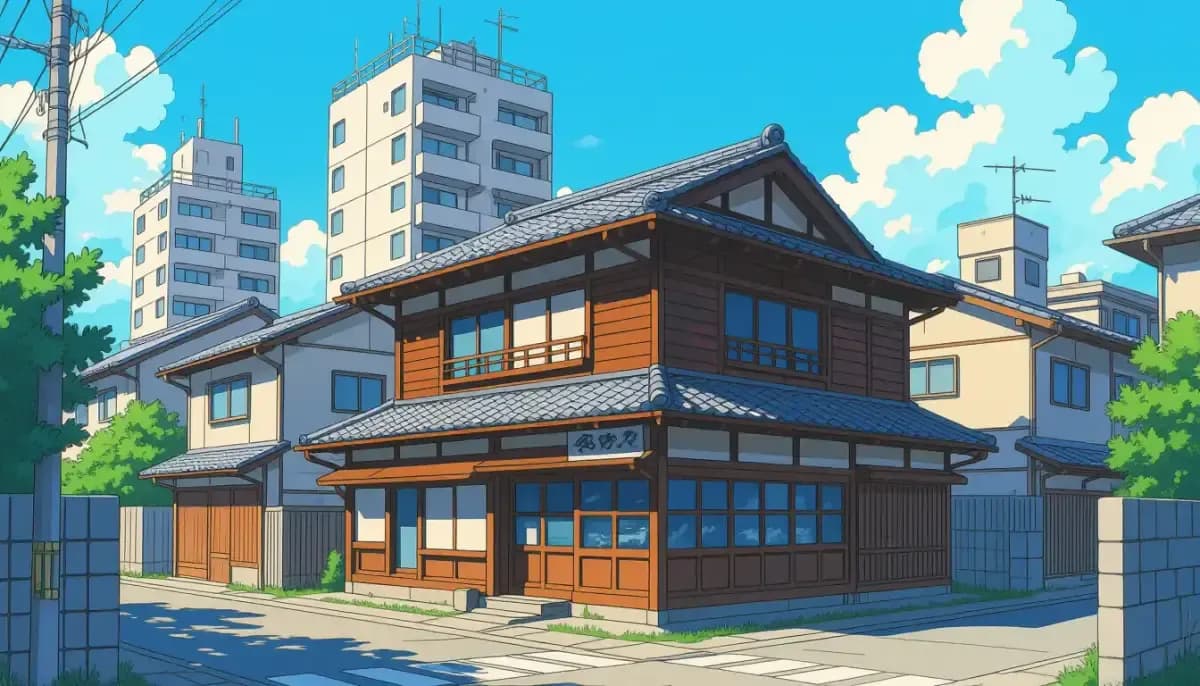
Learn how building age impacts resale value in Japan — statutory depreciation schedules, the critical 1981 seismic code, land vs. building value, and strategies for foreign buyers to maximize returns.
How Property Age Affects Resale Value in Japan
If you're buying property in Japan as a foreigner, understanding how building age impacts resale value is one of the most important lessons you can learn — and one that surprises many Western buyers. Unlike in the US, UK, or Australia, where a well-maintained older home can sell for more than a new one, Japan operates under a fundamentally different system: buildings depreciate, land does not.
This guide explains exactly how property age affects resale value in Japan, what the key milestones are, and how to use this knowledge to make smarter buying decisions.
Japan's Unique Depreciation System: Buildings Vs. Land
In most Western countries, a well-kept 50-year-old home in a good neighborhood holds or grows in value. Japan is different. The Japanese government sets statutory useful life periods for all building types, and once a building reaches that age, it carries zero book value for tax and appraisal purposes — regardless of physical condition.
This doesn't mean the property is worthless. The land it sits on retains its value independently. In fact, Japanese land prices increased 3.3% in 2023, and prime urban land in Tokyo, Osaka, and other major cities has appreciated steadily since 2012.
The practical effect: when you buy an older property in Japan, you're often buying primarily for the land value, not the structure. This is a critical mindset shift that shapes everything from pricing negotiations to renovation decisions.
For a complete introduction to buying in Japan, see our Complete Guide to Buying Property in Japan as a Foreigner.
Statutory Useful Life by Building Material
Japan's National Tax Agency (NTA) defines how long buildings are expected to last for depreciation purposes. These figures directly influence how lenders appraise properties and how buyers calculate value.
| Building Type | Statutory Useful Life |
|---|---|
| Wooden structures (木造) | 22 years |
| Light gauge steel (軽量鉄骨) | 19 years |
| Heavy steel (重量鉄骨) | 34 years |
| Reinforced concrete (RC/鉄筋コンクリート) | 47 years |
| Steel-reinforced concrete (SRC) | 47 years |
A wooden house that is 22 years old has zero remaining book value under Japanese tax law, even if it's in pristine condition. This affects mortgage availability (lenders often won't finance fully depreciated buildings) and the price you can reasonably expect to achieve when selling.
Waseda University's Faculty of Science and Engineering estimates the actual average lifespan of a Japanese house is 64 years — significantly longer than statutory figures. The official depreciation schedule is driven by tax policy and cultural preferences for new construction, not engineering reality.
For more on the types of buildings available in Japan, read our Types of Properties Available in Japan: A Complete Guide.
The 1981 Seismic Code: The Single Most Important Date in Japanese Real Estate
If there's one date every property buyer in Japan needs to know, it's June 1, 1981. This is when Japan introduced the revised seismic building code (新耐震基準, shin-taishin), fundamentally changing how buildings are constructed to withstand earthquakes.
Buildings constructed under the old code (kyū-taishin, pre-June 1981) are designed to different earthquake resistance standards than those built under the new code. The practical consequences for resale value are significant:
- Japanese buyers strongly prefer post-1981 properties. Your potential buyer pool shrinks considerably if you own a pre-1981 structure.
- Lenders are often reluctant to mortgage pre-1981 homes, making them harder to sell even at lower prices.
- Banks may require seismic retrofitting (耐震改修) before approving loans on pre-1981 buildings.
Seismic retrofitting costs vary but are substantial:
- Foundation reinforcement: ¥800,000–¥2,000,000
- Wall bracing installation: ¥500,000–¥1,200,000
- Connection hardware upgrades: ¥300,000–¥800,000
If you're buying a pre-1981 property, budget for these costs and factor them into your price negotiation. Some municipalities offer subsidies for seismic retrofitting performed by approved contractors — worth investigating before committing to a purchase.
Learn more about the full purchase process in our Step-by-Step Home Buying Process in Japan for Foreigners.
How Age Affects Resale Value at Different Stages
Property age doesn't erode value uniformly. The depreciation curve in Japan follows a distinct pattern:
Years 0–10: Steepest Decline New Japanese homes depreciate most sharply in the first decade. A brand-new home loses value almost immediately upon completion, and by the 10-year mark, it may be worth 30–50% less than its purchase price in terms of building value. This is why buying a 5-year-old apartment at a discount often makes more financial sense than purchasing new.
Years 10–22 (wooden) / 10–47 (RC): Gradual Decline After the steep initial drop, depreciation slows. Rental income from these properties also declines with age, but more gradually. Research shows rent levels fall steeply in the first decade, then level off — important if you're considering the property as an investment.
Years 22+ (wooden) / 47+ (RC): Zero Book Value — Land Only Once a building passes its statutory useful life, the building component is formally worthless. Valuation reverts almost entirely to land. In urban areas with high land values, this is manageable. In rural Japan, where land values are also low, this contributes to the akiya (空き家) phenomenon — the over 8 million abandoned homes across the country that nobody wants to buy.
Post-1981 vs. Pre-1981: A Market Premium All else being equal, a post-1981 building commands a meaningful premium over a pre-1981 one of comparable age and size, because the buyer pool is larger and financing is easier to obtain.
For a broader view of market conditions, see our Japan Real Estate Market Overview and Trends for Foreign Investors.
Location: The Great Override
Age-related depreciation can be significantly offset — or even reversed — by location. As Housing Japan's cofounder observed: "If you buy a property in an undesirable location, it could lose value after day one. But in prime locations, it could hold value for 30–50 years."
What defines a "prime location" in Japan?
- Proximity to train stations — within a 5–10 minute walk is the key benchmark
- Central Tokyo, Osaka, Kyoto — demand consistently outpaces supply
- School districts — highly relevant for families
- Low competition — areas with limited new supply preserve older property values
- Growing or stable population — avoid areas with accelerating population decline
In these locations, even a 30-year-old apartment building can sell well above its building book value, because the land beneath it is genuinely valuable and the rental demand remains strong.
Conversely, in rural areas or regions with population decline, even a newly built property may struggle to retain value.
What This Means for Foreign Buyers: Practical Strategies
Understanding Japan's depreciation model should directly influence how you approach property purchases:
Strategy 1: Buy Post-Statutory Life at Land Value A wooden home built 25–30 years ago with the building fully depreciated can often be purchased cheaply, as the seller knows the building has no book value. If the land is in a good location, you're essentially buying the land at a discount. This is popular with buyers who plan to demolish and rebuild.
Strategy 2: Avoid Over-Paying for New Construction New properties carry a significant premium that evaporates within the first few years. Buying a well-maintained 5–10 year old property can deliver substantially better value, particularly for condominiums where the land component is shared.
Strategy 3: Prioritize Post-1981 Buildings For resale-focused purchases, stick with buildings completed after June 1, 1981. This ensures a larger buyer pool and easier financing for your eventual buyers.
Strategy 4: Document Maintenance History A maintained property with documented repair records achieves better resale prices than an identical property with no records. Request the repair history (修繕履歴) from sellers and keep your own records when you own a property.
Strategy 5: Factor Renovation Costs Into Your Offer For older properties requiring seismic retrofitting or major renovation, calculate the full cost of bringing the property to a financeable standard and deduct this from your offer price.
For financing considerations, see our guide on Mortgages and Home Loans for Foreigners in Japan.
Tax Implications of Property Age and Holding Period
Property age intersects with Japan's capital gains tax system in important ways:
- Properties held under 5 years are subject to approximately 39% transfer income tax (short-term capital gains)
- Properties held 5 years or more are taxed at approximately 20% (long-term capital gains)
This means buying a newer property and selling quickly is doubly penalized: the building has depreciated AND the tax rate is higher. The optimal strategy for most buyers is a medium-to-long holding period (5+ years), ideally in a location where land appreciation can offset building depreciation.
Fixed asset tax (固定資産税) is also calculated partly based on building value, so older properties with lower building valuations often carry lower annual tax bills — a minor silver lining.
For a complete breakdown of ongoing ownership costs, see our Property Taxes and Annual Costs of Owning Property in Japan.
Further Resources for Foreign Buyers
Understanding Japan's depreciation model is essential, but it's just one piece of the puzzle. Here are some trusted resources to help you go deeper:
- Living in Nihon — Property Buying and Mortgage Guide for Foreigners: A comprehensive guide covering the entire purchase process from a foreigner's perspective.
- For Work in Japan — Housing and Living Guide: Covers the practical housing considerations for those relocating to Japan for work.
- Gaijin Buy House — Joint Property Ownership for Foreigners: Details on how foreigners can structure property ownership in Japan.
- MailMate — Japan Housing Depreciation Guide: A detailed breakdown of depreciation schedules and their real-world impact.
- Housing Japan — Does Japanese Real Estate Depreciate?: A nuanced look at when depreciation is and isn't the whole story.
Conclusion
Property age in Japan works differently than in most countries. Buildings depreciate on a strict statutory schedule, and the 1981 seismic code created a hard dividing line that affects both buyer pools and financing options. The good news: land doesn't depreciate, and in strong urban markets, land value growth can more than offset building decline.
For foreign buyers, the practical takeaways are clear:
- Prioritize post-1981 buildings for easier resale
- Don't overpay for brand-new construction — the premium disappears quickly
- In good locations, even old properties can represent excellent value
- Always factor seismic retrofitting costs into your offer on pre-1981 homes
- Hold for 5+ years to benefit from lower capital gains tax rates
Understanding these dynamics puts you in a much stronger position than the average buyer — and helps you avoid the classic mistake of assuming Japanese real estate works the same way it does back home.
For the complete picture of costs and legal considerations when buying in Japan, see our guides on Hidden Costs and Fees When Buying Property in Japan and Legal Procedures and Documentation for Japan Property Purchase.

Originally from Vietnam, living in Japan for 16+ years. Graduated from Nagoya University, with 11 years of professional experience at Japanese and international companies. Sharing information about buying property in Japan for foreigners.
View Profile →Related Articles
Energy Efficiency: New Homes vs Old Homes in Japan
Compare energy efficiency in new vs old homes in Japan. Learn about insulation grades, ZEH standards, utility costs, subsidies up to ¥2 million, and how to evaluate any property's energy performance as a foreign buyer.
Read more →
Hidden Problems in Used Properties: What to Check Before Buying
Discover the 4 types of hidden defects in Japanese used properties — physical, psychological, environmental, and legal. Complete inspection checklist, repair costs, and legal protections for foreign buyers.
Read more →
How to Choose a Developer for New Construction in Japan
Learn how to choose the right developer for new construction in Japan as a foreigner. Compare House Makers, local builders, and condo developers with tips on warranties, language support, and red flags.
Read more →
How to Negotiate the Price of Used Property in Japan
How to negotiate used property prices in Japan as a foreigner. Covers discount ranges, cultural etiquette, offer strategies, and tips to get the best deal.
Read more →
Buying Off-Plan Property in Japan: Risks and Precautions
A comprehensive guide for foreigners on the financial, legal, construction, and market risks of buying off-plan property in Japan, with a due diligence checklist to protect your investment.
Read more →
Cost Comparison: New Build vs Used Property in Japan
Compare the true costs of new build vs used property in Japan. Includes prices, transaction fees, renovation costs, depreciation, warranties, and mortgage tips for foreigners.
Read more →