
Energy Efficiency: New Homes vs Old Homes in Japan

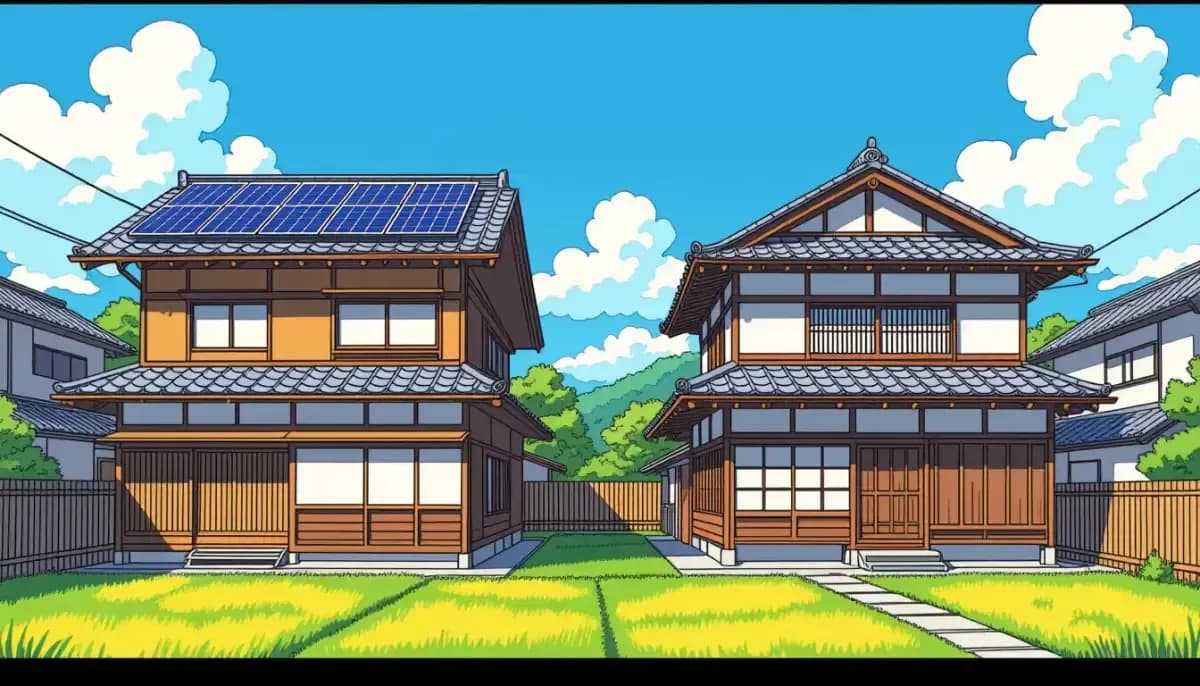
Compare energy efficiency in new vs old homes in Japan. Learn about insulation grades, ZEH standards, utility costs, subsidies up to ¥2 million, and how to evaluate any property's energy performance as a foreign buyer.
Energy Efficiency: New Homes vs Old Homes in Japan
When buying property in Japan as a foreigner, one of the most important — yet often overlooked — factors is energy efficiency. Japan's housing stock ranges from cutting-edge zero-energy homes loaded with solar panels and triple-glazed windows, to decades-old wooden houses that let winter cold seep through every crack. Understanding the energy efficiency gap between new and old homes in Japan can save you hundreds of thousands of yen in utility bills every year, and influence the long-term value of your investment.
This guide breaks down Japan's energy standards, what they mean in practice, and how to evaluate whether a new or used property makes financial and environmental sense for you.
Why Energy Efficiency Matters So Much in Japan
Japan's climate is demanding. Summers are hot and humid — Tokyo regularly exceeds 35°C — while winters in most of Honshu, Tohoku, and Hokkaido can be brutally cold. Traditional Japanese architecture historically prioritized natural ventilation over insulation, which worked reasonably well before modern air conditioning but creates serious problems today.
The result: many older Japanese homes are energy hogs. Single-pane windows, thin walls, uninsulated roofs, and poorly sealed entryways allow heat to escape rapidly in winter and flood in during summer. Without an efficient building envelope, your heating and cooling systems must work overtime.
The average electricity bill for a four-person Japanese household runs ¥10,000–¥12,000 per month (at approximately ¥35.87 per kWh as of early 2025). In a poorly insulated older home, heating and cooling alone can push that figure significantly higher. An energy-efficient modern home, by contrast, can reduce your annual utility costs by around ¥200,000 compared to a conventional house — a meaningful saving over a 35-year mortgage.
For a broader look at what owning property costs year-round, see our guide to property taxes and annual costs of owning property in Japan.
Japan's Energy Conservation Standards: A Quick History
Japan did not always require energy efficiency in residential construction. Understanding the regulatory history helps explain why there is such a wide performance gap between homes built in different eras.
| Era | Standard | Insulation Grade | Key Requirement |
|---|---|---|---|
| Pre-1980 | None | Grade 1 (minimal) | No energy standard |
| 1980–1992 | First standard | Grade 2 | Basic insulation guidance |
| 1992–1999 | Revised standard | Grade 3 | Improved windows & walls |
| 1999–2022 | New energy standard | Grade 4 | Double-pane windows minimum |
| 2022–2024 | Compliance encouraged | Grade 4 | Voluntary compliance |
| April 2025+ | Mandatory compliance | Grade 4+ minimum | No permit without compliance |
| 2030 target | ZEH standard | Grade 5+ | Near-zero energy buildings |
As of April 2025, all newly constructed homes in Japan must meet Thermal Insulation Performance Grade 4 and Primary Energy Consumption Grade 4 or higher. Developers who fail to meet these standards cannot obtain a building permit. By 2030, the bar rises again to ZEH (Zero Energy House) level — Grade 5 insulation and Building Energy Index Grade 6.
The Building-Housing Energy-efficiency Labeling System (BELS), launched in April 2024, now requires that energy performance star ratings appear on property advertisements, making it easier to compare homes at a glance.
For a complete overview of new vs used property considerations beyond energy, check our dedicated guide on new construction vs used properties in Japan.
New Homes: Advantages and What to Expect
Mandatory Energy Standards
A new home built under a permit issued after April 2025 is legally required to meet Grade 4 standards at minimum. In practice, most reputable builders now exceed this baseline — many offer homes certified as ZEH or Long-Life Quality Housing, which carry premium incentives.
ZEH (Zero Energy House) homes incorporate:
- High-performance insulation (Grade 5+ UA value)
- Triple-glazed or high-performance double-glazed windows
- Heat-recovery ventilation systems
- Solar photovoltaic panels
- Home battery storage in many cases
The goal is that the solar generation offsets annual energy consumption to net zero — or close to it.
Financial Incentives for New Energy-Efficient Homes
The Japanese government offers substantial subsidies for buyers of energy-efficient new homes:
- ZEH subsidy: ¥550,000 per unit
- ZEH+ subsidy (higher performance): ¥900,000 per unit
- Extended mortgage tax deduction: Up to 13 years of deductions, with the deduction limit tied to the home's energy efficiency grade — higher-rated homes qualify for a more generous cap
These incentives partially offset the higher construction cost. Building to Grade 6 or 7 typically increases construction costs by 10–20% over a standard home, due to premium insulation materials, triple-glazed windows, and advanced airtightness techniques.
Drawbacks of New Homes
New homes in Japan come with a well-known financial quirk: they depreciate sharply the moment you take possession. Japan's tax and appraisal systems historically assigned near-zero value to wooden structures after 20–25 years, meaning your ¥50 million new home may be appraised at land value only after two decades. New properties also experience immediate price drop at handover.
That said, energy-efficient new homes are increasingly seen as retaining value better, as the market shifts toward recognizing building performance alongside location.
For more on navigating the purchase process, see our step-by-step home buying process in Japan for foreigners guide.
Old Homes: The Energy Efficiency Challenge
The Legacy Insulation Problem
Homes built before 1999 — and especially those built before 1980 — were constructed under no meaningful energy standards. Traditional Japanese post-and-beam (木造) construction uses minimal wall depth, single-pane aluminum-framed windows, and little-to-no roof insulation. In cold climates (Hokkaido, Tohoku, Japanese Alps), this can mean indoor temperatures close to outdoor temperatures on winter nights.
The consequences for utility bills are severe. In an old, uninsulated home in Sapporo or Sendai, monthly winter heating bills can exceed ¥30,000–¥50,000 for a typical detached house — compared to ¥5,000–¥10,000 in a well-insulated modern home.
There is also a health dimension: poorly heated homes contribute to "heat shock," sudden cardiovascular stress caused by moving between warm and cold rooms. Japan has among the highest rates of heat-shock deaths in the developed world, largely attributed to poorly insulated housing.
Akiya and Old Houses: Renovation Potential
Japan's famous akiya (vacant and abandoned houses) — numbering in the millions nationwide — are predominantly old, uninsulated structures. They are often cheap to acquire but expensive to renovate.
The good news: government subsidy programs make energy efficiency upgrades accessible. The Housing Energy Efficiency Campaign (住宅省エネキャンペーン) offers up to ¥2,000,000 in subsidies for insulation renovation work, covering:
- Wall and roof insulation installation
- Window upgrades (double or triple glazing, Low-E glass)
- High-efficiency water heaters
- Solar panel installation
Renovation costs for improving an old home's energy performance typically run ¥500,000–¥3,000,000 depending on scope, but with subsidies covering 30–50% of costs, the net investment is manageable. A full renovation of a 70m² house in Tokyo runs ¥10.5–¥14 million, though targeted energy efficiency upgrades are far less expensive.
For a detailed breakdown, see our guide on home renovation and remodeling in Japan for foreign owners.
Comparing Energy Costs: New vs Old Homes
Here is a practical comparison of annual energy costs across home types in a temperate climate (Tokyo/Osaka area):
| Home Type | Annual Heating & Cooling Cost | Annual Total Utility Cost | Notes |
|---|---|---|---|
| Pre-1980 uninsulated | ¥300,000–¥450,000 | ¥500,000–¥700,000 | Single-pane windows, no insulation |
| 1999–2014 Grade 4 | ¥150,000–¥220,000 | ¥300,000–¥400,000 | Double-pane windows, basic insulation |
| Post-2025 Grade 4 | ¥80,000–¥130,000 | ¥180,000–¥280,000 | Meets current mandatory standard |
| ZEH (net zero) | ¥0–¥50,000 net | ¥50,000–¥100,000 net | Solar offset; may export energy |
| Renovated old home | ¥100,000–¥180,000 | ¥220,000–¥350,000 | After full insulation upgrade |
Figures are estimates for a 3LDK (approximately 80m²) detached house. Cold-climate regions like Hokkaido can be 2–3x higher.
The annual saving between a pre-1980 home and a modern ZEH-standard home can exceed ¥400,000 — roughly ¥33,000 per month. Over a 35-year ownership period, that compounds to over ¥14 million in utility savings, before accounting for energy price inflation.
For more on the financial side of property ownership, read our guide on mortgages and home loans for foreigners in Japan.
How to Evaluate a Property's Energy Performance
When viewing a property — new or old — here is what to check for:
Check the BELS rating: Since April 2024, property listings should display BELS star ratings (1–5 stars). A 5-star rating indicates ZEH performance; 4 stars meets the current mandatory standard.
Ask for the UA value: This is the thermal transmittance value measuring heat loss through the building envelope. Lower is better. A UA value of 0.6 W/(m²·K) or below meets Grade 4; below 0.4 approaches ZEH territory.
Inspect windows: Single-pane aluminum frames are a red flag. Double-pane vinyl-framed windows indicate a post-1999 renovation or construction. Triple-pane windows signal a high-performance modern home.
Check the ventilation system: Since 2003, all new Japanese homes are required to have 24-hour mechanical ventilation (24時間換気). Older homes typically lack this, resulting in both air quality issues and inefficient heating.
Look for insulation marks: In an older home, ask whether the attic, walls, and floor have been insulated. An inspector (インスペクター) can assess this for ¥50,000–¥100,000 — a worthwhile investment before committing to an old house.
For help with the due diligence process, see our complete guide on legal procedures and documentation for Japan property purchase.
Making the Decision: New or Old?
There is no universal answer — it depends on your priorities, budget, and location.
Choose a new energy-efficient home if:
- You prioritize low utility bills and comfort from day one
- You want to access ZEH subsidies and mortgage tax deductions
- You are buying in a cold climate region (Hokkaido, Tohoku, Nagano)
- You prefer not to manage renovation projects
Choose an older home (with planned upgrades) if:
- The purchase price is significantly lower and you can fund renovations
- You are buying an akiya with government renovation subsidies available
- You want a traditional aesthetic (kominka, machiya) that new homes cannot replicate
- The location is strong and the land value justifies the investment
For detailed guidance on akiya renovation economics, see our guide on akiya (vacant and abandoned houses) in Japan for foreign buyers.
External Resources and Further Reading
For an in-depth look at the property buying process as a foreigner in Japan, Living in Nihon's guide to buying property and mortgages covers the legal and financial steps in detail.
If you are considering renovation of a used property, Gaijin Buy House's guide to used property and renovation in Japan provides practical cost breakdowns and subsidy guidance.
For working professionals in Japan navigating housing choices, For Work in Japan offers resources on settling into life in Japan, including housing considerations.
For official technical detail on energy standards, PLAZA HOMES' overview of energy conservation standards and their 2025 compliance update are authoritative English-language sources. HouseRep Tokyo's guide to energy-efficient homes is also excellent for buyers weighing certified property types.
Final Takeaway
Energy efficiency in Japan's housing market is no longer a niche concern — it is becoming a legal requirement and an increasingly important factor in property values, mortgage eligibility, and day-to-day living costs. New homes built after April 2025 must meet baseline standards, while ZEH homes represent the gold standard with net-zero energy bills and generous government subsidies.
Old homes can still be excellent investments, especially with Japan's renovation subsidy programs now covering up to ¥2 million for insulation upgrades. But buyers should factor energy retrofit costs into their budgets from the start.
Whether you are buying new or old, understanding energy performance — through BELS ratings, UA values, and insulation grades — will help you make a smarter, more profitable decision in the Japanese property market.
For the complete picture of what it means to buy property in Japan as a foreigner, start with our complete guide to buying property in Japan as a foreigner.

Originally from Vietnam, living in Japan for 16+ years. Graduated from Nagoya University, with 11 years of professional experience at Japanese and international companies. Sharing information about buying property in Japan for foreigners.
View Profile →Related Articles
Hidden Problems in Used Properties: What to Check Before Buying
Discover the 4 types of hidden defects in Japanese used properties — physical, psychological, environmental, and legal. Complete inspection checklist, repair costs, and legal protections for foreign buyers.
Read more →
How to Choose a Developer for New Construction in Japan
Learn how to choose the right developer for new construction in Japan as a foreigner. Compare House Makers, local builders, and condo developers with tips on warranties, language support, and red flags.
Read more →
How Property Age Affects Resale Value in Japan
Learn how building age impacts resale value in Japan — statutory depreciation schedules, the critical 1981 seismic code, land vs. building value, and strategies for foreign buyers to maximize returns.
Read more →
How to Negotiate the Price of Used Property in Japan
How to negotiate used property prices in Japan as a foreigner. Covers discount ranges, cultural etiquette, offer strategies, and tips to get the best deal.
Read more →
Buying Off-Plan Property in Japan: Risks and Precautions
A comprehensive guide for foreigners on the financial, legal, construction, and market risks of buying off-plan property in Japan, with a due diligence checklist to protect your investment.
Read more →
Cost Comparison: New Build vs Used Property in Japan
Compare the true costs of new build vs used property in Japan. Includes prices, transaction fees, renovation costs, depreciation, warranties, and mortgage tips for foreigners.
Read more →