
Japan Property Depreciation: How New and Used Homes Lose Value

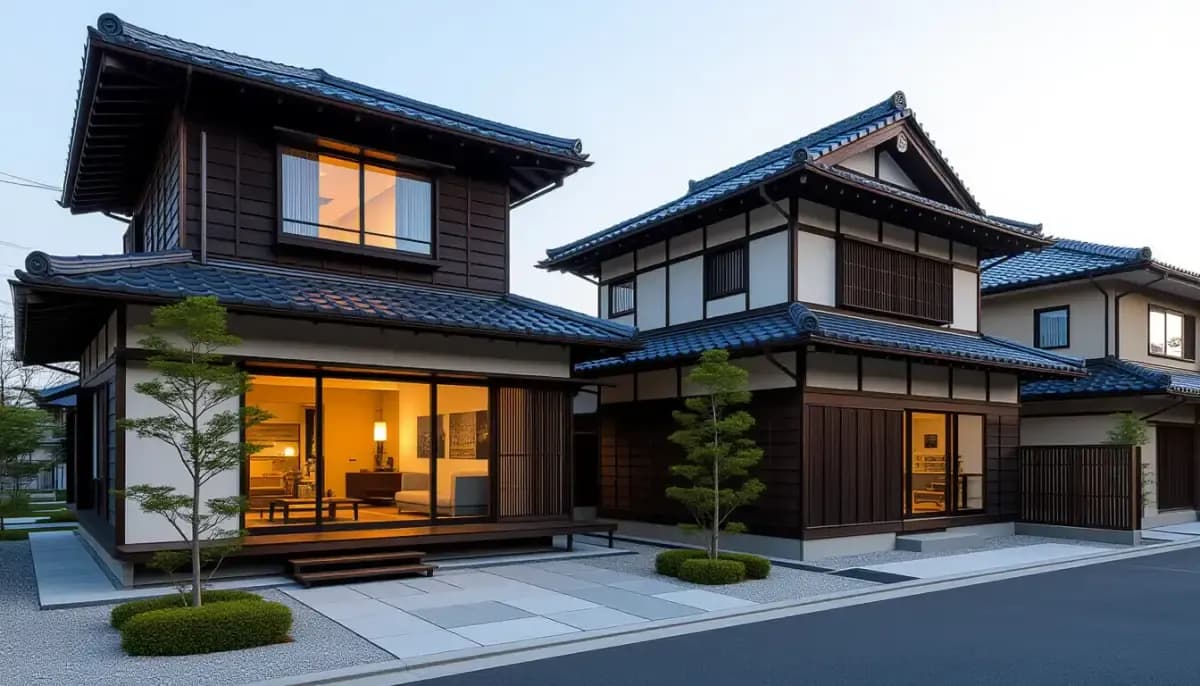
Learn how Japan property depreciation works for new and used homes. Understand statutory useful life, land vs building value, tax deductions, and what it means for foreign buyers in 2025.
Japan Property Depreciation: How New and Used Homes Lose Value
If you're a foreigner considering buying property in Japan, one of the most important concepts to understand is how Japanese real estate depreciates. Unlike many Western countries where homes often appreciate over time, Japanese buildings lose value quickly — sometimes dramatically. But this isn't the whole story. Understanding the difference between land and building value, the depreciation rates for new versus used homes, and how location affects everything will help you make a smarter investment decision.
This guide covers everything you need to know about Japan property depreciation, from the legal framework to the tax implications, so you can buy with confidence.
Why Japanese Buildings Depreciate So Fast
Japan has one of the highest building depreciation rates in the developed world. Research shows that the mean residential structure depreciation rate in Japan is approximately 6.2% per year — compared to just around 1% in the United States. This means that over a decade, a Japanese building may lose roughly half its structural value.
Several factors drive this rapid depreciation:
- Cultural preference for new construction: Japanese buyers have historically preferred brand-new homes, creating weak demand for older properties
- Earthquake risk and evolving building codes: Major updates to seismic standards (especially the 1981 Shintaishin revision) mean older buildings are seen as less desirable or even risky
- Short statutory useful life: Japanese tax law assigns relatively short depreciation lifespans to buildings
- Overbuilding: Japan constructs about 1 million new homes per year despite a shrinking population — flooding the market and reducing the value of existing stock
The result? Around 10 million abandoned homes (known as akiya) are scattered across Japan, many of which have essentially zero market value as structures. Understanding this landscape is critical for any foreign buyer.
For a broader context on the Japan real estate market, read our Japan Real Estate Market Overview and Trends for Foreign Investors.
The Most Important Concept: Land vs. Building Value
Before diving into depreciation rates, you need to understand the single most important distinction in Japanese real estate: land and buildings are legally separate assets.
In Japan:
- Land does NOT depreciate — it is treated as a non-depreciating asset under Japanese tax law
- Buildings DO depreciate — at rates determined by the structure type and age
For a typical standalone house (ikkodate), land often represents approximately 80% of the total purchase price in desirable urban areas. This means the depreciating component (the building) may only account for 20% of what you paid. If land prices hold steady or rise, your overall investment may be protected even as the building loses value.
In 2023, Japanese land prices increased 3.3% nationally, and in central Tokyo, prices have been rising consistently. This dynamic — appreciating land offsetting depreciating structures — is why buying in prime urban locations can still be a sound investment.
However, in rural areas and towns with aging, shrinking populations, even land can lose value. The same akiya problem that affects buildings can drag land prices down in depopulating regions.
To understand property taxes on both land and structures, see our guide on Property Taxes and Annual Costs of Owning Property in Japan.
Statutory Depreciation Life by Building Type
Japanese tax law (the Genka Shokyaku system) assigns each building type a statutory useful life, which determines how quickly it can be written off for tax purposes. This also heavily influences market perception of a building's value.
| Building Material | Statutory Useful Life | Annual Depreciation Rate (Straight-Line) |
|---|---|---|
| Wooden structures | 22 years | ~4.5% per year |
| Light gauge steel (under 3mm) | 19 years | ~5.3% per year |
| Light gauge steel (3–4mm) | 27 years | ~3.7% per year |
| Heavy steel (over 4mm) | 34 years | ~2.9% per year |
| Reinforced Concrete (RC/SRC) | 47 years | ~2.1% per year |
Since April 2016, Japan mandates the straight-line depreciation method for all buildings. This means the building loses value evenly each year over its statutory life, rather than front-loading depreciation as was previously allowed.
Key takeaway: Wooden homes depreciate very quickly. A typical 22-year statutory life means that by the time the home is just over 22 years old, its book value is essentially zero — even if the physical structure is perfectly livable.
New Homes vs. Used Homes: Depreciation Comparison
The depreciation math works differently for new and used properties. Here's what foreign buyers need to know:
New Homes
A brand-new home starts depreciating the moment it is completed. Japanese buyers and lenders alike will treat the building value as declining each year according to the statutory schedule. New homes offer:
- Modern construction meeting the latest earthquake standards (post-2000 or post-1981)
- No hidden maintenance surprises
- Better financing terms (banks prefer new or recent builds)
- Higher initial market value — but also higher initial depreciation cost
However, the premium you pay for a new home also disappears quickly. Buildings typically lose around 50% of their structural value within the first 10 years.
Used Homes (Chuko Jutaku)
Used homes make up only about 13.5% of Japanese home purchases — a remarkably low figure compared to Western markets (where used homes dominate). This figure is slowly growing as the government tries to promote the existing housing stock, but Japanese cultural preferences for new builds remain strong.
For investors, older used homes offer an interesting angle: compressed depreciation. If you purchase a wooden home that has already exceeded its 22-year statutory life, you can depreciate the purchase price of the structure over just a few years for tax purposes. This creates large short-term tax deductions that can shelter rental income.
Remaining useful life formulas for used buildings:
- If within statutory life:
Remaining Life = (Statutory Life − Years Elapsed) + (Years Elapsed × 0.20) - If beyond statutory life:
Remaining Life = Statutory Life × 0.20
Example: A 30-year-old wooden house has a remaining statutory life of 22 × 0.20 = 4.4 years (rounded to 4 years). You can write off the entire building cost over just 4 years.
The catch: Fully depreciated buildings create a lower book value. When you sell, capital gains tax is calculated on the difference between the sale price and the (very low) book value — potentially creating a large taxable gain at exit.
For detailed information on buying used properties, see our Complete Guide to Buying Property in Japan as a Foreigner.
How Location Changes Everything
Depreciation rates and market dynamics vary enormously by location. Tokyo is not rural Akita — and the investment thesis is completely different.
Central Tokyo and Major Urban Areas
In the Tokyo 23 Special Wards, the vacancy rate is below 5% (vs. a US average of 12.7%). Demand is intense, and land prices have risen consistently. In this environment:
- Condos (manshon) within a 10-minute walk of major train stations hold value exceptionally well
- Land appreciation frequently offsets or exceeds building depreciation
- RC concrete buildings with 47-year statutory lives lose value more slowly than wooden homes
Regional Cities (Osaka, Nagoya, Fukuoka)
Major regional cities share some characteristics with Tokyo but with more variance by neighborhood. Prime central areas in Osaka, Nagoya, and Fukuoka have seen strong appreciation, while suburban or peripheral areas follow the national pattern of building-led decline.
Rural Japan and Akiya
In rural prefectures, population decline is accelerating. When there are more homes than people to fill them, both building and land values fall. This is where the akiya (abandoned home) phenomenon is most severe. Some rural properties can be purchased for extremely low prices — even given away — but resale or rental prospects are very limited.
For buyers interested in rural property, see our guide on Rural and Countryside Properties in Japan for Foreign Buyers.
Living In Nihon has excellent resources for foreigners navigating life and property in Japan: Living In Nihon.
Tax Implications of Japanese Property Depreciation
Depreciation is not just a market phenomenon — it has direct tax consequences for property owners in Japan.
Depreciation as a Tax Deduction
If you own a rental property, building depreciation is a deductible expense against rental income (genka shokyaku). This reduces your taxable income from the property.
Example:
- Wooden rental property purchase price: ¥20,000,000
- Building component: ¥5,000,000 (25% of total)
- Annual depreciation deduction: ¥5,000,000 ÷ 22 years = ¥227,272/year
- Tax savings (at 33% marginal rate): approximately ¥75,000/year
If the building is older and can be depreciated over just 4 years (as with a fully depreciated wooden house), the annual deduction jumps dramatically — a key reason foreign investors sometimes seek out old wooden homes.
Capital Gains at Exit
The downside of accelerated depreciation is at exit. When you sell:
- Capital gains = Sale Price − Book Value (original purchase price minus accumulated depreciation)
- A fully depreciated building has a book value near zero
- This means more of your sale price counts as a capital gain, even if the total asset value hasn't risen
Japan's capital gains tax rates are:
- Short-term (held under 5 years): ~39% total (income tax + resident tax)
- Long-term (held 5+ years): ~20% total
This means holding property for more than 5 years significantly reduces your exit tax burden.
For Work in Japan has useful information for foreign residents navigating Japanese financial and legal systems: For Work in Japan.
Pre-1981 vs. Post-1981: The Earthquake Safety Divide
Japan completely revised its building codes in 1981 with the New Seismic Standard (Shintaishin). Buildings constructed before this date are considered significantly less safe by both buyers and lenders.
| Feature | Pre-1981 (Old Standard) | Post-1981 (New Seismic Standard) | Post-2000 (Enhanced Standard) |
|---|---|---|---|
| Earthquake resistance | Designed for Level 5 (M6.5) | Designed for Level 7 (M7.0+) | Additional soil/foundation rules |
| Bank financing | Often restricted or unavailable | Generally available | Preferred by lenders |
| Market demand | Low — specialist investor only | Standard | Premium pricing |
| Depreciation angle | Tax compression for investors | Standard depreciation | Slower depreciation |
| Renovation requirements | Often significant | Moderate | Minimal |
If you are buying a used home, always verify which seismic standard it was built to. Pre-1981 buildings may be difficult to finance and harder to resell.
Making the Right Decision: New vs. Used
So should you buy new or used in Japan? The answer depends on your goals:
Buy new if:
- You want a modern, earthquake-safe home with minimal maintenance concerns
- You plan to live in the property (not just invest)
- You want straightforward financing from Japanese banks
- You are in a location where demand for new builds is strong
Consider a used home if:
- You are an investor seeking rental yield + significant depreciation tax deductions
- The property is a post-1981 RC building (slower depreciation, better resale)
- You have found an exceptional location where land value will hold
- You are comfortable with renovation costs and older building inspections
For guidance on the buying process itself, read our Step-by-Step Home Buying Process in Japan for Foreigners.
You can also find detailed depreciation calculations and property purchase guides at Gaijin Buy House, which is specifically focused on foreign buyers in Japan.
Key Takeaways
Understanding Japan property depreciation is essential for making a smart purchase:
- Buildings depreciate fast in Japan — roughly 6.2% per year for residential structures, with ~50% value loss in the first 10 years
- Land does not depreciate — and land appreciation in urban areas can offset building value loss
- Statutory useful lives range from 19 years (light steel) to 47 years (RC concrete)
- Used homes offer tax advantages through compressed depreciation, but with capital gains risk at exit
- Pre-1981 buildings should be treated with extra caution — limited financing and lower market demand
- Location dominates everything — central Tokyo behaves very differently from rural Japan
- Hold for 5+ years to benefit from the lower long-term capital gains tax rate
For more on the costs associated with buying in Japan, including fees, taxes, and ongoing expenses, see our guide on Hidden Costs and Fees When Buying Property in Japan.
For further reading on Japan property depreciation and investment strategy, we recommend:

Originally from Vietnam, living in Japan for 16+ years. Graduated from Nagoya University, with 11 years of professional experience at Japanese and international companies. Sharing information about buying property in Japan for foreigners.
View Profile →Related Articles
Energy Efficiency: New Homes vs Old Homes in Japan
Compare energy efficiency in new vs old homes in Japan. Learn about insulation grades, ZEH standards, utility costs, subsidies up to ¥2 million, and how to evaluate any property's energy performance as a foreign buyer.
Read more →
Hidden Problems in Used Properties: What to Check Before Buying
Discover the 4 types of hidden defects in Japanese used properties — physical, psychological, environmental, and legal. Complete inspection checklist, repair costs, and legal protections for foreign buyers.
Read more →
How to Choose a Developer for New Construction in Japan
Learn how to choose the right developer for new construction in Japan as a foreigner. Compare House Makers, local builders, and condo developers with tips on warranties, language support, and red flags.
Read more →
How Property Age Affects Resale Value in Japan
Learn how building age impacts resale value in Japan — statutory depreciation schedules, the critical 1981 seismic code, land vs. building value, and strategies for foreign buyers to maximize returns.
Read more →
How to Negotiate the Price of Used Property in Japan
How to negotiate used property prices in Japan as a foreigner. Covers discount ranges, cultural etiquette, offer strategies, and tips to get the best deal.
Read more →
Buying Off-Plan Property in Japan: Risks and Precautions
A comprehensive guide for foreigners on the financial, legal, construction, and market risks of buying off-plan property in Japan, with a due diligence checklist to protect your investment.
Read more →