
Japan House Lifespan and Depreciation Explained

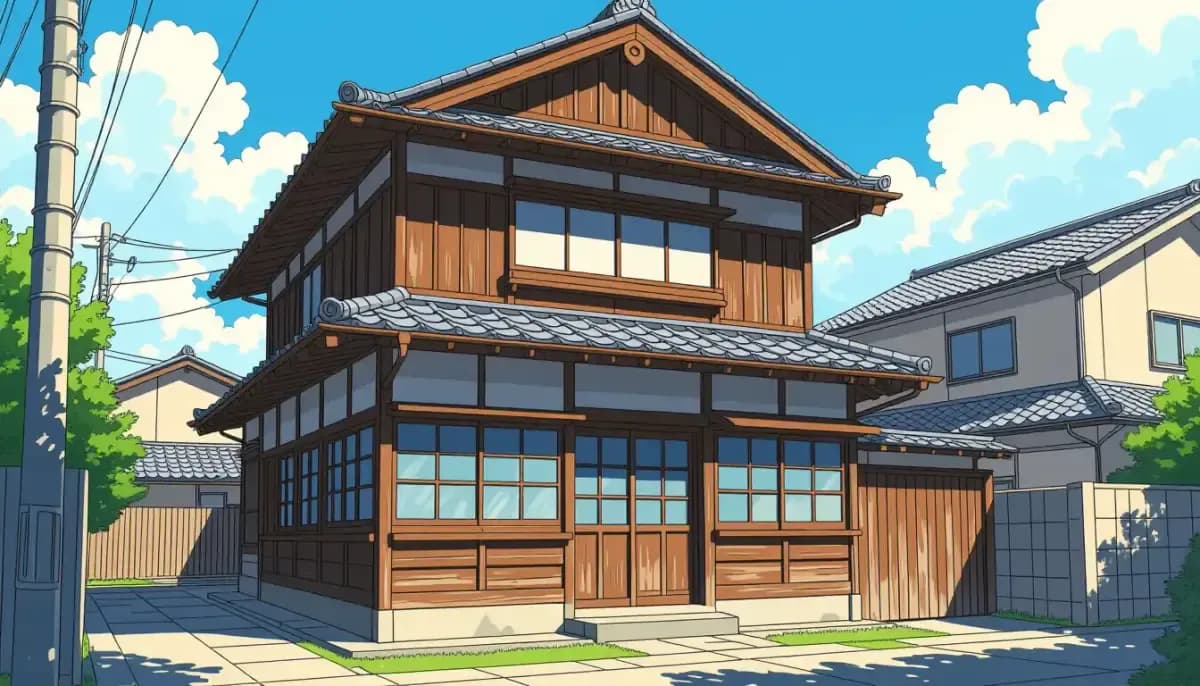
Learn how Japanese house depreciation works, statutory useful life by construction type, genka shoukyaku tax rules, and how to factor depreciation into buying property in Japan as a foreigner.
Japan House Lifespan and Depreciation Explained
If you are considering buying property in Japan as a foreigner, one of the most important concepts to understand is how Japanese homes depreciate in value. Unlike most Western countries where homes tend to appreciate over decades, Japan operates on an entirely different model — one where residential buildings begin losing value the moment construction is complete, and are considered structurally worthless within 22 to 47 years depending on the building material used.
This guide explains everything you need to know about Japanese house lifespan, depreciation rates, the tax implications of genka shoukyaku (減価償却), and how this affects your decision to buy property in Japan as a foreigner.
For a broader overview of buying property in Japan, see our Complete Guide to Buying Property in Japan. If you want to understand ongoing ownership costs, check out our guide on Property Taxes and Annual Costs.
What Is House Depreciation in Japan?
In Japan, residential buildings are treated as depreciable assets under tax law — meaning they have a fixed "useful life" after which they are considered to have zero structural value. This system, called genka shoukyaku (減価償却), is the official tax depreciation framework set by Japan's National Tax Agency (国税庁).
While the land underneath a building retains — or even increases in — value over time, the building itself depreciates every year. This creates a fundamentally different real estate market compared to the United States, the UK, or Australia, where the entire property (land plus structure) typically appreciates over time.
For foreign buyers, this distinction is crucial: you may be buying a piece of land at a good price, but the building sitting on that land could be worth almost nothing from a structural and market standpoint.
The rapid depreciation of Japanese homes has been well-documented. Economists estimate this pattern represents approximately 4% of Japanese GDP in value that simply vanishes each year — a figure that underscores just how different the Japanese housing market is from other developed nations.
House Lifespan by Construction Type
Japan's National Tax Agency sets the statutory useful life for residential buildings based on the construction material. Here is a breakdown of the official figures:
| Construction Type | Statutory Useful Life | Annual Depreciation Rate |
|---|---|---|
| Wood (木造) | 22 years | 4.5% |
| Light Gauge Steel (軽量鉄骨) | 19 years | 5.3% |
| Steel Frame (重量鉄骨) | 34 years | 3.0% |
| Reinforced Concrete (RC) | 47 years | 2.2% |
These figures apply to the straight-line method (定額法), which has been the mandatory depreciation method for all residential buildings in Japan since April 2016. Under this method, the same fixed amount is deducted from the building's value each year over its statutory useful life.
A key point for investors: When you purchase a used building that has already exceeded its statutory useful life, the remaining useful life is recalculated as: statutory useful life × 0.2. This means a used wooden home that is 30 years old (beyond its 22-year statutory life) would have a remaining depreciation period of just 4 years (22 × 0.2). This compressed depreciation period creates large annual tax deductions, which many investors specifically seek out.
Why Japanese Homes Depreciate So Quickly
The rapid depreciation of Japanese homes is not just a tax rule — it reflects real cultural, historical, and economic forces that shape the property market.
Post-War Construction Quality After World War II, Japan faced a severe housing shortage. Millions of homes were built quickly and cheaply, with little insulation, minimal seismic protection, and poor durability. This created a lasting cultural perception that older homes are unsafe and undesirable, driving a preference for new construction over renovation.
Seismic Safety Standards Japan introduced major earthquake-resistant building codes in 1981 (新耐震基準, shin taishin kijun) following the 1978 Miyagi earthquake. Homes built before 1981 do not meet current standards and are widely considered obsolete by lenders and buyers alike. A further update came after the 1995 Great Hanshin earthquake. This regulatory evolution constantly renders older stock outdated.
Cultural Preference for New Construction Japanese buyers have a strong cultural preference for brand-new homes. Unlike in Europe or North America, where an older home with "character" might command a premium, Japanese buyers typically see age as a liability. This demand dynamic reinforces rapid depreciation in the resale market.
Lending Restrictions Banks in Japan are generally reluctant to offer mortgages on buildings that have exceeded or are near their statutory useful life. A 30-year-old wooden home may be impossible to finance through a conventional mortgage, sharply limiting the pool of potential buyers and further suppressing resale value. Learn more about Mortgages and Home Loans for Foreigners in Japan.
How Depreciation Affects Property Value: Real Numbers
To understand what depreciation means in practice, consider this example:
You buy a new wooden house (木造) for ¥40,000,000 total, with ¥20,000,000 attributed to the land and ¥20,000,000 to the building structure.
- Year 0 (purchase): Building value = ¥20,000,000
- Year 5: Building value ≈ ¥9,090,000 (55% lost)
- Year 10: Building value ≈ ¥9,090,000 (book value at 50% for tax purposes)
- Year 22: Building value = ¥0 (fully depreciated under statutory useful life)
In practice, market prices follow a similar curve. Japanese homes lose roughly half their building value within 10 years, and by the time they reach 25 years of age, the building component is considered nearly worthless by the market — even if the structure is still physically sound and livable.
The land component, however, follows a completely different trajectory. In central Tokyo, Osaka, or other major urban areas, land values have generally held steady or increased, especially in desirable neighborhoods. This means the total property value depends heavily on the land-to-building ratio of your purchase.
For regional analysis of property values in specific cities, see our guides on Buying Property in Tokyo and Buying Property in Osaka.
Tax Implications of Genka Shoukyaku for Foreign Property Owners
For foreigners who own rental property in Japan, building depreciation is a powerful tax tool. Here is how it works:
Depreciation as a Non-Cash Deduction Each year, you can deduct the annual depreciation amount from your rental income without any actual cash outlay. This reduces your taxable rental income on paper, even as you continue collecting rent. For high-income earners, this can significantly lower annual tax liability.
Formula for Annual Depreciation Deduction:
Annual deduction = Building value × Depreciation rate
For example, if you own a wooden rental property with a building value of ¥10,000,000:
¥10,000,000 × 4.5% = ¥450,000 deduction per year
Old Buildings: The Compressed Depreciation Advantage A used wooden building bought for ¥5,000,000 that has already exceeded its 22-year statutory life would have a remaining useful life of just 4–5 years. That same ¥5,000,000 building value would generate:
¥5,000,000 ÷ 4 years = ¥1,250,000 annual deduction
This is why old, cheap properties — including akiya (空き家, vacant/abandoned homes) — can be attractive investment tools for tax reduction despite their low physical value.
For detailed information on all property-related taxes, see our guide on Hidden Costs and Fees When Buying Property in Japan.
You can also explore additional insights on Japan's tax rules for property investors at Gaijin Buy House: Japan Real Estate Tax Guide and read further background at MailMate's Japan Housing Depreciation Guide.
The Akiya Problem: Japan's Vacant Home Crisis
Japan's depreciation culture has contributed directly to the country's growing akiya (空き家) crisis. As of recent estimates, Japan has approximately 10 million vacant or abandoned homes — a number that continues to grow as the population ages and young people migrate to urban centers.
In rural areas, the combination of a worthless building, low land value, and an aging population creates a market where sellers struggle to find buyers even when offering properties at near-zero prices. Some akiya are available for ¥1 or even gifted for free, though the new owner must typically cover renovation costs and property taxes.
For foreign buyers attracted by low akiya prices, it is essential to understand:
- Renovation costs can be substantial (sometimes exceeding the purchase price many times over)
- Rural land has limited appreciation potential
- Infrastructure and community services may be declining in the area
- Legal obligations around maintenance and demolition may apply
Learn more about rural property opportunities in our guide: Rural and Countryside Properties in Japan for Foreigners.
For more context on Japan's housing and living landscape, Living in Nihon's Property and Mortgage Guide provides a helpful overview, and REthink Tokyo's analysis explores how limited lifespan shapes the Japanese housing market.
Strategic Buying: How to Factor Depreciation Into Your Decision
Understanding depreciation should change how you approach buying property in Japan. Here are the most important strategic considerations:
Land-to-Building Ratio Matters More Than in Western Countries Since the building depreciates but the land does not, focus on properties where the land component represents a higher portion of the purchase price. Urban properties in central Tokyo or Osaka typically have a higher land-to-building ratio than suburban or rural properties, giving your investment a more stable long-term floor.
New vs. Used Property Tradeoffs
- New homes come with full statutory useful life remaining but start depreciating immediately
- Used homes are cheaper, often dramatically so, but may have limited remaining mortgage eligibility
- Homes built after 1981 (meeting the new seismic code) are significantly more financeable than pre-1981 structures
The Investment vs. Owner-Occupier Difference For investors seeking tax benefits, older buildings with compressed depreciation periods are often desirable. For owner-occupiers, the inability to finance older homes and the eventual need to rebuild or heavily renovate makes newer construction preferable. See our Legal Procedures and Documentation for Japan Property Purchase guide for due diligence steps.
Consulting a Japan-Licensed Real Estate Professional Given the complexity of the Japanese market, working with a licensed real estate agent (宅地建物取引士, takken-shi) and a Japanese tax accountant (税理士, zeirishi) is strongly recommended, particularly for foreign buyers navigating depreciation, mortgage eligibility, and resale strategy.
For Work in Japan's guides at forworkinjapan.com also provide useful context on living and working conditions that affect your property choice.
Summary: Key Takeaways on Japan House Lifespan and Depreciation
Japan's property market operates on fundamentally different principles from most Western markets. Here is a quick recap of what every foreign buyer should know:
- Japanese residential buildings depreciate to zero within 22–47 years depending on construction material
- Land does not depreciate — it holds or appreciates in value over time, especially in urban areas
- The straight-line method (定額法) is mandatory for calculating depreciation since April 2016
- Old buildings beyond their statutory useful life use a compressed depreciation period (statutory life × 0.2)
- Banks are reluctant to lend on older buildings, limiting resale potential
- Tax depreciation (genka shoukyaku) is a key tool for rental property investors in Japan
- Akiya (vacant homes) are abundant but carry significant renovation and location risk
- Strategic buyers focus on land value and location quality, not just the building
Understanding these dynamics is not just useful for tax planning — it fundamentally shapes which properties represent good investments and which may leave you holding a depreciating structure with little resale value. Approach the Japanese market with clear eyes, and you will be far better positioned to make a sound decision.
For next steps, explore our guides on Types of Properties Available in Japan and the Step-by-Step Home Buying Process to continue planning your purchase.

Originally from Vietnam, living in Japan for 16+ years. Graduated from Nagoya University, with 11 years of professional experience at Japanese and international companies. Sharing information about buying property in Japan for foreigners.
View Profile →Related Articles
Privacy and Noise Insulation in Japanese Houses
A complete guide to privacy and noise insulation in Japanese houses for foreign buyers. Learn how RC, steel, and wood construction affects noise levels, plus practical soundproofing tips.
Read more →
Japan House Structure Types: Wood, Steel, and Reinforced Concrete
A complete guide to Japan house structure types for foreign buyers: wooden (木造), steel (鉄骨), and reinforced concrete (RC) construction — costs, earthquake safety, lifespan, and what to check when buying.
Read more →
Small House Design and Compact Living in Japan
Discover the principles of Japanese small house design and compact living. Learn space-saving techniques, Japanese design philosophy, and practical tips for foreigners living in small homes in Japan.
Read more →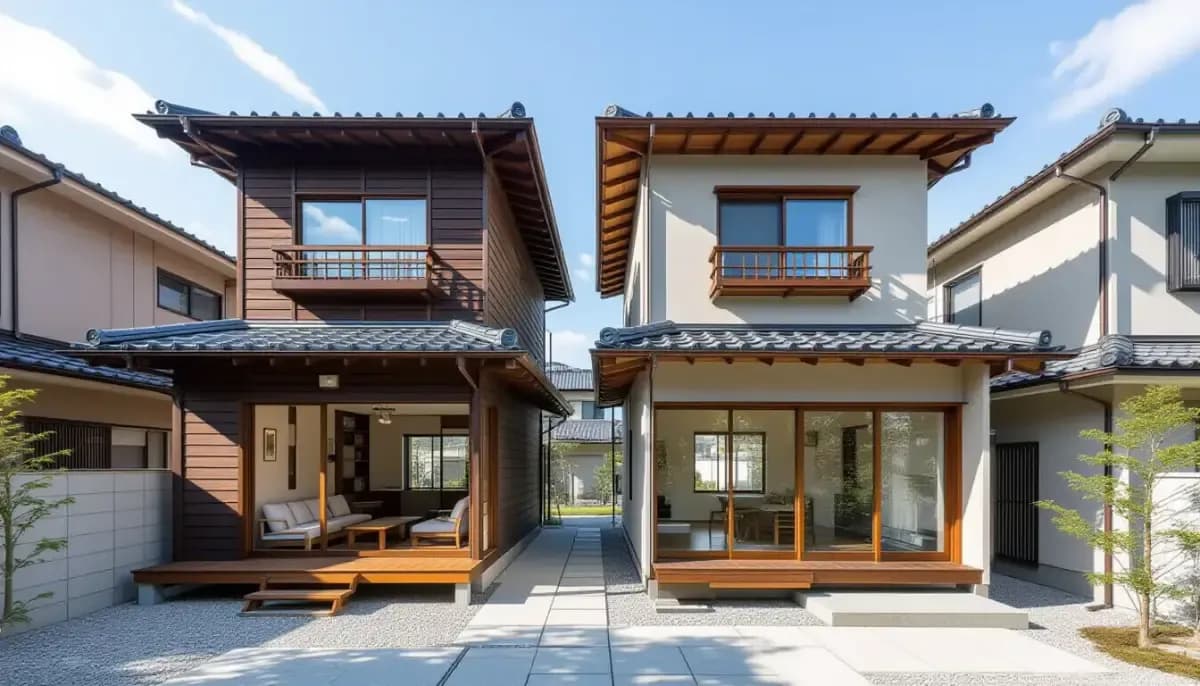
Two-Family House (Nisetai Jutaku) in Japan Explained
Everything foreigners need to know about buying a nisetai jutaku (two-family house) in Japan — types, tax benefits, costs, and legal considerations for foreign buyers.
Read more →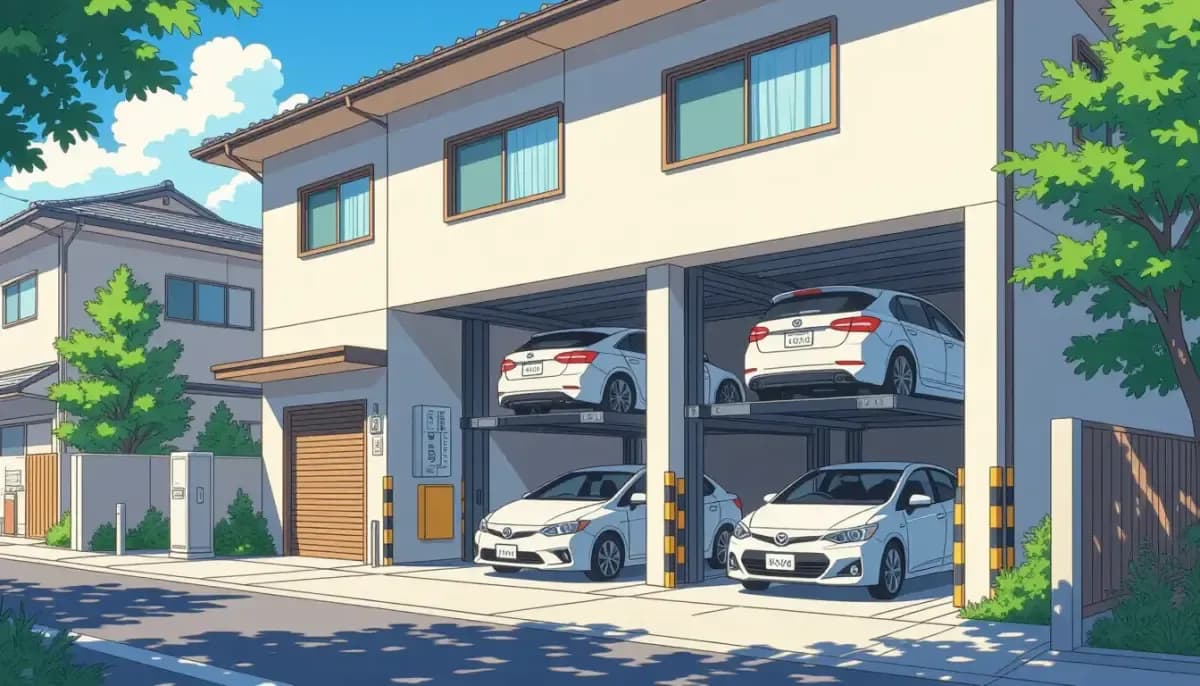
Parking and Garage Requirements for Japan Houses
Learn Japan's parking and garage requirements for homeowners. Everything about the Shako Shomeisho certificate, types of residential parking, costs by region, and tips for foreigners buying property in Japan.
Read more →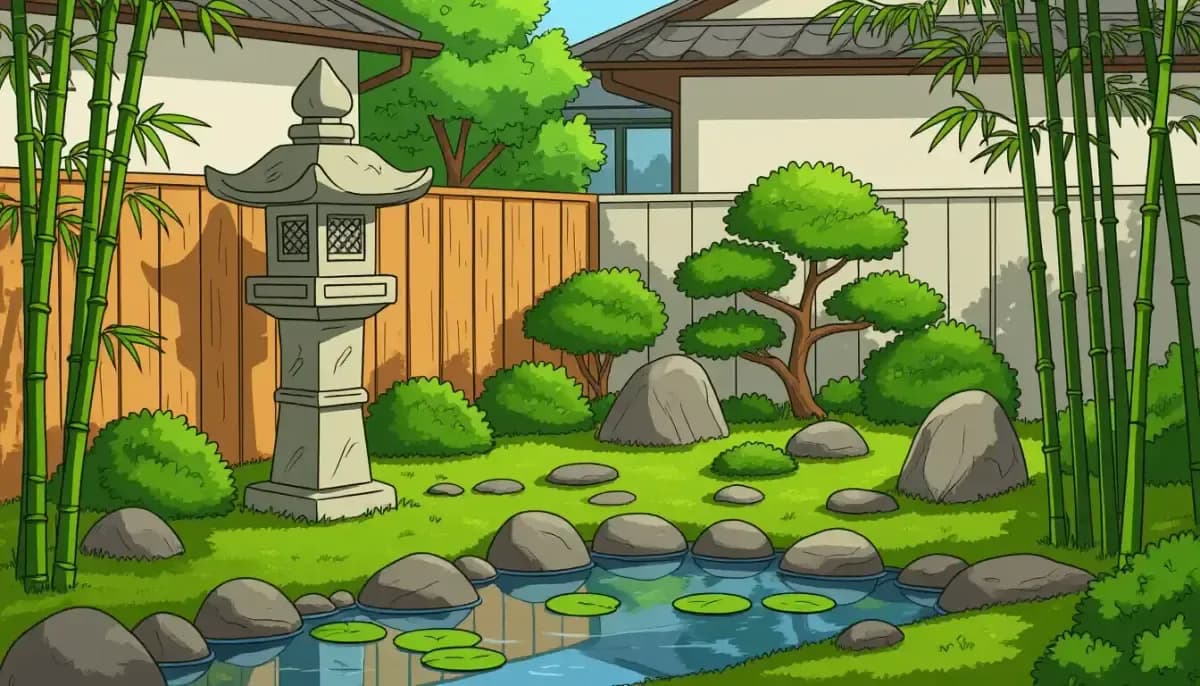
Japanese House Garden and Outdoor Space Guide
Complete guide to Japanese house gardens and outdoor spaces for foreigners. Learn garden types, design principles, seasonal plants, maintenance costs, and practical tips for creating your own Japanese garden.
Read more →