
Japan House Structure Types: Wood, Steel, and Reinforced Concrete

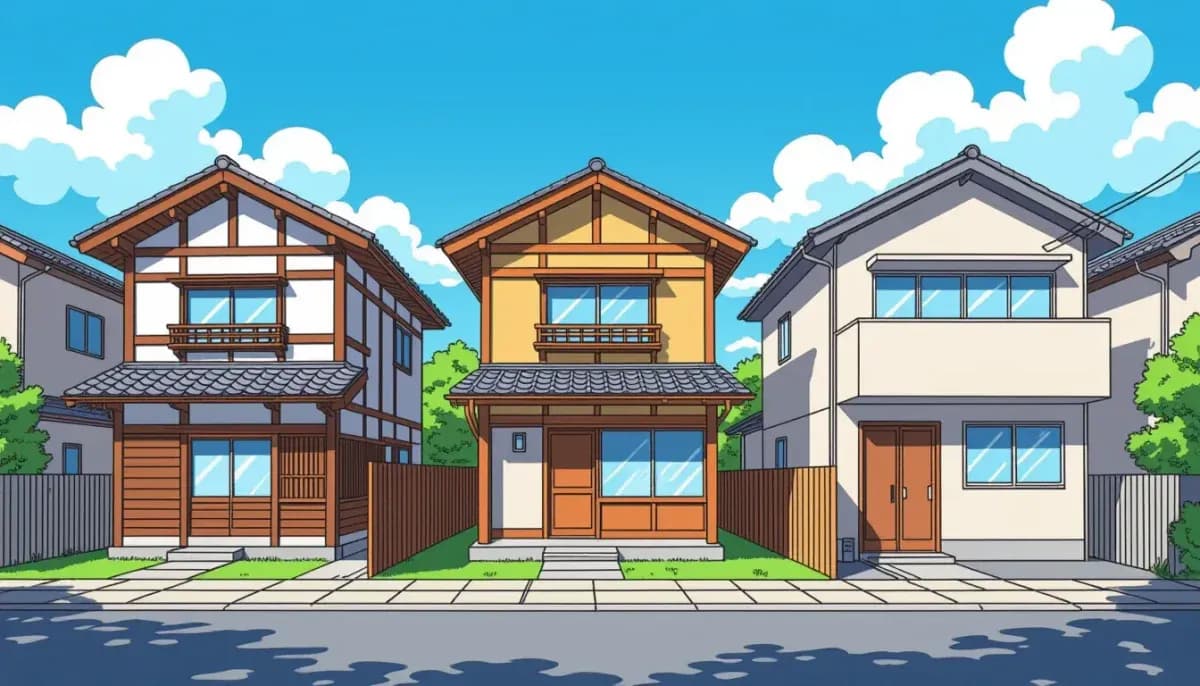
A complete guide to Japan house structure types for foreign buyers: wooden (木造), steel (鉄骨), and reinforced concrete (RC) construction — costs, earthquake safety, lifespan, and what to check when buying.
Japan House Structure Types: Wood, Steel, and Reinforced Concrete
When buying a detached house (一戸建て/ikkodate) in Japan as a foreigner, one of the most important decisions you will face is choosing the right construction type. Japan's unique combination of seismic activity, high humidity, and distinct climate zones means that each structural material — wood, steel, or reinforced concrete — comes with its own set of advantages, drawbacks, and cost implications. Understanding these differences before you buy can save you from expensive surprises and help you find a home that matches your lifestyle and long-term goals.
This guide breaks down the three primary house structure types in Japan: wooden construction (木造/mokuzou), steel frame construction (鉄骨造/tekkotsu), and reinforced concrete construction (RC造/tetsukinnkuriito). We also cover the lesser-known SRC (鉄骨鉄筋コンクリート) and explain exactly what to look for in real estate listings.
Understanding Japanese Construction Type Abbreviations
Before viewing properties in Japan, you need to know how construction types appear in real estate listings. When you search on sites like SUUMO, HOME'S, or AtHome, you will see abbreviations next to each property. Here is what they mean:
| Abbreviation | Japanese Name | English Name |
|---|---|---|
| W造 | 木造 (Mokuzou) | Wooden Construction |
| S造 | 鉄骨造 (Tekkotsu) | Steel Frame Construction |
| RC造 | 鉄筋コンクリート造 | Reinforced Concrete |
| SRC造 | 鉄骨鉄筋コンクリート造 | Steel Reinforced Concrete |
| CB造 | コンクリートブロック造 | Concrete Block Construction |
The most common types you will encounter for detached houses (ikkodate) are W造 (wood) and S造 (steel), since RC and SRC are more commonly used for apartment buildings and larger structures. However, RC detached houses do exist and are valued for their premium construction quality.
Wooden Construction (木造/W造): The Most Common Type in Japan
Wooden construction accounts for approximately 90% of all single-family detached houses in Japan. This dominance is not an accident — wood has been the traditional building material in Japan for centuries, and modern engineering has made it far safer and more durable than its ancient predecessors.
Types of Wooden Construction Methods
There are two primary methods used in modern wooden house construction in Japan:
1. Traditional Timber Framework (在来工法/Zairai Koho) This post-and-beam system uses vertical pillars and horizontal beams to create the structural skeleton. It is the most common method for custom-built homes (注文住宅) and offers excellent flexibility for renovations and custom floor plans. Skilled carpenters (大工/daiku) assemble the frame on-site, which allows for precise adjustments.
2. Two-by-Four Method (2x4/ツーバイフォー工法) Imported from North America, this panel-based system uses structural wall panels (rather than post-and-beam) to create both the walls and structural support. It offers a shorter construction period and lower costs, but is less flexible for future renovations since removing walls may compromise structural integrity.
Pros and Cons of Wooden Construction
Advantages:
- Lowest construction cost among all structure types
- Excellent thermal insulation and humidity control — natural wood fibers breathe, helping regulate indoor moisture in Japan's humid summers
- Design flexibility — easiest type to customize and renovate later
- Earthquake performance — wood naturally flexes during seismic activity, absorbing and dispersing energy rather than cracking
- Lightest foundation requirements — reducing upfront costs significantly
Disadvantages:
- Statutory useful life of only 22 years for tax and depreciation purposes (though actual lifespan can be much longer with maintenance)
- Fire risk — wood is combustible, though modern fire-retardant treatments and sprinkler requirements have improved safety
- Requires maintenance against termites (白蟻/shiroari) and moisture-related deterioration
- Weakest soundproofing of all construction types — noise from rain, neighbors, and traffic is most audible
For foreigners buying a detached house in Japan, wooden construction is typically the most affordable entry point. A traditional wooden ikkodate in suburban areas can often be purchased for significantly less than steel or RC equivalents. For more on the overall buying process, see our guide on Step-by-Step Home Buying Process in Japan for Foreigners.
Steel Frame Construction (鉄骨造/S造): The Versatile Middle Ground
Steel frame construction is divided into two subcategories that behave quite differently:
Light Steel (軽量鉄骨/Keiryo Tekkotsu): Uses steel members less than 6mm thick. This is the structure favored by major prefabricated house manufacturers (HM companies) such as Sekisui House (積水ハウス) and Daiwa House (大和ハウス). If you see a prefab home from these brands, it is very likely light steel construction.
Heavy Steel (重量鉄骨/Juryo Tekkotsu): Uses steel members 6mm or thicker. This provides greater structural strength and is used for mid-rise buildings and larger residential structures. The "Ramen structure" (ラーメン構造) common in heavy steel allows very open floor plans with minimal interior columns.
Pros and Cons of Steel Frame Construction
Advantages:
- Superior earthquake resistance compared to wood — steel flexes significantly before failing, absorbing seismic energy efficiently
- Termite-proof — unlike wood, steel does not attract or support termite infestations
- Large open spaces possible — steel's strength allows wide spans between support columns
- Consistent quality — factory-prefabricated components reduce variation in construction quality
- Better Wi-Fi signal penetration than concrete walls
Disadvantages:
- High thermal conductivity — steel transfers heat and cold more rapidly than wood or concrete, requiring extra insulation to maintain comfortable indoor temperatures
- Rust vulnerability — Japan's humid climate accelerates rust formation; regular inspection of exposed steel elements is essential
- More expensive than wood — though still cheaper than RC
- Moderate soundproofing — better than wood but inferior to RC
Statutory useful life: Light steel (3-4mm) = 27 years; Heavy steel (6mm+) = 34 years.
Steel construction is a popular choice for families seeking the balance between affordability and safety without the premium cost of RC. Major prefab house brands offering steel construction also tend to include long-term maintenance and inspection programs.
For more on property types and what to look for when house hunting, visit Living in Nihon for practical guides on life in Japan.
Reinforced Concrete Construction (RC造): The Premium Choice
Reinforced concrete (RC) construction uses concrete poured around a framework of steel reinforcing bars (rebar), creating an extremely dense and strong composite structure. While RC is most commonly seen in apartment buildings (マンション/mansion), RC detached houses do exist and represent the premium end of the ikkodate market.
Pros and Cons of RC Construction
Advantages:
- Strongest earthquake resistance — RC structures built to modern Shin-Taishin (新耐震) standards can withstand JMA Seismic Intensity 6-7 events without structural collapse
- Best soundproofing — concrete slabs 150-200mm thick block both airborne noise (voices, music) and impact noise (footsteps)
- Superior fire resistance — concrete is non-combustible, and RC buildings typically receive lower fire insurance premiums
- Longest statutory lifespan: 47 years — with proper maintenance, RC buildings can realistically exceed 100 years
- High thermal mass — concrete stores and releases heat slowly, reducing extremes of indoor temperature and lowering utility bills over time
Disadvantages:
- Most expensive construction type — significantly higher per-square-meter construction costs than wood or steel
- Condensation risk — where warm interior air contacts cool concrete walls or ceilings, moisture can condense, creating mold-friendly conditions without adequate ventilation
- Requires active ventilation — modern RC buildings must have 24-hour mechanical ventilation systems (24時間換気) to prevent mold from the airtight construction
- Reduced floor plan flexibility — depending on the structural type, interior walls may be load-bearing and cannot be removed
- Heavy foundation requirements — RC's weight demands more expensive deep foundations
When viewing RC properties, always check window corners, behind furniture pushed against external walls, and ceiling corners for signs of condensation staining or mold. This is the most common maintenance issue in Japanese RC construction.
For detailed guidance on reinforced concrete apartment buildings and what to check during inspections, A-Realty's guide to RC buildings is an excellent resource.
Comprehensive Comparison: Wood vs Steel vs RC
| Factor | Wood (W) | Light Steel (S) | Heavy Steel (S) | RC |
|---|---|---|---|---|
| Cost | Lowest | Low-Medium | Medium | High |
| Earthquake Resistance | Good (modern) | Very Good | Very Good | Excellent |
| Soundproofing | Poor | Moderate | Moderate | Excellent |
| Fire Resistance | Poor | Good | Good | Excellent |
| Termite Risk | High | None | None | None |
| Rust Risk | None | Moderate | Moderate | None |
| Condensation Risk | Low | Low | Low | Moderate-High |
| Design Flexibility | High | Moderate | High | Moderate |
| Statutory Lifespan | 22 years | 27-34 years | 34 years | 47 years |
| Actual Lifespan | 30-80+ years | 40-60+ years | 50-80+ years | 60-100+ years |
| Foundation Cost | Lowest | Low | Moderate | Highest |
| Renovation Ease | High | Moderate | Moderate | Low |
The 1981 Shin-Taishin Standard: The Most Critical Date to Know
Regardless of which construction type you choose, the single most important factor in earthquake safety is whether the building was built before or after June 1981.
In 1981, Japan enacted a major revision of the Building Standards Law, known as the Shin-Taishin (新耐震) standards. Buildings constructed after this date must meet significantly stricter seismic requirements than those built earlier. The 2016 Kumamoto Earthquake demonstrated clearly that pre-1981 buildings suffered disproportionately high collapse rates compared to post-1981 structures.
What to do:
- Always verify the construction year (竣工年/shunkou-nen) of any property
- If the building was completed before June 1981, commission a seismic inspection (耐震診断/taishin shindan) before purchasing
- Some pre-1981 buildings have undergone seismic reinforcement (耐震補強/taishin hokyou) — ask for documentation of any retrofitting work
For a comprehensive overview of legal rights and procedures when buying property in Japan as a foreigner, see our Legal Procedures and Documentation guide.
What Foreigners Should Know When Choosing a Structure Type
As a foreign buyer, your choice of construction type will depend heavily on your priorities and circumstances:
If budget is your primary concern: Choose wooden construction (木造). It offers the lowest purchase price, lowest renovation costs, and the widest selection of properties at every price point in Japan. For investment purposes, wooden properties also tend to offer higher rental yields.
If earthquake safety and longevity are your priority: Choose RC construction. The higher upfront cost is offset by the longer lifespan, lower insurance costs, and peace of mind knowing your home is built to the highest safety standards.
If you want a modern prefab home with brand support: Light steel construction from major manufacturers like Sekisui House or Daiwa House offers excellent quality control, modern design, and long-term maintenance programs — a popular choice for families building custom homes.
For investment properties: Wooden apartment buildings in major urban areas can offer gross rental yields exceeding 8%, and they are the easiest to finance and demolish for land resale. The trade-off is that older wooden buildings become harder to sell as they approach and exceed the 22-year tax depreciation threshold.
For advice on mortgages and financing options specific to your construction type, see our Mortgages and Home Loans for Foreigners in Japan guide.
Inspecting a Home: Key Checks by Structure Type
No matter which construction type you choose, commissioning a home inspection (住宅診断/juutaku shindan) from a qualified inspector is strongly recommended. Here are the key issues to check for each type:
Wooden Houses:
- Termite damage (白蟻被害) — check under flooring, in crawl spaces, and around wooden columns near ground level
- Moisture and rot in wood members, especially in crawl spaces (床下/yukashita)
- Condition of roof tiles and waterproofing
- Foundation cracks or settlement
Steel Frame Houses:
- Rust on exposed steel components, especially external stairs, balcony railings, and roof structures
- Thermal insulation quality — check for condensation on interior surfaces in winter
- Quality of seals around windows and connection points
RC Houses:
- Concrete cracks (ひび割れ/hibiware) — hairline cracks are common but large cracks indicating structural movement are serious
- Condensation and mold at wall-ceiling junctions and window frames
- Condition of waterproofing on roof and external walls
- Check the 24-hour ventilation system is functioning
For expat-specific insights on what to look for when house hunting in Japan, For Work in Japan offers practical relocation and real estate advice.
SRC: Steel Reinforced Concrete for Premium Construction
SRC (鉄骨鉄筋コンクリート/tekkotsu tetsukinn kuriito) combines a steel frame embedded within reinforced concrete to create the strongest and most durable construction type available. It offers:
- Highest earthquake resistance of any structure type
- Best fire resistance and sound insulation
- Longest actual lifespan (often exceeding 100 years)
- Used primarily in high-rise condominiums, luxury towers, and commercial buildings
SRC is rarely used in detached houses due to cost, but if you are considering purchasing a high-rise apartment in Japan, understanding SRC is important. Its statutory useful life is the same as RC at 47 years.
Finding Your Ideal Home
Choosing the right structure type for your Japanese home is ultimately a personal decision that balances budget, safety priorities, lifestyle needs, and long-term plans. Whether you choose the warmth and affordability of wooden construction, the modern reliability of steel frame, or the premium durability of reinforced concrete, Japan offers high-quality options at every price point.
For comprehensive guidance on the entire process of buying a detached house in Japan as a foreigner — from selecting a location to signing the final contract — see our complete guide on Buying a Detached House (Ikkodate) in Japan as a Foreigner.
For additional resources on Japanese house construction types and what expats need to know, Gaijin Buy House is a dedicated resource for foreign buyers navigating the Japanese real estate market.
Understanding structure types is just one piece of the puzzle. Combine this knowledge with research on property taxes and annual costs and hidden fees when buying property in Japan to build a complete picture of your total ownership costs before making a purchase decision.

Originally from Vietnam, living in Japan for 16+ years. Graduated from Nagoya University, with 11 years of professional experience at Japanese and international companies. Sharing information about buying property in Japan for foreigners.
View Profile →Related Articles
Privacy and Noise Insulation in Japanese Houses
A complete guide to privacy and noise insulation in Japanese houses for foreign buyers. Learn how RC, steel, and wood construction affects noise levels, plus practical soundproofing tips.
Read more →
Japan House Lifespan and Depreciation Explained
Learn how Japanese house depreciation works, statutory useful life by construction type, genka shoukyaku tax rules, and how to factor depreciation into buying property in Japan as a foreigner.
Read more →
Small House Design and Compact Living in Japan
Discover the principles of Japanese small house design and compact living. Learn space-saving techniques, Japanese design philosophy, and practical tips for foreigners living in small homes in Japan.
Read more →
Two-Family House (Nisetai Jutaku) in Japan Explained
Everything foreigners need to know about buying a nisetai jutaku (two-family house) in Japan — types, tax benefits, costs, and legal considerations for foreign buyers.
Read more →
Parking and Garage Requirements for Japan Houses
Learn Japan's parking and garage requirements for homeowners. Everything about the Shako Shomeisho certificate, types of residential parking, costs by region, and tips for foreigners buying property in Japan.
Read more →
Japanese House Garden and Outdoor Space Guide
Complete guide to Japanese house gardens and outdoor spaces for foreigners. Learn garden types, design principles, seasonal plants, maintenance costs, and practical tips for creating your own Japanese garden.
Read more →