
Japanese House Garden and Outdoor Space Guide

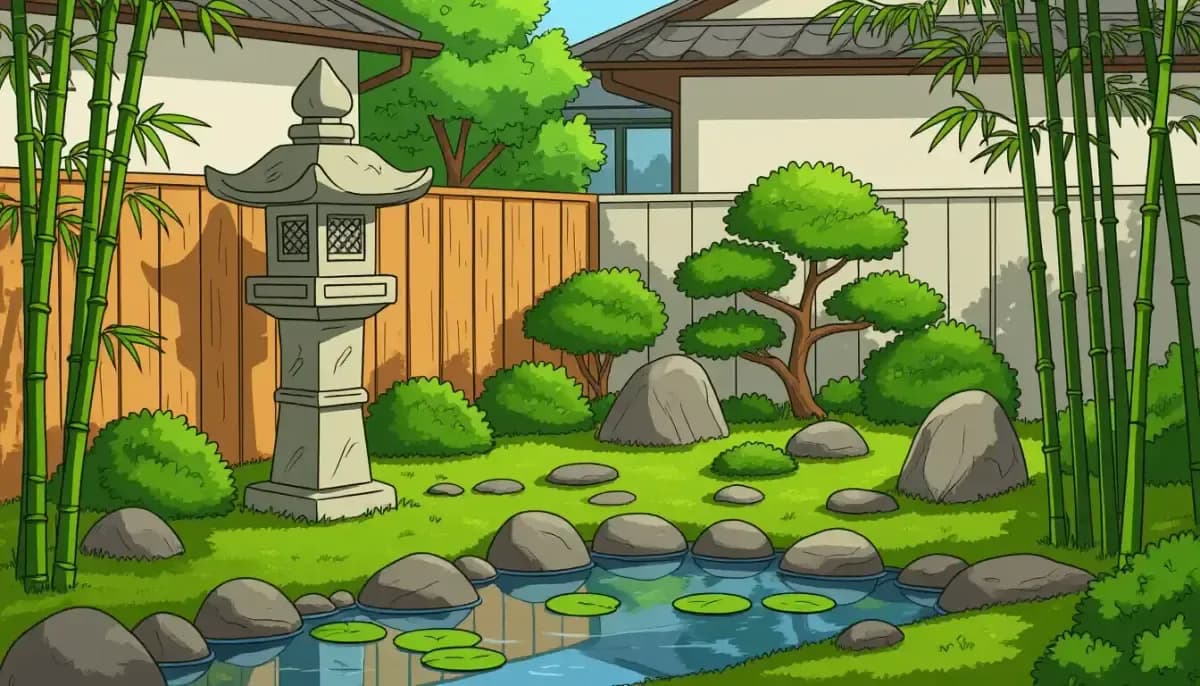
Complete guide to Japanese house gardens and outdoor spaces for foreigners. Learn garden types, design principles, seasonal plants, maintenance costs, and practical tips for creating your own Japanese garden.
Japanese House Garden and Outdoor Space Guide for Foreigners
When you buy a detached house (ikkodate) in Japan, one of the most delightful surprises is the outdoor space. Japanese residential gardens are living works of art — centuries-old design traditions distilled into surprisingly compact spaces that can transform how you experience your home. Whether you inherit a traditional tsuboniwa courtyard, a small urban backyard, or a generous suburban lot, understanding Japanese garden culture will help you make the most of your outdoor space.
This guide covers everything foreigners need to know about Japanese house gardens and outdoor spaces: the types of gardens you may encounter, core design principles, seasonal plant care, maintenance expectations, and practical tips for creating your own piece of Japanese landscape.
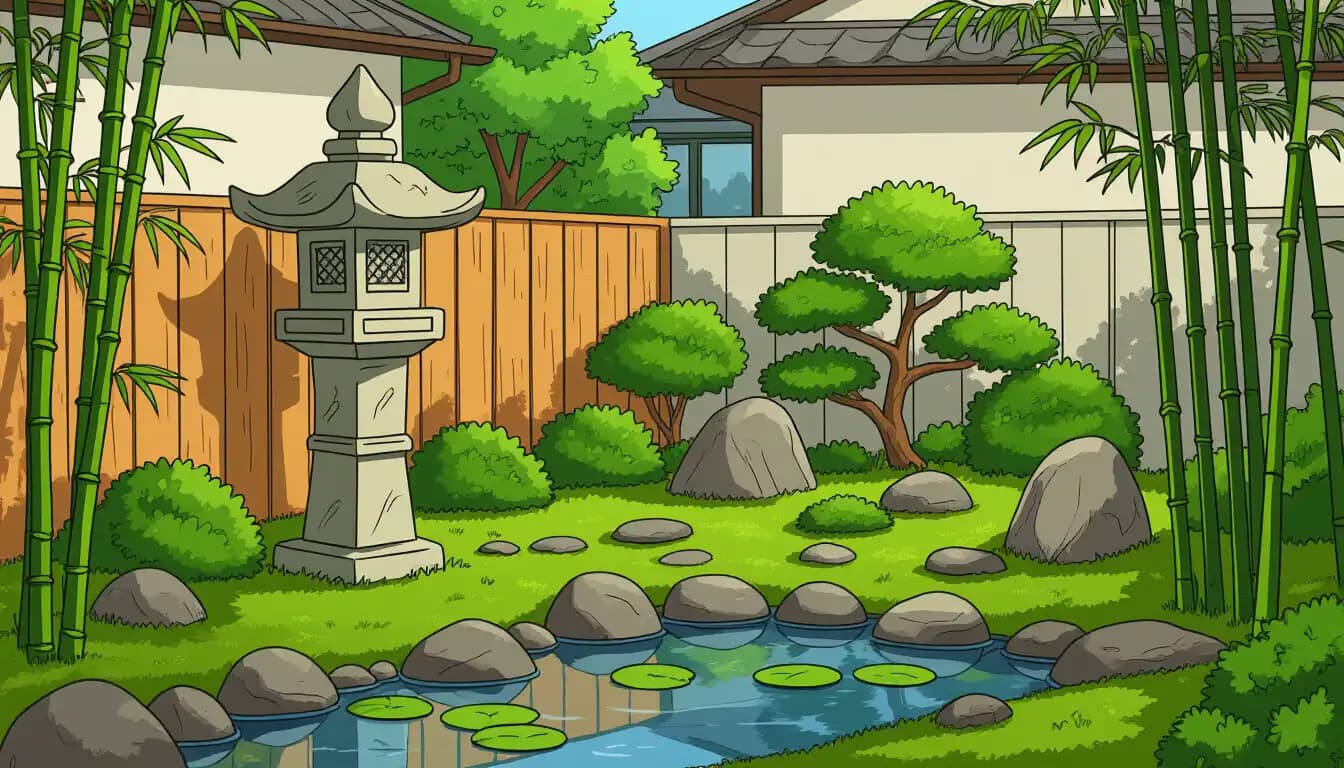
Understanding Japanese Garden Types
Japanese residential gardens come in several distinct forms, each with its own purpose, aesthetic, and maintenance requirements. Knowing which type you have — or which you want to create — is the essential first step.
| Garden Type | Japanese Name | Key Features | Best For |
|---|---|---|---|
| Courtyard Garden | Tsubo-niwa (坪庭) | Small enclosed space, viewed from indoors | Urban townhouses, machiya |
| Dry Landscape | Karesansui (枯山水) | Raked gravel, rocks, no water | Zen aesthetic, low maintenance |
| Tea Garden | Roji (露地) | Stepping stones, stone basin, teahouse | Traditional homes |
| Stroll Garden | Kaiyu-shiki-teien | Pond, pathways, multiple viewpoints | Larger suburban lots |
| Hill and Pond | Tsukiyama | Artificial hills, water features | Large properties, villas |
The tsuboniwa is by far the most common garden type you will encounter when buying a Japanese house. Dating back over 1,000 years to the Heian period (794–1185), these compact courtyard gardens were originally designed to bring light, fresh air, and a connection to nature into the dense townhouse (machiya) homes of Kyoto and other cities. They are designed primarily for viewing from indoors — a living painting framed by your windows — not for walking through.
The word ka-tei (家庭) in Japanese literally combines the characters for "house" and "garden," reflecting how deeply intertwined these two concepts are in Japanese domestic life.
Five Core Design Principles of Japanese Gardens
Japanese garden design is guided by a distinct philosophy that differs fundamentally from Western landscaping. Understanding these principles will help you appreciate what you have and make thoughtful additions.
1. Wabi-Sabi (侘び寂び) — Beauty in Imperfection
Wabi-sabi is perhaps the most important concept to grasp. It embraces weathered, aged, and imperfect materials as more beautiful than new ones. A mossy stone lantern covered in lichen is more valued than a shiny new one. Weathered wood is prized over polished surfaces. As a foreigner, resist the urge to "clean up" aged elements — they are often the most authentic and valuable parts of the garden.
2. Shizen (自然) — Natural Appearance Through Intentional Design
Despite appearing effortlessly natural, Japanese gardens are carefully and deliberately designed. Every stone placement, every pruned branch, every path of gravel is intentional. The goal is to create a miniature natural landscape that looks as if it grew that way — but nothing is left to chance.
3. Fukinsei (不均整) — Asymmetry and Irregularity
Unlike Western formal gardens with their symmetrical axes and mirror-image plantings, Japanese gardens embrace asymmetry. An odd number of stones is always preferred over an even number. Paths curve rather than run straight. This irregularity creates visual interest and a more natural feel.
4. Shakkei (借景) — Borrowed Scenery
Shakkei means using the scenery beyond your garden boundary as part of the garden's composition. A distant mountain, neighboring trees, or even a neighbor's wall of bamboo can be "borrowed" by framing your garden view to include them. This principle helps small gardens feel much larger.
5. Ma (間) — The Importance of Empty Space
Perhaps the most counterintuitive principle for Western sensibilities: empty space is as important as filled space. The areas of bare gravel, open sky, or unplanted ground are not gaps to be filled — they are deliberately placed negative space that gives the eye a place to rest and makes the planted elements more powerful.
For more on traditional Japanese housing styles and their relationship to outdoor spaces, see our guide to traditional Japanese houses like kominka and machiya.
Essential Garden Elements You May Find
When you move into a Japanese house, you may encounter any of these traditional garden elements:
Ishi (石) — Stones and Rocks Stones are the bones of a Japanese garden. They represent mountains, islands, or natural outcroppings and are placed with great deliberation. Natural stones from local or regional quarries are most authentic. Never move major stones without understanding what they represent.
Toro (灯籠) — Stone Lanterns Stone lanterns were originally used to light garden paths. Today they are primarily decorative, available in many styles (yukimi-doro for snow viewing, kasuga-doro, etc.). They are excellent focal points and photograph beautifully in all seasons.
Shishi-odoshi (鹿威し) — Bamboo Water Feature The iconic bamboo tube that fills with water, tips, and clacks against a stone. Originally designed to scare deer from garden plants, today these are purely decorative but add the element of sound and movement.
Tsukubai (蹲踞) — Stone Water Basin A low stone basin with running water, originally used for ritual hand-washing before tea ceremony. These add the sound of water without requiring a full pond.
Engawa (縁側) — The Transitional Veranda The engawa is not a garden element per se, but it is crucial to understanding how Japanese people relate to their outdoor spaces. This narrow wooden veranda runs along the exterior of traditional rooms and serves as a transitional zone between the fully indoors and fully outdoors. It is a place to sit and observe the garden in all weather. If your home has an engawa, maintain it — it is one of the most beloved features of Japanese houses.
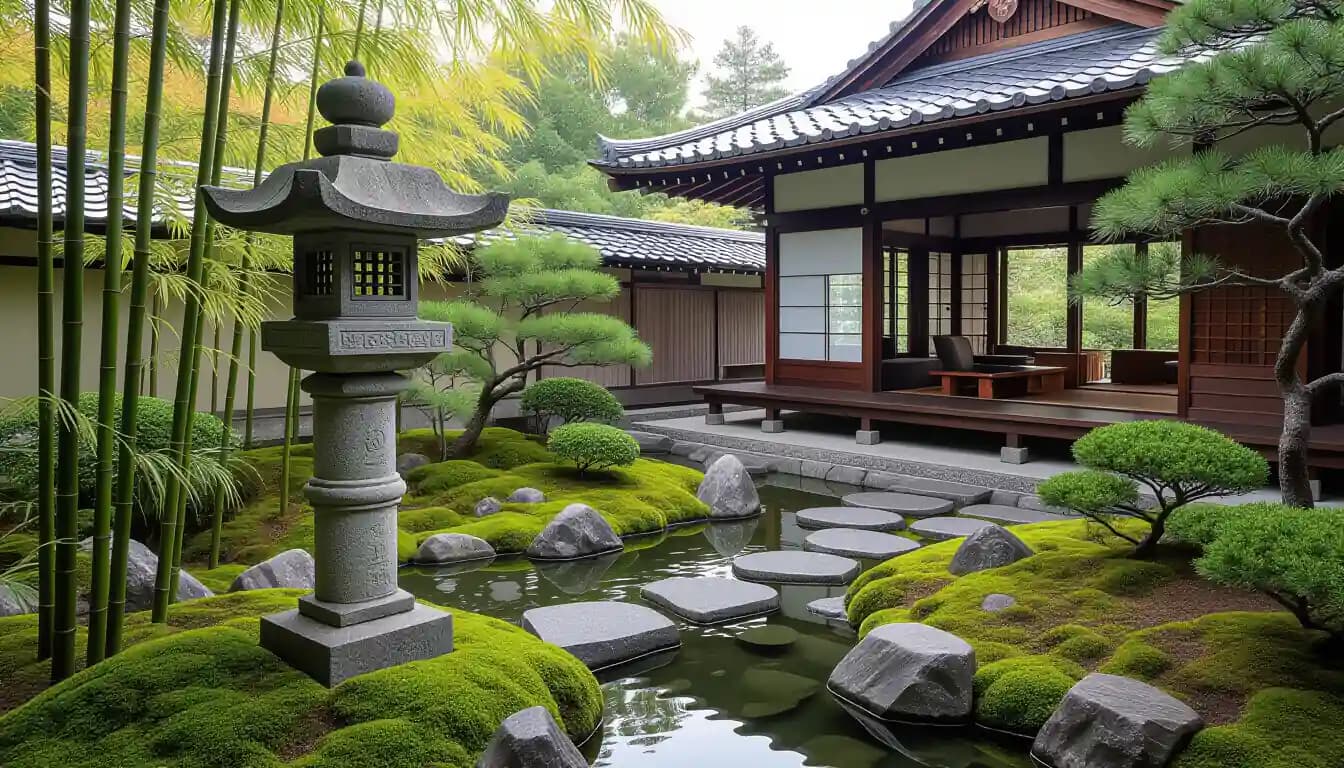
Seasonal Plant Guide for Japanese Residential Gardens
One of the great pleasures of a Japanese garden is its deliberate engagement with all four seasons. Traditional garden design ensures something is always happening outdoors.
| Season | Feature Plants | What to Enjoy |
|---|---|---|
| Spring | Cherry (sakura), camellia, azalea, wisteria | Blossom viewing (hanami), color explosion |
| Summer | Japanese iris, lotus, hydrangea, bamboo | Lush green depth, cool shadows |
| Autumn | Japanese maple (momiji), ginkgo, chrysanthemum | Spectacular foliage color |
| Winter | Pine, bamboo, plum (ume), nandina berries | Snow on branches, evergreen structure |
| Year-round | Moss, ferns, bamboo, pine, boxwood, camellia | Green backbone of the garden |
Plants with Symbolic Meaning:
- Cherry blossom (sakura): Purity and the beauty of impermanence
- Pine (matsu): Longevity, strength, endurance
- Bamboo (take): Resilience, flexibility, rapid growth
- Plum (ume): Perseverance (blooms in late winter before spring)
- Moss: Simplicity, refinement, the passage of time
For those with limited outdoor space in urban areas, balcony container gardening is an excellent option. A seasonal planting calendar for small spaces: cucumbers and tomatoes in summer, carrots and sweet potatoes in autumn, broccoli in winter, and beans and strawberries in spring. Herbs like basil, rosemary, lavender, and mint grow well in pots year-round.
Maintenance: What to Expect
Japanese gardens require consistent, thoughtful maintenance. The 60% decline in Japan's professional landscaping workforce between 2004 and 2017 means finding skilled garden maintenance services can be challenging and potentially expensive. Understanding what is required will help you plan your time and budget.
Weekly Tasks:
- Leaf and debris removal (essential for maintaining the clean aesthetic)
- Inspection of water features
- Weeding (moss gardens are especially vulnerable to weed invasion)
Monthly Tasks:
- Plant trimming and shaping (niwashi — garden craftsmen — traditionally prune with hand shears, not power tools)
- Moss care: misting during dry periods, removing competing weeds
- Gravel raking in karesansui-style areas
Seasonal Tasks:
- Spring: pruning dormant shrubs, adding summer plants, cleaning stone surfaces
- Summer: increased watering, pest inspection (especially for bamboo and pine)
- Autumn: major leaf cleanup, preparing plants for winter, adding winter plants
- Winter: protecting tender plants, enjoying snow-covered compositions
Finding Garden Help:
- Search for niwashi (庭師) — professional garden craftsmen
- Local home centers (Konan, Cainz, Nafco, GooDay) stock garden tools and basic supplies
- Daiso and Seria (100-yen shops) carry surprisingly good budget planters and garden tools
- Rakuten and Amazon Japan are good for pest control products and specialty items
For context on overall home ownership costs, see our guide to property taxes and annual costs in Japan.
Creating Your Own Japanese Garden: A Practical Guide for Foreigners
If you want to create a Japanese garden from scratch or renovate an existing one, here is a practical framework:
Step 1: Define the Purpose and Feeling Before buying a single plant, decide what you want your garden to do. Is it for quiet meditation? For entertaining? For growing food? For viewing from inside? This intention should drive every design decision.
Step 2: Work With Your Environment Let the existing landscape inspire your design. Note where the sun falls at different times of day, how drainage works, what views you want to frame or block, and what already grows in the garden. Choose plants suited to your local climate — plants that thrive in Hokkaido differ significantly from those suited to Okinawa.
Step 3: Match Scale to Space One of the most common mistakes in Japanese garden design is using elements that are too large for the space. Large rocks overwhelm small gardens. A single well-placed medium stone is more powerful than three large ones crammed together. This applies to plants too — a dwarf Japanese maple will feel more elegant in a small courtyard than a full-sized specimen.
Step 4: Add Sound and Movement Even a small tsukubai water basin or bamboo shishi-odoshi adds the dimension of sound that transforms a garden from static to alive. Moving water also deters mosquitoes.
Step 5: Embrace Gradual Growth Japanese gardens are not built in a weekend. They honor time and seasonal change. Plant moss knowing it will take years to spread naturally. Let the garden teach you patience — arguably one of the most valuable things it can offer.
For broader guidance on buying and owning a house in Japan, visit Living in Nihon for expat life tips, For Work in Japan for practical relocation resources, and Gaijin Buy House for foreigner-focused real estate guidance.
Outdoor Spaces in Urban vs. Rural Japanese Homes
The outdoor space you get with a Japanese house varies enormously by location:
Tokyo and Major Urban Areas: Urban plots are small, typically 100–200 m² total, with much of that covered by the house itself. Expect a narrow strip of garden at the front and/or rear. Tsuboniwa-style courtyard gardens are ideal for these spaces. Parking is often integrated into the "garden" space, with stones or gravel used to create a design that looks like a garden when no car is present. Many buyers in Tokyo rely on balcony container gardening.
Suburban Areas: Mid-sized lots of 200–300 m² give more room for traditional garden elements — a small pond, a proper stone lantern, mature trees. This is the sweet spot for creating a genuine Japanese residential garden.
Rural and Countryside Properties: Large rural properties, including akiya (abandoned houses), often come with substantial land that may include established old gardens with mature trees, stone arrangements, and sometimes agricultural plots. These can be beautiful but require significant ongoing maintenance. See our guide to akiya (vacant and abandoned houses) in Japan for more.
Common Questions From Foreign Homeowners
Can I remove existing garden elements? Legally, yes — it is your property. Culturally, think carefully before removing mature trees or old stone arrangements, as these may have significant age and value. Consult a local niwashi before making major changes.
Do I need permits for garden construction? Most garden work does not require permits. However, constructing walls above a certain height, adding significant water features, or making drainage changes may require notification. Check with your local municipality.
What about the neighbors? In Japan, the garden that faces the street is as much for the neighbors and passersby as it is for you. Keeping your front garden tidy is considered a social obligation, not just a personal preference. In residential neighborhoods, neglected gardens are noticed.
Is it expensive to maintain a Japanese garden? Professional niwashi charge ¥5,000–¥15,000 per visit for smaller gardens, with seasonal major pruning sessions costing more. Many foreign homeowners learn basic maintenance themselves, which is deeply rewarding.
For additional resources on Japanese garden design principles, the comprehensive Japanese garden guide at Garden Design and KonMari's guide to Japanese garden planning offer excellent English-language introductions.
For a deeper dive into the tsuboniwa courtyard garden tradition, Japan Living Guide's tsuboniwa article is highly recommended.
Conclusion
Japanese house gardens are one of the most rewarding aspects of owning property in Japan. They connect you to a living aesthetic tradition over a thousand years old, change with the seasons, and create a contemplative relationship with nature that is rare in modern life. Whether your outdoor space is a tiny tsuboniwa, a modest suburban garden, or a generous rural plot, approaching it with an understanding of Japanese design principles will help you create something genuinely beautiful.
The key is patience, observation, and respect for what is already there. Let the garden teach you — and enjoy the process.
For more on the complete home ownership journey in Japan, see our complete guide to buying property in Japan as a foreigner and our guide to home renovation and remodeling in Japan.

Originally from Vietnam, living in Japan for 16+ years. Graduated from Nagoya University, with 11 years of professional experience at Japanese and international companies. Sharing information about buying property in Japan for foreigners.
View Profile →Related Articles
Privacy and Noise Insulation in Japanese Houses
A complete guide to privacy and noise insulation in Japanese houses for foreign buyers. Learn how RC, steel, and wood construction affects noise levels, plus practical soundproofing tips.
Read more →
Japan House Lifespan and Depreciation Explained
Learn how Japanese house depreciation works, statutory useful life by construction type, genka shoukyaku tax rules, and how to factor depreciation into buying property in Japan as a foreigner.
Read more →
Japan House Structure Types: Wood, Steel, and Reinforced Concrete
A complete guide to Japan house structure types for foreign buyers: wooden (木造), steel (鉄骨), and reinforced concrete (RC) construction — costs, earthquake safety, lifespan, and what to check when buying.
Read more →
Small House Design and Compact Living in Japan
Discover the principles of Japanese small house design and compact living. Learn space-saving techniques, Japanese design philosophy, and practical tips for foreigners living in small homes in Japan.
Read more →
Two-Family House (Nisetai Jutaku) in Japan Explained
Everything foreigners need to know about buying a nisetai jutaku (two-family house) in Japan — types, tax benefits, costs, and legal considerations for foreign buyers.
Read more →
Parking and Garage Requirements for Japan Houses
Learn Japan's parking and garage requirements for homeowners. Everything about the Shako Shomeisho certificate, types of residential parking, costs by region, and tips for foreigners buying property in Japan.
Read more →