
How to Choose a Developer for New Construction in Japan

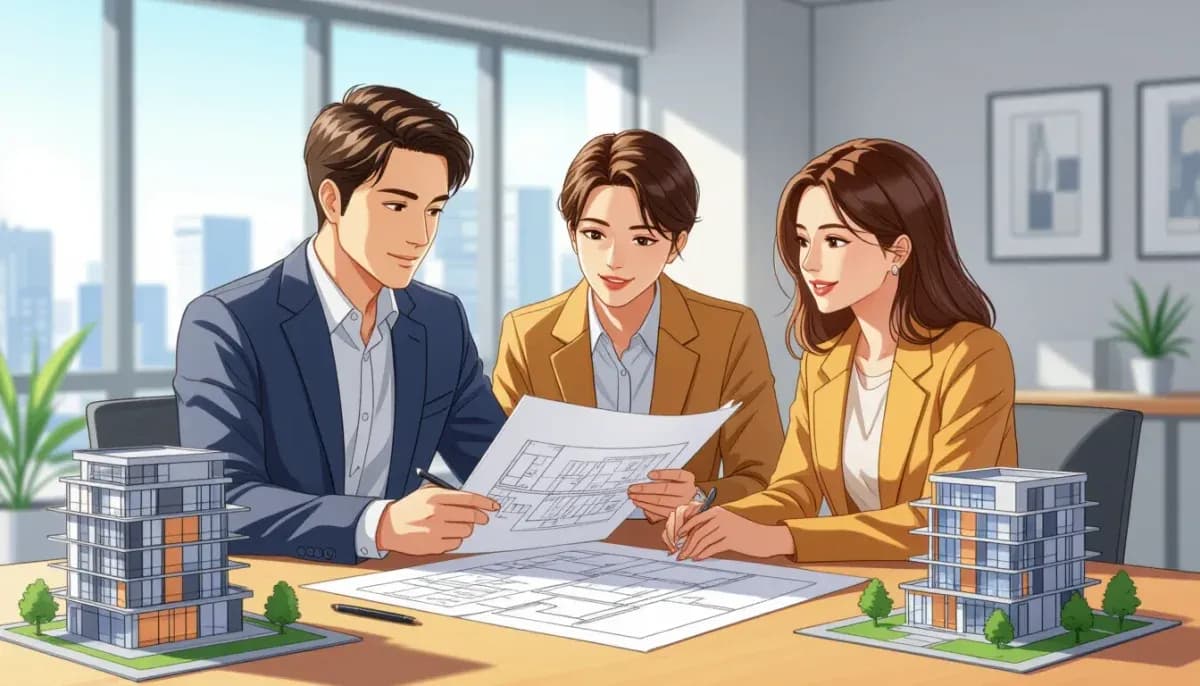
Learn how to choose the right developer for new construction in Japan as a foreigner. Compare House Makers, local builders, and condo developers with tips on warranties, language support, and red flags.
How to Choose a Developer for New Construction in Japan
Buying new construction property in Japan is an exciting prospect — you get the latest earthquake-resistant design, brand-new fixtures, and comprehensive warranties. But choosing the right developer or builder is one of the most critical decisions you'll make. For foreigners, the process comes with unique challenges: Japanese-only contracts, unfamiliar company structures, and cultural differences in how developers operate. This guide walks you through everything you need to know to select a trustworthy developer for new construction in Japan.
Understanding the Types of Developers and Builders in Japan
Before choosing a developer, you need to understand Japan's distinct categories of construction and real estate companies. Each type offers a different balance of quality, cost, flexibility, and foreign-client support.
| Type | Japanese Term | Key Features | Best For |
|---|---|---|---|
| House Maker | ハウスメーカー | National brand, standardized quality, high cost | Buyers wanting predictability |
| Local Builder | 工務店 | Community-based, better value, more customization | Buyers wanting cost-performance |
| Architectural Firm | 設計事務所 | Fully bespoke design, highest cost | Buyers wanting unique design |
| Condo Developer | 分譲マンションデベロッパー | Sells completed condo units off-plan | Urban condo buyers |
| Spec Home Builder | 建売業者 | Pre-built detached homes, lower cost | Budget-conscious buyers |
House Makers (ハウスメーカー) are large national companies like Daiwa House, Sekisui House, Misawa Homes, and Sumitomo Forestry. They build homes using highly standardized factory-produced components. Quality is predictable and warranties are solid, but costs are high and customization is limited. Many have English-capable staff or dedicated foreign-client departments, making them more accessible for foreigners.
Local Builders (工務店) are smaller, often family-run construction firms. They typically offer better cost-performance than House Makers and more flexibility in design, but their English support varies widely. Finding a reputable local builder requires more due diligence.
Architectural Firms (設計事務所) provide fully bespoke design services. They are the most expensive option and used by buyers who want a truly unique home. The design and construction process takes longer, and finding one with foreign-client experience requires careful research.
Condo Developers include major names like Mitsui Fudosan Residential, Sumitomo Realty & Development, and Nomura Real Estate. They develop and sell new condominium units before or during construction. You deal directly with the developer rather than through an agent, which eliminates the standard ~3% brokerage commission.
Key Criteria for Evaluating a Developer
Not all developers are created equal. When evaluating potential developers for your new construction purchase in Japan, consider these critical factors:
1. Track Record and Reputation
Research the developer's history of completed projects. How long have they been in business? How many units have they delivered? Are there public reviews or ratings from previous buyers? In Japan, large developers like Mitsui Fudosan and Daiwa House have decades-long track records and publicly available delivery histories. Smaller or newer companies require more scrutiny.
Look for any news about delays, construction defects, or financial problems. Japanese real estate forums and review sites (such as マンションコミュニティ for condos) can provide buyer feedback on specific developments.
2. Financial Stability
A developer's financial health directly affects your purchase security. If a developer becomes insolvent before completing construction, you could lose your deposit or be left with an unfinished property. Under Japan's real estate regulations, new condo developers are required to either hold funds in escrow or arrange completion guarantee insurance — confirm which mechanism applies to your purchase.
Check if the developer is publicly listed (上場企業). Listed companies have publicly audited financial statements. For unlisted developers, ask about their completion guarantee (完成保証) and defect liability insurance (瑕疵担保責任保険).
3. Warranty and After-Sales Service
Japan's Housing Quality Assurance Law (品確法) mandates a 10-year structural warranty on all new construction, covering load-bearing structural elements and water-sealing components. This is the legal minimum. Many reputable developers offer additional warranty periods or extend coverage to other building systems.
Beyond the statutory warranty, ask about:
- Post-delivery inspection schedule (typically at 1 year and 2 years)
- Response time for warranty claims
- Dedicated customer service contact for defect reports
- Whether after-sales service is handled in-house or outsourced
4. English Support and Foreign-Client Experience
For foreigners, this is often the most practical factor. All construction contracts in Japan — including the Important Items Explanation (重要事項説明書) and the construction contract (工事請負契約書) — are prepared in Japanese. Unless you are fluent in Japanese legal terminology, you need either English-capable staff at the developer or a qualified interpreter/translator.
Questions to ask:
- Do you have English-speaking staff or a dedicated foreign-client team?
- Can you provide translated summaries of key contract documents?
- Have you previously worked with foreign national buyers?
Some major House Makers and large condo developers have dedicated international divisions. For local builders, you may need to arrange your own interpreter.
5. Construction Quality Standards
Look for developers who meet or exceed Japan's quality benchmarks:
- Housing Performance Evaluation (住宅性能評価): A voluntary third-party assessment covering seismic resistance, energy efficiency, and durability. Properties with this certification have been independently verified.
- Long-Life Quality Housing (長期優良住宅): A government certification for homes built to last 75-200 years with high durability, seismic resistance, and energy performance. Certified homes qualify for tax benefits.
- ZEH (Net Zero Energy House): Indicates high energy efficiency standards. Increasingly common in new construction.
Ask the developer specifically about their seismic resistance rating — in Japan, this is one of the most important quality metrics.
The New Construction Purchase Process
Understanding the typical purchase timeline helps you know when to evaluate a developer and when it's too late to change course.
| Stage | Timeline | Key Action |
|---|---|---|
| Developer research | Before visit | Research reputation, track record |
| Showroom/model visit | Ongoing | Assess quality, ask questions |
| Purchase application | After selection | Submit application + deposit (¥20,000–¥100,000) |
| Lottery (if applicable) | If oversubscribed | Wait for result |
| Important Items Explanation | Before contract | Receive and review document |
| Contract signing | After explanation | Sign purchase contract + pay 5-10% deposit |
| Construction period | 6-18 months | Monitor progress |
| Pre-delivery inspection | Before handover | Inspect unit with developer |
| Final payment & handover | Completion | Pay remaining balance, receive keys |
| Registration | After handover | Register ownership at Legal Affairs Bureau |
Note: Popular new condo developments in desirable locations often use a lottery system (抽選) when the number of applicants exceeds available units. You may submit a purchase application and still not secure the unit. This is unique to new construction and not typical for resale properties.
For more on the overall purchase process, see our Step-by-Step Home Buying Process in Japan for Foreigners.
Major Reputable Developers to Know
Here are some of Japan's most established and reputable new construction developers, particularly relevant for foreign buyers:
Condo Developers:
- Mitsui Fudosan Residential (三井不動産レジデンシャル) — Japan's largest residential developer, known for the "Park" series of condos. Financially solid, strong after-sales service.
- Sumitomo Realty & Development (住友不動産) — Major developer with strong presence in Tokyo. Known for durable construction and long-term support.
- Nomura Real Estate (野村不動産) — Developer of the "PROUD" condo series. Strong reputation for quality and buyer communication.
- Tokyu Land Corporation (東急不動産) — Active in Tokyo and surrounding areas, strong sustainability focus.
House Makers (Custom Homes):
- Daiwa House (大和ハウス) — Japan's largest house maker by revenue. Offers partial English support.
- Sekisui House (積水ハウス) — Strong emphasis on sustainability and long-life quality housing certification.
- Misawa Homes (ミサワホーム) — Known for seismic-resistant design and modular construction.
- Sumitomo Forestry (住友林業) — Premium wood-frame homes with a strong natural materials philosophy.
For general guidance on new construction property types, visit the Buying New Construction Property in Japan Foreigners Guide at Gaijin Buy House.
Red Flags: When to Walk Away
Not every developer claiming to build quality homes deserves your trust. Be cautious if you encounter:
Contractual Red Flags:
- Pressure to sign the purchase contract before the Important Items Explanation has been delivered
- Refusal to allow an independent inspector or interpreter at pre-signing meetings
- Vague or incomplete defect liability terms
- No clear completion guarantee or escrow arrangement
Company-Level Red Flags:
- No verifiable track record of completed projects
- Inability to provide references from previous buyers
- Financial instability or news of delayed payments to subcontractors
- No response to written questions about warranty terms
Communication Red Flags:
- Staff who become evasive when you ask for English-language support
- Resistance to allowing you time to have documents reviewed by an independent advisor
- Unsolicited urgency — "You must sign today or lose the unit"
If you encounter multiple red flags from the same developer, it is worth considering other options. Japan's new construction market is competitive and reputable alternatives exist. For more guidance, see the Complete Guide to Buying Property in Japan as a Foreigner.
Language and Legal Considerations for Foreign Buyers
This is an area where many foreign buyers underestimate the complexity. Japan's residential real estate transactions involve several legally significant documents that are exclusively in Japanese:
- Important Items Explanation (重要事項説明書): A legally required document that must be explained to you by a licensed real estate agent (宅地建物取引士) before you sign. It covers the property's legal status, restrictions, and terms of sale.
- Sales Contract (売買契約書): The binding purchase agreement.
- Construction Contract (工事請負契約書): For custom homes, the agreement governing the construction work.
You have the legal right to request time to review these documents before signing. Use it. Arrange a qualified translator or seek help from a bilingual real estate agent. For further guidance on legal procedures, see our Legal Procedures and Documentation for Japan Property Purchase guide.
Important 2025 update: A new law effective 2025 requires nationality disclosure in large land transactions, and foreign buyers must report certain acquisitions to Japan's Finance Ministry. Confirm with your developer or agent whether your purchase triggers these requirements.
For comprehensive support on mortgages and financing, Living in Nihon's property buying guide covers the financing side of the process in detail.
Custom Home vs. New Condo: Choosing the Right Path
The choice between building a custom home and buying a new condo affects which type of developer relationship you'll have.
| Factor | New Condo (分譲マンション) | Custom Home (注文住宅) |
|---|---|---|
| Developer relationship | Buy from developer as seller | Contract developer as builder |
| Timeline | Typically 6-12 months if under construction | 12-18+ months from land purchase |
| Customization | Very limited (pre-designed) | High (especially with local builder) |
| Brokerage fee | None (bought direct from developer) | Varies |
| Language support | Major developers have some English support | Variable — must verify |
| Risk | Developer insolvency during construction | Builder insolvency, cost overruns |
| Depreciation | 10-20% immediately post-handover | Similar for new builds |
For those interested in the custom home building route, the Land Purchase and Custom Home Building in Japan Foreigners Guide at Gaijin Buy House provides a detailed overview of the process. Custom home construction requires a contingency budget of 10-15% above quoted costs for unforeseen items like soil improvement or design changes.
For a broader overview of property types available to foreign buyers, see our Types of Properties Available in Japan: A Complete Guide.
Practical Steps to Choose Your Developer
Here is a structured approach to make your developer selection:
Step 1 — Define your requirements. Decide: new condo or custom home? Urban or suburban? Budget range? Required language support level?
Step 2 — Research candidates. Use Japan's real estate portals (SUUMO, at home, REINS), check developer websites, read buyer reviews, and ask for referrals from your bilingual real estate agent.
Step 3 — Visit showrooms and model units. Assess actual build quality. Inspect finishes, fixtures, insulation, and soundproofing. Ask questions — a reputable developer will welcome detailed questions.
Step 4 — Verify financial stability. For listed companies, review recent financial statements. For private companies, ask about completion guarantee and defect liability insurance coverage.
Step 5 — Request references. Ask for contact information for previous foreign buyers or completed project documentation you can review.
Step 6 — Confirm language support. Establish the level of English support available before committing.
Step 7 — Review the Important Items Explanation carefully. Never sign before having this document thoroughly reviewed with qualified translation assistance.
For additional resources on finding employment and building your life in Japan as a foreigner, For Work in Japan offers guidance on careers and relocation. Japan's Real Estate Japan guide to buying a home is also a useful English-language reference covering the overall purchase process. Understanding Japan's Visa and Residency Considerations for Property Buyers is also important before committing to a major purchase.
Conclusion
Choosing the right developer for new construction in Japan requires balancing reputation, financial stability, warranty coverage, language accessibility, and construction quality. For foreigners, the language barrier and unfamiliarity with Japan's distinct categories of builders add complexity to what is already one of life's largest financial decisions.
The good news: Japan has some of the world's most reliable residential developers, strict legal protections for buyers including mandatory 10-year structural warranties, and an increasingly international-friendly property market. By doing your due diligence — verifying track records, securing language support, understanding your contractual rights, and watching for red flags — you can confidently navigate the new construction market in Japan.
For a comprehensive foundation, start with our Complete Guide to Buying Property in Japan as a Foreigner.

Originally from Vietnam, living in Japan for 16+ years. Graduated from Nagoya University, with 11 years of professional experience at Japanese and international companies. Sharing information about buying property in Japan for foreigners.
View Profile →Related Articles
Energy Efficiency: New Homes vs Old Homes in Japan
Compare energy efficiency in new vs old homes in Japan. Learn about insulation grades, ZEH standards, utility costs, subsidies up to ¥2 million, and how to evaluate any property's energy performance as a foreign buyer.
Read more →
Hidden Problems in Used Properties: What to Check Before Buying
Discover the 4 types of hidden defects in Japanese used properties — physical, psychological, environmental, and legal. Complete inspection checklist, repair costs, and legal protections for foreign buyers.
Read more →
How Property Age Affects Resale Value in Japan
Learn how building age impacts resale value in Japan — statutory depreciation schedules, the critical 1981 seismic code, land vs. building value, and strategies for foreign buyers to maximize returns.
Read more →
How to Negotiate the Price of Used Property in Japan
How to negotiate used property prices in Japan as a foreigner. Covers discount ranges, cultural etiquette, offer strategies, and tips to get the best deal.
Read more →
Buying Off-Plan Property in Japan: Risks and Precautions
A comprehensive guide for foreigners on the financial, legal, construction, and market risks of buying off-plan property in Japan, with a due diligence checklist to protect your investment.
Read more →
Cost Comparison: New Build vs Used Property in Japan
Compare the true costs of new build vs used property in Japan. Includes prices, transaction fees, renovation costs, depreciation, warranties, and mortgage tips for foreigners.
Read more →