
Japan Used Property Age and Building Standard History

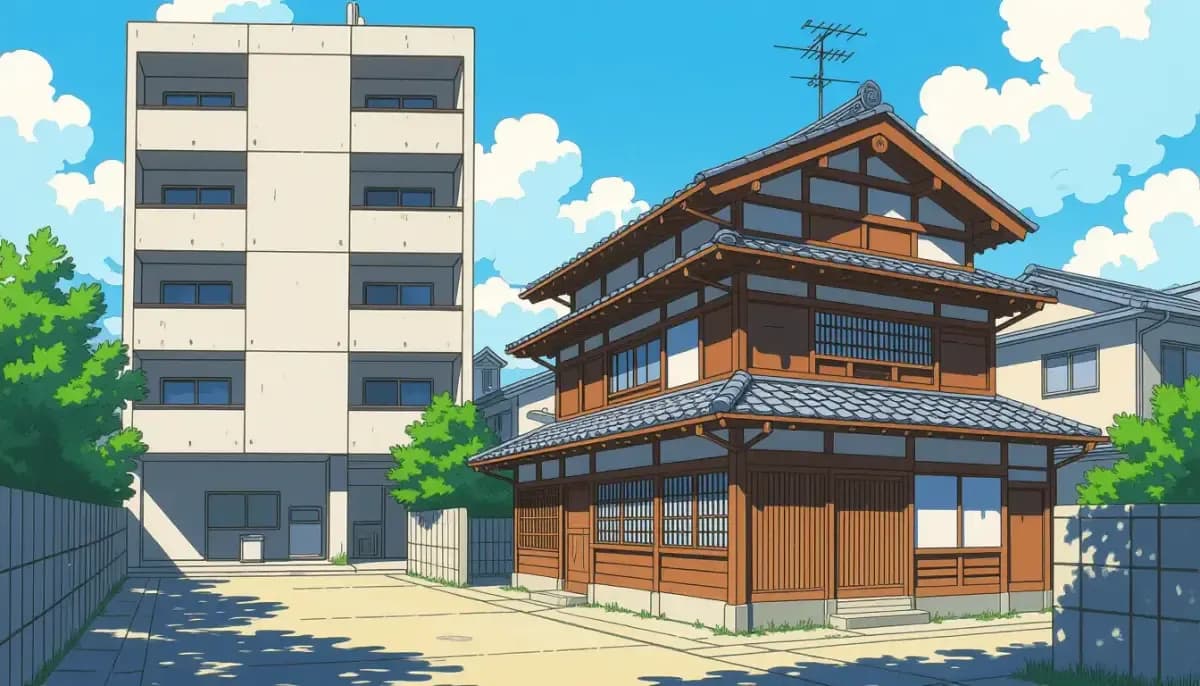
Understand Japan's building standard history for used property buyers. Learn what the 1981 and 2000 seismic standard changes mean for safety, financing, and property value in Japan.
Japan Used Property Age and Building Standard History
When buying used property in Japan, understanding the country's building standard history is not optional — it is essential. The year a building was constructed determines its earthquake resistance class, its financing eligibility, its depreciation value, and ultimately how safe it will be when the next major earthquake strikes. For foreign buyers navigating the Japanese real estate market, this knowledge is the difference between a wise investment and a costly mistake.
This guide walks you through Japan's building code evolution, what the key dates mean for buyers, how age affects pricing and financing, and what to look for when evaluating used properties.
The Foundation: Japan's Building Standards Act
Japan's first nationwide building regulation appeared in the City Building Law of 1920, enacted to impose basic structural and fire safety requirements on urban construction. However, the devastating 1923 Great Kanto Earthquake — which killed over 100,000 people and destroyed much of Tokyo and Yokohama — exposed the inadequacy of those early standards. In its aftermath, Japan began systematically rethinking how buildings should be constructed.
The modern Building Standards Act (建築基準法) was enacted in 1950, establishing comprehensive national requirements for structural integrity, fire resistance, and site safety. This law has been amended multiple times since, with the most consequential revisions occurring in 1981 and 2000 — both triggered by catastrophic earthquakes.
For foreign buyers, these two dates create a three-tier system that every used property can be slotted into, and each tier carries very different implications for safety, financing, and value.
The 1981 Watershed: Shin-Taishin vs Kyu-Taishin
The single most important date in Japanese residential construction history is June 1, 1981.
On that date, major revisions to the Building Standards Act came into force following the 1978 Miyagi Earthquake (M7.4). These revisions created what is now called the Shin-Taishin standard (新耐震基準) — literally "new earthquake-resistant standard." Any building whose construction was confirmed before this date falls under the old Kyu-Taishin standard (旧耐震基準), or "old earthquake-resistant standard."
What changed fundamentally:
| Criterion | Kyu-Taishin (pre-1981) | Shin-Taishin (post-1981) |
|---|---|---|
| Design earthquake level | Shindo 5 moderate | Shindo 6–7 extreme |
| Structural requirement | No major damage | No collapse (damage acceptable) |
| Occupant safety focus | Secondary | Primary |
| Wall ratio requirements | Basic | Stricter, calculated |
| Foundation requirements | Minimal | Reinforced specifications |
In practical terms, a Kyu-Taishin building was designed to remain undamaged in a moderate earthquake, but was not engineered to protect occupants in a major one. Shin-Taishin buildings are designed to survive a Shindo 6–7 event — the highest levels on Japan's intensity scale — without collapsing, even if they sustain damage.
A critical point about the 1981 date: The relevant date is not when construction finished, but when the construction confirmation certificate (確認済証) was issued. A building that received its certificate in April 1981 but was completed in September 1981 is still Kyu-Taishin. Always verify the certificate date, not the completion date.
For a detailed comparison of new versus used property economics, see our guide on Japan New Build vs Used Property: Complete Comparison.
The 2000 Revision: A Third Safety Tier
The 1995 Great Hanshin-Awaji Earthquake (M7.3) killed over 6,400 people and collapsed or severely damaged roughly 400,000 buildings in Kobe and surrounding areas. Post-disaster analysis revealed a troubling finding: even some Shin-Taishin buildings had collapsed, particularly wooden structures.
In response, Japan enacted another major revision to the Building Standards Act effective June 1, 2000, creating what is now effectively a third tier. This revision applied primarily to wooden (mokuzō) structures and introduced:
- Mandatory metal joint connectors at all structural joints, preventing beam-column separation
- Stronger foundation requirements, including reinforced concrete foundations for most wooden homes
- Balanced wall placement rules, requiring load-bearing walls to be distributed symmetrically to prevent torsional collapse
- Ground investigation requirements before construction
Buildings constructed after June 2000 represent the highest safety standard available on the used market today.
For more on how building standards affect earthquake safety in Japan, read our companion article on 1981 Earthquake Standard: Why Building Age Matters in Japan.
Real-World Evidence: Earthquake Data by Building Era
The difference between building tiers is not theoretical — it is documented in disaster after disaster.
1995 Great Hanshin-Awaji Earthquake:
- Approximately 98% of collapsed wooden houses were built under Kyu-Taishin standards
- Post-1981 buildings performed dramatically better, though some still failed
2016 Kumamoto Earthquakes (two M7.0+ events in quick succession):
| Building Era | Approximate Wooden House Collapse Rate |
|---|---|
| Pre-1981 (Kyu-Taishin) | ~28% |
| 1981–2000 (Shin-Taishin) | ~8.7% |
| Post-2000 (Revised Shin-Taishin) | ~2.2% |
Every reinforced concrete building that collapsed in Kumamoto was pre-1981 construction. The data creates an unambiguous hierarchy: post-2000 > 1981-2000 > pre-1981.
Earthquake Building Codes and Technology in Japan - Japan Real Estate Resources provides an excellent technical overview of these engineering differences.
How Building Age Affects Property Pricing
Building standard history directly shapes market pricing. Japan's property market prices used homes on a sliding scale based on age and construction quality.
Age-based pricing tiers (approximate relative to equivalent new construction):
| Property Age | Approximate Price vs New | Notes |
|---|---|---|
| 0–5 years | 80–95% | Near-new condition, typically Shin-Taishin+ |
| 6–10 years | 65–80% | Equipment begins aging, still modern |
| 11–20 years | 50–70% | Post-1981 stock; equipment replacement may be needed |
| 21–30 years | 35–55% | Approaching or past 2000 standard cutoff |
| 31–40 years | 20–40% | Often 1981-era or borderline; renovation likely needed |
| Over 40 years | 10–30% | Likely Kyu-Taishin; seismic retrofit costs apply |
According to data analyzed by Living in Nihon, Tokyo new apartment prices rose from ¥67.32 million (2015) to ¥111.81 million (2024) — a 66% increase. Used apartments rose more gradually, from ¥44.79 million (2018) to ¥57.76 million (2022), a 29% increase over the same period. Used properties represent genuine value, but the building standard tier must factor into any price assessment.
For an overview of overall market trends, see Japan Real Estate Market Overview and Trends for Foreign Investors.
Depreciation: Tax and Loan Implications by Building Type
Japan's tax law treats buildings as depreciating assets. Understanding the depreciation schedule is important both for assessing the book value of a property and for understanding loan eligibility.
Legal depreciation periods (法定耐用年数) under Japanese tax law:
| Structure Type | Depreciation Period |
|---|---|
| Wooden (mokuzō) | 22 years |
| Light steel frame (karukōzō) | 19–34 years (varies by thickness) |
| Heavy steel frame (jūkōzō) | 34 years |
| Reinforced concrete (RC/SRC) | 47 years |
Once a building exceeds its legal depreciation period, its book value is recorded at 10% of original cost. For wooden buildings, this means any house over 22 years old has minimal paper value. For Kyu-Taishin wooden homes (pre-1981), the structure itself carries essentially zero book value.
This depreciation structure has a direct impact on mortgage eligibility and loan terms. Many Japanese banks use the remaining legal service life to set maximum loan periods. A 30-year-old wooden house may only qualify for a 10–15 year loan term rather than the standard 35 years, significantly increasing monthly payments.
Our guide on Mortgages and Home Loans for Foreigners in Japan covers how foreign buyers specifically are affected by these lending constraints.
Financing Eligibility by Building Standard
Building standard and age create significant differences in mortgage availability:
Pre-1981 (Kyu-Taishin) properties:
- Many major banks will not lend at all
- Those that do typically offer lower loan-to-value ratios (LTV)
- Higher interest rates or stricter conditions common
- Seismic retrofit (耐震改修) may be required before lending approval
1981–2000 (Shin-Taishin) properties:
- Most banks will lend, but with attention to remaining service life
- Loan periods often capped based on remaining depreciation
- Post-1984 construction tends to attract the broadest lender acceptance
Post-2000 (Revised Shin-Taishin) properties:
- Highest financing flexibility
- Standard 35-year mortgages widely available if within depreciation period
- Better loan-to-value ratios
For pre-1981 properties with seismic reinforcement completed and certified, some lenders will reconsider standard terms. This requires a seismic diagnosis (耐震診断) and documented retrofit work, which typically costs ¥1–3 million depending on the structure.
Gaijin Buy House's used property renovation guide covers the retrofit process in detail for foreign buyers.
Japan's Three Seismic Engineering Technologies
When evaluating modern or recently renovated properties, understanding the three seismic engineering approaches helps assess relative safety:
1. Taishin (耐震) — Earthquake Resistance The baseline standard. Uses reinforced walls and load-bearing pillars to withstand seismic forces. All properties built to Shin-Taishin standards use Taishin at minimum. The building absorbs earthquake energy through its structure.
2. Seishin (制震) — Earthquake Damping Incorporates devices — typically hydraulic dampers or metallic yield dampers — installed in the wall cavities or frame to absorb and dissipate kinetic energy. Reduces damage to the structure and contents during strong shaking. Found in higher-spec new construction and some premium renovations.
3. Menshin (免震) — Base Isolation The highest-performing technology. The building sits on a system of isolators (rubber bearings, sliders) that decouple the structure from ground movement entirely. Reduces interior shaking by up to two-thirds compared to conventional Taishin construction. Most common in large condominium towers built after 2000.
When viewing properties, ask whether the building uses Taishin only or incorporates Seishin or Menshin technology. For condominiums, this information is typically in the building specifications document.
Japan's Akiya Problem: Age and the Vacant House Crisis
Japan's building standard history intersects with a national housing challenge: the akiya (空き家) crisis. Japan has over 8 million vacant properties nationwide, the majority of which are older stock — many built before the 1981 or 2000 standard revisions.
Foreign buyers are increasingly attracted to akiya for their low purchase prices (sometimes ¥1–5 million or even less). However, the building standard tier of these properties must be the first evaluation criterion:
- Pre-1981 akiya may require seismic retrofitting costing ¥1–3 million before banks will lend
- Very old wooden akiya (pre-1960) may require near-complete structural replacement
- Rural akiya often have soil and foundation issues in addition to building age concerns
A professional home inspection (住宅インスペクション) costs ¥50,000–100,000 and is strongly recommended for any used property purchase. For Kyu-Taishin properties, a seismic diagnosis is essential before making an offer.
For the broader context of rural property buying, see Rural and Countryside Properties in Japan for Foreign Buyers.
How to Verify a Property's Building Standard
When evaluating any used property in Japan, follow these verification steps:
Step 1: Request the construction confirmation certificate (確認済証) This document shows when construction was confirmed. The date on this document — not the completion date — determines the seismic standard.
Step 2: Check the inspection completion certificate (検査済証) Confirms the building was actually built to the approved design. Note: many older properties lack this document, which can create complications.
Step 3: Review building specification sheets (建物仕様書) For condominiums, ask for the building's technical specifications, which will state whether Taishin, Seishin, or Menshin technology is used.
Step 4: Commission a home inspection A professional inspector can identify structural issues, moisture damage, pest damage (termites are a serious concern in older wooden properties), and signs of improper modifications.
Step 5: Consider a seismic diagnosis for pre-1981 properties If you are seriously interested in a Kyu-Taishin property, a seismic diagnosis provides a formal assessment and — if reinforcement is done — a certificate that may improve financing options.
For a complete overview of the property purchasing process, see Step-by-Step Home Buying Process in Japan for Foreigners.
What Foreign Buyers Should Know
Foreign buyers face the same rules as Japanese nationals regarding building standards — there is no separate standard. However, there are a few practical considerations specific to foreigners:
- Language barrier: Building certificates and inspection reports are in Japanese. Ensure your real estate agent or a bilingual inspection firm can translate and explain key documents.
- Remote purchasing risk: Foreign buyers sometimes purchase properties remotely or with minimal on-site visits, increasing the risk of overlooking visible signs of age-related deterioration.
- Akiya bank processes: While akiya banks provide free listings, they rarely screen for building standard compliance. Due diligence is entirely the buyer's responsibility.
- Renovation financing: Some banks offer separate renovation loans alongside property purchase loans — useful if you plan to retrofit a Kyu-Taishin property.
For more on the legal and practical aspects of property ownership as a foreigner, see Can Foreigners Buy Property in Japan? Legal Rights and Restrictions.
You can also explore additional perspectives and practical tips at For Work in Japan, which covers life in Japan as an expat, and Dovetail's detailed breakdown of pre- and post-1981 seismic standards for investors.
Summary: The Three-Tier Framework
| Tier | Construction Date | Standard | Key Implication |
|---|---|---|---|
| Tier 1 | Before June 1981 | Kyu-Taishin | Highest seismic risk; limited financing; may need ¥1-3M retrofit |
| Tier 2 | June 1981–May 2000 | Shin-Taishin | Significantly safer; standard financing available; check wooden joints |
| Tier 3 | June 2000 onward | Revised Shin-Taishin | Highest safety tier on used market; broadest financing; metal joints required |
Understanding where any used property falls within this framework should be your first step — before location analysis, before price negotiation, and before any emotional attachment forms. Japan's earthquake history has made building standard compliance a matter of life and safety, and the market reflects that reality in pricing, financing terms, and long-term resale value.
For a complete overview of new construction warranty protections to compare against used property risks, see our guide on Japan New Construction Home Warranty and Guarantee.

Originally from Vietnam, living in Japan for 16+ years. Graduated from Nagoya University, with 11 years of professional experience at Japanese and international companies. Sharing information about buying property in Japan for foreigners.
View Profile →Related Articles
Energy Efficiency: New Homes vs Old Homes in Japan
Compare energy efficiency in new vs old homes in Japan. Learn about insulation grades, ZEH standards, utility costs, subsidies up to ¥2 million, and how to evaluate any property's energy performance as a foreign buyer.
Read more →
Hidden Problems in Used Properties: What to Check Before Buying
Discover the 4 types of hidden defects in Japanese used properties — physical, psychological, environmental, and legal. Complete inspection checklist, repair costs, and legal protections for foreign buyers.
Read more →
How to Choose a Developer for New Construction in Japan
Learn how to choose the right developer for new construction in Japan as a foreigner. Compare House Makers, local builders, and condo developers with tips on warranties, language support, and red flags.
Read more →
How Property Age Affects Resale Value in Japan
Learn how building age impacts resale value in Japan — statutory depreciation schedules, the critical 1981 seismic code, land vs. building value, and strategies for foreign buyers to maximize returns.
Read more →
How to Negotiate the Price of Used Property in Japan
How to negotiate used property prices in Japan as a foreigner. Covers discount ranges, cultural etiquette, offer strategies, and tips to get the best deal.
Read more →
Buying Off-Plan Property in Japan: Risks and Precautions
A comprehensive guide for foreigners on the financial, legal, construction, and market risks of buying off-plan property in Japan, with a due diligence checklist to protect your investment.
Read more →