
Train Station Proximity and Japan Property Value Correlation

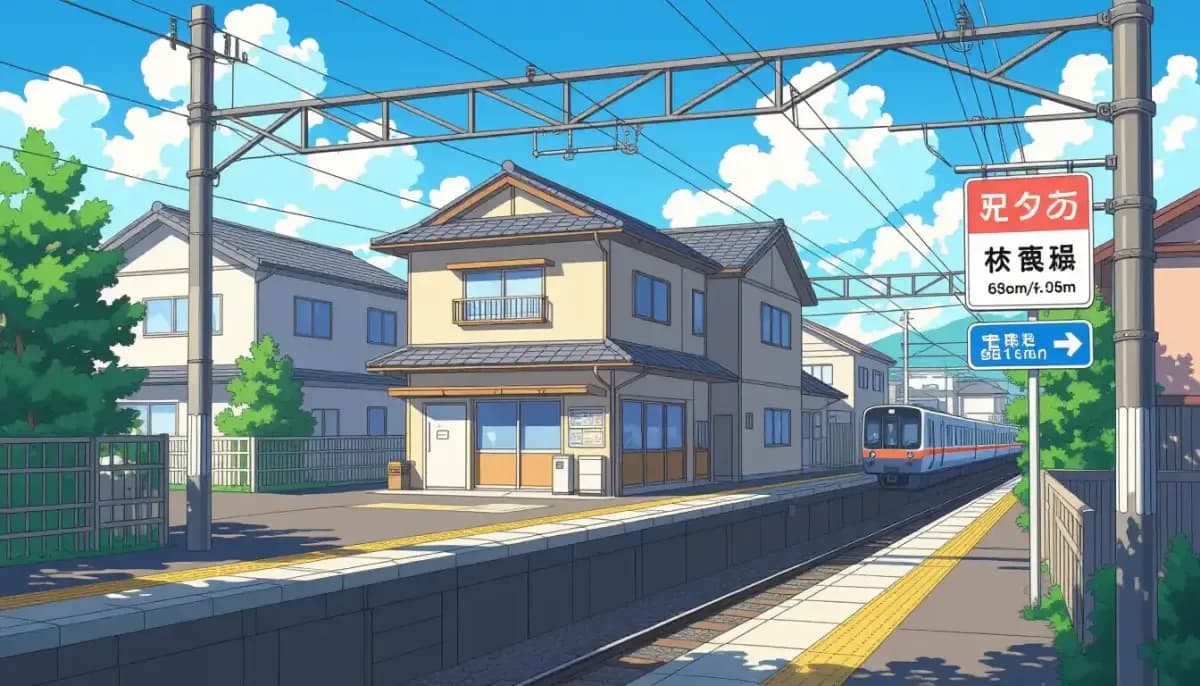
How does train station walking distance affect property values in Japan? Discover the data, price premiums, and practical tips for foreign buyers navigating Japan's real estate market.
Train Station Proximity and Japan Property Value Correlation
When buying property in Japan, few factors shape value as decisively as walking distance to the nearest train station. Whether you're a foreign investor eyeing Tokyo or an expat searching for your first home in Osaka, understanding the station proximity premium is essential. Japan's dense rail network — over 27,000 kilometers of track and hundreds of busy stations — means that a difference of five minutes on foot can translate to tens of thousands of dollars in property value.
This guide breaks down the science, data, and practical implications of train station proximity for anyone navigating the Japanese real estate market.
Why Train Station Proximity Matters So Much in Japan
Japan's urban culture is built around rail. Unlike car-centric countries, most Japanese city dwellers depend on trains and subways for their daily commute. Surveys consistently show that Japanese apartment seekers list "walkability to the nearest station" as a top priority — sometimes ahead of property size or age.
The Japanese real estate industry has even standardized how walking distance is calculated: 80 meters per minute on a flat road. This means that a property listed as "10-minute walk" sits approximately 800 meters from the station. This standardization makes comparisons straightforward, but the premium it creates is anything but small.
For foreign buyers, this cultural weight on transit access creates both opportunity and risk. Buy close to a station and you capture strong demand, liquidity, and appreciation. Stray too far and you may face prolonged vacancy or a painful resale discount.
For a broader understanding of how location affects property decisions in Japan, see our Complete Guide to Buying Property in Japan as a Foreigner.
The Data: How Much Does Station Distance Affect Price?
Multiple studies and market surveys confirm a clear, measurable relationship between station distance and property value:
| Walking Distance to Station | Price/Rent Premium vs. 15+ Min Walk | Vacancy Risk |
|---|---|---|
| 1–3 minutes | +35% to +50% | Very Low |
| 4–5 minutes | +20% to +30% | Low |
| 6–10 minutes | +5% to +15% | Moderate |
| 11–15 minutes | Baseline | Higher |
| 16–20 minutes | -10% to -20% | High |
| 20+ minutes | -25% or more | Very High |
Key data points from the Japanese market:
- 30% rent difference between studio apartments 5 minutes vs. 10 minutes from a station, according to Tokyo market surveys
- Properties beyond 10 minutes walking distance experience significantly higher vacancy rates and longer time-on-market
- A real-world Fukuoka case study documented a building where a property was advertised as 9–10 minutes from the station but was actually 17–19 minutes away. The result: roughly 28% vacancy in the building, extended empty periods, and substantial rent reductions — nearly causing the investor a financial loss
- Survey data from 180 greater Tokyo residents found 31.1% consider a 10-minute walk as "near the station" and 25% view 5 minutes as nearby, confirming the cultural benchmark
For those evaluating Tokyo specifically, our Buying Property in Tokyo as a Foreigner guide provides neighborhood-level analysis.
Infrastructure Announcements: The Anticipation Premium
Station proximity value isn't static — it shifts dramatically when new transit lines or stations are announced. Japan's history of major rail projects shows a consistent pattern:
Announcement Effect: Property values near planned stations typically rise 5% to 15% within months of a project announcement.
Completion Effect: Once a new line or station opens, values often jump an additional 10% to 20%, reflecting both actual improved access and pent-up speculative demand being realized.
Recent examples illustrate this pattern vividly:
- Nakano Ward (Tokyo): Site of major station area redevelopment projects, land prices surged 16.3% in 2025
- Suginami Ward (Tokyo): Benefiting from nearby transit improvements, land prices rose 15.1% in 2025
- Shibuya's Sakura Stage complex area: A single site near this new station-adjacent development increased by a staggering 32.7% in one year
- Yurakucho Line extension: Tokyo Metro plans a 4.8-kilometer extension from Toyosu to Sumiyoshi (mid-2030s target), with property values along the projected route already attracting speculative interest
This anticipation premium is especially relevant for foreign investors watching Japan's ongoing infrastructure investment cycle. For a broader market overview, see Japan Real Estate Market Overview and Trends.
The 10-Minute Rule: Japan's Property Investing Golden Standard
Among real estate professionals in Japan, the "10-minute rule" is widely cited: a property should be within a 10-minute leisurely walk to the nearest train station. Going beyond this threshold consistently:
- Reduces rental demand — tenants with options will choose more convenient locations first
- Increases vacancy times — vacant properties eat into returns faster
- Dampens resale value — buyers apply a discount for inferior access
- Reduces liquidity — properties take longer to sell at any price
The exception to this rule applies to:
- Major transportation hubs (up to 15 minutes acceptable): Being 12–15 minutes from Shinjuku, Shibuya, or Osaka's Umeda can still command strong demand due to the hub's exceptional connectivity
- Suburban family homes with parking: Car-owning families in suburban areas are less station-dependent, making 15+ minute walk distances more acceptable if parking is available
For buyers in regional cities and countryside areas where rail is less central, our guide to Rural and Countryside Properties in Japan for Foreign Buyers covers the different calculus that applies outside major metro areas.
How to Evaluate Station Proximity When Buying
Foreign buyers often make mistakes when assessing station proximity. Here's a practical framework:
Step 1: Walk It Yourself Never trust the listed walking time without verification. Property listings in Japan use the 80m/min standard, but this assumes flat terrain, no traffic lights, and a direct route. Actual times can vary by 20–50%.
Step 2: Check the Line, Not Just the Distance A property 5 minutes from a small local line may be less valuable than one 8 minutes from a major express line. Consider:
- Number of lines accessible
- Express vs. local service
- Number of stops to key hubs (Shinjuku, Umeda, Nagoya Station)
- Peak-hour frequency
Step 3: Research Future Development Check municipal urban planning documents and news for planned station redevelopments or new lines near any property you're considering. An upcoming station area redevelopment can dramatically shift the value trajectory.
Step 4: Compare Properties in the Same Walk-Distance Band When comparing properties, always control for station distance. A property that seems expensive may actually be undervalued once you account for being 3 minutes closer to the station than comparable listings.
Step 5: Calculate the Full Commute Impact Living 20 minutes from the station adds 40 minutes of walking to your total daily commute. For tenants, this is a quality-of-life issue that directly affects their willingness to rent — and the rent they're willing to pay.
For detailed guidance on the full due diligence process, see Legal Procedures and Documentation for Japan Property Purchase.
Regional Differences: Tokyo vs. Other Cities
The station proximity premium varies significantly by region:
| Region | Station Proximity Premium | Notes |
|---|---|---|
| Tokyo (23 Wards) | Highest (25–50% premium within 5 min) | Most competitive; every minute counts |
| Osaka/Kobe | High (20–40% premium within 5 min) | Strong demand near major hubs |
| Nagoya | Moderate (15–30% premium) | More car use; premiums slightly lower |
| Fukuoka | Moderate (15–25% premium) | Compact city; still station-focused |
| Sapporo | Moderate (10–20% premium) | Subway-focused; winter limits cycling |
| Rural/Regional Cities | Lower (5–15% premium) | Car dependency reduces station value |
In Tokyo, the premium for being within 3 minutes of a major station versus 15 minutes can exceed 50% for comparable properties. This is why investors consistently prioritize central ward properties near multiple lines.
For city-specific insights:
- Buying Property in Osaka as a Foreigner
- Buying Property in Fukuoka and Kyushu as a Foreigner
- Buying Property in Nagoya and Chubu Region as a Foreigner
External Resources for Further Research
Understanding the station proximity premium is essential reading for any foreign investor in Japan. Here are authoritative external resources:
- Living in Nihon: Buying Property & Mortgage Guide for Foreigners — Comprehensive guide covering how location factors affect mortgage eligibility and property selection for foreigners
- For Work in Japan: Housing & Living Infrastructure Guide — Practical guide to housing, commuting, and daily life infrastructure for expats in Japan
- Gaijin Buy House: Complete Property Purchase Guide for Foreigners — Step-by-step guide specifically for foreigners navigating Japan's property market
- E-Housing: How Tokyo's Transportation Network Increases Real Estate Prices — Data-driven analysis of Tokyo Metro expansion's impact on property values
- Plaza Homes: Property Investment and Distance from Stations — Professional investor perspective on station distance as a property investment criterion
- Realestate.co.jp: How Important Is Living Near the Station? — Survey data from Tokyo residents on station proximity preferences
Conclusion: Station Proximity as a Core Investment Principle
In Japan's property market, train station proximity is not just a convenience factor — it is a fundamental value driver with measurable, documented price premiums. For foreign buyers, this creates a clear investment principle: prioritize station proximity, especially within the 10-minute walk threshold.
Properties within 5 minutes of major stations in Tokyo, Osaka, or Fukuoka consistently outperform on rental yield, vacancy rates, appreciation, and resale liquidity. Properties beyond 15 minutes face structural disadvantages that compound over time.
Whether you're buying your first Japanese home or building an investment portfolio, factoring station distance into every property evaluation is not optional — it's essential.
For the full framework on evaluating and purchasing property in Japan, start with our Step-by-Step Home Buying Process in Japan for Foreigners.

Originally from Vietnam, living in Japan for 16+ years. Graduated from Nagoya University, with 11 years of professional experience at Japanese and international companies. Sharing information about buying property in Japan for foreigners.
View Profile →Related Articles
Neighborhood Visit Checklist Before Buying Property in Japan
Use this comprehensive neighborhood visit checklist before buying property in Japan. Covers safety, transport, noise, schools, and community quality for foreign buyers.
Read more →
Future Development and Urban Planning in Japanese Neighborhoods
Understand Japan's urban planning system, major redevelopment projects, and compact city policies before buying property. Essential guide for foreign buyers navigating Japanese neighborhoods.
Read more →
Understanding Neighborhood Demographics in Japan
Learn how neighborhood demographics affect property values in Japan. Discover foreign resident concentrations by ward, aging rural trends, and how to research demographics before buying.
Read more →
Japan Neighborhood Walkability and Livability Scoring Guide
Learn how to score and evaluate Japanese neighborhoods using walkability indexes, livability criteria, and expat-friendly tools. Compare cities, wards, and key factors before buying or renting in Japan.
Read more →
Best Expat Community Neighborhoods in Japan by City
Discover the best expat neighborhoods in Japan's major cities — Tokyo, Osaka, Fukuoka, Yokohama, Kyoto, and Kobe. Practical guide for foreign residents on where to live, costs, and community resources.
Read more →
Checking Flood and Earthquake Risk for Japan Neighborhoods
Learn how to check flood and earthquake risk for any Japan neighborhood using official hazard maps, J-SHIS, and real estate tools. Essential guide for foreign property buyers.
Read more →