
Checking Flood and Earthquake Risk for Japan Neighborhoods

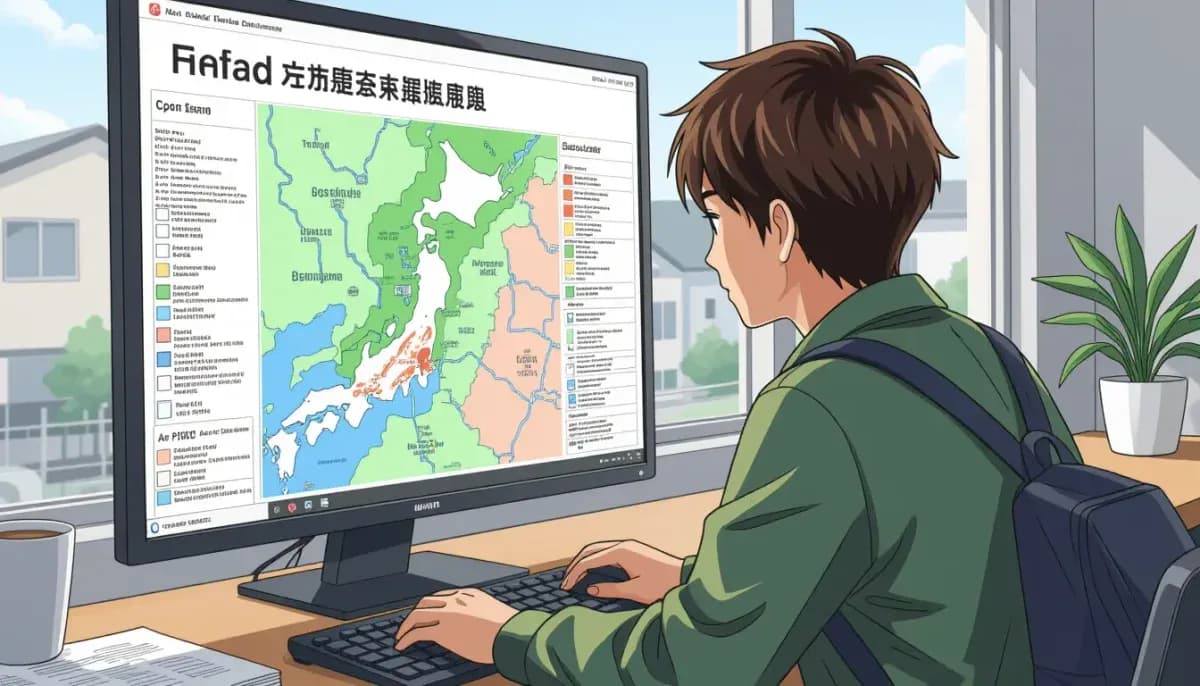
Learn how to check flood and earthquake risk for any Japan neighborhood using official hazard maps, J-SHIS, and real estate tools. Essential guide for foreign property buyers.
Checking Flood and Earthquake Risk for Japan Neighborhoods: A Complete Guide for Foreigners
Buying property in Japan comes with unique challenges — and one of the most important (yet often overlooked) is checking for natural disaster risks. Japan is one of the most disaster-prone countries on Earth, sitting at the intersection of four major tectonic plates and regularly experiencing earthquakes, typhoons, floods, and landslides. Before committing to any property, you need to understand the flood and earthquake risk of the specific neighborhood you're considering.
This guide walks you through exactly how to check flood and earthquake risk for any Japan neighborhood — using official tools, hazard maps, and local resources — so you can make a safe, informed decision.
Why Disaster Risk Matters When Buying Property in Japan
Japan's geography makes natural disaster risk unavoidable, but the risk level varies dramatically from neighborhood to neighborhood — sometimes from one city block to the next.
Key facts every foreign buyer should know:
- Japan sits at the junction of four tectonic plates, making it one of the most seismically active regions on Earth
- Approximately 10% of Japan's population lives on floodplains that make up only 2% of the country's total land area
- The 2011 Tohoku earthquake triggered Japan's worst-ever liquefaction event; nearly 85% of Urayasu city near Tokyo experienced significant ground damage
- The likelihood of a major earthquake in the Nankai Trough area within the next 30 years is estimated at 70–80%
- Since August 2020, Japanese real estate law mandates that sellers and agents explain a property's hazard map designation during any transaction
Understanding these risks before you buy — not after — can protect your investment, your family's safety, and potentially your life.
For a broader overview of the buying process, see our Complete Guide to Buying Property in Japan as a Foreigner.
Understanding Japan's Hazard Map System (ハザードマップ)
Japan has one of the world's most comprehensive hazard mapping systems. The government provides detailed maps covering:
| Disaster Type | Japanese Term | Coverage |
|---|---|---|
| River flooding | 洪水ハザードマップ | Nationwide, by municipality |
| Inland flooding | 内水ハザードマップ | Urban drainage flood risk |
| Tsunami | 津波ハザードマップ | Coastal areas |
| Storm surge | 高潮ハザードマップ | Coastal/bay areas |
| Landslide | 土砂災害ハザードマップ | Mountainous/hilly areas |
| Liquefaction | 液状化ハザードマップ | Mainly reclaimed land & riverbeds |
| Earthquake shaking | 地震動ハザードマップ | Nationwide |
The key resource: The Hazard Map Portal (disaportal.gsi.go.jp) — operated by Japan's Ministry of Land, Infrastructure, Transport and Tourism (MLIT) — lets you view all of these layers for any address in Japan. Simply enter an address or click a location on the map to see overlapping risk layers.
This is the single most important tool for checking neighborhood risk before buying or renting in Japan.
How to Check Flood Risk for Any Japan Neighborhood
Step 1: Use the National Hazard Map Portal
Go to disaportal.gsi.go.jp and search for the property address or neighborhood. Toggle the flood layer (洪水) to see:
- Expected inundation depth (color-coded from light yellow to dark red)
- Time until water recedes after a major flood event
- Historical flooding records in the area
Colors generally indicate:
- Light yellow: 0–0.5m inundation (knee-deep)
- Orange: 0.5–3m (can reach second floor)
- Red/Dark red: 3–20m (extremely dangerous; life-threatening)
Step 2: Check Your Municipality's Local Flood Map
Each city and ward publishes its own detailed flood hazard maps. Search for "[city name] 洪水ハザードマップ" (e.g., "渋谷区 洪水ハザードマップ" for Shibuya). Five central Tokyo wards — Shinjuku, Shibuya, Chuo, Chiyoda, and Minato — publish English-language hazard maps.
Step 3: Check Ground Elevation
Low elevation (especially below sea level) dramatically increases flood risk. Eastern Tokyo wards like Edogawa, Katsushika, and Adachi are "zero-meter zones" — areas at or below sea level — where worst-case flooding scenarios project 3–5 meters of standing water that could persist for over two weeks.
Aim for properties at 10 meters or higher elevation as a baseline. Properties at 20+ meters are considered well-protected from most flood scenarios.
Step 4: Look at River Proximity
Properties within 500 meters of major rivers carry elevated risk during heavy rainfall. Check the MLIT River Information System for real-time water levels and historical data.
For more details on location-specific risks in Tokyo, see our Buying Property in Tokyo as a Foreigner guide.
How to Check Earthquake Risk for Any Japan Neighborhood
Use the J-SHIS Seismic Hazard Map
The Japan Seismic Hazard Information Station (J-SHIS) provides nationwide earthquake probability maps. You can view:
- Probability of strong shaking in the next 30 years
- Expected seismic intensity by location
- Historical earthquake records
Check Soil Type and Liquefaction Risk
Liquefaction occurs when water-saturated soil loses its strength during an earthquake, causing buildings to sink or tilt. This is a serious concern in:
- Reclaimed land in Tokyo Bay, Osaka Bay, and Nagoya Bay
- Areas near rivers and former wetlands
- Neighborhoods with historically water-associated place names
A useful tip: Japanese place names often reveal the land's history. Names containing these kanji characters suggest historically wet, potentially unstable ground:
- 水 (mizu/sui) — water
- 沼 (numa) — marsh/swamp
- 池 (ike) — pond
- 川 (kawa) — river
- 島 (shima) — island/former island
- 浜 (hama) — beach/shore
You can check liquefaction risk using the National Liquefaction History Map.
Consider Building Age and Construction Standards
Japan's New Earthquake Resistance Standards (新耐震基準, shin-taishin) were introduced in 1981. Buildings constructed after June 1981 meet significantly higher seismic safety requirements.
When evaluating a property:
- Built after 1981: Generally meets modern earthquake resistance standards
- Built after 2000: Meets even stricter standards introduced after the 1995 Kobe earthquake
- Built before 1981: May not be earthquake-resistant; have it professionally inspected
For guidance on property inspection requirements, see our Legal Procedures and Documentation guide.
Safest and Most Dangerous Areas in Tokyo: A Comparison
Tokyo's risk levels vary enormously by ward. Here's how they compare:
| Ward | Flood Risk | Earthquake Risk | Overall Safety |
|---|---|---|---|
| Bunkyo | Very Low | Low | Excellent |
| Shibuya | Very Low | Low | Excellent (#1 2025 ranking) |
| Meguro | Low | Low | Very Good |
| Chiyoda | Low-Medium | Low | Very Good |
| Shinjuku | Medium | Medium | Good |
| Minato | Low (upland) / High (bayfront) | Medium | Varies by sub-area |
| Sumida | High (3–4m worst case) | High | Poor |
| Arakawa | High | Very High | Poor (#1 earthquake risk) |
| Katsushika | High | High | Poor |
| Edogawa | Very High (3–5m worst case) | High | Very Poor |
Safest characteristics:
- Located on the Yamanote or Musashino plateau (high, stable ground)
- Elevation above 20 meters
- Firm volcanic loam soil (reduces liquefaction and shaking)
- No major river running through the ward
Highest risk characteristics:
- Located in "zero-meter zones" (at or below sea level)
- Former swampland, reclaimed land, or riverbed
- Dense wooden housing stock built before 1981
- Multiple rivers bordering the area
For details on other cities, see our guides on Buying Property in Osaka and Buying Property in Yokohama and Kanagawa.
Tools and Resources for Checking Disaster Risk
Here are the key tools every foreign buyer should use:
Official Government Tools
- Hazard Map Portal — All-in-one flood, tsunami, landslide, and earthquake maps for any address in Japan
- J-SHIS Seismic Hazard Station — Detailed earthquake probability maps
- JMA Real-time Risk Map — Live earthquake early warnings and flood risk indicators
- MLIT River System — Real-time river levels and flood warnings
Real Estate Integration
Major Japanese real estate portals now integrate hazard map data:
- SUUMO — Click the "ハザードマップ" toggle on map search
- LIFULL HOME'S — Shows flood, landslide, and earthquake risk directly on property detail pages (added in 2020–2021)
- AtHome — Hazard risk layer available on listing maps
Since August 2020, real estate agents in Japan are legally required to explain a property's hazard map status. If your agent doesn't volunteer this information, ask directly.
English-Language Resources
- REthink Tokyo — Hazard Maps Guide — Practical breakdown of Tokyo's hazard map system for English speakers
- Japan Remotely — Natural Disaster Resource Guide — Comprehensive collection of disaster planning resources
- E-Housing Tokyo Safety Rankings — Detailed ward-by-ward safety comparison
Priority Sites for Expats in Japan
- Living in Nihon — Comprehensive disaster preparedness guide for foreigners living in Japan
- Gaijin Buy House — Resources for foreigners navigating the Japan property market
- For Work in Japan — Information and resources for expats living and working in Japan
What to Ask Your Real Estate Agent
When viewing properties, ask these direct questions:
- "What is the flood hazard map designation for this property?" (Required disclosure since August 2020)
- "What is the expected inundation depth in a worst-case flood?"
- "When was the building constructed, and does it meet shin-taishin standards?"
- "Is this area at risk for liquefaction?"
- "Has this property or neighborhood experienced flooding in the past 20 years?"
A good agent will have this information ready. If they seem evasive or don't know — that's a red flag.
For guidance on working with real estate agents as a foreigner, see our Step-by-Step Home Buying Process guide.
Practical Checklist Before Signing Any Contract
Use this checklist when evaluating any Japan property for disaster risk:
| Check | How to Verify | Acceptable Result |
|---|---|---|
| Flood inundation depth | Hazard Map Portal | 0m (no risk) or clearly marked |
| Ground elevation | Topographic maps, local hazard maps | 10m+ minimum; 20m+ ideal |
| Soil liquefaction risk | J-SHIS liquefaction map | Low or none |
| Building construction year | Property documents | 1981 or later |
| Distance from major rivers | Google Maps + hazard map | 500m+ preferred |
| Agent hazard disclosure | Request in writing | Full written disclosure |
| Tsunami zone (coastal areas) | Municipal tsunami hazard map | Not in designated zone |
| Landslide risk (hilly areas) | Municipal landslide hazard map | Not in designated zone |
Final Thoughts: Risk Can Be Managed, Not Eliminated
Living in Japan means accepting that some level of natural disaster risk is unavoidable. However, the difference between a high-risk and low-risk neighborhood can be enormous — sometimes the difference between minor inconvenience and catastrophic loss.
The good news: Japan's hazard mapping system is among the most detailed in the world, and the tools are freely available. As a foreign buyer, you have access to the same information as Japanese buyers. The key is knowing where to look and what questions to ask.
Take the time to check the hazard map before you visit any property. It takes 10 minutes and could save you from a very costly mistake.
For more on the full property buying process, including costs, financing, and legal procedures, visit our Complete Guide to Buying Property in Japan as a Foreigner. You may also want to review Property Taxes and Annual Costs and Hidden Costs and Fees to fully understand the financial picture.

Originally from Vietnam, living in Japan for 16+ years. Graduated from Nagoya University, with 11 years of professional experience at Japanese and international companies. Sharing information about buying property in Japan for foreigners.
View Profile →Related Articles
Neighborhood Visit Checklist Before Buying Property in Japan
Use this comprehensive neighborhood visit checklist before buying property in Japan. Covers safety, transport, noise, schools, and community quality for foreign buyers.
Read more →
Future Development and Urban Planning in Japanese Neighborhoods
Understand Japan's urban planning system, major redevelopment projects, and compact city policies before buying property. Essential guide for foreign buyers navigating Japanese neighborhoods.
Read more →
Understanding Neighborhood Demographics in Japan
Learn how neighborhood demographics affect property values in Japan. Discover foreign resident concentrations by ward, aging rural trends, and how to research demographics before buying.
Read more →
Japan Neighborhood Walkability and Livability Scoring Guide
Learn how to score and evaluate Japanese neighborhoods using walkability indexes, livability criteria, and expat-friendly tools. Compare cities, wards, and key factors before buying or renting in Japan.
Read more →
Best Expat Community Neighborhoods in Japan by City
Discover the best expat neighborhoods in Japan's major cities — Tokyo, Osaka, Fukuoka, Yokohama, Kyoto, and Kobe. Practical guide for foreign residents on where to live, costs, and community resources.
Read more →
Noise Pollution Assessment in Japanese Neighborhoods
Learn how to assess noise pollution in Japanese neighborhoods before buying or renting. Covers regulations, building types, common noise sources, complaint procedures, and practical tips for foreigners.
Read more →