
Neighborhood Visit Checklist Before Buying Property in Japan

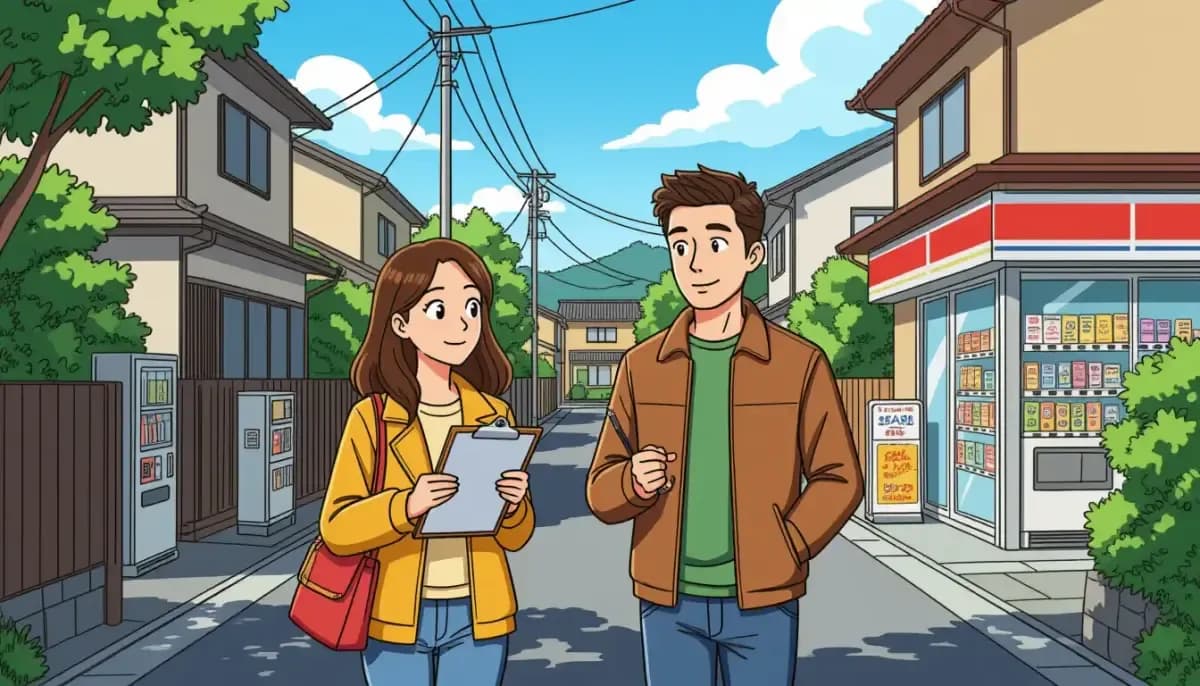
Use this comprehensive neighborhood visit checklist before buying property in Japan. Covers safety, transport, noise, schools, and community quality for foreign buyers.
Neighborhood Visit Checklist Before Buying Property in Japan
Buying property in Japan is one of the most exciting decisions a foreigner can make — but the neighborhood you choose matters just as much as the building itself. Unlike many countries, Japanese real estate listings focus heavily on the property's interior details while leaving out crucial neighborhood context. Before signing anything, you need to visit the area yourself — ideally multiple times, at different hours.
This comprehensive neighborhood visit checklist is designed specifically for foreign buyers who may be unfamiliar with the local cues and community dynamics that Japanese buyers take for granted. Use this guide to evaluate any neighborhood in Japan before committing to a purchase.
Why a Neighborhood Visit Is Non-Negotiable
Japanese real estate listings are notoriously deceptive in one particular area: walking times. Listings calculate walking distance at a standard 80 meters per minute — a brisk, uninterrupted pace that excludes traffic signals, steep slopes, pedestrian crossings, and crowded station exits. A listed "5-minute walk" from the station might realistically take 12 minutes during morning rush hour.
Beyond commute times, Japan's dense urban environment means that what looks like a quiet residential street on a map could be next to a 24-hour izakaya, a pachinko parlor, or an industrial facility. There is no substitute for physically visiting the neighborhood.
Additionally, Japan has a national akiya (vacant home) problem that reached approximately 9 million units — about 13.8% of the national housing stock — according to the 2024 Ministry of Internal Affairs survey. In neighborhoods with high vacancy rates, property values can decline, building management funds run dry, and community facilities deteriorate. Your visit can help you spot these warning signs before they become your problem.
For a complete overview of the property buying process, see our guide on Can Foreigners Buy Property in Japan? Legal Rights.
Checklist Section 1: Safety and Disaster Risk
Japan is one of the most seismically active countries on Earth. Before visiting, check the municipal hazard map (ハザードマップ, hazardmap) for the area — these are freely available from every city and ward office website, as well as the national portal at hazardmap.jp. These maps show:
- Flood risk zones — including probable flood depths in a once-in-100-year event
- Landslide risk corridors — especially relevant in hilly cities like Kobe, Yokohama, and Kyoto
- Liquefaction-prone land — common in reclaimed bay areas of Tokyo, Osaka, and Nagoya
- Tsunami inundation zones — critical for coastal properties in Tohoku, Pacific coast, and Okinawa
During your visit, observe the physical environment for drainage channels, elevation changes, and proximity to rivers. Low-lying areas near rivers that are not flagged on hazard maps can still flood during extreme rainfall events.
On-site safety checks:
- Look for nearby koban (police box) — their presence is a practical safety indicator
- Note street lighting levels at night
- Check whether the area has emergency evacuation signage
- Observe building age and maintenance condition of neighboring properties
Checklist Section 2: Transport and Daily Convenience
Transport access in Japan is excellent in cities, but quality varies enormously between neighborhoods just a few stations apart. During your visit, test the following:
Walk the actual commute route yourself — do it at the time of day you would normally commute. Note the actual time, road conditions, elevation, and shelter from rain.
Check nearby daily essentials:
- Convenience stores (コンビニ) — a nearby konbini is essential in Japan for bill payments, ATMs, and food
- Supermarkets — check opening hours and whether they stock imported or international foods
- Pharmacy (薬局/ドラッグストア) — at least one within reasonable distance
- Hospital or clinic — especially important for foreigners: check if any nearby clinic has English-speaking staff. Outside central Tokyo and Osaka, English-language medical care is scarce.
- Post office or convenience store with postal services
Public transport check:
- How many train/subway lines are accessible from the nearest station?
- Is there a bus route as backup?
- How crowded is the station platform at rush hour?
For area-specific guidance, see our articles on Best Neighborhoods in Tokyo for Foreign Property Buyers and Best Neighborhoods in Osaka for Foreign Property Buyers.
Checklist Section 3: Community Quality and Noise
A neighborhood's community quality is difficult to assess from listing photos — it requires observation. Japanese apartment buildings and residential blocks function with a strong community management structure, and the condition of shared spaces tells you a great deal about how well that system is working.
Garbage disposal area (ゴミ置き場): This is one of the most reliable indicators of community standards in Japan. Garbage sorting is strictly regulated — different days for burnable, non-burnable, plastic, and cardboard. If the disposal point is clean, organized, and labeled correctly, residents are following the rules. If it is overflowing or disorganized, this signals poor community management or high vacancy.
Mailboxes: Check mailboxes in the building's entryway. If multiple boxes are overflowing with uncollected advertising flyers (チラシ), this indicates a high number of vacant units — a warning sign for both property values and building management fund health.
Noise environment: Visit the neighborhood at these different times:
- Weekday morning (commute hours) — train noise, traffic
- Weekday evening (7–10pm) — bar noise, delivery traffic
- Weekend afternoon — family activity, local events
- Late night if possible — entertainment venues, late-night transport
Common noise sources to identify:
- Train or highway elevated structures
- Pachinko parlors (open until midnight or later)
- 24-hour convenience stores with delivery trucks
- Commercial kitchens or food processing facilities
- Construction sites (check zoning maps for planned developments)
Checklist Section 4: Schools, Families, and Long-Term Livability
If you have or plan to have children, school districts in Japan are a critical factor. Japan's school districts (学区, gakku) are tied to your registered address — the neighborhood you buy in directly determines which public elementary and junior high school your children attend. Private schools offer more flexibility but involve application processes and fees.
During your visit, observe:
- Are there children playing outdoors or walking to school? This is a strong signal of a family-friendly area.
- Is there a nearby park with maintained play equipment?
- Are there daycare centers (保育園) or kindergartens nearby? Daycare availability is critical and often limited — proximity matters.
- Is there a community center (公民館) or local shopping street (商店街) that suggests an active community?
Questions to ask the real estate agent:
- What is the local elementary school's reputation?
- Is this area considered child-friendly?
- What is the demographic trend — aging population or younger families moving in?
Checklist Section 5: Property and Building Condition
While the interior property inspection (naiken) focuses on the unit itself, your neighborhood visit should include an assessment of the surrounding buildings and your specific property's exterior context.
For condominiums (mansions):
- Is the building exterior well-maintained? Look for cracks, staining, and rust on balconies
- Check the management notice board (掲示板) in the entrance — is it current with regular updates?
- Ask about the repair reserve fund balance (修繕積立金) — low balances indicate future special assessments
- Check the management association's annual report if available
For standalone houses (ikkodate):
- Inspect for foundation cracks, roof condition, and drainage
- Note neighboring property conditions — a deteriorating neighboring house can affect your resale value
- Check setback distances from neighboring structures
For more detail on the legal aspects of property ownership, see our guide on Foreigner Property Ownership Rights in Japan.
Neighborhood Visit Checklist: Quick Reference Table
Use this table during your visit to score each neighborhood:
| Check Item | What to Look For | Good Sign | Warning Sign |
|---|---|---|---|
| Hazard Map | Flood, landslide, liquefaction zones | Low/no risk zone | High flood or liquefaction risk |
| Commute (actual walk) | Real walking time at rush hour | Under 10 min to station | Over 15 min, steep slope |
| Convenience | Supermarket, konbini, pharmacy within 10 min | All three within walk | None within 15 min walk |
| Medical | English-capable clinic nearby | Yes, within 30 min | No English-capable option |
| Noise (evening) | Bar/pachinko/train noise level | Quiet by 10pm | Noise after midnight |
| Garbage area | Cleanliness and organization | Clean, labeled, tidy | Overflowing, dirty |
| Mailboxes | Vacancy indicator | Boxes mostly clear | Multiple boxes packed with flyers |
| Koban (police box) | Safety indicator | Within 10-min walk | None visible nearby |
| Children present | Family suitability | Children playing, families out | Only elderly residents visible |
| Building condition | Exterior maintenance | Clean, no cracks or rust | Peeling paint, cracks, rust stains |
| Neighborhood trends | Demographics and investment signs | New shops, young families | Many vacant shops, aging population |
Using the Checklist Effectively
The most effective approach is to visit the same neighborhood at least three times: once on a weekday morning, once on a weekday evening, and once on a weekend afternoon. Each visit will reveal different aspects of the community.
Take notes and photos during each visit. Japanese real estate transactions move quickly once you decide, so having detailed notes from multiple visits allows you to make a confident, informed decision.
For additional guidance on the property viewing process itself, the team at Gaijin Buy House has an excellent property viewing checklist covering what to inspect inside the property during a naiken (内見) visit.
For a broader guide to the buying process as a foreigner, including financing options, see Living in Nihon's comprehensive buying property and mortgage guide.
If you are also considering your employment situation in Japan as part of your property purchase decision, For Work in Japan covers visa and work permit options that affect mortgage eligibility.
For additional practical advice from experienced expat buyers, The Tokyo Chapter's guide on things to consider when choosing your Japan home and Belonging Japan's house viewing checklist are both excellent resources.
Final Thoughts
A neighborhood visit checklist turns what could be an overwhelming process into a systematic, manageable evaluation. Japan's residential neighborhoods vary enormously — even within the same city ward — and the factors that matter to a foreign buyer differ from those that matter to a local Japanese buyer. Language barriers, medical access, community integration, and hazard awareness all require extra attention.
By combining thorough online research (especially hazard maps) with multiple in-person visits and structured observation, you dramatically reduce the risk of buyer's remorse and increase your chances of finding a neighborhood where you will genuinely thrive.
For next steps in your property purchase journey, explore our guides on how to find a real estate agent in Japan, Japan mortgage requirements for foreigners, and Japan's property registration system.

Originally from Vietnam, living in Japan for 16+ years. Graduated from Nagoya University, with 11 years of professional experience at Japanese and international companies. Sharing information about buying property in Japan for foreigners.
View Profile →Related Articles
Future Development and Urban Planning in Japanese Neighborhoods
Understand Japan's urban planning system, major redevelopment projects, and compact city policies before buying property. Essential guide for foreign buyers navigating Japanese neighborhoods.
Read more →
Understanding Neighborhood Demographics in Japan
Learn how neighborhood demographics affect property values in Japan. Discover foreign resident concentrations by ward, aging rural trends, and how to research demographics before buying.
Read more →
Japan Neighborhood Walkability and Livability Scoring Guide
Learn how to score and evaluate Japanese neighborhoods using walkability indexes, livability criteria, and expat-friendly tools. Compare cities, wards, and key factors before buying or renting in Japan.
Read more →
Best Expat Community Neighborhoods in Japan by City
Discover the best expat neighborhoods in Japan's major cities — Tokyo, Osaka, Fukuoka, Yokohama, Kyoto, and Kobe. Practical guide for foreign residents on where to live, costs, and community resources.
Read more →
Checking Flood and Earthquake Risk for Japan Neighborhoods
Learn how to check flood and earthquake risk for any Japan neighborhood using official hazard maps, J-SHIS, and real estate tools. Essential guide for foreign property buyers.
Read more →
Noise Pollution Assessment in Japanese Neighborhoods
Learn how to assess noise pollution in Japanese neighborhoods before buying or renting. Covers regulations, building types, common noise sources, complaint procedures, and practical tips for foreigners.
Read more →