
Future Development and Urban Planning in Japanese Neighborhoods

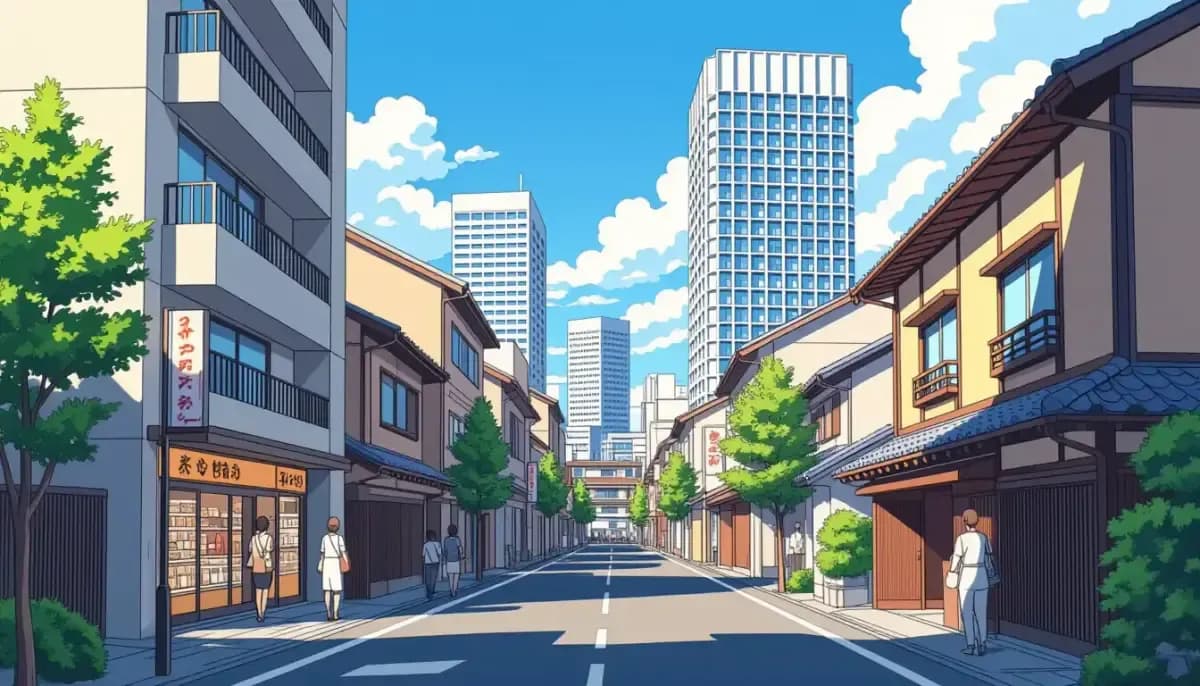
Understand Japan's urban planning system, major redevelopment projects, and compact city policies before buying property. Essential guide for foreign buyers navigating Japanese neighborhoods.
Future Development and Urban Planning in Japanese Neighborhoods
Japan's cities are in the midst of a dramatic transformation. Decades of thoughtful urban planning, combined with bold new redevelopment initiatives and cutting-edge smart city technology, are reshaping neighborhoods from bustling Tokyo to quieter regional towns. For foreigners considering buying property in Japan, understanding these planning trends is not just fascinating — it's essential due diligence. The neighborhood you buy into today may look very different in ten years, and knowing Japan's planning rules can help you identify areas primed for appreciation or flag risks you might otherwise overlook.
This guide explains how Japan's urban planning system works, what major development projects are reshaping cities right now, and what all of this means for foreign property buyers navigating the Japanese real estate market.
How Japan's Urban Planning System Works
Japan's urban planning is governed primarily by the City Planning Law (都市計画法, Toshi Keikaku Hō), originally enacted in 1919 and substantially revised in 1968. This national framework divides land into Urban Promotion Areas, Urban Control Areas, and undesignated land. Within urban zones, land is further classified into one of 12 standardized use zones — a system administered consistently nationwide, unlike many countries where local municipalities have broad discretion to invent their own zoning rules.
What makes Japan's system distinctive is its "negative zoning" approach: regulations specify what cannot be built in a zone, rather than reserving land exclusively for one use. This means even the most restrictive Exclusively Low-Rise Residential Zone (第一種低層住居専用地域) still permits small shops, home offices, and certain multifamily buildings. The result is the mixed-use, walkable neighborhood character that Japan is famous for — a corner café next to a family home, a small workshop tucked beside an apartment block.
A key technical metric in Japan's planning system is Floor Area Ratio (FAR / 容積率), which controls how much total floor space can be built on a plot relative to the plot's area. Even low-rise residential zones carry minimum FAR allowances of 50–100%, meaning significant intensification is legally possible even in quiet neighborhoods. For property buyers, this is critical: a quiet residential street today may legally accommodate much denser future development if FAR allows it.
| Zone Type | Main Character | Typical FAR | Permitted Uses |
|---|---|---|---|
| First Low-Rise Residential | Quiet suburbs | 50–150% | Housing, small shops, home offices |
| Second Low-Rise Residential | Low-rise mix | 100–200% | + Convenience stores, small offices |
| First Mid-High Residential | Mid-density | 100–300% | + Apartment buildings |
| Neighborhood Commercial | Local shopping | 200–400% | + Restaurants, retail |
| Commercial | Urban cores | 400–1300% | + Large offices, hotels |
| Industrial | Factories | 100–400% | Manufacturing (housing limited) |
Major Redevelopment Projects Reshaping Japanese Cities
Japan's major cities are in the middle of a historic redevelopment wave. Population concentration in urban cores, post-COVID office reshuffling, and national infrastructure investment have all converged to trigger massive projects that will fundamentally change certain neighborhoods.
Tokyo's Landmark 2025–2030 Projects
Takanawa Gateway City (品川区) is perhaps the most transformative project underway. Centered on the new Takanawa Gateway Station on the Yamanote Line — the first new Yamanote station in 49 years — this development includes a 44-story luxury residential tower, international business hub, advanced research facilities, and direct transit connectivity to Haneda Airport. The surrounding Shinagawa and Minato Ward areas are already seeing property value appreciation in anticipation.
Yaesu 2-Chome North District (adjacent to Tokyo Station) represents a ¥317.2 billion investment transforming a formerly nondescript office area into a global business destination. Features include a mixed-use skyscraper, Japan's first international school directly inside a major transit hub, serviced apartments, and a new express bus terminal connecting central Tokyo to Haneda and Narita airports.
Toranomon-Azabudai Hills (completed 2023–2024, Minato Ward) set a new benchmark: a 330-meter supertall tower surrounded by greenery, luxury residences, international schools, and a curated retail/cultural district. It has already attracted multinational headquarters and high-net-worth residents, driving premium property prices in the surrounding blocks.
Nihonbashi Urban Renewal (2025–2037): In one of Tokyo's most ambitious long-term projects, the Metropolitan Expressway running over the historic Nihonbashi bridge is being relocated underground. The aerial highway has obscured the neighborhood for 60 years; its removal will restore the historic canal and bridge and trigger a wave of high-end retail, hospitality, and residential development.
Toyosu Waterfront continues evolving from an industrial zone into a mixed-use residential and startup destination, adding new towers, parks, and cultural facilities throughout the late 2020s.
The Rail Integrated Communities Model
One of the most distinctive features of Japanese urban development — and one that directly affects property values — is the Rail Integrated Communities (RIC) model. Unlike most countries where transit and real estate development are handled by separate public and private entities, Japan's major private railway companies (Tokyu, Odakyu, Hankyu, Kintetsu, etc.) traditionally finance rail infrastructure by developing the land around and above their stations.
This produces something remarkable: vibrant mixed-use neighborhoods organically clustered around transit hubs. Department stores, shopping malls, offices, clinics, and residential buildings are all physically integrated into or immediately adjacent to major stations. The railway company profits from both the trains and the real estate, creating strong incentives to continually improve and upgrade the surrounding neighborhood.
For property buyers, this model has a practical implication: areas near planned new transit stations or transit upgrades tend to see significant appreciation. The announcement of a new station (like Takanawa Gateway) or a new line extension historically triggers a rapid run-up in nearby land values, often before construction even begins.
- Learn about living near transit hubs at Living in Nihon
- For Work in Japan: Navigating work and life near major stations
- Gaijin Buy House: Property buying guide for foreigners in Japan
Machizukuri: Community-Based Planning
Japan's planning system is not just top-down. A uniquely Japanese tradition called Machizukuri (まちづくり), literally "town-making," gives residents formal influence over how their neighborhoods develop. Through resident associations (jichikai / 自治会 and jijikai / 事自会) and dedicated Machizukuri councils, local communities can shape everything from the design of new buildings to streetscaping and commercial zoning amendments.
Machizukuri councils work alongside municipal governments and often mediate between large developers and neighborhood residents. They have produced some of Japan's most successful neighborhood revitalization projects — historic preservation districts in Kyoto, creative mixed-use districts in Tokyo's Yanaka neighborhood, and pedestrian-friendly shopping streets across regional cities.
For foreign property buyers, this has practical implications:
- Check for active Machizukuri plans before buying. If a neighborhood has an active planning council working toward revitalization, that's often a positive signal for long-term quality of life and property values.
- Joining the local jichikai is advisable — even for foreigners. These associations handle everything from trash schedules to disaster preparedness, and being a recognized member gives you both social standing and a voice in local planning.
- Machizukuri can also restrict development. Some historic neighborhoods use it to limit the height or style of new buildings, which protects character but may constrain future property uses.
For more context on navigating neighborhood life as a foreigner, see our guide on buying property in Japan as a foreigner and understanding the Japan real estate market.
Compact City Policies and Population Decline
Japan's population has been declining since 2012, and the government's long-term planning response is reshaping which neighborhoods grow and which shrink. National policy now promotes "Location Normalization Plans" (立地適正化計画), a framework encouraging municipalities to concentrate housing, services, and investment into designated "Urban Function Zones" and "Residential Encouragement Zones" — essentially a managed contraction of sprawl.
In practical terms, this means:
- Areas designated as Urban Function Zones will receive priority infrastructure investment, public amenities, and transit improvements. Properties here are likely to hold or increase in value even as Japan's overall population declines.
- Peripheral suburban areas outside these zones may see reduced services, school closures, and declining property values over time. This is a real risk for buyers attracted by low prices in outer suburbs.
- Compact city policies favor walkable, transit-served neighborhoods — exactly the kind of mixed-use neighborhoods Japan is already known for.
Japan's urbanization rate stands at approximately 92%, far above the global average of 55%. Even as the national population falls, urban cores — particularly in Tokyo, Osaka, Nagoya, Fukuoka, and Sapporo — continue to grow as people migrate from rural areas seeking jobs and services. For foreign buyers, this strongly favors urban property investments over rural or exurban locations, unless buying specifically for lifestyle or akiya (abandoned home) purposes.
If you're considering rural property, read our rural and countryside property guide for a realistic assessment of the trade-offs.
Smart City Initiatives and Green Building Standards
Japan is actively piloting next-generation urban technology through its Society 5.0 framework — a government-backed vision integrating AI, robotics, IoT sensors, and data analytics into everyday urban infrastructure. "Super Smart City" pilot projects are testing autonomous vehicles on public roads, AI-managed energy grids, robotic delivery systems, and digital twin city models.
Concurrently, Japan has introduced mandatory green building standards for large new developments, centered on the CASBEE (Comprehensive Assessment System for Built Environment Efficiency) certification. CASBEE evaluates buildings on energy efficiency, water use, indoor environmental quality, and urban biodiversity. Tokyo and other major municipalities now require CASBEE certification for buildings above a certain floor area, and many developers voluntarily pursue higher ratings as a market differentiator.
For property buyers, green-certified buildings typically feature:
- Lower utility costs due to superior insulation and energy systems
- Better earthquake and disaster resilience features
- Higher resale value and rental premiums over the long term
- Alignment with global ESG investing trends
Major developers like Mori Building, Mitsubishi Estate, and Tokyu Land are investing heavily in CASBEE-compliant and smart-building features as standard in their flagship projects. If you're evaluating a new-build condominium, asking about CASBEE ratings and smart home features is increasingly worth your while.
For a broader view of market trends, see Japan Real Estate Market Overview and our guide to property types available in Japan.
What Future Development Means for Foreign Property Buyers
Putting all of this together, here is what Japan's urban planning landscape means practically for foreign buyers:
| Factor | Implication for Buyers |
|---|---|
| Negative zoning | Quiet residential areas can legally intensify — check FAR before buying |
| Major redevelopment zones | Properties near projects like Takanawa Gateway may appreciate significantly |
| RIC transit model | Proximity to new or upgraded stations historically boosts values |
| Compact city policy | Favor Urban Function Zone-designated areas over peripheral suburbs |
| Machizukuri | Research neighborhood plans; active councils often signal vibrant communities |
| Smart city / CASBEE | Prioritize green-certified new builds for long-term value and lower running costs |
| Population decline | Urban cores remain strong; rural periphery faces structural headwinds |
Before finalizing any purchase, consider:
- Review the municipality's City Planning Map (都市計画図) — freely available online — to confirm the zoning classification and FAR of your target property.
- Check for Location Normalization Plans in the municipality to understand whether the neighborhood is designated as a priority zone for future investment.
- Search for active large-scale redevelopment projects (再開発事業) within 1–2 km of the property; these can be game-changers for neighborhood character and value.
- Ask your real estate agent about any planned public works, road widening, or transit projects that could affect the immediate area.
For more on the legal and procedural aspects of buying, see Legal Procedures and Documentation for Japan Property Purchase and Step-by-Step Home Buying Process in Japan.
Conclusion
Japan's urban planning system is one of the most coherent and well-functioning in the world. Its combination of nationally standardized zoning, flexible mixed-use rules, strong community participation, and bold infrastructure investment has produced cities that are livable, dynamic, and — for foreign buyers — full of opportunity. At the same time, demographic decline is reshaping which neighborhoods will thrive and which may stagnate, making it more important than ever to understand the planning context before you buy.
The good news: Japan's planning data is largely public, transparent, and accessible. With the right research — and the guidance of a knowledgeable real estate agent familiar with foreign buyers — you can make a well-informed decision that accounts not just for the neighborhood as it is today, but as it is likely to evolve over the coming decades.
For deeper research into specific cities and neighborhoods:

Originally from Vietnam, living in Japan for 16+ years. Graduated from Nagoya University, with 11 years of professional experience at Japanese and international companies. Sharing information about buying property in Japan for foreigners.
View Profile →Related Articles
Neighborhood Visit Checklist Before Buying Property in Japan
Use this comprehensive neighborhood visit checklist before buying property in Japan. Covers safety, transport, noise, schools, and community quality for foreign buyers.
Read more →
Understanding Neighborhood Demographics in Japan
Learn how neighborhood demographics affect property values in Japan. Discover foreign resident concentrations by ward, aging rural trends, and how to research demographics before buying.
Read more →
Japan Neighborhood Walkability and Livability Scoring Guide
Learn how to score and evaluate Japanese neighborhoods using walkability indexes, livability criteria, and expat-friendly tools. Compare cities, wards, and key factors before buying or renting in Japan.
Read more →
Best Expat Community Neighborhoods in Japan by City
Discover the best expat neighborhoods in Japan's major cities — Tokyo, Osaka, Fukuoka, Yokohama, Kyoto, and Kobe. Practical guide for foreign residents on where to live, costs, and community resources.
Read more →
Checking Flood and Earthquake Risk for Japan Neighborhoods
Learn how to check flood and earthquake risk for any Japan neighborhood using official hazard maps, J-SHIS, and real estate tools. Essential guide for foreign property buyers.
Read more →
Noise Pollution Assessment in Japanese Neighborhoods
Learn how to assess noise pollution in Japanese neighborhoods before buying or renting. Covers regulations, building types, common noise sources, complaint procedures, and practical tips for foreigners.
Read more →