
Noise Pollution Assessment in Japanese Neighborhoods

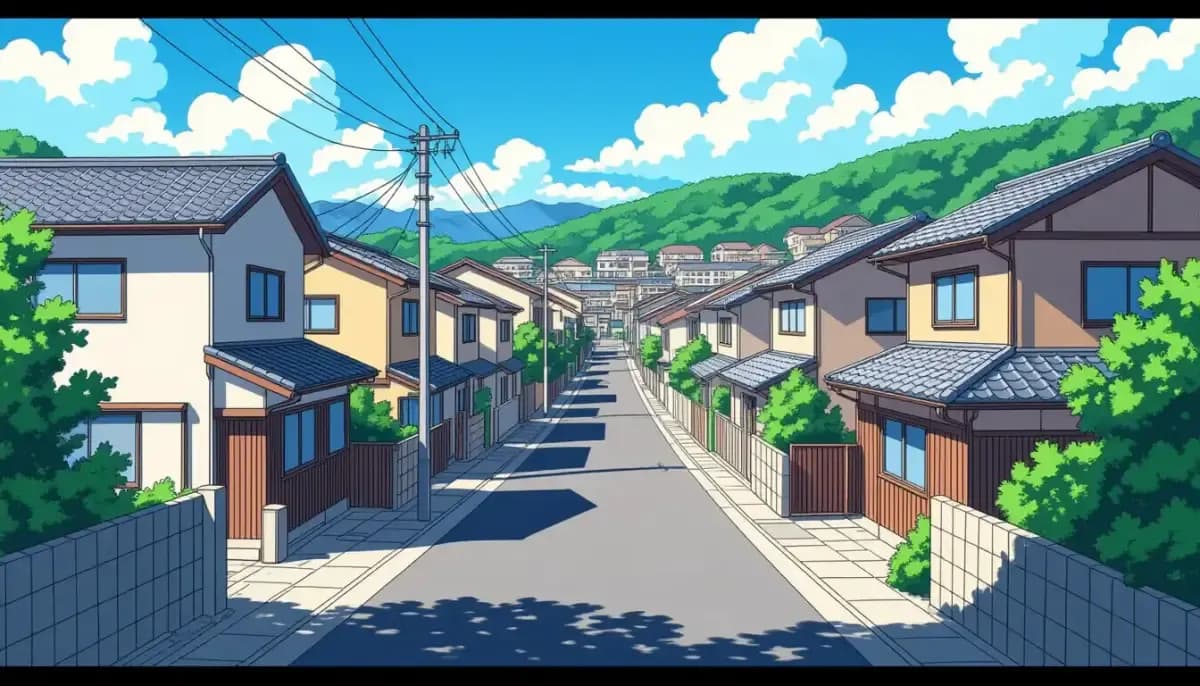
Learn how to assess noise pollution in Japanese neighborhoods before buying or renting. Covers regulations, building types, common noise sources, complaint procedures, and practical tips for foreigners.
Noise Pollution Assessment in Japanese Neighborhoods: A Foreigner's Complete Guide
Moving to Japan comes with many surprises, and one of the most significant for foreign residents and property buyers is the complex landscape of noise in Japanese neighborhoods. From the early-morning train station announcements to late-night pachinko parlors, understanding how to assess and cope with noise pollution is an essential skill for anyone looking to live comfortably in Japan. This guide walks you through everything you need to know about noise levels, regulations, and practical assessment strategies before choosing your next home.
Understanding Japan's Noise Regulations
Japan's approach to noise regulation is governed primarily by the Environmental Noise Regulation Act, enacted in 1968 and significantly amended in 1999. This law establishes environmental quality standards for noise across different land-use zones, setting specific decibel limits for daytime and nighttime hours.
Under Japanese law, daytime is defined as 6:00 a.m. to 10:00 p.m., while nighttime covers 10:00 p.m. to 6:00 a.m.. The standards vary depending on the zone classification:
| Zone Type | Description | Daytime Limit | Nighttime Limit |
|---|---|---|---|
| Type AA | Special quiet areas (hospitals, schools) | 50 dB | 40 dB |
| Type A | Primarily residential | 55 dB | 45 dB |
| Type B | Mixed residential/commercial | 55 dB | 45 dB |
| Type C | Commercial and industrial areas | 60 dB | 50 dB |
| Near 2-lane roads (A/B) | Road-adjacent residential zones | 60 dB | 55 dB |
| Near arterial roads | Major road exception category | 70 dB | 65 dB |
Importantly, several major noise sources are excluded from these standards: aircraft noise, railway vibration, and construction noise are governed by separate regulations under the Road Traffic Act and Building Standards Act. This means the neighborhood you're assessing may technically comply with noise standards while still being considerably loud depending on its proximity to train lines or construction sites.
According to the Ministry of Environment's official noise guidelines, Japan has one of the most detailed noise classification systems in Asia, but enforcement remains inconsistent. In FY2015, approximately 16,500 noise complaints were filed with Japan's Environment Dispute Coordination Commission—a figure that experts believe significantly underrepresents the actual extent of noise dissatisfaction, given Japan's conflict-averse culture.
How to Assess Noise Levels Before Moving
Conducting your own noise assessment before signing a lease or purchasing property is one of the most valuable investments of time you can make. Here's a systematic approach tailored to foreign residents:
Visit at Multiple Times
The single most important strategy is to visit the property or neighborhood at different times of day and week. A quiet weekday morning can mask the chaos of a Saturday evening. Aim to visit:
- Weekday morning (7–9 a.m.): Check for commuter traffic, train announcements, and delivery trucks
- Weekday evening (6–9 p.m.): Gauge residential noise from neighbors returning home
- Weekend afternoon/evening: Discover weekend-specific noise like markets, events, or increased foot traffic
- Late night (10 p.m.+): Assess whether nearby entertainment venues or convenience stores cause disturbance
Check the Surrounding Proximity
Walk a 500-meter radius around the property and note the following:
- Train lines and stations: Proximity matters more than you think. Even underground lines can transmit vibration noise. Station announcement jingles can be heard surprisingly far.
- Pachinko parlors: These are loud indoors but generate noise through ventilation systems and attract foot traffic.
- Convenience stores: Open 24/7, they attract late-night visitors and delivery trucks.
- Entertainment districts: Bars, karaoke establishments, and izakayas produce noise that peaks Friday and Saturday nights.
- Schools or parks: Children's noise during school hours and weekends can be significant.
- Construction sites: Check for ongoing or planned development nearby using city planning maps.
Use a Decibel Meter App
Several free smartphone apps can give you an approximate reading of ambient noise levels. While not scientifically precise, they provide a useful reference point. A comfortable residential environment should measure 40–55 dB during the day. Readings consistently above 65 dB indicate a potentially problematic noise environment.
For more tips on evaluating Japanese properties, check out gaijinbuyhouse.com which provides practical real estate advice specifically for foreigners in Japan.
Building Construction Types and Noise Transmission
One of the most significant factors in your noise experience won't be the neighborhood itself—it will be the building you live in. Japanese residential construction falls into several categories, each with dramatically different noise transmission properties:
RC Construction (鉄筋コンクリート / Reinforced Concrete)
RC buildings offer the best sound insulation. Concrete walls and floors significantly reduce the transmission of airborne sound and impact noise (footsteps, dropped objects). If noise sensitivity is a concern, prioritize RC construction.
Noise transmission: Low
SRC Construction (鉄骨鉄筋コンクリート / Steel-Reinforced Concrete)
Similar to RC but with added steel framing, SRC is common in larger apartment complexes and offers comparable noise insulation to standard RC buildings.
Noise transmission: Low
Steel Frame (鉄骨造 / Heavy Steel)
Heavy steel construction offers moderate sound insulation. While better than wood, it can still transmit impact noise between floors.
Noise transmission: Moderate
Light Steel (軽量鉄骨造 / Light Gauge Steel)
Common in two-story apartment buildings (often built by companies like Sekisui House), light steel construction offers limited sound insulation. You will likely hear neighbors clearly.
Noise transmission: High
Wood Frame (木造 / Timber Construction)
Traditional Japanese wooden buildings offer the least sound insulation. Footsteps, voices, and even kitchen sounds can be audible through walls and floors.
Noise transmission: Very High
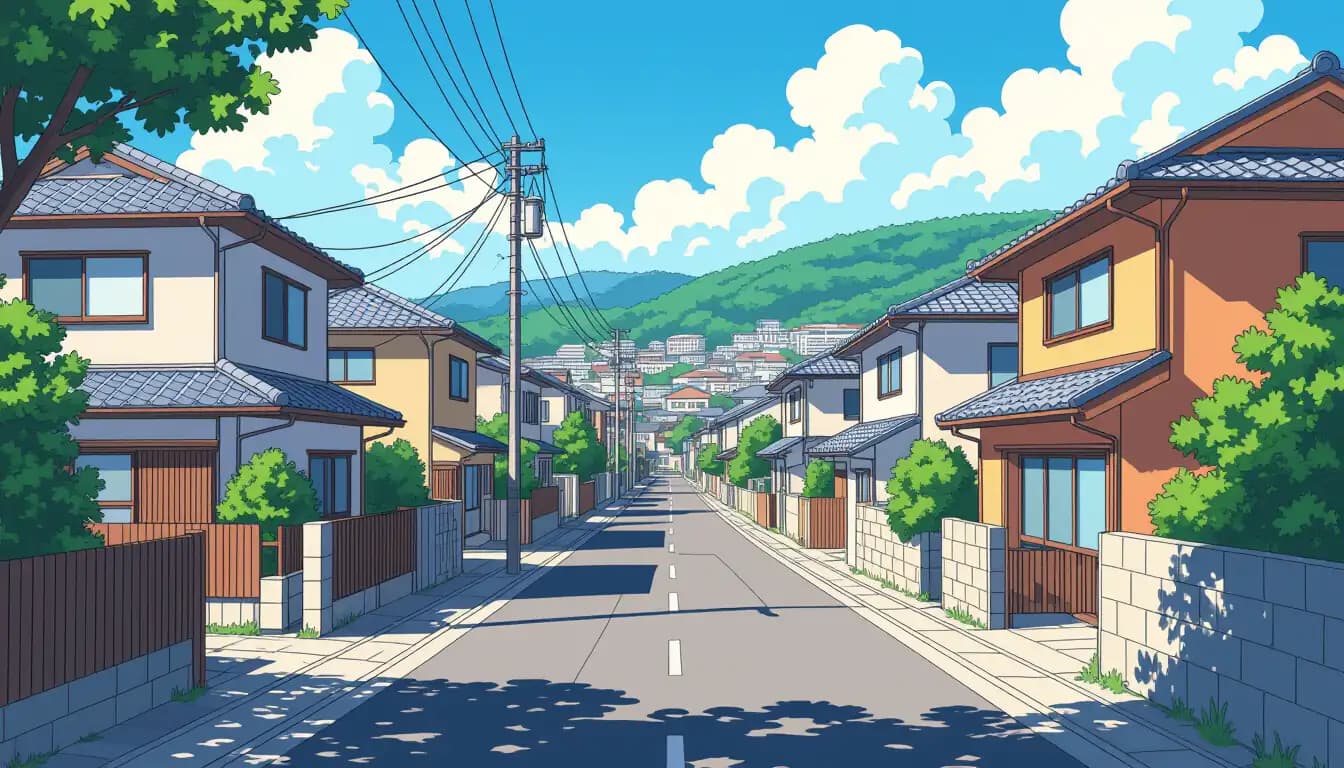
When choosing an apartment or house, always ask the real estate agent about the construction type. This information should also be listed on any official property listing (物件情報). For a comprehensive overview of property types in Japan, see our guide to types of properties available in Japan.
Common Noise Sources in Japanese Neighborhoods
Understanding what makes Japanese neighborhoods noisy can help you identify red flags during your assessment. Some noise sources are uniquely Japanese:
Train and Station Noise
Japan's extensive rail network is a major noise contributor. Each station plays unique departure melodies (発車メロディ, hassha merodii), which are pleasant but repeated hundreds of times daily. Elevated tracks generate significant noise from passing trains. Underground stations are quieter above ground but can transmit vibration into nearby buildings.
Political Campaign Vehicles
During election periods (which occur multiple times per year across national, prefectural, and municipal elections), campaign vehicles equipped with loudspeakers drive through residential neighborhoods repeatedly announcing candidates' names. This noise, while temporary, can be highly disruptive.
Seasonal Noise
Japan's summer brings cicadas (semi), which can reach noise levels of 77+ dB in residential areas near parks or trees—louder than a vacuum cleaner. Winter brings less insect noise but may increase indoor heating system sounds.
Neighborhood Broadcast Systems
Many Japanese neighborhoods use a community broadcast system (防災行政無線, bōsai gyōsei musen) that plays time signals (often at noon and 5 p.m.) and emergency announcements. These are a normal part of Japanese community life but can surprise newcomers.
For more on adjusting to life in Japan, Living in Nihon offers extensive guides on navigating daily life as a foreigner.
How to Handle Noise Complaints in Japan
If you're already living in a noisy environment and need to take action, understanding the complaint process is essential. Japan's conflict-avoidance culture means the process is often indirect:
Step 1: Building Management (管理組合 / 管理会社)
Your first point of contact should be your building's management company or owners' association. Submit a written complaint (tenants often write a formal letter) describing the noise: its source, timing, frequency, and duration. Management can issue anonymous notices to the building.
Step 2: Real Estate Agency
If you rent, contact your real estate agency (不動産屋, fudōsan-ya). They can mediate between you and the landlord or other tenants.
Step 3: Local Ward Office (区役所 / 市役所)
For persistent neighborhood noise (not apartment-specific), your local ward or city office has an environment division that handles noise complaints. They can dispatch inspectors to measure noise levels.
Step 4: Police (110)
For acute noise violations (loud parties at night, persistent disturbances), calling the non-emergency police line (110) is acceptable. Officers will typically issue a verbal warning to the offending party.
Step 5: Japan's Environment Dispute Coordination Commission
For serious, ongoing noise disputes that cannot be resolved at the local level, cases can be escalated to the national Environmental Dispute Coordination Commission (中央公害等調整委員会).
For detailed guidance on navigating noise complaints as a foreigner, Japan Dev's noise complaint guide offers practical step-by-step advice. Additionally, For Work in Japan provides resources on settling into Japanese community life.
Choosing a Quiet Neighborhood: Practical Tips for Property Buyers
If you're purchasing property and noise is a top priority, here are evidence-based strategies to find quieter neighborhoods:
Prioritize these neighborhood characteristics:
- Located away from major arterial roads (prefer quiet side streets)
- No large entertainment venues or commercial districts within 500 meters
- Classified as a Type A or AA zoning area (check local city planning maps)
- Established residential areas with few ongoing developments
Choose buildings with these features:
- RC or SRC construction
- Corner unit (fewer shared walls with neighbors)
- Top floor (no upstairs neighbor foot traffic)
- Double-pane windows (二重サッシ, nijū sashi) as standard
- Proper door seals and ventilation duct dampers
During the property viewing:
- Ask the agent directly about any noise complaints in the building's history
- Turn off all appliances and listen carefully to ambient sound
- Check for trains, highways, or construction through the windows
- Ask how thick the walls and floors are (e.g., concrete slab thickness of 200mm+ is good)
Noise assessment should be part of your overall due diligence process. Our comprehensive guide to buying property in Japan as a foreigner covers this and many other critical steps.
Japan's Noise Situation in Global Context
Despite its reputation for orderliness, Japan ranks surprisingly high in international noise comparisons. A 2018 WHO report identified Japan as one of the noisiest countries globally, primarily due to its high-density urban environments and the cultural acceptance of institutional noise (train announcements, broadcast systems, commercial signage).
Japan's legal noise limits—particularly the 70 dB exception for arterial roads—are significantly higher than WHO recommendations of 53 dB for residential environments. Research published in public health journals has shown that road traffic noise in cities like Osaka contributes measurably to health burdens, measured in DALYs (disability-adjusted life years).
For foreigners accustomed to quieter residential environments, the gap between expectation and Japanese reality can be jarring. The key is not to assume that a peaceful-looking neighborhood will be quiet—always conduct your own noise assessment before committing.
Read the GaijinPot overview of Japan's noise pollution issues for more context on how noise affects daily life across Japan.
Key Takeaways
Noise pollution assessment is a critical but often overlooked step in choosing a home in Japan. Here's a quick recap of the most important points:
- Japan's noise standards vary by zone type (Type AA to C), with residential limits of 55 dB (day) / 45 dB (night)
- Visit properties at multiple times—evenings, weekends, and late nights reveal the true noise environment
- Building construction type is paramount: prioritize RC or SRC over wood or light steel
- Corner, top-floor units in RC buildings offer the best noise isolation
- Common Japanese noise sources include trains, political campaign vehicles, seasonal insects, and neighborhood broadcast systems
- Noise complaints should be escalated through building management, ward offices, and ultimately the police if needed
- Japan's urban noise levels often exceed WHO recommendations—independent assessment before signing any agreement is essential
For additional resources on settling into Japan and making smart property decisions, explore our guides on hidden costs of buying property in Japan and legal procedures for Japan property purchases.

Originally from Vietnam, living in Japan for 16+ years. Graduated from Nagoya University, with 11 years of professional experience at Japanese and international companies. Sharing information about buying property in Japan for foreigners.
View Profile →Related Articles
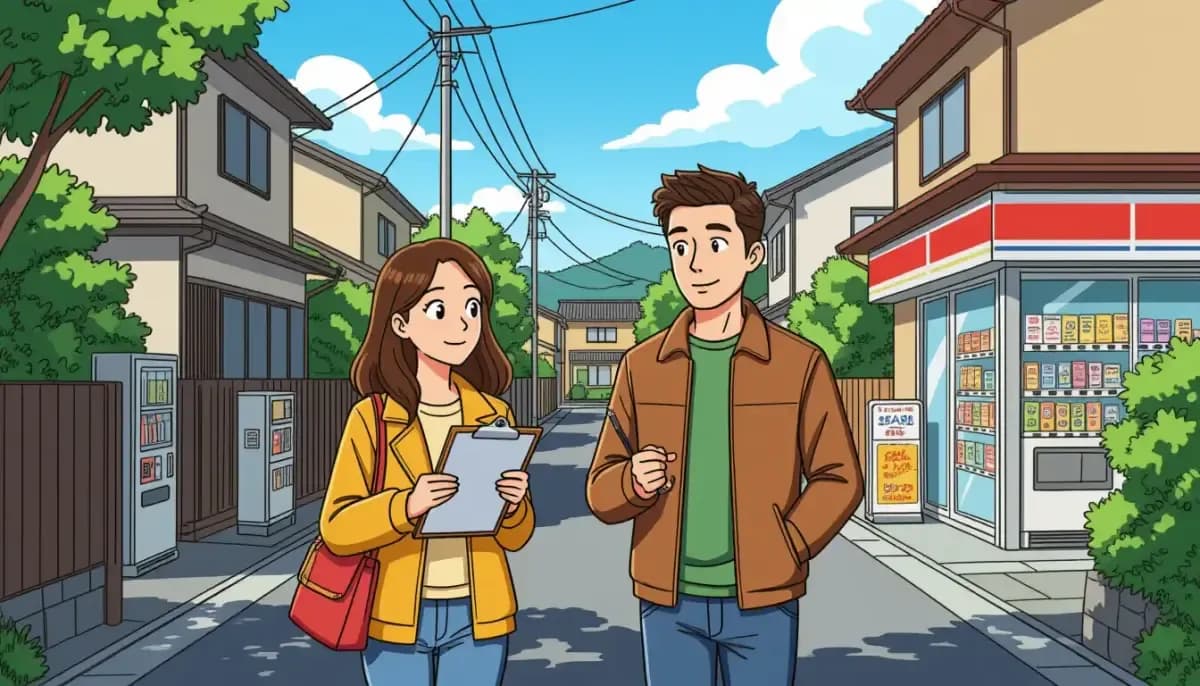
Neighborhood Visit Checklist Before Buying Property in Japan
Use this comprehensive neighborhood visit checklist before buying property in Japan. Covers safety, transport, noise, schools, and community quality for foreign buyers.
Read more →
Future Development and Urban Planning in Japanese Neighborhoods
Understand Japan's urban planning system, major redevelopment projects, and compact city policies before buying property. Essential guide for foreign buyers navigating Japanese neighborhoods.
Read more →
Understanding Neighborhood Demographics in Japan
Learn how neighborhood demographics affect property values in Japan. Discover foreign resident concentrations by ward, aging rural trends, and how to research demographics before buying.
Read more →
Japan Neighborhood Walkability and Livability Scoring Guide
Learn how to score and evaluate Japanese neighborhoods using walkability indexes, livability criteria, and expat-friendly tools. Compare cities, wards, and key factors before buying or renting in Japan.
Read more →
Best Expat Community Neighborhoods in Japan by City
Discover the best expat neighborhoods in Japan's major cities — Tokyo, Osaka, Fukuoka, Yokohama, Kyoto, and Kobe. Practical guide for foreign residents on where to live, costs, and community resources.
Read more →
Checking Flood and Earthquake Risk for Japan Neighborhoods
Learn how to check flood and earthquake risk for any Japan neighborhood using official hazard maps, J-SHIS, and real estate tools. Essential guide for foreign property buyers.
Read more →