
Chubu Region Rural Property: Affordable Options for Foreigners

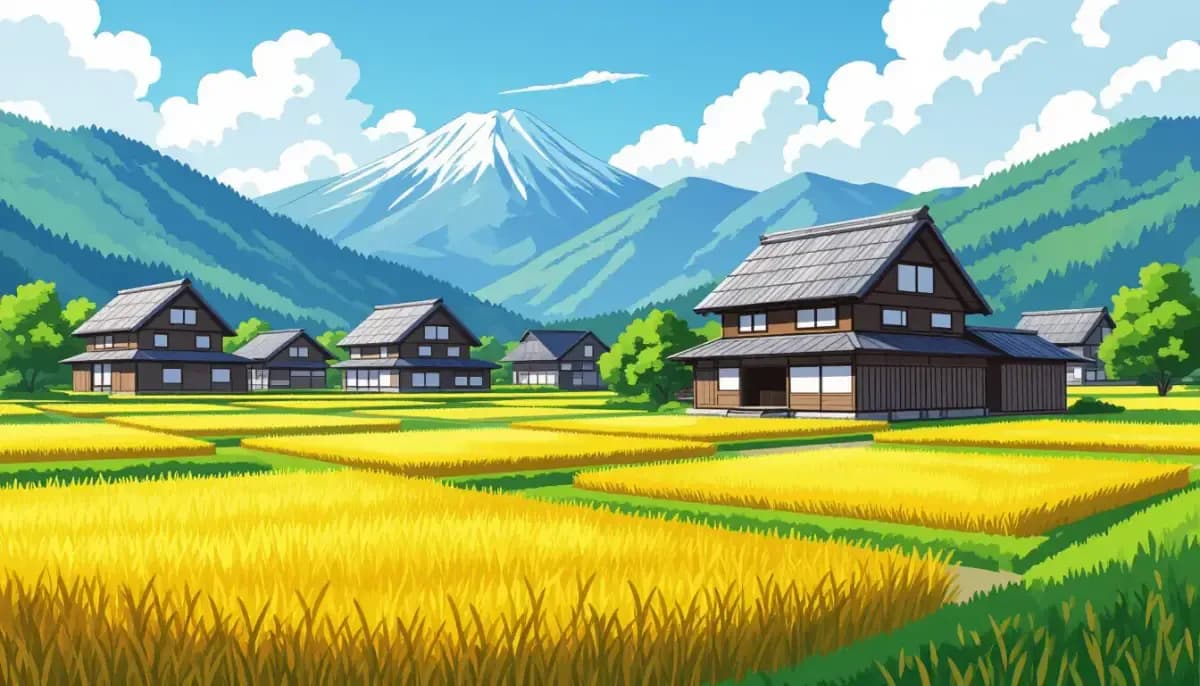
Discover affordable rural property options in Japan's Chubu region. Complete guide for foreigners on buying homes in Nagano, Gifu, Toyama, and Shizuoka — including prices, akiya banks, and the purchase process.
Chubu Region Rural Property: Affordable Options for Foreigners
If you have ever dreamed of owning a home in the Japanese countryside — surrounded by mountain scenery, rice paddies, and the quiet rhythms of traditional village life — the Chubu region deserves a close look. Stretching across central Honshu, Chubu encompasses some of Japan's most dramatic landscapes and least-crowded rural towns, where property prices are a fraction of what you would pay in Tokyo or Osaka. For foreign buyers willing to embrace the countryside lifestyle, Chubu offers some of the most compelling and affordable real estate opportunities in the entire country.
This guide covers everything you need to know about buying rural property in Chubu as a foreigner — from the best prefectures and price ranges to practical steps for navigating the purchase process.
Why Chubu is One of Japan's Best Rural Property Markets
Japan has a well-documented housing surplus. With a population that has been declining for over a decade, there are now more than 9 million vacant homes (akiya) across the country. A large concentration of these properties sits in the rural areas of Chubu — particularly in Nagano, Gifu, Toyama, and parts of Shizuoka — where young residents have migrated to urban centers, leaving behind entire villages of empty homes.
This demographic reality creates a genuine opportunity for foreign buyers. Local governments in Chubu are actively incentivizing new residents to take over vacant properties, offering subsidized prices, renovation grants, and streamlined akiya bank listings to attract people willing to put down roots. Unlike Tokyo's competitive market, rural Chubu gives you the rare chance to buy a large traditional home — sometimes with land included — at a price comparable to a used car.
For a deeper overview of the broader market, see our guide to buying property in Nagoya and the Chubu region as a foreigner, and for country-specific context, visit Living in Nihon for practical advice on relocating to Japan.
Best Prefectures for Affordable Rural Property in Chubu
The Chubu region includes nine prefectures, but the most affordable rural property options are concentrated in a handful of areas.
Nagano Prefecture
Nagano is arguably the most foreigner-friendly rural property destination in all of Japan. The prefecture gained international recognition through the 1998 Winter Olympics and is home to world-class ski resorts like Hakuba and Niseko-alternative Nozawa Onsen. But away from the resort areas, Nagano offers deeply affordable traditional farmhouses (kominka and minka) in villages where depopulation has been severe.
Rural akiya in the less-touristic parts of Nagano — areas like Ina Valley, Iida, or Iiyama — regularly list for ¥1.5M to ¥5M ($10,000 to $33,000 USD). Even properties near Matsumoto, one of Nagano's most popular cities, can be found for under ¥10M when you move into the surrounding countryside. Explore the full Nagano picture in our Nagano mountain and resort property guide for foreigners.
Gifu Prefecture
Gifu is home to UNESCO-listed Shirakawa-go, one of Japan's most iconic rural landscapes. The steep-roofed gasshō-zukuri farmhouses of that region are now largely protected heritage sites, but throughout the rest of Gifu — in the Hida Highlands, along the Nagara River valley, and in the agricultural flatlands near the Nagoya border — you will find affordable rural homes in abundance.
Gifu is particularly interesting for buyers who want rural tranquility without full isolation. Many rural areas in the prefecture connect to Nagoya by expressway or rail within 60 to 90 minutes. Our Gifu and Takayama property guide for foreign buyers covers pricing and local conditions in detail.
Toyama Prefecture
Toyama sits on the Sea of Japan coast and is often overlooked by foreign property seekers. That oversight has kept prices low. The prefecture consistently ranks as one of Japan's most affordable places to live, and its rural areas extend from coastal fishing villages into the dramatic Northern Alps. Properties in rural Toyama towns often list under ¥3M ($20,000 USD), with larger homes occasionally appearing for even less through municipal akiya banks.
Shizuoka and Aichi Rural Areas
While Shizuoka is known for Mount Fuji views and green tea production, its more remote interior areas — particularly the Oku-Oi region and Izu Peninsula hinterlands — contain numerous affordable rural properties. Similarly, the rural fringes of Aichi beyond Nagoya city offer traditional homes at prices well below the urban average. See our complete Shizuoka property guide for foreign buyers for more on that market.
Chubu Rural Property Prices: What to Expect
Understanding the price range across different property types is essential before you start searching. The table below gives a general overview of what buyers encounter in the Chubu rural market.
| Property Type | Price Range (JPY) | Price Range (USD approx.) | Renovation Required? |
|---|---|---|---|
| Basic akiya (fixer-upper) | ¥500,000 – ¥2,000,000 | $3,300 – $13,300 | Yes – extensive |
| Standard rural home | ¥2,000,000 – ¥6,000,000 | $13,300 – $40,000 | Usually some work needed |
| Renovated traditional kominka | ¥6,000,000 – ¥15,000,000 | $40,000 – $100,000 | Move-in ready |
| Resort-adjacent property (Nagano) | ¥10,000,000 – ¥30,000,000 | $66,000 – $200,000 | Varies |
| New construction rural area | ¥20,000,000 – ¥40,000,000 | $133,000 – $266,000 | None |
Renovation costs deserve special mention. Full modernization of a large rural akiya can run from ¥5M to ¥15M ($33,000 to $100,000 USD), so factor this into your total budget. Many local governments in Chubu offer renovation subsidies — sometimes up to ¥1M or more — to buyers who commit to making the property their primary residence.
For a full breakdown of costs, see our guide to hidden costs and fees when buying property in Japan.
How to Find Rural Property in Chubu
Finding rural property in Chubu requires using multiple search channels simultaneously, since listings are fragmented across local akiya banks, national real estate portals, and regional agents.
Municipal Akiya Banks
Every prefecture and many individual municipalities in Chubu maintain an official akiya bank — a database of registered vacant properties. These are your best source for the most affordable listings, since sellers are often motivated by a desire to see the home lived in rather than maximized profit. You can access Nagano, Gifu, Toyama, Shizuoka, and Aichi akiya banks directly through their respective municipal or prefectural websites.
The challenge is that most akiya bank sites are in Japanese only. Using Google Translate or working with a bilingual agent helps bridge this gap. Dedicated English-language platforms like All Akiyas aggregate listings from multiple akiya banks and allow searching by region, price, and property type.
National Real Estate Portals
SUUMO and AtHome both carry rural Chubu listings and allow basic English-language browsing. These tend to surface more conventional used properties rather than the extreme bargain akiya, but they are useful for understanding local price benchmarks and for finding properties that may not appear in akiya banks.
Bilingual Real Estate Agents
Working with a bilingual agent who specializes in rural transactions is highly recommended. They can help you interpret contracts, communicate with sellers and local governments, and navigate the registration process. For the broader agent experience, see our guide to working with Japanese real estate agents as a foreigner.
For detailed guidance on the purchase process from start to finish, Gaijin Buy House provides practical resources for foreign buyers navigating Japanese real estate.
The Buying Process for Foreigners
Japan imposes no legal restrictions on foreign property ownership. You can buy land and buildings outright, in your own name, regardless of your nationality or visa status. Here is how the process typically unfolds for rural Chubu properties:
Step 1 – Identify and inspect the property. Once you have shortlisted properties, visit in person. Photos rarely capture structural issues, water damage, or the true condition of older homes. Hire a building inspector (kenchiku inspector) for properties over 30 years old.
Step 2 – Submit an offer and negotiate. Rural properties in Japan typically sell near asking price, but for heavily discounted akiya there is often room for flexibility. An initial deposit (tetsukkin) of ¥100,000 to ¥500,000 is usually required to hold the property.
Step 3 – Review the Explanation of Important Matters (Jyuuyou Jikousetsumei-sho). Your agent is legally required to present this document before contract signing. It discloses property conditions, legal encumbrances, renovation restrictions, and local regulations.
Step 4 – Sign the purchase contract and pay the down payment. Down payments are typically 10% to 20% of the purchase price.
Step 5 – Closing and registration. A judicial scrivener (shiho shoshi) handles the official ownership transfer and registration with the Legal Affairs Bureau. This typically takes one to two months from contract signing.
The full step-by-step walkthrough is available in our step-by-step home buying process guide for foreigners in Japan.
For housing and living infrastructure context once you have made your purchase, For Work in Japan's housing guide covers utilities, residence registration, and practical setup tips.
Renovation and Rural Life: What to Prepare For
Rural property in Chubu almost always means some degree of renovation. Traditional Japanese rural homes — kominka, minka, and gassho-style farmhouses — were built with different construction standards than modern homes, and many have not been lived in or maintained for years or decades.
Common renovation needs include roof repair or replacement (a major cost item, often ¥1M to ¥3M), upgrading or replacing plumbing and electrical systems, improving insulation for the cold Nagano and Toyama winters, and restoring damaged tatami and shoji screens.
The good news is that Japanese rural renovation can be deeply rewarding. Many foreign owners have documented their renovation journeys online, and a growing community of expat property owners in areas like Nagano and Gifu shares contractor recommendations, subsidy information, and practical tips. Prefectural governments have also established support programs specifically for foreign buyers who want to restore traditional homes.
For a detailed overview of what renovation involves, see our guide to home renovation and remodeling in Japan for foreign owners. Also explore our broader coverage of rural and countryside properties in Japan for foreign buyers and akiya and vacant houses in Japan for foreigners.
For comprehensive guides aimed specifically at foreign buyers across all stages of ownership, Cheap Japan Homes and Akiya Hub are excellent English-language resources with up-to-date process guides and listings.
Key Considerations Before You Buy
Before committing to rural Chubu property, think through the practical realities of rural Japanese life:
- Car ownership is essential. Public transportation in most rural Chubu areas is limited or non-existent. A car is not optional — it is a basic infrastructure requirement.
- Japanese language helps significantly. While not legally required to buy property, basic Japanese makes interactions with neighbors, contractors, local government, and utility companies far smoother.
- Community integration matters. Rural Japanese communities have deep social structures. Being a good neighbor — participating in local cleanups, respecting agricultural schedules, introducing yourself to the neighborhood association (jichikai) — makes rural life much more enjoyable and sustainable.
- Property buying does not give visa status. You will need an appropriate visa or residency status to live in Japan full-time. See our guide to visa and residency considerations for property buyers in Japan for details.
- Winter conditions in mountain areas are serious. Parts of Nagano, Gifu, and Toyama receive extremely heavy snowfall. Ensure any property you purchase is structurally sound for the local climate.
Rural Chubu is one of Japan's most rewarding destinations for foreign property buyers — a region where budget, beauty, and opportunity intersect in ways that are rarely possible in the country's crowded urban markets. With the right preparation and realistic expectations about rural life, buying property here can be the beginning of a genuinely extraordinary Japanese lifestyle.

Originally from Vietnam, living in Japan for 16+ years. Graduated from Nagoya University, with 11 years of professional experience at Japanese and international companies. Sharing information about buying property in Japan for foreigners.
View Profile →Related Articles

Chubu Region New Development and Infrastructure Projects
Explore Chubu region's major infrastructure projects including the maglev Chuo Shinkansen, Meitetsu Nagoya Station redevelopment, and smart city initiatives. Essential guide for foreign property buyers in Nagoya and the Chubu region.
Read more →
Toyota City and Industrial Area Property Near Nagoya
Complete guide to buying property in Toyota City and industrial areas near Nagoya. Prices, zoning rules, mortgages, and tips for foreign buyers in Aichi Prefecture.
Read more →
Nagoya Rental Property Investment Guide for Foreigners
A complete guide to investing in Nagoya rental property as a foreigner: yields 4-8%, neighborhoods, taxes, mortgages, and property management tips for 2025.
Read more →
Gifu and Takayama Property Guide for Foreign Buyers
Complete guide to buying property in Gifu and Takayama as a foreigner. Covers legal rights, market prices, akiya/kominka opportunities, buying process, and costs for international buyers.
Read more →
Karuizawa Resort Property Investment Guide for Foreigners
Complete guide to buying resort property in Karuizawa as a foreigner: market overview, price ranges by area, buying process, annual costs, rental income potential, and legal considerations.
Read more →
Nagano Mountain and Resort Property Guide for Foreigners
Complete guide to buying mountain and resort property in Nagano as a foreigner. Covers Hakuba, Karuizawa, Nozawa Onsen — prices, legal rules, taxes, and rental income potential.
Read more →