
Chubu Region New Development and Infrastructure Projects


Explore Chubu region's major infrastructure projects including the maglev Chuo Shinkansen, Meitetsu Nagoya Station redevelopment, and smart city initiatives. Essential guide for foreign property buyers in Nagoya and the Chubu region.
Chubu Region New Development and Infrastructure Projects: What Foreign Buyers Need to Know
Japan's Chubu region is undergoing one of the most ambitious infrastructure transformations in its modern history. Anchored by the manufacturing powerhouse of Nagoya and spanning nine prefectures—Aichi, Fukui, Gifu, Ishikawa, Nagano, Niigata, Shizuoka, Toyama, and Yamanashi—the Chubu region is home to more than 21 million people and represents the industrial and geographical heart of Japan. For foreign buyers and expats considering property investment in this region, understanding the pipeline of development projects is critical to making informed decisions.
From the world's most ambitious maglev railway to sweeping urban redevelopment at Nagoya's main station, the Chubu region's infrastructure agenda promises to reshape property values, connectivity, and quality of life for decades to come. This guide breaks down the most significant projects underway and explains their implications for foreign residents and investors.

The Chuo Shinkansen: Japan's Maglev Revolution Connecting Chubu to the World
The single most transformative project in the Chubu region is the Chuo Shinkansen—Japan's superconducting maglev (SCMaglev) rail line connecting Tokyo (Shinagawa Station) to Nagoya, with an eventual extension to Osaka. When complete, this engineering marvel will cover the Tokyo–Nagoya distance in just 40 minutes, compared to approximately 100 minutes on the current Tokaido Shinkansen.
The project is operated by Central Japan Railway Company (JR Central) and represents a staggering investment of over ¥9 trillion (approximately $82 billion USD). Construction commenced in 2014, and while the original target opening date was 2027, repeated delays—primarily due to tunnel construction challenges in Shizuoka Prefecture, where authorities refused permits over water table concerns—have pushed the expected opening to no earlier than 2035.
Key facts about the Chuo Shinkansen:
- 86% of the Tokyo–Nagoya section will run underground, including 100 km of deep tunnels beneath the Tokyo, Nagoya, and Osaka metropolitan areas
- Intermediate stations in Sagamihara, Kōfu, Iida, and Nakatsugawa along the Chubu stretch
- Speeds exceeding 500 km/h using superconducting magnetic levitation technology
- The Nagoya terminus will be directly integrated into the existing Nagoya Station hub
For property investors, this project fundamentally changes the calculus for Chubu real estate. Properties within proximity to the new Nagoya maglev terminus, or in currently underserved intermediate cities like Iida and Nakatsugawa, are positioned for long-term appreciation once the line opens. Learn more about the official project status at JR Central's SCMaglev information site.
For broader context on buying property near major transport infrastructure in Japan, see our guide to Buying Property in Nagoya and Chubu Region as a Foreigner.
Meitetsu Nagoya Station: A City Within a Station
While the maglev captures headlines, a more immediately impactful project is the comprehensive redevelopment of Meitetsu Nagoya Station, set to unfold from 2026 through 2033. This project will fundamentally remodel one of Japan's busiest private railway hubs.
The redevelopment plan includes:
- Two new railway platforms to increase passenger capacity
- A dedicated platform for trains bound for Chubu Centrair International Airport—streamlining one of Japan's most important air-rail connections
- A new integrated bus terminal consolidating regional bus routes
- Two mixed-use skyscrapers featuring retail, restaurants, offices, and a 150-key Andaz Hotel (scheduled to open after 2034)
This is a transformative urban development project for Nagoya's city center. The addition of the Andaz—Hyatt's lifestyle luxury brand—signals Nagoya's ambitions to attract high-value business and leisure tourists. Combined with the 2024 opening of four new business hotels and The Royal Park Hotel Iconic Nagoya (264 keys), the city's hospitality infrastructure is clearly being repositioned for a more international audience.
For foreign buyers, properties in the Meieki (Meitetsu Nagoya Station) area are directly affected. Expect construction disruption through the early 2030s, followed by a sharp increase in commercial and residential desirability. Understanding Japan's step-by-step home buying process is essential before committing to any purchase in this dynamic zone.
Chubu Centrair International Airport Expansion
Chubu Centrair International Airport (NGO), located on an artificial island in Ise Bay in Aichi Prefecture, serves as the primary air gateway to the Chubu region. Infrastructure investment at Centrair is aligned with the broader regional ambition to capture a larger share of Japan's booming inbound tourism market—a goal that received a major boost when Chubu hosted Japan's largest travel trade event, Tourism Expo, in September 2025.
The airport's ongoing development focuses on:
- Smart logistics facilities supporting the region's automotive and aerospace supply chains
- International terminal capacity upgrades to handle increased passenger volumes
- Improved rail connectivity, particularly with the upcoming Meitetsu Nagoya Station redevelopment
- Hydrogen demonstration plants as part of Japan's green energy transition within airport operations
The airport island's unique geography makes it a genuinely interesting real estate micro-market: some foreign investors have explored opportunities in the Tokoname city area surrounding the airport, which offers significantly lower land costs than central Nagoya while benefiting from the airport economy.
| Infrastructure Project | Location | Timeline | Key Impact |
|---|---|---|---|
| Chuo Shinkansen Maglev | Tokyo–Nagoya–Osaka | Opening 2035+ | 40-min Tokyo–Nagoya travel time |
| Meitetsu Nagoya Station | Nagoya City Center | 2026–2033 | New platforms, skyscrapers, Andaz Hotel |
| Centrair Airport Expansion | Aichi (Tokoname) | Ongoing | Smart logistics, international capacity |
| Solar Power Development (5MW) | Chubu TSO area | By end 2026 | Renewable energy infrastructure |
| Smart City Initiatives | Multiple Chubu cities | 2025–2030 | Urban livability, digital infrastructure |
Renewable Energy and Green Infrastructure
The Chubu region is also at the forefront of Japan's renewable energy push. In a significant development, ENEOS Renewable Energy partnered with Green Energy Plus to develop 50 low-voltage solar power plants totaling 5MW across the Chubu transmission system operator (TSO) area, with the final plant expected to begin commercial operation before the end of 2026. You can read more about this partnership at Japan Energy Hub.
Beyond solar, the Chubu region's green energy infrastructure encompasses:
- Hydrogen demonstration plants linked to Chubu's industrial base—Toyota and affiliated companies are major drivers of Japan's hydrogen economy
- Smart grid projects connecting the region's industrial electricity consumers with renewable sources
- Offshore wind exploration in the Pacific coastal zones of Shizuoka and Aichi prefectures
For foreign residents, this energy transition is relevant beyond environmental concerns. Industrial towns in Aichi and Shizuoka that currently host conventional energy infrastructure may see significant land-use changes over the coming decade, potentially affecting both residential and commercial property markets.
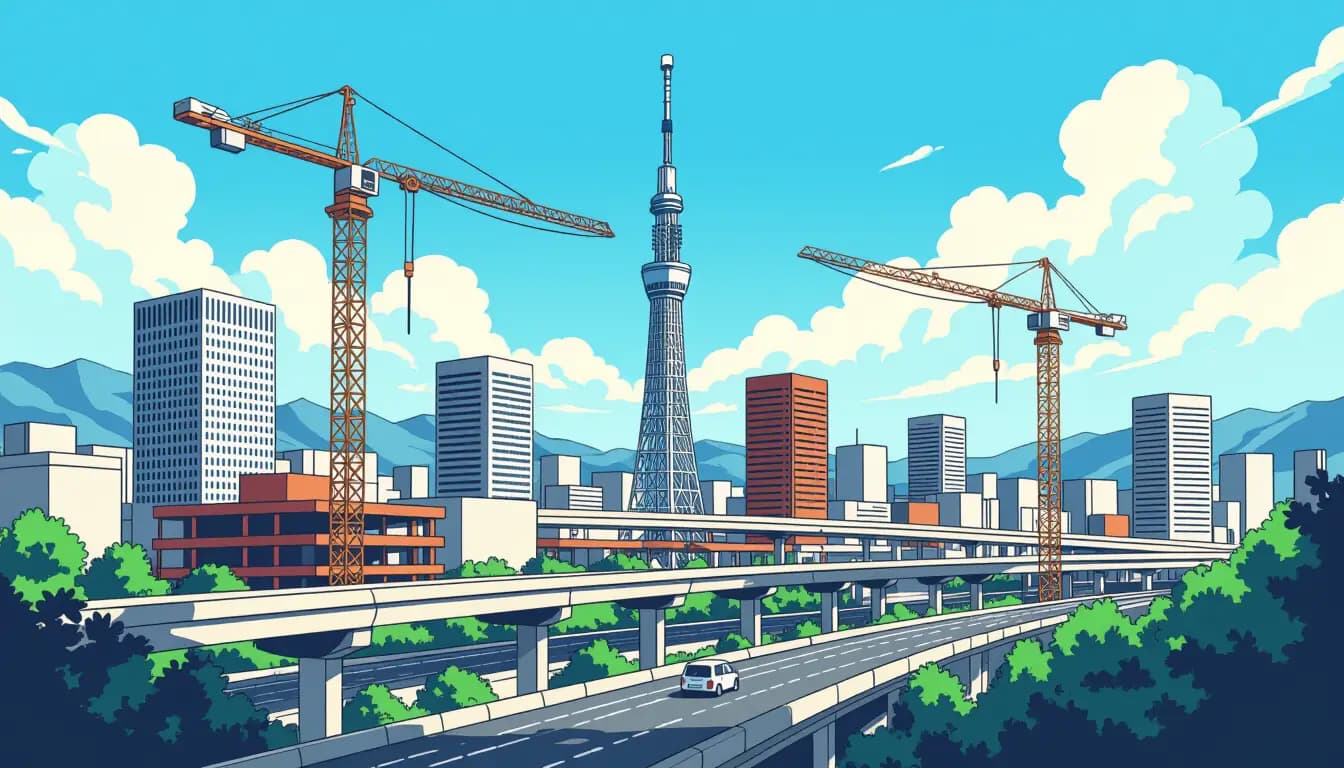
Smart City Initiatives and Urban Redevelopment
The national government's Society 5.0 and Smart City frameworks are being actively implemented across Chubu. Key urban redevelopment initiatives include:
Nagoya Smart City Program: The city of Nagoya is integrating IoT sensors, AI-driven traffic management, and digital public services across the Sakae and Fushimi business districts. These initiatives are designed to improve urban livability and reduce carbon emissions, with direct effects on commercial property demand.
Toyota City Smart Town (Woven City by Toyota): While located at the base of Mount Fuji in Shizuoka (technically on the Chubu–Kanto border), Toyota's experimental smart city—Woven City—is the world's most high-profile smart urban development and is directly linked to the Chubu automotive ecosystem. The project will eventually house thousands of residents in a fully automated, hydrogen-powered environment.
Seismic Resilience Upgrades: Given Japan's ongoing earthquake risk, major infrastructure investment in seismic-resistant construction is flowing into older districts of Nagoya and surrounding cities. This represents both a safety improvement and a significant property value driver, as newer seismically compliant buildings command premiums.
For expats navigating Japan's property market, resources like Living in Nihon provide practical guidance on daily life, while For Work in Japan covers employment opportunities in the expanding industrial and tech sectors. Gaijin Buy House offers specific guidance for foreign nationals navigating property purchase procedures.
What These Projects Mean for Foreign Property Investors
The Chubu region's development pipeline is among the most substantial of any Japanese region outside Tokyo. For foreign buyers, the key takeaways are:
Near-term (2025–2028):
- Construction activity near Meitetsu Nagoya Station will cause temporary disruption but creates buying opportunities before completion premiums emerge
- The Centrair Airport corridor offers competitive pricing with strong long-term fundamentals
- Renewable energy development is accelerating job creation in green-tech sectors, supporting residential demand in Aichi and Gifu
Medium-term (2028–2035):
- Maglev station-adjacent properties in Nagoya and intermediate cities will experience pre-opening speculation
- The Andaz Hotel and Meitetsu skyscrapers will complete, significantly upgrading the Meieki district
- Smart city features in Nagoya will enhance livability metrics, potentially narrowing the price gap with Tokyo and Osaka
Long-term (2035+):
- A 40-minute Tokyo–Nagoya connection will fundamentally alter the comparative advantage of Chubu real estate, making it viable as a primary or secondary residence for Tokyo-based professionals
- The regional industrial base (automotive, aerospace, hydrogen) provides economic resilience unmatched by tourism-dependent markets
Understanding Japan's real estate market overview and trends is a foundational step before diving into any specific regional investment. Additionally, familiarizing yourself with legal procedures and documentation for Japan property purchase will prepare you for the buying process.
Practical Tips for Foreign Buyers Interested in Chubu Development Zones
- Register with a local Nagoya real estate agent who specializes in foreign buyer transactions—the Meieki area in particular has experienced agents familiar with international clients.
- Monitor Shizuoka Maglev updates closely—the ongoing dispute over Shizuoka construction permits is the single largest risk factor for the Chuo Shinkansen timeline. Any resolution will trigger immediate property market movement.
- Consider intermediate maglev stop cities—Iida in Nagano Prefecture and Nakatsugawa in Gifu are often overlooked but sit directly on the planned maglev route. Property prices here remain far below Nagoya levels.
- Factor in construction timelines—if you're buying near Meitetsu Nagoya Station, understand that major construction activity continues until at least 2033. Noise, dust, and access disruptions should be factored into your investment horizon.
- Leverage Japan's akiya (vacant home) programs—even as Nagoya's center booms, surrounding rural Chubu areas have significant akiya stock. Several municipalities offer subsidized acquisition programs specifically for foreign residents. See our guide on rural and countryside properties in Japan for foreign buyers.
Understanding property taxes and annual costs of owning property in Japan and hidden costs and fees when buying property in Japan is essential before making any final commitment.
Conclusion
The Chubu region stands at a genuinely transformative moment. The convergence of the Chuo Shinkansen maglev, the Meitetsu Nagoya Station redevelopment, Centrair Airport expansion, and the region's renewable energy transition creates a once-in-a-generation infrastructure investment cycle. For foreign buyers who understand these dynamics, Chubu offers something increasingly rare in Japanese real estate: strong fundamental demand, clear government-backed infrastructure investment, and pricing that still reflects its relative under-appreciation compared to Tokyo and Osaka.
The key is timing. Buy in proximity to future infrastructure before the projects complete, understand the legal and financial requirements that apply to foreign nationals, and take a long-term view aligned with the region's 10–20 year development horizon. With the right preparation, Chubu's development boom represents one of the most compelling property investment stories in Asia.

Originally from Vietnam, living in Japan for 16+ years. Graduated from Nagoya University, with 11 years of professional experience at Japanese and international companies. Sharing information about buying property in Japan for foreigners.
View Profile →Related Articles
Toyota City and Industrial Area Property Near Nagoya
Complete guide to buying property in Toyota City and industrial areas near Nagoya. Prices, zoning rules, mortgages, and tips for foreign buyers in Aichi Prefecture.
Read more →
Nagoya Rental Property Investment Guide for Foreigners
A complete guide to investing in Nagoya rental property as a foreigner: yields 4-8%, neighborhoods, taxes, mortgages, and property management tips for 2025.
Read more →
Chubu Region Rural Property: Affordable Options for Foreigners
Discover affordable rural property options in Japan's Chubu region. Complete guide for foreigners on buying homes in Nagano, Gifu, Toyama, and Shizuoka — including prices, akiya banks, and the purchase process.
Read more →
Gifu and Takayama Property Guide for Foreign Buyers
Complete guide to buying property in Gifu and Takayama as a foreigner. Covers legal rights, market prices, akiya/kominka opportunities, buying process, and costs for international buyers.
Read more →
Karuizawa Resort Property Investment Guide for Foreigners
Complete guide to buying resort property in Karuizawa as a foreigner: market overview, price ranges by area, buying process, annual costs, rental income potential, and legal considerations.
Read more →
Nagano Mountain and Resort Property Guide for Foreigners
Complete guide to buying mountain and resort property in Nagano as a foreigner. Covers Hakuba, Karuizawa, Nozawa Onsen — prices, legal rules, taxes, and rental income potential.
Read more →