Working with Japanese Real Estate Agents as a Foreigner: Complete Guide
Navigating Japan's property market as a foreigner can be daunting — unfamiliar customs, language barriers, and documentation requirements all add layers of complexity to what is already one of the biggest financial decisions of your life. Working with the right Japanese real estate agent can make all the difference. This comprehensive guide explains how to find, evaluate, and collaborate effectively with real estate agents in Japan, giving you the knowledge to approach your property search with confidence.
Why You Need a Real Estate Agent in Japan
Japan's real estate market is uniquely structured, and attempting to navigate it alone as a foreigner is rarely a good idea. According to Japan's Ministry of Land, Infrastructure, Transportation and Tourism, a striking 60% of foreign investors rate the availability of real estate information in Japan as "bad" or "very bad" — and that figure speaks volumes about the challenges non-Japanese buyers and renters face.
In Japan, property listings are predominantly in Japanese, contracts use specialized legal terminology, and the transaction process involves multiple steps that differ significantly from Western markets. Real estate agents don't just find you a property; they serve as translators, cultural interpreters, document processors, and legal guides all rolled into one.
Research analyzing over 450 contact records from foreign real estate clients found that 44% of foreigners seek to rent an apartment or house, while 31% want to purchase property outright. Regardless of which camp you fall into, having a professional agent by your side is virtually essential.
For a broader overview of the buying process, see our Complete Guide to Buying Property in Japan as a Foreigner.
What Japanese Real Estate Agents Actually Do
Understanding the scope of an agent's role helps set expectations from the start. In Japan, licensed real estate agents (不動産業者, fudōsan gyōsha) are legally regulated professionals who provide a wide range of services.
Core services include:
- Searching property databases (most agents access the same national REINS database) and filtering results to your specifications
- Arranging and accompanying you on property viewings
- Explaining local zoning regulations, building age, and neighborhood characteristics
- Preparing and explaining all contracts, disclosures, and legal documents
- Mediating between buyer and seller (or tenant and landlord)
- Coordinating with notaries, judicial scriveners (司法書士, shihōshoshi), and financial institutions
- Handling post-purchase or post-move-in issues and complaints
What differentiates foreigner-specialist agents is their additional support: bilingual contracts, visa and residency advice, connections to international mortgage brokers, and an understanding of the cultural adjustments foreign buyers may need.
Learn more about Japan Real Estate Agent Duties and Legal Obligations and Japan Real Estate Agent License System Explained.
How to Find a Foreigner-Friendly Real Estate Agent
Not every agent in Japan is equipped or willing to work with foreign clients. Finding the right one requires a deliberate approach.
Online Platforms and Directories
Several online platforms cater specifically to foreign property seekers:
- GaijinPot Apartments and Real Estate Japan maintain searchable directories of English-speaking agents
- Housing Japan, Homes, and Suumo have international sections with English support
- wagaya Japan specializes in foreigner-friendly listings with bilingual documentation
For a curated list of agencies, see Top Foreigner-Friendly Real Estate Companies in Japan and explore Best Online Real Estate Platforms in Japan for Foreign Buyers.
Word-of-mouth is often the most reliable method. Ask colleagues, friends, or members of expat communities on Facebook groups or Reddit (r/japanlife, r/movingtojapan). Community forums frequently surface agents with proven track records with foreign clients.
Evaluating an Agent Before You Commit
Before committing to an agent, do your due diligence:
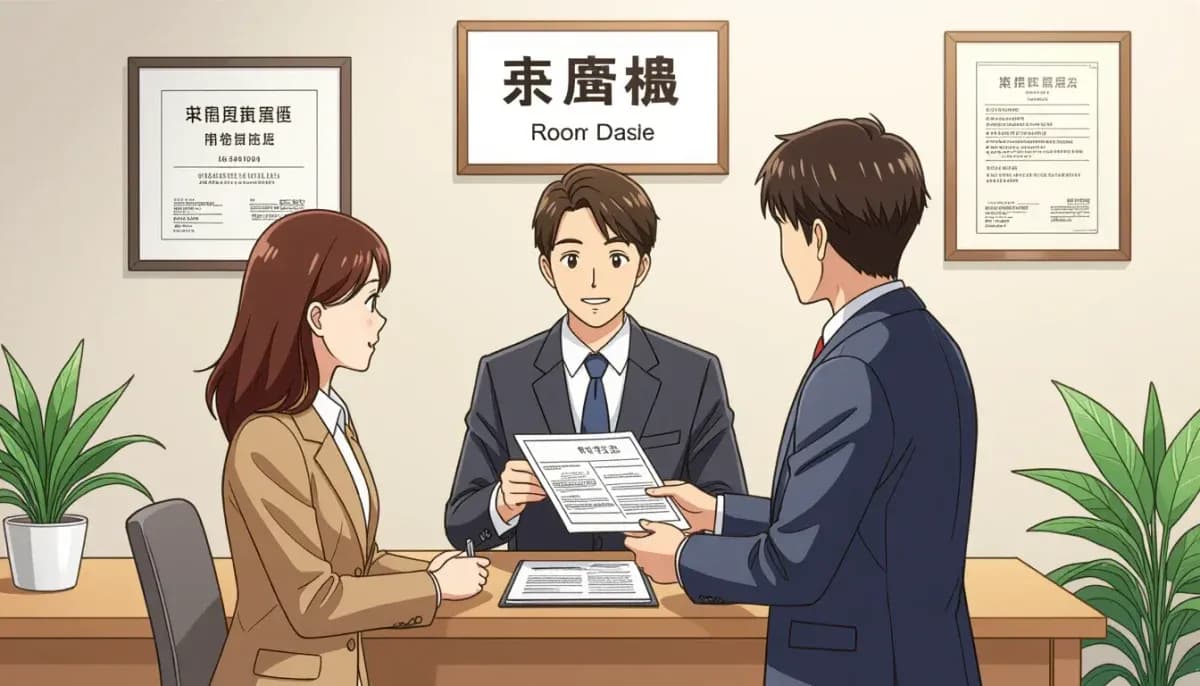
- Check credentials: All real estate agents in Japan are legally required to carry and present a 不動産業従業員証明書 (Real Estate Employee Identification Certificate). Always ask to see this.
- Verify RECAJ membership: Membership in the Real Estate Companies Association of Japan (RECAJ) is a reliable credibility indicator.
- Assess language ability: Don't assume "English-speaking" means fluent. Request a short consultation call to evaluate real communication capability.
- Review social media: Agents' personal Instagram, Twitter/X, or YouTube accounts can reveal their personality and values — useful since all agents access the same REINS property database.
- Ask about foreign client experience: Explicitly ask how many foreign clients they have worked with and what countries they are from.
For guidance on identifying trustworthy agents, see Red Flags and Scams to Watch For with Japan Real Estate Agents.
Read also: How to Find an English-Speaking Real Estate Agent in Japan
Documents and Preparation Before Meeting Your Agent
Japanese real estate transactions require thorough documentation. Coming prepared saves time and signals seriousness to agents and landlords alike.
| Document | Purpose | Notes |
|---|
| Valid Passport | Identity verification | Required for all transactions |
| Residence Card (在留カード) | Proof of legal residency | Must be current and valid |
| Proof of Income | Mortgage/rental eligibility | Pay slips, employment contract, bank statements |
| Employment Certificate | Verifies stable employment | Often required by landlords |
| Guarantor Information | Required for rentals | Or proof of guarantor company enrollment |
| Tax Documents | Confirms income history | Last 1-3 years' tax returns for buyers |
| Personal Seal (印鑑) | Contract signing | Or signature if foreigner-designated process |
If you don't have a Japanese guarantor, many agencies can connect you with guarantor companies (保証会社, hoshō gaisha) — ask your agent about this option early in the process.
For details on the purchase documentation process, see Legal Procedures and Documentation for Japan Property Purchase.
Understanding Agent Fees and Commission Structures
One of the most common surprises for foreign buyers in Japan is the commission structure. Understanding how agents are paid prevents misunderstandings down the line.
In Japan, real estate agents typically charge 3% of the property price plus ¥60,000 plus consumption tax from each party — both buyer and seller. This dual-agency model, where one agent can represent both sides, is common and legally permitted. The maximum statutory rate is set by the Real Estate Transaction Act.
Typical fee breakdown for a ¥50 million property:
| Fee Type | Rate | Amount (approx.) |
|---|
| Agent Commission (buyer) | 3% + ¥60,000 + tax | ~¥1,760,000 |
| Agent Commission (seller) | 3% + ¥60,000 + tax | ~¥1,760,000 |
| Registration Fee | Flat | ¥50,000–¥200,000 |
| Stamp Duty | Tiered by price | ¥10,000–¥60,000 |
| Judicial Scrivener Fee | Service-based | ¥100,000–¥200,000 |
For a complete cost breakdown, read Japan Real Estate Agent Commission Structure and Fees and Hidden Costs and Fees When Buying Property in Japan.
Also, understand the difference between Buyer's Agent vs Seller's Agent in Japan Explained to ensure your interests are properly represented.
Cultural Customs and Communication Tips
Working effectively with a Japanese real estate agent requires awareness of cultural norms that differ from Western business practices.
Key Cultural Points
Reikin (礼金 — Key Money): A uniquely Japanese custom where renters pay the landlord 1-2 months' rent upfront as a non-refundable "thank you" gift. While becoming less common in major cities, it still exists in many markets.
Shikikin (敷金 — Security Deposit): Typically 1-2 months' rent, returned (minus cleaning and damages) at the end of tenancy.
Building Age Preference: Many Japanese buyers and landlords prefer newer buildings (post-1981 earthquake building codes). Older properties (古民家, kominka) are less favored by locals but may appeal to foreign buyers seeking character and lower prices.
Indirect Communication: Japanese business culture values harmony and may avoid direct refusals. If an agent or landlord says "it might be difficult" (難しいかもしれません), this often means no. Building a respectful, patient relationship pays dividends.
Punctuality: Meetings start on time. Arrive a few minutes early to show respect.
Negotiation Style: Negotiation exists in Japan's property market, but aggressive tactics are counterproductive. See Negotiation Tips When Working with Japan Real Estate Agents for effective strategies.
Navigating the Language Barrier
The language barrier remains the single biggest obstacle for foreign buyers working with Japanese agents. Here's how to manage it strategically.
Hire a bilingual agent first: Sounds obvious, but many foreigners attempt to work with standard Japanese agencies using translation apps. This works poorly for legal documents where precision is critical.
Use professional translation for contracts: Even with a bilingual agent, having a second bilingual professional review contracts is wise for large transactions.
Leverage translation technology for listings: Apps like Google Translate and DeepL have improved dramatically and work well for initial property browsing on Japanese portals.
Ask for written summaries: Request that your agent summarize key contract points in writing (email or messenger) in your language. This creates a record and helps avoid miscommunication.
For specialized support, see Overcoming Language Barriers with Japan Real Estate Agents.
Additional resources from expert sites:
Agency Contract Types in Japan
Before your agent begins formal property searches on your behalf, you will likely sign an agency contract. Japan has three types:
- Ippan Baikai (一般媒介) — General mediation. You can register with multiple agencies simultaneously. The agent has no exclusive obligation.
- Sennin Baikai (専任媒介) — Exclusive mediation. Only one agency represents you, but you can find your own buyer/property independently.
- Senzoku Sennin Baikai (専属専任媒介) — Fully exclusive. One agency only, and you cannot source deals independently.
For buyers, a general mediation contract gives maximum flexibility, especially when working in competitive markets like Tokyo. For sellers, exclusive contracts incentivize agents to work harder.
See Types of Real Estate Agency Contracts in Japan for a deeper breakdown.
Working with Specialist Investment Agents
If you are purchasing property as an investment rather than for personal use, consider working with agents who specialize in investment properties. These professionals understand rental yield calculations, property management handoffs, and the nuances of Japan's growing foreign investor market.
According to a March 2025 survey by Mitsubishi UFJ Trust & Banking Corp., 20% to 40% of new apartments in Tokyo's Chiyoda, Shibuya, and Minato wards are now sold to foreign buyers — a testament to the growing appeal of Japan's market for international investors.
See Real Estate Agents Specialized in Investment Property in Japan for recommendations.
For more context on market conditions, read Japan Real Estate Market Overview and Trends for Foreign Investors.
You may also want to explore Visa and Residency Considerations for Property Buyers in Japan if your purchase is linked to immigration planning.
Red Flags to Watch For
Not every agent operates with your best interests in mind. Be alert to these warning signs:
- Pressure tactics: A good agent won't rush you to sign. If you feel pressured, walk away.
- Vague fee disclosures: All fees must be disclosed in writing before signing. Demand clarity.
- No credentials: Refusing to show the Real Estate Employee Identification Certificate is a serious red flag.
- Overpromising: Agents who guarantee specific outcomes (price drops, approval timelines) are being unrealistic.
- Ignoring your requirements: Repeatedly showing properties outside your stated budget or preferences signals misalignment.
For more details, see Red Flags and Scams to Watch For with Japan Real Estate Agents.
External Resources for Further Research
The following expert sources provide additional valuable guidance:
Final Thoughts
Working with a Japanese real estate agent as a foreigner is not just convenient — in most cases, it is essential. The right agent unlocks property access, navigates bureaucracy, bridges cultural gaps, and protects you from costly mistakes. Take time to research and interview multiple agents, verify credentials, and choose someone who genuinely specializes in foreign clients.
With the right professional partnership, Japan's property market — from a Tokyo studio apartment to a historic machiya in Kyoto — is entirely accessible to you as a foreigner.
Explore related guides: