
Toyota City and Industrial Area Property Near Nagoya

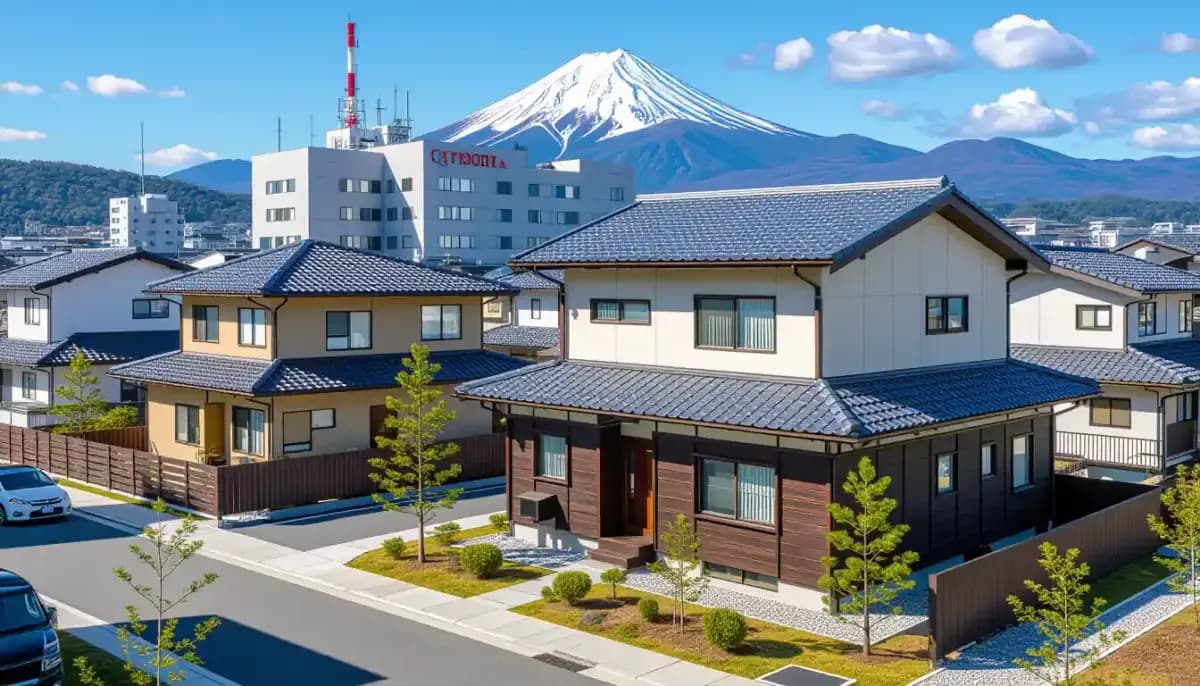
Complete guide to buying property in Toyota City and industrial areas near Nagoya. Prices, zoning rules, mortgages, and tips for foreign buyers in Aichi Prefecture.
Toyota City and Industrial Area Property Near Nagoya: A Complete Guide for Foreigners
Toyota City (豊田市) is one of Japan's most distinctive real estate markets — a thriving industrial hub shaped by the global automotive giant that shares its name. Located about 40 kilometers east of Nagoya in Aichi Prefecture, this city offers foreign buyers and expats an unusual combination: affordable suburban property prices, strong employment in the automotive sector, and convenient access to one of Japan's major urban centers.
Whether you're relocating for work at Toyota Motor Corporation, one of its thousands of suppliers, or simply seeking value in the greater Nagoya metro area, understanding Toyota City's property market is essential. This guide covers everything foreign buyers need to know.
Toyota City at a Glance: The Automotive Capital of Japan
Toyota City was originally known as Koromo (衣) before being renamed in 1959 to reflect the overwhelming influence of Toyota Motor Corporation on its economy and identity. Today, it is home to Toyota's global headquarters, multiple manufacturing plants, and a vast ecosystem of automotive suppliers and parts manufacturers.
With a population of approximately 420,000, Toyota City is Aichi Prefecture's second-largest city. Its economy is deeply tied to the auto industry — meaning property demand here tracks closely with Toyota's hiring cycles and the broader health of the manufacturing sector.
Key facts:
- Located 40 km east of Nagoya (30–45 minutes by train or car)
- Population: ~420,000 (2024 estimate)
- Main employers: Toyota Motor Corp., Denso, Aisin, Toyota Industries, JTEKT
- Train access: Meitetsu Toyota Line and Aichi Loop Railway
For foreigners in Japan's manufacturing sector, Toyota City is one of the most logical places to consider buying property outside of the major metros. For more context on the broader regional market, see our guide on buying property in Nagoya and the Chubu region.
Property Prices in Toyota City: What Foreigners Can Expect
Toyota City offers significantly more affordable properties than Nagoya's city center, let alone Tokyo or Osaka. The market is dominated by detached suburban homes on medium-to-large plots, with older "akiya" (vacant house) opportunities at very low entry points.
For Sale: Detached Houses
| Property Type | Price Range | Size | Land Area |
|---|---|---|---|
| Old/akiya entry point | ¥2.22M–¥5M | 40–80 m² building | 150–400 m² |
| Mid-range family home | ¥6.9M–¥12M | 80–165 m² | 200–600 m² |
| Modern suburban home | ¥15M–¥25M | 100–200 m² | 150–350 m² |
| Newer large family home | ¥25M–¥38.5M | 150–250 m² | 200–500 m² |
A typical 4LDK family home — the standard Japanese configuration for a household with children — ranges from ¥10 million to ¥22 million depending on age and condition. Older homes (pre-1990) are substantially cheaper, but require close attention to seismic certification standards.
Important note on building age: Japan updated its seismic building codes significantly in 1981 and again in 2000. When evaluating any property, verify the seismic certification date — not just the construction year. Buildings pre-1981 that haven't been retrofitted may not meet modern safety standards.
For a full overview of property types and what to look for, see our complete guide to types of properties in Japan.
Rental Market Overview
Rentals in Toyota City are affordable compared to Nagoya or Tokyo:
| Unit Type | Monthly Rent | Size |
|---|---|---|
| Studio (1K) | ¥35,000–¥60,000 | 20–30 m² |
| 1LDK | ¥55,000–¥75,000 | 35–50 m² |
| 2LDK | ¥65,000–¥90,000 | 50–75 m² |
| 3LDK | ¥80,000–¥120,000 | 65–100 m² |
Many listings offer zero deposit or minimal key money, particularly for older units. Properties are typically 3–13 minutes' walk from train stations on the Meitetsu Toyota or Aichi Loop lines.
Browse available Toyota City rentals at RealEstate.co.jp and Wagaya Japan.
Industrial Zoning and Property Regulations Near Toyota's Plants
One of the most critical considerations when buying in Toyota City is zoning. The city contains a mix of residential, commercial, and industrial zones — and the areas nearest Toyota's manufacturing facilities have specific regulations that directly affect what you can build, renovate, or use a property for.
Key zoning categories to understand:
- Class 1 & 2 Residential Zones: Standard suburban neighborhoods. Ideal for family homes, quiet environments.
- Quasi-Residential/Commercial Zones: Allow more mixed uses; fine for homes but with some commercial activity nearby.
- Industrial Zones (工業地域): Exist near Toyota's plants. Residential use is permitted but proximity to heavy manufacturing means noise, truck traffic, and air quality concerns.
- Exclusively Industrial Zones (工業専用地域): No residential use permitted. Be careful to verify this before purchasing any discounted property in outlying areas.
You can verify zoning via Toyota City's municipal urban planning maps (都市計画図, toshi keikaku zu), available at the city hall or online through Aichi Prefecture's GIS portal. Always confirm zoning independently — don't rely solely on your real estate agent's description.
For a broader look at legal procedures and documentation, see our guide on legal procedures and documentation for Japan property purchase.
Can Foreigners Buy Property in Toyota City? Legal Rights Explained
Yes — and the rules are straightforward. Foreigners have identical property ownership rights to Japanese citizens in Japan. There are no restrictions based on nationality, visa status, or residency. You do not need a visa, permanent residency (PR), or Japanese citizenship to purchase property.
This applies to:
- Detached houses (戸建て, kodate)
- Apartments and condominiums (マンション, mansion)
- Land (土地, tochi)
- Commercial and industrial properties
What property purchase does NOT give you:
- Residency or visa rights — Japan has no "golden visa" scheme
- Tax advantages or any special immigration pathway
For a detailed breakdown of your legal rights as a foreign buyer, see our guide: Can foreigners buy property in Japan? Legal rights and restrictions.
More resources on foreigner housing support are available at Living in Nihon and For Work in Japan.
Mortgages for Foreigners in Toyota City
Getting a mortgage in Japan as a foreigner is possible but requires meeting specific criteria. Most major Japanese banks require:
- Stable Japanese income — typically from a Japanese employer
- Permanent residency (PR) or, in some cases, a long-term visa
- Clean Japanese credit history (maintained for at least 2–3 years)
For workers at Toyota Motor Corporation or affiliated suppliers on company-sponsored work visas, some banks may be more flexible — particularly if your employer provides a salary guarantee letter.
Banks known to work with foreign applicants:
- SMBC Trust Bank PRESTIA
- Tokyo Star Bank
- Some regional Aichi banks for long-term residents
Interest rates (early 2026):
- Variable rate: 0.6%–1.5% (qualified residents)
- Fixed rate: 1.5%–3.0%
- FLAT 35 long-term fixed: may be accessible in some cases
If you cannot obtain a Japanese mortgage, purchasing with overseas financing or cash is a legitimate alternative — particularly for lower-priced properties in the ¥5M–¥15M range.
For more detail, see our guide on mortgages and home loans for foreigners in Japan.
Buying Costs and Annual Ownership Expenses
One-Time Purchase Costs
Expect to pay 5–12% above the purchase price in transaction costs:
| Cost Item | Amount |
|---|---|
| Agent commission | 3% + ¥60,000 + 10% consumption tax |
| Registration & License Tax | ~1.5% of land value |
| Real Estate Acquisition Tax | 1.5% (land), 2–4% (buildings) |
| Stamp duty | ¥10,000–¥480,000 (scales with price) |
| Judicial scrivener fees | ¥100,000–¥150,000 |
| Mortgage setup fees | ¥50,000–¥300,000 (if applicable) |
Annual Ownership Costs
| Cost Item | Rate |
|---|---|
| Fixed Asset Tax (固定資産税) | ~1.4% of assessed value |
| City Planning Tax (都市計画税) | Up to 0.3% where applicable |
| Building maintenance (older homes) | Varies widely |
| Home insurance | ¥30,000–¥100,000/year |
For a full breakdown, see our guide on property taxes and annual costs of owning property in Japan and hidden costs and fees when buying property in Japan.
Toyota City Neighborhoods: Where to Look
Toyota City's geography is shaped by its industrial history. The core urban area sits along the Yahagi River, with residential neighborhoods fanning outward into the Mikawa highlands.
Central Toyota City (Toyota / Shintoyota stations): Most convenient for commuting, shopping, and city services. Higher property values, smaller plots. Good for apartment buyers or those wanting walkability.
Uragahara / Jousui area: Established residential suburbs. Mix of older family homes and newer developments. Moderate prices, good schools.
Inabu / Asahi area (northern Toyota City): More rural character. Large plots, very affordable akiya opportunities. Significant drive to main Toyota facilities. Better for remote workers or retirees.
Homi New Town: A large planned residential development from the 1970s–90s. Offers spacious older homes at low prices, though the area skews toward an older demographic. Regeneration efforts ongoing.
For expat-specific housing and relocation advice in the broader area, Gaijin Buy House and All Japan Relocation's Nagoya guide provide useful context.
Akiya (Vacant House) Opportunities Near Toyota
Japan's famous akiya (空き家, vacant house) phenomenon is well-represented in Toyota City and surrounding Aichi municipalities. With approximately 9 million vacant homes nationwide — about 14% of all housing stock — buyers willing to take on renovation projects can find exceptional value.
In Aichi Prefecture, akiya properties start from as low as ¥2.8 million for rural detached homes with large land areas. Some municipalities list properties at near-zero prices for buyers who commit to inhabiting and renovating the home.
Tips for akiya buyers:
- Use the Aichi Prefecture akiya bank (空き家バンク) database
- Budget for significant renovation: ¥3M–¥10M is typical for older properties
- Seismic retrofit may be required for pre-1981 buildings — check for available municipal subsidies
- Properties sold "as-is" often come with undisclosed structural or drainage issues; independent inspection is essential
For more on rural and countryside property opportunities across Japan, see our guide on rural and countryside properties in Japan for foreign buyers.
Step-by-Step Buying Process Summary
For foreigners new to Japan's property market, the purchase process has several distinct stages:
- Property search — Use platforms like Allakiyas or SUUMO (Japanese-language)
- Engage a licensed real estate agent (宅地建物取引士, takken) — verify their license
- Receive the "Important Matters Explanation" (重要事項説明, juuyo jiko setsumeisho) — mandatory disclosure document
- Sign purchase agreement and pay deposit (usually 10% of price)
- Apply for mortgage (if needed)
- Final settlement and key handover
- Register ownership at the Legal Affairs Bureau (法務局, homukyoku)
Note: Legal ownership is only secured at registration, not at signing. Always obtain the registry certificate (touki jiko shomeisho) to verify title and check for liens before proceeding.
All official documentation is in Japanese. Translations are for reference only and are not legally binding. Working with a bilingual agent or bilingual judicial scrivener is strongly recommended — though note that specialist bilingual agents are less common outside Tokyo, Osaka, and Fukuoka.
See our step-by-step home buying process guide for full details.
Is Toyota City Right for You?
Toyota City makes the most sense for foreign buyers who:
- Work in the automotive industry — Toyota Motor Corp., Denso, Aisin, or affiliated suppliers
- Prioritize affordability over urban amenity — property is significantly cheaper than Nagoya city center
- Have a car — much of Toyota City is car-dependent, like many Japanese suburban areas
- Are comfortable with Japanese-language services — international infrastructure is thinner than in Tokyo or Osaka
- Are open to older properties — the best value is typically in pre-2000 homes needing some renovation
If your priority is urban amenity, walkability, or strong English-language support networks, Nagoya's city center or other major metros may serve you better.
For the full picture of buying property in Japan as a foreigner, start with our complete guide to buying property in Japan as a foreigner.

Originally from Vietnam, living in Japan for 16+ years. Graduated from Nagoya University, with 11 years of professional experience at Japanese and international companies. Sharing information about buying property in Japan for foreigners.
View Profile →Related Articles

Chubu Region New Development and Infrastructure Projects
Explore Chubu region's major infrastructure projects including the maglev Chuo Shinkansen, Meitetsu Nagoya Station redevelopment, and smart city initiatives. Essential guide for foreign property buyers in Nagoya and the Chubu region.
Read more →
Nagoya Rental Property Investment Guide for Foreigners
A complete guide to investing in Nagoya rental property as a foreigner: yields 4-8%, neighborhoods, taxes, mortgages, and property management tips for 2025.
Read more →
Chubu Region Rural Property: Affordable Options for Foreigners
Discover affordable rural property options in Japan's Chubu region. Complete guide for foreigners on buying homes in Nagano, Gifu, Toyama, and Shizuoka — including prices, akiya banks, and the purchase process.
Read more →
Gifu and Takayama Property Guide for Foreign Buyers
Complete guide to buying property in Gifu and Takayama as a foreigner. Covers legal rights, market prices, akiya/kominka opportunities, buying process, and costs for international buyers.
Read more →
Karuizawa Resort Property Investment Guide for Foreigners
Complete guide to buying resort property in Karuizawa as a foreigner: market overview, price ranges by area, buying process, annual costs, rental income potential, and legal considerations.
Read more →
Nagano Mountain and Resort Property Guide for Foreigners
Complete guide to buying mountain and resort property in Nagano as a foreigner. Covers Hakuba, Karuizawa, Nozawa Onsen — prices, legal rules, taxes, and rental income potential.
Read more →