
Rental Rules and Regulations for Japan Condominiums

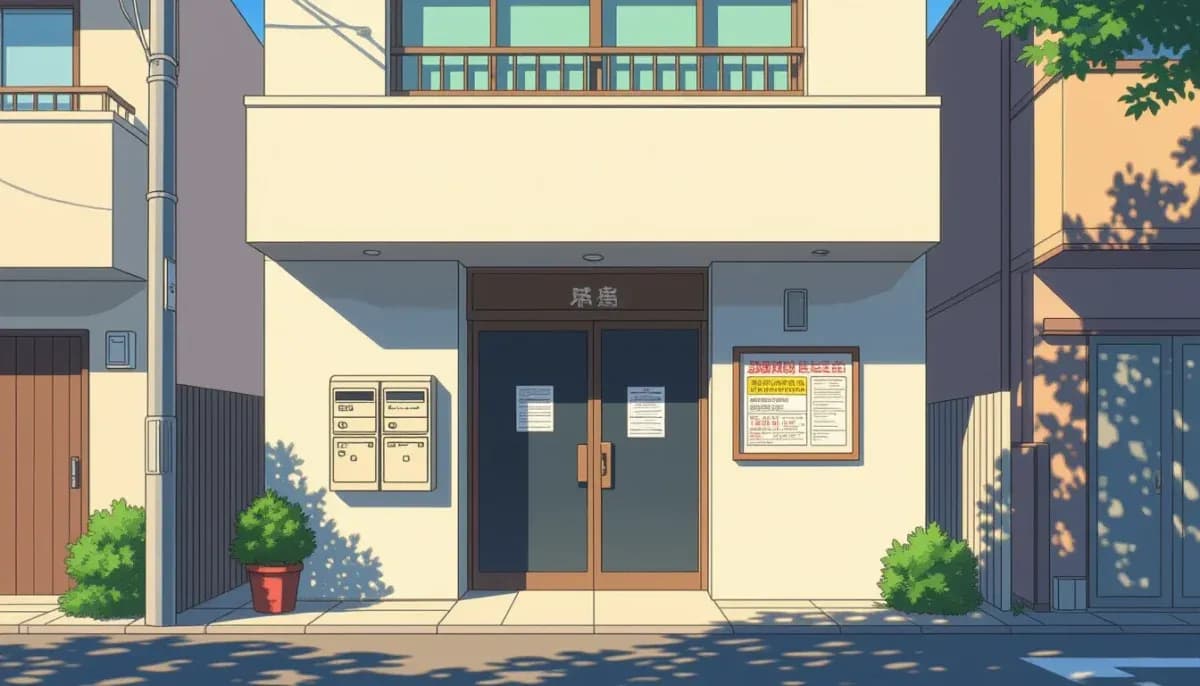
Complete guide to Japan condominium rental rules for foreigners: lease agreements, deposits (shikikin/reikin), house rules, noise policies, pet restrictions, subletting laws, move-out obligations, and tenant rights explained.
Rental Rules and Regulations for Japan Condominiums: A Complete Guide for Foreigners
Renting a condominium (マンション, manshon) in Japan is a straightforward process once you understand the system — but the rules can seem strict and the upfront costs surprisingly high to newcomers. Whether you're an expat arriving for work, a long-term resident, or a foreign investor renting out a unit, understanding Japan's rental regulations is essential for a smooth experience.
This guide covers everything from lease agreements and initial costs to house rules, move-out obligations, and the specific challenges that foreign renters face in Japan's condominium market.
Understanding Japan's Rental Cost Structure
One of the first shocks for foreigners renting in Japan is the volume of upfront costs. Unlike many Western countries where you might pay first and last month's rent plus a deposit, Japanese condominiums typically require significantly more.
| Cost Item | Typical Amount | Notes |
|---|---|---|
| Shikikin (敷金) Security Deposit | 1–2 months' rent | Partially refundable; used for repairs |
| Reikin (礼金) Key Money | 1–2 months' rent | Non-refundable "gratitude" to landlord |
| Agent Fee | ~1 month + 10% tax | Paid to real estate agent |
| Guarantee Company Fee | 50–100% of 1 month's rent | Required for most foreigners |
| Key Replacement | ¥10,000–¥20,000 | New key cylinder on move-in |
| Fire Insurance | ¥15,000–¥20,000/year | Mandatory in most leases |
For an ¥80,000/month apartment, expect to pay ¥360,000–¥400,000 upfront before moving in. This is standard across Japan, though reikin has become less common in recent years, particularly in areas outside central Tokyo.
Shikikin (security deposit) is held by the landlord and returned after move-out, minus deductions for damage beyond normal wear and tear. Reikin (key money) is a uniquely Japanese custom with roots in post-war housing scarcity — it is paid directly to the landlord and is never refunded, regardless of how long you stay.
For more on the financial side of Japan property, see our guide on hidden costs and fees when buying property in Japan.
Lease Agreements: Key Terms You Must Know
Standard Lease (普通借家契約)
The most common lease type in Japan is a 2-year fixed-term renewable contract governed by the Act on Land and Building Leases (ALBL, 借地借家法). Under this system:
- Tenants have strong legal protections — landlords cannot refuse renewal without "just cause"
- You can renew indefinitely as long as rent is paid and rules followed
- Termination requires 1–2 months' written notice from either party
- Renewal fee: typically 0.5–1 month's rent, due 1–3 months before expiration
Fixed-Term Lease (定期借家契約, Teiki Shakka)
Fixed-term leases are increasingly common, especially in Tokyo where they now account for over 30% of listings. Key differences:
- Set duration: typically 2–4 years
- No automatic renewal right — you must negotiate and sign a new contract
- More favorable to landlords; often used for newly renovated or premium properties
- Must be documented in a notarized document separate from the main contract
Always clarify which type of lease you're signing before submitting an application.
For a deeper understanding of property ownership frameworks in Japan, our Japan real estate terminology glossary explains key legal terms in plain English.
Guarantor Requirements for Foreign Renters
Most Japanese landlords require a guarantor (連帯保証人, rentai hoshounin) — someone who agrees to cover unpaid rent or damages if the tenant defaults. Traditionally, this meant a Japanese citizen with stable employment and good credit.
For foreigners, this presents an immediate challenge. Most people new to Japan don't have Japanese family or established local connections to serve as a guarantor.
Guarantee Companies (保証会社)
The solution is a guarantee company (hoshou gaisha), a specialized firm that acts as your institutional guarantor for a fee:
- Upfront fee: 50–100% of one month's rent
- Annual renewal fee: ¥1,000–¥2,000 per year
- Companies with good records for accepting foreigners: GTN (Global Trust Networks) and Casa
To qualify, most guarantee companies look for:
- Valid Japanese residence card (在留カード)
- Proof of income: annual salary ≥ 36× monthly rent
- Employment contract or letter from employer
- Japanese bank account
Without a residence card, options are very limited. Tourist visa holders and working holiday visa holders face the most restrictions.
Foreigner-Friendly Housing Options
If you're struggling with guarantor requirements, consider these alternatives:
- UR Housing (都市再生機構): Government-managed apartments with no guarantor, no key money, and a transparent application process. Requires a valid residence card and income proof.
- Leopalace21: Furnished apartments with flexible contracts; relatively foreigner-friendly
- Weekly/monthly mansions: Short-term furnished rentals with minimal paperwork — useful as a base while you secure a long-term lease
- Look for listings marked 外国人可 (gaikokujin ka, "foreign nationals accepted")
According to surveys, approximately 40% of foreigners in Japan report experiencing housing discrimination during their search — a persistent challenge that the Japanese government has acknowledged. For Work in Japan has resources on navigating these barriers: forworkinjapan.com.
Condominium House Rules (管理規約)
Renting a condominium in Japan means you're subject to two sets of rules:
- Your lease agreement with the individual landlord
- The condominium's management rules (管理規約, kanri kiyaku) set by the Owners' Association (管理組合)
The management rules are binding on all residents — renters included — and cover everything from noise limits to trash disposal. Before signing, ask for a copy of the 管理規約 and review it carefully.
Common House Rules in Japanese Condominiums
Noise and Quiet Hours
- Quiet hours are typically enforced from 10 PM to 8 AM
- During quiet hours, TVs, music, and conversations must be kept low
- Musical instruments (piano, drums, electric guitar) are commonly prohibited entirely inside units — practicing at a rented studio is expected
- Late-night laundry and vacuuming should be avoided even during daytime hours in thin-walled buildings
Pets
- Pets are banned in the vast majority of condominiums unless the property is explicitly listed as pet-acceptable (ペット可)
- "No pets" means no pets — even small fish in large tanks may require permission
- Violations can result in deposit forfeiture or eviction proceedings
- Always confirm pet policy in writing before applying
Smoking
- Indoor smoking is often permitted unless the lease specifies otherwise — but restoration costs for nicotine-damaged walls and floors fall entirely on the tenant
- Balcony smoking is strictly prohibited in most condominiums due to shared air circulation and fire risk
- Common-area smoking is universally banned
Common Areas
- No personal items (bicycles, strollers, umbrellas) may be stored in hallways or near the entrance
- Delivery lockers are for temporary storage only — items must be retrieved within 24–48 hours
- Elevator etiquette: hold the door, limit noise, no food or beverages
Waste Disposal
- Residents must follow the municipal trash separation schedule (燃えるごみ, 燃えないごみ, 資源ごみ, etc.)
- Waste must be placed at the designated collection point on the correct morning — not the night before
- Violations of waste rules are taken seriously and can lead to complaints from the building management
For guidance on setting up your new home and understanding local routines, see our article on moving to Japan and setting up your new home.
Subletting and Short-Term Rentals
Subletting (転貸, Tenkai)
Subletting your unit without explicit landlord approval is strictly prohibited under Civil Code Article 612. This means:
- You cannot rent out your apartment or a room to a third party
- You cannot allow a non-household-member to use the apartment as their primary residence
- Violations give the landlord the right to immediately terminate the lease
Short-Term Rentals (民泊, Minpaku)
Operating an Airbnb or short-term rental from a Japanese condominium is subject to:
- Japan's Minpaku Law (住宅宿泊事業法, effective June 2018): Maximum 180 days per year of short-term rentals nationally
- Local governments can impose stricter limits — central Tokyo wards often allow as few as 60–90 days
- The condominium's HOA rules almost always prohibit Airbnb-style rentals outright
- Operating without HOA approval and minpaku registration is illegal and can result in eviction and fines
If you're interested in short-term rental income, you'll need to own the unit and have explicit HOA approval — see our detailed guide on short-term rentals and Airbnb (minpaku) in Japan.
Move-Out: Restoration Obligations (原状回復)
Japanese tenants are required to return the unit to its original condition upon move-out — but the law draws a clear line between what the landlord must cover and what the tenant must pay for.
What Landlords Are Responsible For (Normal Wear and Tear)
- Faded wallpaper or flooring due to sunlight exposure
- Small nail holes from standard picture hanging
- Natural discoloration of walls from age
- Scratches that would occur from normal furniture use
What Tenants Are Responsible For
- Nicotine and smoke stains: Entire room re-wallpapering at tenant's cost — this is one of the most common disputes
- Pet damage: Scratches, stains, and odors from pets (even if pets were permitted)
- Unauthorized modifications: Holes beyond standard size, removed fixtures, changed locks
- Mold from neglect: If mold grew due to failure to ventilate or clean
- Damage from accidents: Water damage from overflowing baths, broken windows, etc.
Best Practice: Photograph the entire unit with timestamps on move-in day — every wall, floor, ceiling, and fixture. This documentation is your primary protection in deposit disputes.
Standard notice to vacate: 1–2 months in advance, in writing.
For landlords managing properties, see our guide on property management for overseas owners in Japan.
Renewal and Lease Termination
Renewal Process
For standard leases, renewal is typically:
- Management company sends renewal notice 3–6 months before expiration
- Both parties agree to continue (or negotiate new terms)
- Renewal documents signed 1–2 months before expiration
- Renewal fee (更新料) paid: typically 0.5–1 month's rent
If you plan to move out rather than renew, provide written notice during this window.
Early Termination
Ending a lease before the 2-year term is complete generally requires:
- 1–2 months' notice in writing
- Sometimes a break clause fee (解約違約金) of 1 month's rent if terminating in the first year
- Review your specific contract carefully — terms vary
Tenant Rights Under Japanese Law
Japan's housing laws are relatively tenant-friendly. Under the ALBL:
- Landlords must provide formal justification for refusing to renew a standard lease
- Eviction requires a court order — landlords cannot change locks or remove belongings without legal process
- Rent increases require tenant agreement unless the lease specifically allows periodic adjustments
Japan's Condominium Market: Key Statistics
Understanding the rental market context helps you navigate as a renter:
- Japan has over 7 million condominium units nationwide (2023)
- Approximately 36% of Japanese households rent (~19.2 million households)
- Average rental unit size: 45.6 sqm; 26% of units are under 30 sqm
- New condo supply in the Tokyo metro area (2024): 23,003 units — the lowest since 1973, down 14.4% year-over-year
- Occupancy rate in greater Tokyo J-REIT apartments: 97.4% (August 2024)
- Average Tokyo rent per tsubo: ¥20,755, up 4.7% year-over-year for 15 consecutive months
- National gross rental yield: 4.47% (Tokyo: 3.59%; Fukuoka/Sapporo: ~4.98%)
The combination of low new supply and high occupancy makes Japan's condominium rental market — especially in Tokyo — highly competitive for desirable units.
Tips for Foreign Renters in Japan
- Get a residence card first: Almost everything in the rental process requires one. Complete your municipal registration (住民登録) on arrival.
- Open a Japanese bank account early: Required by most landlords and guarantee companies. Japan Post Bank is often easiest for new arrivals.
- Work with a bilingual agent: Many agencies in Tokyo, Osaka, Yokohama, and Kobe have English-speaking staff. Outside major cities, English support is rare.
- Read the 重要事項説明書: The "Important Matters Explanation" document must be read aloud by a licensed real estate agent before signing. Ask for an English translation if available.
- Ask about 管理費: Condominium management fees are often charged separately from rent — confirm the total monthly cost.
- Document everything: Photos on move-in and move-out, receipts for all payments, signed copies of every document.
For a comprehensive look at the property-buying side, the team at Living in Nihon has an excellent detailed guide on rental contracts in Japan. A-Realty's long-term rental guide also provides useful current-year tips for navigating the process. If you're considering purchasing rather than renting, our complete guide to buying property in Japan as a foreigner covers the full purchase process.
Those interested in the investment angle can also explore rental property investment in Japan for foreign landlords and our overview of Japan real estate investment for foreigners.
For a property viewing checklist before you commit to any unit, Gaijin Buy House has a practical naiken (内見, property viewing) checklist that applies equally to rental and purchase viewings.
Final Thoughts
Renting a condominium in Japan as a foreigner requires preparation — understanding the two-layer rule system (lease + HOA), the substantial upfront costs, and your rights and obligations upon move-out. The legal framework is clear and relatively tenant-protective, but ignorance of the rules is not an excuse in Japan's detail-oriented rental culture.
Take the time to read your lease and management rules in full, photograph everything on move-in, pay your rent on time, and follow the building's community rules — and your tenancy will proceed smoothly. Japan's condominium buildings are typically quiet, well-maintained, and safe, making them an excellent base for expat life.
For additional guidance on navigating Japanese real estate as a foreigner, explore our resources on working with Japanese real estate agents and choosing the right Japanese neighborhood.

Originally from Vietnam, living in Japan for 16+ years. Graduated from Nagoya University, with 11 years of professional experience at Japanese and international companies. Sharing information about buying property in Japan for foreigners.
View Profile →Related Articles
Japan Condo Resale Value: Key Factors That Affect Price
Discover the key factors that affect Japan condo resale value — from station proximity and building age to management quality and market timing. Essential guide for foreign buyers.
Read more →
Luxury and Branded Condominiums in Japan
Complete guide to buying luxury and branded condominiums in Japan as a foreigner. Covers Aman Residences, Ritz-Carlton, tower mansions, prices, costs, and investment potential in Tokyo and beyond.
Read more →
Japan Condo Building Inspection: What to Check Before Buying
Complete guide to condo building inspections in Japan for foreign buyers. Learn inspection types, costs (¥40,000–¥150,000), seismic standards, and critical documents to review before signing.
Read more →
Earthquake Safety Concerns in Older Japan Condominiums
Buying an older condo in Japan? Learn about the critical 1981 seismic code, risks of pre-1981 buildings, retrofitting options, and how to protect yourself as a foreign buyer.
Read more →
Japan Condo Common Facilities and Amenities Guide
Discover what common facilities to expect in Japanese condominiums — from auto-lock entrances and parcel lockers to gyms and concierge services. Learn about management fees, what to inspect, and what foreign buyers should know before purchasing.
Read more →
Parking and Bicycle Storage in Japan Condominiums
Learn everything about parking and bicycle storage in Japanese condominiums: types, fees, HOA rules, and tips for foreign buyers navigating Japan's condo market.
Read more →