
Japan Housing Market Forecast 2026: What Foreign Buyers Should Know

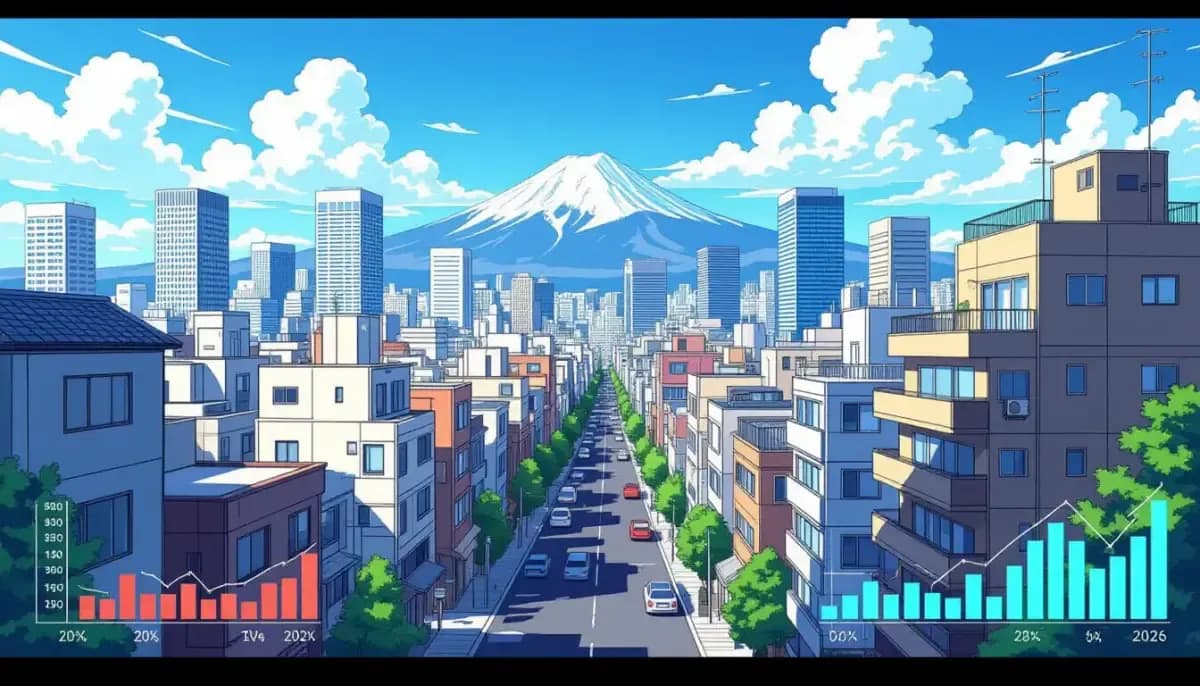
Complete guide to Japan's housing market forecast for 2026. Discover price trends, interest rate outlook, new foreign buyer regulations, and the best cities to invest in Japan real estate.
Japan Housing Market Forecast 2026: What Foreign Buyers Should Know
Japan's real estate market continues to attract growing interest from foreign investors and expatriates looking to purchase property. With national land prices posting their strongest growth in 34 years and Tokyo maintaining its position as the top destination for cross-border investment globally, 2026 presents a compelling—yet increasingly complex—landscape for foreign buyers. This comprehensive guide breaks down what you need to know about the Japan housing market forecast for 2026, from price trends and interest rate movements to new regulatory changes targeting foreign ownership.
Whether you are a first-time buyer exploring the market or an experienced investor evaluating your next acquisition, understanding the forces shaping Japan's property sector this year is essential for making informed decisions.
Japan Property Market Overview: Where Things Stand Heading Into 2026
Japan's real estate market ended 2025 on a high note. National land prices rose 2.7% year-on-year—the strongest gain in 34 years—driven by sustained demand in major urban centers and emerging regional cities. The full-year 2025 investment volume is expected to top JPY 6 trillion, a new single-year record.
Here is a snapshot of price growth by sector in 2025:
| Sector | National YoY Price Growth (2025) |
|---|---|
| Nationwide Average | +2.7% |
| Residential | +2.1% |
| Commercial | +3.9% |
| Industrial | +4.8% |
| Tokyo / Osaka / Nagoya Metro | +4.3% |
| Regional Cities (Sapporo, Sendai, Hiroshima, Fukuoka) | +5.8% |
Notably, regional cities are outpacing the major metropolitan areas in percentage terms, signaling that Japan's growth story is no longer confined to Tokyo. For foreign buyers looking for value, cities like Fukuoka, Sapporo, and Sendai offer lower entry prices combined with strong appreciation momentum.
For a broader view of the market's fundamentals, see our Japan Real Estate Market Overview and Trends for Foreign Investors.
Tokyo Property Prices and 2026 Forecast
Tokyo remains the epicenter of Japan's residential market and the world's top-ranked city for cross-border real estate investment—a title it has held for seven consecutive years. In 2025, the average residential price in Tokyo reached 91.4 million JPY, representing a 10.7% year-on-year increase. In central Tokyo's most sought-after wards, prices have surpassed 120 million JPY.
However, analysts expect the pace of growth to moderate in 2026. The forecast is for Tokyo residential prices to increase 5–6%, as affordability constraints begin to limit buyer pools and new supply gradually enters the market.
Foreign buyers have become a substantial force in Tokyo's new apartment market. In 2025, foreigners accounted for 27% of all property purchases in Japan (up from 21% five years ago), and in three premium Tokyo wards, foreign buyers represented 20–40% of new condominium transactions.
If you are specifically interested in Tokyo, our detailed Guide to Buying Property in Tokyo as a Foreigner covers neighborhood breakdowns, pricing by area, and practical purchasing tips.
Regional Cities: The Emerging Opportunity for 2026
One of the most significant trends in Japan's 2026 housing market forecast is the rise of regional cities. While Tokyo and Osaka continue to command the headlines, cities such as Fukuoka, Sapporo, Sendai, and Hiroshima are experiencing property price growth of 5.8%—outperforming the major metro average of 4.3%.
These cities offer several advantages for foreign buyers:
- Lower entry prices: Average property prices in Fukuoka and Sapporo are significantly lower than in Tokyo, making them accessible to buyers with smaller budgets
- Higher rental yields: The national average rental yield sits at approximately 4.2%, but Osaka and Fukuoka consistently offer yields that exceed central Tokyo's compressed returns
- Growing populations: Unlike many rural areas, these cities are drawing in domestic migrants and international workers, supporting rental demand
- Infrastructure investment: Government-backed infrastructure projects are enhancing connectivity and livability
For buyers considering Fukuoka, see our Guide to Buying Property in Fukuoka and Kyushu as a Foreigner. For Hokkaido, which includes the sought-after Niseko ski resort area, check our Buying Property in Hokkaido as a Foreigner guide.
Asia Pacific net buying intentions for Japan real estate reached 17% for 2026—up from 13% the prior year—reflecting growing confidence among international investors. PropertyAccess and PLAZA HOMES both confirm this trend is broad-based, not limited to a single city.
Interest Rates and Mortgage Conditions in 2026
One of the most closely watched factors for Japan's housing market in 2026 is the Bank of Japan's monetary policy trajectory. After decades of near-zero interest rates, the BOJ began normalizing policy in 2024 and raised its policy rate to 0.75% by December 2025—a 30-year high.
For 2026, analysts expect the BOJ to continue gradual rate increases, with the policy rate potentially reaching 1.0–1.25% by year-end. Long-term neutral rate estimates range from 1.0% to 2.5%. This means the era of ultra-low mortgage rates is transitioning, but conditions remain historically favorable:
| Mortgage Type | Estimated Rate Range (2026) |
|---|---|
| Variable Rate (variable mortgages) | 0.5%–1.5% |
| Fixed Rate (10-year fixed) | 1.5%–2.5% |
| Fixed Rate (35-year flat rate) | 1.8%–2.8% |
Foreign buyers typically face additional mortgage challenges, as most Japanese banks require permanent residency or a qualifying visa status. However, specialist lenders and international bank branches in Japan have expanded their offerings. For a full breakdown of financing options, read our Mortgages and Home Loans for Foreigners in Japan guide.
The key takeaway: while rates are rising, 2026 still represents a relatively favorable borrowing environment compared to historical norms. Locking in a fixed-rate product sooner rather than later may be advisable if further rate hikes materialize.
New Regulations for Foreign Property Buyers in 2026
Perhaps the most important development affecting foreign buyers in 2026 is a wave of new disclosure and transparency requirements. Japan is not following the path of countries like Canada or New Zealand, which have imposed outright bans on foreign property purchases. Instead, the regulatory trend is toward transparency and monitoring.
Key regulatory changes foreign buyers must know:
Already in effect (July 2025):
- Land transactions covering 200 square meters or more require buyers to disclose their nationality to prefectural governors
Coming into force (April 2026):
- Nationality disclosure becomes mandatory for ALL residential property transactions, regardless of size
- Foreign buyers must register their names in Roman letters alongside Japanese script
- Overseas residents must register a Japan-based domestic contact address
In planning for FY2026–2027:
- Nationality information mandatory in all real estate registrations (Ministry of Justice)
- Centralized registry of all foreign-held properties under discussion
- Pre-approval system for property purchases near defense facilities, nuclear plants, and ports
- Corporate transparency rules to prevent shell company acquisitions
The practical impact: the buying process is becoming more administratively complex for foreign purchasers, but there is no indication that foreign buying will be prohibited. Buyers who complete purchases before April 2026 will face less paperwork, making early 2026 a strategic window.
Consult our Legal Procedures and Documentation for Japan Property Purchase guide for more detail on the documentation process, and see Living in Nihon for practical guides on navigating life as a foreign resident in Japan.
What to Expect: Japan Property Market Polarization in 2026
A key theme emerging in analyst forecasts for 2026 is deepening market polarization. Not all properties and not all locations will benefit equally from the broader upward trend.
Winners in 2026:
- Well-located properties in major urban centers with good transit access
- Energy-efficient and newly constructed buildings qualifying for government subsidies
- Short-term rental properties in tourist hotspots benefiting from record inbound tourism (42.7 million visitors in 2025, spending ¥9.5 trillion)
- Properties in growing regional cities with expanding job markets
Underperformers in 2026:
- Rural and peripheral properties far from employment centers
- Older buildings with deferred maintenance and poor energy ratings
- Properties in municipalities experiencing accelerating population decline
- Japan has approximately 9 million vacant homes (akiya)—about 13% of all residential stock—concentrated in declining regions
For buyers interested in the akiya market, which offers dramatically lower prices but significant renovation risks, see our Akiya (Vacant and Abandoned Houses) in Japan for Foreign Buyers guide.
The bottom line: location quality and building condition matter more than ever in 2026. Premium, well-managed properties in convenient locations will continue to appreciate; poorly located or maintained properties face growing headwinds. CBRE Japan's 2026 Market Outlook confirms this selectivity trend.
Practical Advice for Foreign Buyers Entering the Market in 2026
Given the market dynamics described above, here is actionable guidance for foreign buyers considering a Japan property purchase in 2026:
1. Act before April 2026 regulations take effect The April 2026 nationality disclosure requirements add administrative steps to every transaction. Buyers who can close before this deadline will navigate a simpler process.
2. Evaluate regional cities seriously With Fukuoka, Sapporo, and Sendai posting stronger price growth than Tokyo and offering higher rental yields, these cities deserve consideration—especially for investment-oriented buyers.
3. Get mortgage pre-approval early With interest rates rising, understanding your borrowing capacity now allows you to budget accurately and lock in rates before further BOJ increases.
4. Work with a bilingual real estate professional Language barriers and cultural differences make the Japan property market particularly challenging for foreign buyers. Working with an experienced bilingual agent is essential. For Work in Japan provides resources for foreigners navigating life and work in Japan, including housing resources. Gaijin Buy House specializes in helping foreign buyers navigate Japan's property market.
5. Budget carefully for total ownership costs Purchase costs in Japan typically add 6–10% to the property price (registration taxes, agent fees, stamp duties). Annual ownership costs include property tax and city planning tax. See our Hidden Costs and Fees When Buying Property in Japan guide for a full breakdown.
6. Think long-term and prioritize location Japan's aging and shrinking population means future resale value increasingly depends on proximity to employment centers, transit, and services. Buy where people will want to live in 20 years, not just today.
Conclusion: Is 2026 a Good Time to Buy Property in Japan?
The Japan housing market in 2026 remains fundamentally attractive for foreign buyers—particularly for those targeting major cities and emerging regional hubs. Prices continue to rise at a measured pace, interest rates remain historically low despite normalization, and Japan's unique combination of economic stability, cultural appeal, and currency advantage (for USD, EUR, and GBP holders) keeps it near the top of global real estate investment rankings.
However, the window of regulatory simplicity is closing. New disclosure requirements and the prospect of additional transparency measures make early 2026 a strategic moment for buyers who are ready to act. The market rewards preparation: buyers who understand the full cost structure, work with qualified professionals, and focus on high-demand locations are best positioned to succeed.
For a complete introduction to the buying process, start with our Complete Guide to Buying Property in Japan as a Foreigner and our Step-by-Step Home Buying Process for Foreigners in Japan.
For additional market analysis and practical tips, A-Realty's 2026 Japan Real Estate Guide is an excellent resource written specifically for foreign residents and investors.

Originally from Vietnam, living in Japan for 16+ years. Graduated from Nagoya University, with 11 years of professional experience at Japanese and international companies. Sharing information about buying property in Japan for foreigners.
View Profile →Related Articles

Weak Yen Impact on Japan Property Investment for Foreigners
Learn how Japan's weak yen creates major buying advantages for foreign property investors. Discover real savings, rental yields, legal framework, and key risks to navigate in 2025.
Read more →
Japan vs Other Asian Countries: Real Estate Market Comparison
Compare Japan's real estate market against Hong Kong, Singapore, Thailand and other Asian countries. Full analysis of prices, ownership rights, yields, and transaction costs for foreign buyers in 2025.
Read more →
Japan Construction Industry Trends and New Home Development
Understand Japan's construction industry trends, new home development statistics, prefab housing growth, labor challenges, and what it means for foreign buyers planning to purchase or build in Japan.
Read more →
Best Cities to Invest in Japan Real Estate in 2026
Discover the top Japanese cities for real estate investment in 2026. Compare Tokyo, Osaka, Fukuoka, Sapporo rental yields, prices, and tips for foreign buyers entering the market.
Read more →
Japan Property Market Bubble History: Lessons for Today's Buyers
Learn from Japan's 1991 property bubble collapse — when prices fell 90% — and apply those hard-won lessons to buying property in Japan as a foreigner in 2025's rising market.
Read more →
Japan Luxury Real Estate Market Trends for High-Net-Worth Buyers
Discover Japan's luxury real estate market trends for 2026. Tokyo prices, Niseko resort properties, foreign buyer rules, financing tips, and strategic insights for high-net-worth buyers.
Read more →