
How to Check Neighborhood Safety and Crime Rates in Japan

Learn how to research neighborhood safety and crime rates in Japan before buying property. Covers NPA data, Tokyo ward crime rates, on-the-ground indicators, and tips for foreign buyers.
How to Check Neighborhood Safety and Crime Rates in Japan
When buying property in Japan as a foreigner, understanding neighborhood safety is one of the most important factors to research. Japan is widely regarded as one of the safest countries in the world — but crime rates vary significantly between neighborhoods, and knowing how to check them gives you a critical edge when choosing where to invest. This guide walks you through how to research crime rates in Japan, what the data actually means, and how to evaluate a neighborhood's safety before committing to a purchase.
How Safe Is Japan? Understanding the Baseline
Before diving into how to check crime data, it helps to know Japan's overall safety profile. According to Numbeo, Japan has a Crime Index of 22.27 and a Safety Index of 77.73, ranking it among the 12 safest countries in the world. For comparison, Tokyo's nighttime walking safety score is 73/100, versus 46 for New York City and just 37 for London.
Japan's homicide rate stands at a remarkably low 0.2–0.3 per 100,000 people — compared to 5–6 per 100,000 in the United States and 1.3 in France. Violent assault rates are similarly low, with roughly 24 incidents per 100,000 versus 500–1,500 in many Western nations.
That said, crime is not zero. Japan's 2025 White Paper on Crime reported 737,679 Penal Code offenses in 2024, a 4.9% rise from 2023 and the third consecutive annual increase. Theft dominates at 501,507 cases (68% of all crime), and fraud has surged — up 24.6% to 57,324 cases in 2024. For foreigners buying property, financial fraud and scams represent the main risk, not violent crime.
The takeaway: Japan is genuinely very safe by global standards, but specific neighborhoods and crime types still matter when choosing where to live.
Where to Find Official Crime Data in Japan
Japan's National Police Agency (NPA) publishes detailed crime statistics, and several tools make this data accessible to home buyers.
National Police Agency (NPA) Website
The NPA publishes annual crime data at the national level, broken down by prefecture, city, and ward. Search for the 犯罪統計 (crime statistics) section on the NPA website to access:
- Annual Penal Code offense counts
- Crime type breakdowns (theft, fraud, violence, etc.)
- Trend data showing year-over-year changes
- Regional maps of crime concentration
Municipal Crime Maps
Most major cities and prefectures in Japan publish interactive crime maps. These show crime incidents by location — often down to the sub-neighborhood (chōme) level. Search for your target area's municipal website and look for:
- Tokyo: Metropolitan Police Department crime maps (警視庁 犯罪マップ)
- Osaka: Osaka Prefectural Police crime statistics
- Other cities: Search "[city name] 犯罪 統計" for local police data
Third-Party Data Aggregators
Several English-language resources aggregate Japanese crime data in an accessible format:
| Resource | What It Provides | Best For |
|---|---|---|
| Numbeo Japan | Crowd-sourced safety index, category scores | Quick overview, expat perceptions |
| Get Around Japan | Ward-by-ward crime rate comparisons (Tokyo) | Comparing Tokyo wards |
| RealEstate.co.jp | Chōme-level crime data for Tokyo | Hyper-local research |
| City-Data Japan | Population-adjusted crime rates | Apples-to-apples comparisons |
| Japan Times Crime Reports | News coverage of crime trends | Understanding context and trends |
For detailed ward-level comparisons in Tokyo, Get Around Japan's safety guide provides 2024 data covering all 23 wards. For even more granular chōme-level data, RealEstate.co.jp's neighborhood crime rankings are invaluable.
Tokyo's Safest and Most Crime-Prone Wards: What the Data Shows
For Tokyo buyers, ward-level crime rates reveal significant variation. The overall 23-ward average crime rate is 0.71%. Here's how wards compare:
| Ward | Crime Rate | Notes |
|---|---|---|
| Chiyoda | 3.69% | Government district, tourist concentration |
| Shinjuku | 1.68% | Entertainment district skews the ward average |
| Shibuya | 1.57% | Major commercial/entertainment hub |
| Taito | 1.22% | Asakusa, Ueno tourist areas |
| Toshima | 1.21% | Ikebukuro station area |
| Suginami | 0.42% | Consistently safest residential ward |
| Setagaya | 0.47% | Large family-oriented residential ward |
| Bunkyo | 0.48% | University area, very quiet residential streets |
| Nerima | 0.48% | Suburban residential, low crime |
| Meguro | 0.49% | Upmarket residential, excellent safety |
Critical insight: High crime wards are not uniformly dangerous. In Shinjuku, the East Exit area accounts for roughly one-third of all ward crimes, while quieter residential areas in the same ward have rates comparable to the safest wards. The ward average is heavily skewed by entertainment districts and major train station areas.
For residential buyers, the practical approach is to research specific neighborhoods within a ward, not just the ward average.
How to Evaluate Neighborhood Safety On the Ground
Statistics are only part of the picture. When visiting a potential neighborhood, look for these physical and social indicators of safety:
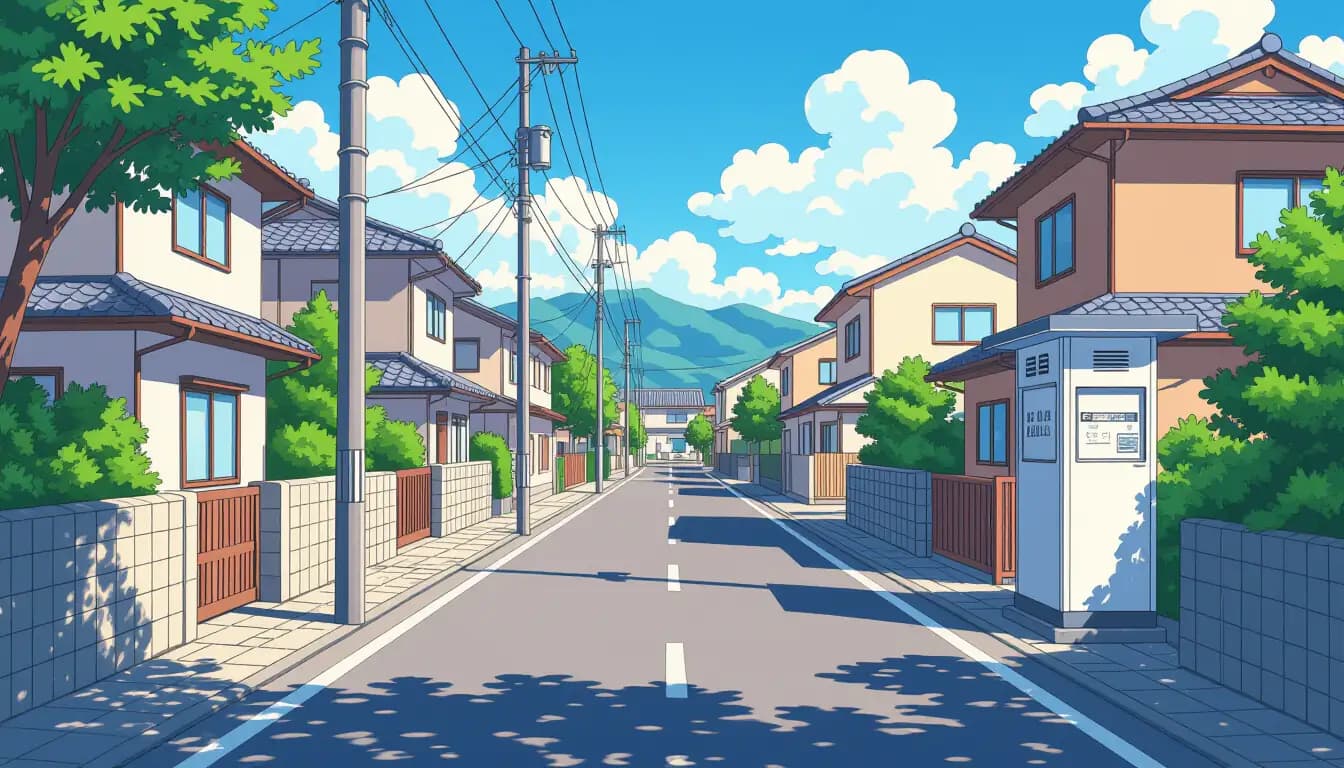
Physical Safety Indicators
Koban (police boxes): Japan's neighborhood police boxes are a major crime deterrent. A nearby koban means faster police response and an active police presence in daily life. Count how many are within a 10-minute walk of a potential property.
Street lighting: Well-lit streets significantly reduce crime risk after dark. Walk the neighborhood at night if possible, or check satellite/street view images taken at night.
Foot traffic patterns: Active streets with pedestrians throughout the day and evening tend to be safer than isolated dead-end streets with little movement.
Property maintenance: Well-maintained buildings, clean streets, and visible neighborhood pride correlate with lower crime. Neglected properties and broken windows are associated with higher crime risk in urban sociology research.
Social Safety Indicators
Chōnaikai (neighborhood associations): Active neighborhood associations conduct safety patrols, organize community events, and coordinate with local police. Look for neighborhood notice boards with recent postings — this signals an active community.
Elementary schools nearby: Areas with elementary schools typically have active parent patrols (known as "morning patrols") and child safety zones, both of which correlate with lower crime.
Local shops and morning activity: A neighborhood with morning foot traffic to local shops, people walking dogs, and elderly residents out in the morning is typically a healthy community with low crime.
Crimes That Particularly Affect Foreigners in Japan
Japan's crime profile for foreigners differs somewhat from the general population. Understanding what risks actually exist helps you focus your vigilance appropriately.
Financial Fraud and Scams (Rising Risk)
The most significant risk for foreign residents is financial fraud. In 2024, fraud cases rose 24.6% nationally. "Tokuryū" networks — anonymous criminal organizations using phone, internet, and impersonation schemes — increasingly target foreigners because:
- Language barriers make it easier to deceive
- Foreigners may be unfamiliar with local scam patterns
- Japan's "safe" reputation creates over-trust
Be especially vigilant about:
- Investment fraud (fake high-return schemes)
- Romance scams
- Fake landlord/real estate scams targeting buyers before they arrive
- Phone impersonation scams claiming to be from government agencies
Bicycle Theft
Bicycle theft accounts for approximately 31.8% of all reported crimes in Tokyo. While not dangerous, it's a practical concern for residents. Secure bicycle parking and proper locking significantly reduce this risk.
Petty Theft in Tourist Areas
Pickpocketing and petty theft are concentrated in tourist-heavy areas (Shinjuku, Asakusa, Akihabara, Osaka's Dotonbori). In residential neighborhoods, these crimes are rare.
Are Foreigners More Likely to Be Crime Victims?
Statistically, foreigners are not more likely to be arrested for or victims of crime than Japanese residents. Foreign residents' arrest rate (0.19%) is statistically equivalent to Japanese citizens (0.15–0.20%). However, foreigners are disproportionately targeted by financial fraud due to language barriers and cultural unfamiliarity. For a comprehensive expat safety overview, see the Osaka Language Solutions crime safety guide for expats.
Using Crime Data When Buying Property: Practical Steps
Here's how to integrate crime research into your property buying process:
1. Start with ward/city-level data Before viewing specific properties, research the ward or city's overall crime rate using NPA data or Numbeo. This gives you a baseline for comparison.
2. Drill down to the neighborhood Once you've identified target areas, look for chōme-level data. RealEstate.co.jp and municipal crime maps can show you specific blocks.
3. Visit at different times of day A neighborhood looks very different at 9 AM (active families and commuters) than at 11 PM (who's around and what's happening). Visit both.
4. Talk to local residents Japanese neighbors are generally happy to talk to someone considering moving to the area. Even with limited Japanese, a friendly conversation reveals a lot about community feel.
5. Ask your real estate agent A good real estate agent who works with foreigners can provide candid assessments of neighborhoods. For guidance on working with agents in Japan, Living in Nihon's expat resources offer helpful context on navigating Japanese real estate.
6. Check proximity to nightlife Even in "safe" wards, proximity to entertainment districts, pachinko parlors, or nightclubs tends to correlate with higher local crime. Check what's within a 10-minute walk of any property you're considering.
7. Consider the perception vs. reality gap A January 2026 Japan Times report noted that Japanese people's subjective fear of crime has increased despite objectively stable or improving safety data, partly due to social media amplifying isolated incidents. Some neighborhoods may be undervalued due to reputation rather than actual current risk. This can create buying opportunities for well-researched purchasers.
Beyond Crime: Other Safety Considerations for Property Buyers
Crime is only one dimension of neighborhood safety relevant to property buyers. Also research:
Natural disaster risk: Japan's seismic and flood risks are significant. Check your target area's hazard maps (ハザードマップ) for earthquake, tsunami, flood, and landslide risk. For work and relocation guidance in Japan, For Work in Japan covers practical aspects of settling into Japanese communities. For foreigner-focused real estate advice in Japan, Gaijin Buy House offers dedicated guidance on buying property as a foreigner.
Building age and earthquake certification: Homes built before 1981 may not meet current earthquake standards. Post-1981 buildings comply with the "new earthquake resistance standards" (新耐震基準). See our guide to types of properties available in Japan for details on construction standards.
Proximity to industrial zones: Some older residential areas in Japan are adjacent to industrial or commercial zones that may pose environmental or quality-of-life concerns.
For a complete overview of what to research before buying, see our step-by-step home buying process guide and our buying property in Tokyo area guide.
Home Security Options in Japan
Even in Japan's low-crime environment, home security systems are widely used and affordable.
| Security Provider | Services | Notes |
|---|---|---|
| SECOM (セコム) | 24-hour monitoring, sensors, emergency response | Japan's largest security company; very reliable |
| ALSOK (アルソック) | Monitoring, cameras, emergency dispatch | Major competitor to SECOM; similar pricing |
| Panasonic Smart Home | Smart locks, cameras, local alerts | DIY system; no monthly fees |
| Local koban registration | Free police check-in service | Register your address with local police |
Monthly monitoring fees for SECOM and ALSOK typically range from ¥3,000–¥8,000/month depending on coverage level and property size.
A simple and free option: register your address with the local koban. Officers will periodically check on your property and respond faster to your address in an emergency.
Summary: Key Takeaways for Foreign Buyers
Japan is one of the world's safest countries, but smart buyers still do their homework. Here's what to remember:
- Use NPA data and municipal crime maps for objective neighborhood-level crime statistics
- Ward averages can be misleading — entertainment districts skew numbers for otherwise safe residential areas
- Tokyo's safest residential wards include Suginami, Setagaya, Bunkyo, and Nerima
- Fraud and financial scams are the main risk for foreigners, not violent crime
- Physical indicators like koban proximity, street lighting, and active neighborhood associations are reliable safety signals
- Visit neighborhoods in person at different times before buying
- Consider hazard maps alongside crime data — earthquake and flood risk matter as much as crime rates for long-term safety
For more guidance on the property buying process, explore our complete guide to buying property in Japan as a foreigner and our legal procedures and documentation guide.

Originally from Vietnam, living in Japan for 16+ years. Graduated from Nagoya University, with 11 years of professional experience at Japanese and international companies. Sharing information about buying property in Japan for foreigners.
View Profile →Related Articles
Neighborhood Visit Checklist Before Buying Property in Japan
Use this comprehensive neighborhood visit checklist before buying property in Japan. Covers safety, transport, noise, schools, and community quality for foreign buyers.
Read more →
Future Development and Urban Planning in Japanese Neighborhoods
Understand Japan's urban planning system, major redevelopment projects, and compact city policies before buying property. Essential guide for foreign buyers navigating Japanese neighborhoods.
Read more →
Understanding Neighborhood Demographics in Japan
Learn how neighborhood demographics affect property values in Japan. Discover foreign resident concentrations by ward, aging rural trends, and how to research demographics before buying.
Read more →
Japan Neighborhood Walkability and Livability Scoring Guide
Learn how to score and evaluate Japanese neighborhoods using walkability indexes, livability criteria, and expat-friendly tools. Compare cities, wards, and key factors before buying or renting in Japan.
Read more →
Best Expat Community Neighborhoods in Japan by City
Discover the best expat neighborhoods in Japan's major cities — Tokyo, Osaka, Fukuoka, Yokohama, Kyoto, and Kobe. Practical guide for foreign residents on where to live, costs, and community resources.
Read more →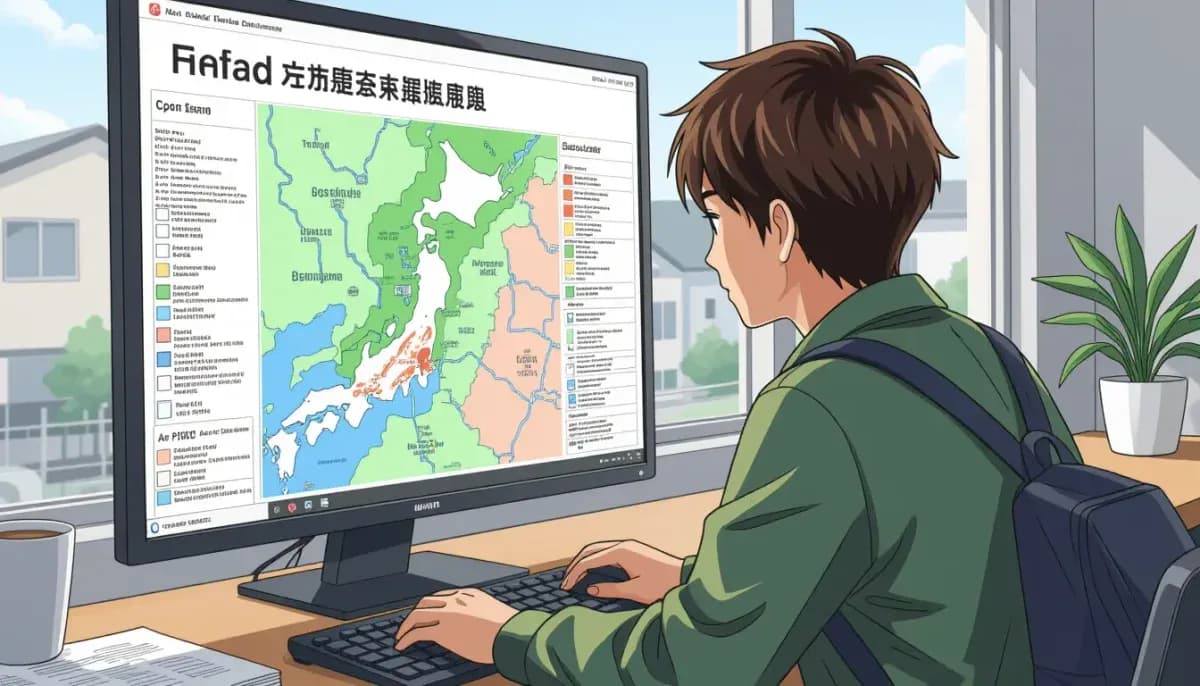
Checking Flood and Earthquake Risk for Japan Neighborhoods
Learn how to check flood and earthquake risk for any Japan neighborhood using official hazard maps, J-SHIS, and real estate tools. Essential guide for foreign property buyers.
Read more →