
Japan Rural Subsidies and Relocation Incentives for Newcomers

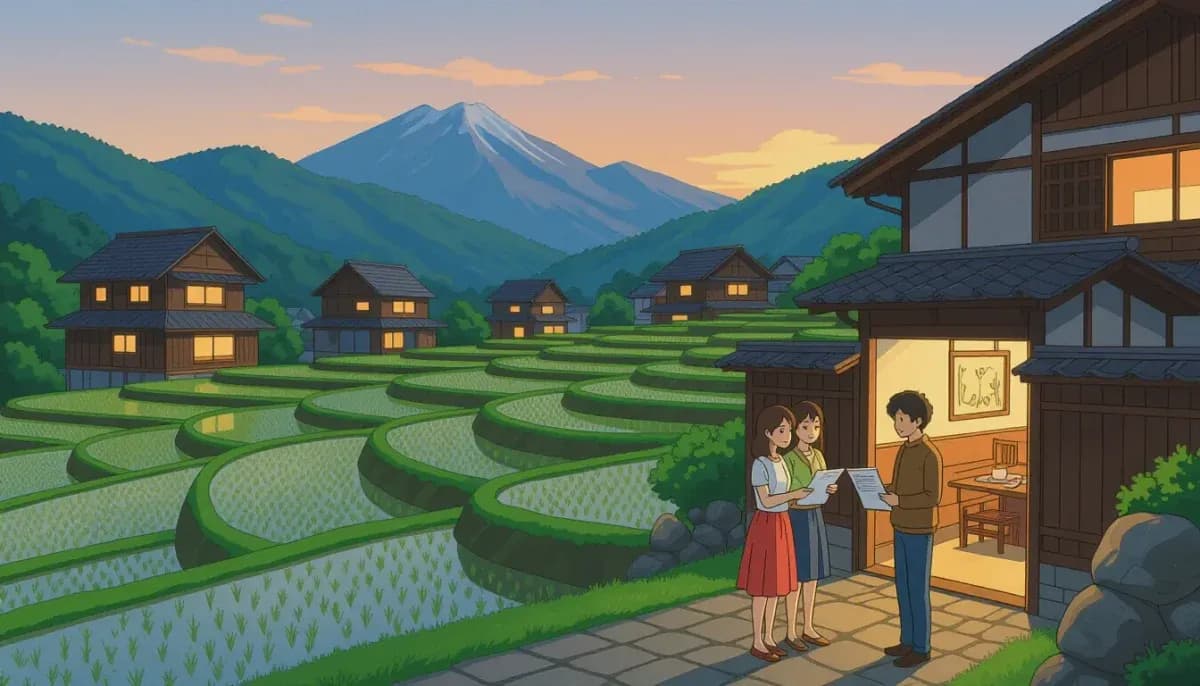
Learn how foreigners in Japan can access rural relocation grants of up to ¥3,000,000+. Covers national subsidies, local municipal incentives, akiya renovation grants, and how to apply step-by-step.
Japan Rural Subsidies and Relocation Incentives for Newcomers
Japan's countryside is calling — and the government is sweetening the deal. Over the past several years, Japan has rolled out a series of generous subsidies and relocation incentives designed to encourage people to move away from congested cities like Tokyo and Osaka and settle in rural prefectures. For foreigners already living in Japan, these programs represent a remarkable opportunity: cash grants, renovation subsidies, business startup funds, and more, all for making the move to a quieter, more affordable part of the country.
This guide covers everything you need to know about Japan's rural relocation subsidies in 2025 and 2026 — who qualifies, how much you can receive, which programs are available, and how to apply as a foreign resident.
Why Japan Is Paying People to Move to the Countryside
Japan faces a demographic crisis that is most acutely felt in rural areas. Thousands of small towns and villages are experiencing rapid depopulation as younger generations migrate to major cities for work and education. The result: shuttered schools, abandoned farmhouses (akiya), declining local economies, and an aging population with insufficient caretakers.
To reverse this trend, the Japanese government launched the "Chihou Sosei" (Regional Revitalization) initiative. Under this policy umbrella, both the national government and local municipalities have established financial incentive programs to attract new residents — including, in many cases, foreign nationals with eligible residency status.
The goal isn't just to fill houses. Municipalities want people who will contribute to the local community long-term: starting businesses, raising families, revitalizing old properties, and participating in local events and governance. That's why the subsidies often come with conditions like staying for five or more years.
If you're considering buying property in a rural area, it's also worth reading our guide on rural and countryside properties in Japan for foreigners for context on the real estate side of the equation.
Who Can Qualify: Visa and Residency Requirements
One of the most common misconceptions about Japan's rural relocation subsidies is that they're only for Japanese citizens. In reality, foreign nationals can qualify — but only if they hold certain types of residency status.
Eligible residency statuses typically include:
- Permanent Resident (永住者) — the most common qualifying status for long-term foreign residents
- Spouse or Child of Japanese National (日本人の配偶者等)
- Spouse or Child of Permanent Resident (永住者の配偶者等)
- Long-term Resident (定住者)
- Specified Skilled Worker (特定技能)
- Business Manager (経営・管理)
Important: These programs do NOT grant you a visa. You must already hold an eligible residency status before applying. Temporary residents (e.g., those on standard work visas or student visas) are generally not eligible, though some municipalities have begun experimenting with broader eligibility criteria.
If you're uncertain about your residency status and how it relates to property purchases or relocation benefits, our guide on visa and residency considerations for property buyers in Japan provides a useful overview.
| Residency Status | Typically Eligible? | Notes |
|---|---|---|
| Permanent Resident | ✅ Yes | Most widely accepted status |
| Spouse of Japanese National | ✅ Yes | Usually eligible |
| Spouse of Permanent Resident | ✅ Yes | Usually eligible |
| Long-term Resident | ✅ Yes | Eligible in most municipalities |
| Specified Skilled Worker | ✅ Yes (some programs) | Increasingly included |
| Business Manager | ✅ Yes (some programs) | Especially for startup grants |
| Standard Work Visa | ❌ Generally No | Check specific municipality rules |
| Student Visa | ❌ No | Not eligible |
| Tourist/Short-term Stay | ❌ No | Not eligible |
The National Relocation Grant: How Much Can You Get?
The centerpiece of Japan's rural relocation support is the national relocation grant (地方移住支援金), administered through the Tokyo Shigoto Foundation and similar bodies in other prefectures. Here's the current breakdown as of 2025:
- Single individuals: ¥600,000 (approximately $4,000 USD)
- Families (married couples or households with children): ¥1,000,000 base grant
- Per child bonus: ¥1,000,000 per child under 18 (this was significantly increased from ¥300,000 per child in April 2023)
That means a family with two children could receive: ¥1,000,000 (base) + ¥1,000,000 (child 1) + ¥1,000,000 (child 2) = ¥3,000,000 total (approximately $20,000 USD)
To qualify for the national grant, you typically need to:
- Relocate from an "over-concentrated area" (i.e., Tokyo's 23 wards or certain surrounding municipalities) to a designated rural municipality
- Register your new address within a set time period
- Commit to residing in the area for at least five years
- Be employed (or self-employed) in the region
The five-year requirement is especially important: if you leave before the required period ends, you may be required to repay a portion of the grant.
Local Municipal Incentives: The Big Numbers
Beyond the national grant, individual prefectures and municipalities offer their own relocation packages — and some are remarkably generous. Here are examples of what's on offer:
| Prefecture/Municipality | Incentive | Maximum Amount |
|---|---|---|
| Miyakonojo, Miyazaki | Family relocation grant with child bonus | Up to ¥5,000,000 |
| Mishima, Kagoshima | Monthly stipend for relocating couples | ¥100,000/month |
| Nagano Prefecture | Family relocation assistance | Up to ¥300,000 + child bonuses |
| Yamanashi Prefecture | Akiya renovation subsidy | Up to ¥1,500,000 (50% of costs) |
| Shimane Prefecture | New business startup grant | Up to ¥2,000,000 |
| Various municipalities | Agricultural support grants | Varies by program |
Municipal programs can often be stacked with the national grant, meaning a family with multiple children who relocates to a high-incentive municipality could potentially receive over ¥5,000,000 in combined support. This is a legitimate pathway that many savvy movers are using.
The challenge is that these local programs vary widely in their rules, application processes, and budget availability. For more on the broader real estate context in rural regions, see our article on buying property in Hokkaido as a foreigner, where some of Japan's most generous rural incentives are available.
Akiya (Vacant Home) Renovation Subsidies
Japan has millions of vacant homes — called akiya (空き家) — scattered across rural towns and villages. Many of these homes are listed in prefectural and municipal akiya banks (空き家バンク) at extremely low prices, sometimes even for free or near-free if the buyer commits to renovation and long-term residence.
To encourage renovation of these properties, many municipalities offer renovation grants, including:
- Yamanashi Prefecture: Covers up to 50% of renovation costs for akiya properties, with a maximum subsidy of ¥1,500,000, specifically targeting energy-efficient upgrades.
- Various municipalities in Shikoku and Kyushu: Offer renovation grants ranging from ¥300,000 to ¥2,000,000.
- Rural towns in Tohoku: Some offer complete home renovation subsidies for new residents who agree to live there for 10+ years.
Akiya renovation grants are separate from relocation cash grants — meaning you may be able to receive both when moving into a vacant rural property.
For a more detailed look at how to actually purchase rural property in Japan as a foreigner, read our comprehensive guide to buying property in Japan as a foreigner.
Business Startup and Employment Incentives
For foreign residents considering entrepreneurship or career changes in rural Japan, there are additional financial incentives worth knowing about:
Startup Grants: Shimane Prefecture, for example, offers up to ¥2,000,000 for new business ventures that contribute to local job creation. Many other prefectures have similar programs, often with additional support for tourism-related businesses, traditional craft preservation, or agriculture.
Agricultural Support: New farmers (新規就農者) can receive substantial support through the Agricultural Management Establishment Support Program, including:
- Up to ¥1,500,000 per year for the first five years as a new farmer
- Land and equipment subsidies
- Training and mentorship programs
Remote Work Support: As remote work becomes more normalized, some municipalities now offer additional incentives for workers who move to rural areas while continuing to work for urban companies remotely. These can include office setup allowances and coworking space subsidies.
For those considering whether rural property ownership makes sense as part of their broader Japan residency strategy, our overview of Japan's real estate market trends provides useful context.
How to Apply: Step-by-Step Process
The application process for Japan's rural relocation subsidies can feel bureaucratic, but it follows a logical sequence. Here's a general roadmap:
1. Research Eligible Municipalities Use Japan's official "Chiiki Ouen Net" (地域おうえんネット) portal to search municipalities offering support programs. You can filter by region, family size, and type of incentive.
2. Contact the Local Municipality Every municipality has a relocation support desk (移住相談窓口). Contact them before you move to confirm your eligibility as a foreign resident and understand the documentation required.
3. Confirm Your Residency Status Gather your residence card, certificate of residence history, and any other documents proving your eligibility. If you're a permanent resident, have your PR certification ready.
4. Register Your New Address After moving, register at the local city hall (役所) immediately. The grant application period often starts from this date.
5. Submit Your Application Applications are typically submitted to the prefecture's relocation support center or the municipality's housing/revitalization department. You'll need:
- Application form (in Japanese — get translation help if needed)
- Proof of previous address in an over-concentrated area
- Proof of employment or business registration in the new area
- Residency card
- Bank account information for payment
6. Await Approval and Payment Processing times vary, but grants are usually paid within 2-4 months of approval. The five-year residency requirement monitoring begins from your registration date.
Timing tip: Popular programs often exhaust their annual budgets by summer or fall. The optimal application window is April through June, right after Japan's fiscal year budget refreshes. If you're planning to apply, time your move accordingly.
For more guidance on navigating Japan's documentation requirements, see our article on legal procedures and documentation for Japan property purchase.
Practical Considerations Before You Apply
Before committing to rural relocation in Japan, there are several practical realities to weigh:
Language: Rural areas are significantly less English-friendly than major cities. If your Japanese isn't at a functional level, you'll need to invest in language learning or find a support network.
Healthcare: While Japan's universal healthcare system extends to rural areas, specialized medical facilities may be far away. Consider proximity to hospitals when choosing a location.
Employment: Unless you're self-employed, remote, or have arranged a local job in advance, finding employment in rural Japan can be challenging. Agricultural and care-sector work is abundant; white-collar office work is rare.
Community Integration: Many relocation programs involve participation in local community activities. This is often framed as optional, but in practice, it's expected. Be prepared for active community involvement.
Property Costs: Rural properties are far cheaper than urban counterparts — sometimes dramatically so. However, old properties (especially akiya) may require significant renovation investment. Always get a thorough property inspection before purchase. Our guide on hidden costs and fees when buying property in Japan outlines what to budget for.
Resources and Where to Learn More
Navigating Japan's rural relocation support systems as a foreigner requires staying current with changing program rules. Here are reliable resources:
- For comprehensive guides on living and relocating to Japan, Living in Nihon offers practical expat-focused content.
- If you're considering working in Japan as part of your relocation plan, For Work in Japan provides detailed information on visa types and work authorization.
- For foreigners specifically looking at property purchases alongside relocation grants, Gaijin Buy House covers the intersection of property ownership and residency.
- The 2026 Japan Relocation Grant Guide at John of Japan is one of the most comprehensive and up-to-date English-language resources on current grant amounts and municipal programs.
- For a fact-checked breakdown of foreigner eligibility, Romancing Japan's analysis cuts through the misinformation that often surrounds this topic.
Final Thoughts: Is Rural Relocation Right for You?
Japan's rural relocation incentives are genuinely compelling — especially for foreign families with children, where grants can exceed ¥3,000,000 from national programs alone, and potentially much more when combined with municipal incentives. For those already established in Japan with permanent residency, the financial case for exploring rural relocation is real and worth serious consideration.
The key is doing thorough research before committing: confirming your visa eligibility, choosing the right municipality, timing your application for April-June, and understanding the five-year commitment you're making. With proper planning, moving to rural Japan can be both financially rewarding and genuinely life-enriching.
Japan's countryside offers something increasingly rare: space, community, affordable housing, and a connection to traditional culture. The government subsidies are designed to share that opportunity with newcomers — including those from abroad.
For the next step in your Japan property journey, start with our complete guide to buying property in Japan as a foreigner to understand the full landscape before you make your move.

Originally from Vietnam, living in Japan for 16+ years. Graduated from Nagoya University, with 11 years of professional experience at Japanese and international companies. Sharing information about buying property in Japan for foreigners.
View Profile →Related Articles
Japan Depopulation Areas: Opportunity vs Risk for Property Buyers
Explore the real opportunities and serious risks of buying property in Japan's depopulation zones. From ¥2M akiya prices to renovation costs, resale challenges, and which areas show genuine potential for foreign buyers.
Read more →
Access and Transportation in Rural Japan: What Property Buyers Should Know
Everything foreign property buyers need to know about access and transportation in rural Japan — car dependency, train coverage, license requirements, and how transport affects property values.
Read more →
Best Rural Prefectures in Japan for Foreign Buyers
Discover the best rural prefectures in Japan for foreign property buyers. Compare Nagano, Niigata, Tohoku, Oita, and more — with prices, subsidies, and practical tips for buying countryside property in Japan.
Read more →
Self-Sufficient Living in Rural Japan: A Foreigner's Guide
Discover how foreigners can build a self-sufficient lifestyle in rural Japan — from akiya housing and farming to community integration, relocation subsidies up to ¥3M, and remote work strategies.
Read more →
Renovating Old Houses in the Japanese Countryside
Everything foreigners need to know about renovating old houses in rural Japan: akiya renovation costs, government subsidies, finding contractors, community integration, and common mistakes to avoid.
Read more →
Integrating into Rural Japanese Communities as a Foreign Buyer
A complete guide for foreign buyers on integrating into rural Japanese communities: chonaikai participation, moving-in etiquette, waste rules, government relocation incentives, and how to build genuine relationships in inaka Japan.
Read more →