
Integrating into Rural Japanese Communities as a Foreign Buyer

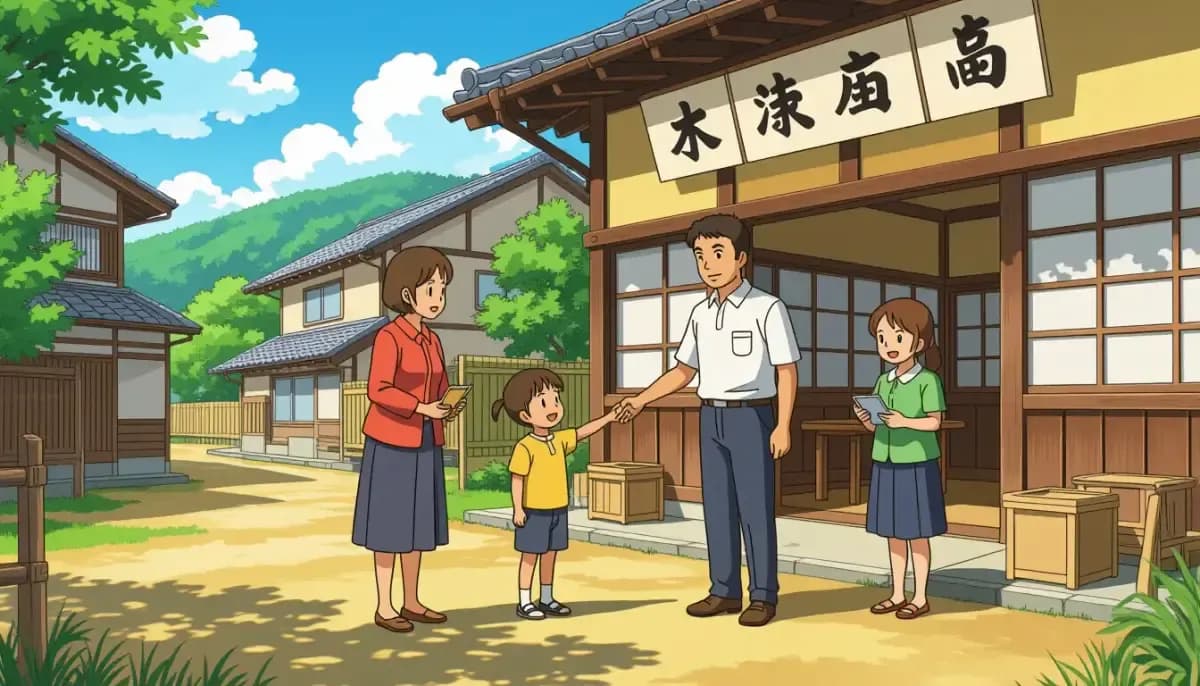
A complete guide for foreign buyers on integrating into rural Japanese communities: chonaikai participation, moving-in etiquette, waste rules, government relocation incentives, and how to build genuine relationships in inaka Japan.
Integrating into Rural Japanese Communities as a Foreign Buyer
Moving to rural Japan as a foreigner is one of the most rewarding — and challenging — life decisions you can make. The countryside offers affordable property, clean air, and a slower pace of life, but it also demands genuine effort to earn your place in a tightly-knit community. This guide gives you the practical knowledge to build real relationships, avoid costly social mistakes, and make your rural Japanese neighborhood feel like home.
Rural Japan (known as inaka) operates by its own rules. With 91% of Japan's population concentrated in cities, rural communities are small, traditional, and have had little exposure to foreigners. Japan itself is approximately 97% Japanese, meaning you will stand out in most rural areas. Some towns of 100,000 people may have only six or seven Western foreigners. This visibility is both a challenge and, eventually, an enormous advantage.
Understanding Rural Japanese Community Structure
Before you can integrate, you need to understand how rural Japanese communities actually function. The social fabric is woven around collective responsibilities that have existed for centuries, shaped by the cooperative demands of rice farming and the need for mutual survival.
The fundamental social unit is the chonaikai (neighborhood association). Every residential area has one, and while participation is technically voluntary, it is functionally essential for community acceptance and access to local services. Annual membership fees typically run ¥2,000–5,000. In exchange, you gain access to the community's trust network — and that network matters for everything from garbage collection schedules to emergency support.
Chonaikai activities include:
- Monthly neighborhood environmental cleanups
- Annual disaster preparedness drills (typically 1–2 per year)
- Seasonal festivals and community events
- Mochi-making gatherings in winter
- Rotating community notice boards (kairanban)
- Safety patrol coordination
Rural municipalities depend far more heavily on these associations than urban neighborhoods do. In a city, you can theoretically ignore the chonaikai. In a village, opting out signals that you do not want to belong — and the community will respect that choice by excluding you from everything.
The social hierarchy in rural areas is also strict: age and seniority are paramount. As a foreigner, you will be positioned outside this hierarchy initially. Consistent, respectful participation gradually earns you a recognized place within it.
For a deeper understanding of neighborhood relations across Japan, Gaijin Buy House has an excellent guide to Japanese housing culture and neighborhood relations that covers the chonaikai system in detail.
The First 48 Hours: Moving-In Etiquette That Changes Everything
How you handle your first two days in a rural neighborhood can define the next decade of your community life. Japanese moving-in etiquette follows a specific protocol: greet your immediate neighbors before unpacking.
The traditional greeting covers what is called mukō san-ken ryō tonari — the three houses directly across the street and the two houses on each side of yours. That is a minimum of five households. In rural areas, this circle often extends further.
What to bring: A small gift worth ¥500–1,000. Traditional choices are individually wrapped confectionery (senbei, wagashi, or a regional sweet), or towels. Avoid alcohol unless you know the recipient drinks. The gift should be wrapped neatly; many convenience stores and department stores will wrap it for you.
Timing matters: Weekday evenings between 5–7 PM or weekend mornings are ideal. Avoid mealtime, late evenings, and early mornings.
What to say: A short, humble introduction in Japanese goes a long way, even if it is imperfect. Something like: "Hajimemashite, [name] to mōshimasu. Yoroshiku onegai itashimasu" (Nice to meet you, my name is [name]. I look forward to your guidance). Mention where you came from, that you have just moved in, and express your hope for a good relationship with the community.
Residents who complete this greeting ritual experience significantly fewer disputes with neighbors in the years that follow. Those who skip it are remembered for skipping it — sometimes for years.
Waste Disposal: The Make-or-Break Rule
Waste separation is, without exaggeration, the single most common cause of neighbor disputes involving foreigners in rural Japan. Getting this wrong marks you as someone who does not follow rules — and in a community where rule-following signals respect, that reputation is hard to recover from.
Rural Japanese communities have highly specific waste rules:
| Waste Type | Frequency | Notes |
|---|---|---|
| Burnable waste (moeru gomi) | 2× per week | Kitchen scraps, paper, cloth |
| Non-burnable waste (moenai gomi) | 1–2× per month | Metal, ceramics, glass |
| Plastic packaging (pura) | Weekly | Rinsed clean before disposal |
| Resource materials (shigen) | Weekly or bi-weekly | Newspapers, cardboard, cans, bottles |
| Large items (sodai gomi) | Scheduled pickup | Must be pre-registered with municipality |
The critical rules to memorize:
- Time matters as much as sorting. Waste must be placed at the collection point during morning collection hours only — typically before 8 AM. Never leave waste out the night before; this invites animals and marks you as a rule-breaker.
- Location matters. Use the designated community collection point (gomi suteba), not wherever is convenient.
- Bags matter. Many municipalities require specific colored or branded garbage bags sold locally.
Your chonaikai will have a printed schedule. Ask for it on your first visit, and if possible, ask a neighbor to walk you through it once.
Building Genuine Relationships in Rural Japan
The foreigners who thrive in rural Japan share one trait: they show up consistently, even when it feels uncomfortable. Community acceptance in inaka is not given; it is earned through repeated visible participation.
Start with the chonaikai. Attend your first community meeting or cleanup event as soon as possible after moving in. You do not need to understand everything that is said. Your presence communicates that you intend to be a community member, not just a resident.
Learn some Japanese. This is non-negotiable for deep rural integration. Rural areas have far fewer English speakers than cities, and regional dialects can compound the difficulty. The U.S. Foreign Service Institute classifies Japanese as a "Super-hard language" requiring approximately 2,200 class hours to professional proficiency — but even basic conversational Japanese creates opportunities for genuine connection. Every fumbling attempt is seen as respect.
Accept invitations. Rural Japanese people are often remarkably generous to foreigners who demonstrate genuine effort. Once you are recognized as someone who participates, invitations follow — to festivals, to family events, to neighbors' homes. Accept them whenever you can.
Observe quiet hours. Most rural communities designate 10 PM–7 AM as quiet hours. Rural wooden construction transmits noise easily. Being mindful of this is noticed and appreciated.
Be patient with the "gaijin bubble." Initially, many neighbors will maintain a deliberate social distance, unsure how to interact with you. This is not hostility — it is uncertainty. Consistent, friendly, rule-abiding presence dissolves the bubble over time.
For practical guidance on daily life logistics in rural areas, Living in Nihon offers resources on adapting to life in Japan covering housing administration and local services.
Government Incentives for Foreign Buyers Moving Rural
Japan's government actively wants more people — including foreigners — to move to depopulating rural areas. The Regional Revitalization Program offers substantial financial incentives:
- Families: ¥1,000,000 base relocation grant + ¥1,000,000 per child under 18. A family with two children receives ¥3,000,000 total (approximately $20,000 USD).
- Singles: ¥600,000 relocation assistance
- Approximately 1,300 municipalities — roughly 80% of Japan's local districts across 44 of 48 prefectures — participate in these programs
- Excluded regions: Tokyo, Kanagawa, Osaka, and Okinawa
Eligibility generally requires valid long-term residency status and a commitment to remain in the area for at least five years. Many municipalities also offer renovation grants of ¥500,000–¥2,000,000 for akiya (vacant home) purchases.
Rural akiya themselves represent extraordinary value: vacant homes in the countryside typically cost ¥2–6 million (roughly $13,000–$40,000 USD) — approximately one-tenth of a comparable Tokyo apartment. The trade-off is real: renovation costs for basic interiors run ¥3–5 million, and full renovations ¥5–15 million. But the total remains dramatically lower than urban alternatives.
For a complete overview of rural property buying, including akiya banks and renovation considerations, see the Gaijin Buy House guide to rural property in Japan and our own guide to rural and countryside properties in Japan.
Navigating Social Challenges: What No One Tells You
Honest preparation includes acknowledging the real challenges of rural integration — not to discourage you, but so you are not blindsided.
The social reality: A 2024 survey found that 54.5% of rural Japanese residents oppose increased foreign population in their communities, citing concerns about disruption to social order. This does not mean hostility toward you personally, but it does mean that some neighbors will never fully accept your presence. Accept this reality rather than fighting it.
Murahachibu (村八分): Village ostracism — the community-level social penalty for persistent rule-breaking — still occurs in some rural areas. It manifests as collective withdrawal of cooperation: neighbors who stop helping, notices that stop being delivered, inclusion that evaporates. The antidote is simple: follow community rules consistently and participate genuinely. Murahachibu targets people who repeatedly and visibly violate community norms.
Indirect communication: Rural Japan runs on indirect communication. Direct refusals, direct disagreement, or blunt criticism are perceived as aggression. Learn to read hesitation, soft "sō desu ne..." responses, and topic changes as potential nos. Respond with equal indirectness.
Privacy norms differ: In some rural communities, neighbors may enter homes without explicit invitation for community matters. This is not an invasion — it is an expression of community closeness. Setting boundaries requires delicacy.
Mental health matters: Isolation is real, especially in the first 12–18 months. Build a support network deliberately — other foreign residents in the region, online communities of inaka expats, and regular trips to larger towns for social recharging.
For information on visa requirements needed to make this move legally, see our guide on visa and residency considerations for property buyers in Japan. For job opportunities in rural regions, For Work in Japan covers rural employment options.
Practical Day-to-Day Rural Life
Beyond community relations, rural life requires several practical adaptations:
Transportation: Car ownership is nearly essential. Public transit in rural Japan is infrequent and often stops running in the early evening. Budget for a vehicle purchase, local driving license conversion if needed, and ongoing fuel and maintenance costs.
Shopping and services: Rural towns typically have a small supermarket, a home center, and a few local shops. Specialty items require trips to regional cities or online ordering. Deliveries reach rural addresses but may take longer.
Healthcare: Access to English-speaking medical providers is limited. Building a relationship with a local kakaritsuke-isha (family doctor) early is valuable — even if communication requires effort.
Seasonal demands: Rural Japanese communities have strong seasonal rhythms. Rice planting in May, festivals in summer, harvest in autumn, snow management in winter (in many regions). Participating in these seasonal activities — even as a helper — connects you to the community's fundamental rhythms.
Internet access: Fiber broadband reaches many rural areas through government programs, but coverage is uneven. Verify connectivity before purchasing property.
Making Rural Japan Your Home
Integration into rural Japan is not a destination — it is an ongoing practice. The foreigners who build genuinely fulfilling lives in inaka share a common approach: they show up, they follow the rules, they learn the language imperfectly but persistently, and they accept that belonging takes years, not months.
The rewards are proportional to the effort. Rural Japanese communities, once they accept you, offer a depth of social connection, natural beauty, and cultural richness that urban life rarely matches. Neighbors who were initially cautious become people who bring you vegetables from their garden, who teach you dialect words, who include you in festivals that have run for centuries. That is not a transaction — it is a life.
For more on the financial and legal aspects of your rural property purchase, see our complete guide to buying property in Japan as a foreigner and our detailed breakdown of property taxes and annual ownership costs in Japan.
For first-hand accounts of rural Japanese life, GaijinPot's guide to inaka living and inakalifestyle.com's honest assessment of rural challenges offer invaluable perspective from people who have lived it.
The countryside is waiting. Go with open eyes, genuine respect, and the patience to let belonging develop at its own pace — and rural Japan will likely exceed your every expectation.

Originally from Vietnam, living in Japan for 16+ years. Graduated from Nagoya University, with 11 years of professional experience at Japanese and international companies. Sharing information about buying property in Japan for foreigners.
View Profile →Related Articles
Japan Depopulation Areas: Opportunity vs Risk for Property Buyers
Explore the real opportunities and serious risks of buying property in Japan's depopulation zones. From ¥2M akiya prices to renovation costs, resale challenges, and which areas show genuine potential for foreign buyers.
Read more →
Access and Transportation in Rural Japan: What Property Buyers Should Know
Everything foreign property buyers need to know about access and transportation in rural Japan — car dependency, train coverage, license requirements, and how transport affects property values.
Read more →
Best Rural Prefectures in Japan for Foreign Buyers
Discover the best rural prefectures in Japan for foreign property buyers. Compare Nagano, Niigata, Tohoku, Oita, and more — with prices, subsidies, and practical tips for buying countryside property in Japan.
Read more →
Self-Sufficient Living in Rural Japan: A Foreigner's Guide
Discover how foreigners can build a self-sufficient lifestyle in rural Japan — from akiya housing and farming to community integration, relocation subsidies up to ¥3M, and remote work strategies.
Read more →
Renovating Old Houses in the Japanese Countryside
Everything foreigners need to know about renovating old houses in rural Japan: akiya renovation costs, government subsidies, finding contractors, community integration, and common mistakes to avoid.
Read more →
Internet and Infrastructure in Rural Japan for Remote Workers
Complete guide to internet options in rural Japan for remote workers: fiber, Starlink, home routers, coverage maps, costs, and practical setup tips for foreigners.
Read more →