
Access and Transportation in Rural Japan: What Property Buyers Should Know

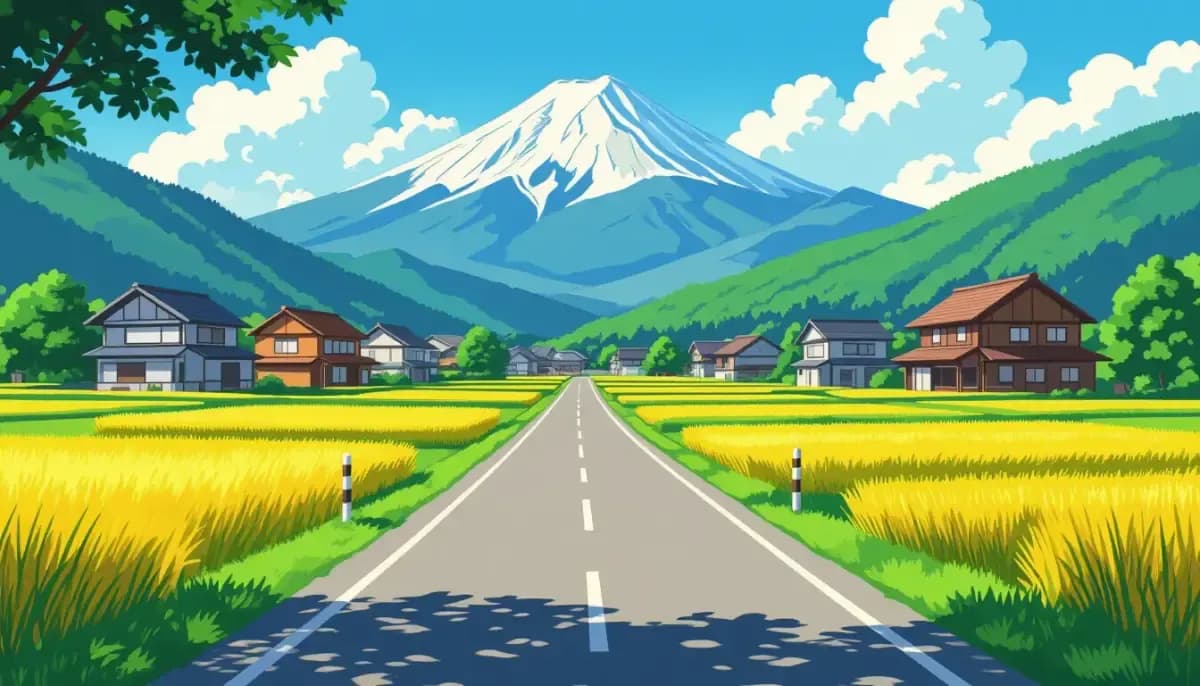
Everything foreign property buyers need to know about access and transportation in rural Japan — car dependency, train coverage, license requirements, and how transport affects property values.
Access and Transportation in Rural Japan: What Property Buyers Should Know
Buying property in rural Japan can be an incredibly rewarding decision — lower prices, beautiful scenery, and a slower pace of life. But before you sign on the dotted line, there is one factor that can make or break your rural living experience: transportation access. Understanding how you will get around is not just a lifestyle consideration — it directly impacts the value of your property, your ability to rent it out, and your daily quality of life.
This guide covers everything property buyers need to know about access and transportation when purchasing rural Japanese real estate, from car dependency and train availability to expressway access and how station proximity affects your investment.
!Rural Japan countryside road with mountains and traditional village
Why Transportation Is Critical for Rural Property Buyers
Japan's reputation for world-class public transport is well-deserved — in cities. The Shinkansen network, dense metro systems, and frequent suburban trains make urban Japan highly accessible. However, rural Japan tells a very different story.
According to the World Economic Forum, bus usage outside Japan's three major metropolitan areas (Tokyo, Osaka, and Nagoya) has fallen 36% over the past 20 years. An estimated 85% of rural bus operators now run below the financial break-even point, and in western Japan's Chugoku region, 60% of train lines fail to cover even half their operating costs. Meanwhile, Shikoku — one of Japan's four main islands — has no Shinkansen access at all.
For property buyers, this means one thing: if your rural property lacks convenient transport access, you are buying a car-dependent asset. That affects everything from daily convenience to long-term resale and rental potential.
For a broader overview of the rural property market, see our guide on Rural and Countryside Properties in Japan for Foreigners.
The Reality: Car Ownership Is Essential in Rural Japan
Unlike urban Japan where many residents never own a car, rural Japan essentially requires one. Public transport exists but is typically too infrequent and limited for daily commuting, shopping, or even occasional medical appointments.
Here is what car ownership in rural Japan involves for foreign buyers:
Getting a Japanese Driver's License This is one of the biggest hurdles for foreigners. Japan only allows nationals from specific countries (primarily those with reciprocal agreements, such as Switzerland, France, Germany, Canada, and Australia) to convert their foreign license without retesting. Most other nationalities — including Americans and many Asians — must pass the full Japanese driving examination, which is notoriously difficult, expensive, and time-consuming. The process involves multiple visits to a driving center, written tests in Japanese, and practical examinations on purpose-built courses.
Buying a Car Purchasing a used car in Japan requires proof of residence (juuminhyo), proof of a guaranteed parking space (a legal requirement even in rural areas), and payment by bank transfer. Test drives are not always available, and all paperwork must typically be handled in Japanese.
Running Costs Car ownership costs in rural Japan are manageable but real:
| Cost Item | Estimated Amount |
|---|---|
| Used car purchase | ¥300,000–¥1,500,000 |
| Shaken (biennial inspection) | ¥50,000–¥100,000 |
| Fuel (per liter, 2025) | ~¥170 |
| Expressway tolls (per trip) | ¥1,000–¥4,000 |
| Daily rental (if needed) | From ¥5,000/day |
| Parking (rural, annual) | Often free or ¥10,000–¥30,000/year |
For more detail on ongoing property ownership costs, see Property Taxes and Annual Costs of Owning Property in Japan.
Evaluating Train and Bus Access Before Buying
Even in rural areas, transport access varies enormously from one location to another. A property 10 minutes' walk from a local train station is a fundamentally different proposition from one that is 30 minutes by car from the nearest bus stop.
Train Station Proximity Research from Housing Japan highlights a sobering statistic: only 15% of vacant rural houses (akiya) are in convenient locations within 1 km of a train station and in decent condition. The other 85% are either severely deteriorated or poorly located from a transport perspective. This matters enormously for resale and rental income — properties that can only be accessed by car attract a dramatically smaller pool of potential buyers or tenants.
When evaluating a property, check:
- How far is the nearest train station on foot?
- How frequently do trains run? (Some rural lines run just 2–4 times per day)
- Does the line connect to a major city? How long does the journey take?
- Is the line at risk of closure? Many rural lines are being discontinued due to low ridership.
Bus Routes Bus coverage can fill gaps where trains do not run, but do not assume rural bus services are stable. Given that 85% of rural operators are loss-making, services are subject to route cuts and schedule reductions. Always verify current timetables directly — not just what existed when a property listing was written.
For more on the akiya (vacant house) market where transportation access is often a key consideration, see Akiya (Vacant and Abandoned Houses) in Japan for Foreign Buyers.
Expressway Access and Regional Connectivity
Japan's expressway network is extensive and generally well-maintained, providing fast intercity connections even in rural areas. For property buyers who plan to travel regularly between their rural property and major cities, expressway access can be more important than local public transport.
Key considerations:
- Interchange proximity: How far is the nearest expressway interchange? In mountainous rural areas, expressways may route around valleys, making interchanges unexpectedly distant.
- Toll costs: Long expressway trips add up. A trip from rural Shikoku to Osaka might cost ¥5,000–¥8,000 in tolls each way. Budget this into your total transport costs.
- ETC (Electronic Toll Collection): If you own a car, get an ETC card. Discounts of 30–50% apply during off-peak hours.
- Snow and road closures: In mountainous areas of Tohoku, Hokkaido, and the Japan Alps, expressways and mountain roads can close during heavy snowfall. This is a seasonal access risk that urban buyers often overlook.
If you are considering property in Hokkaido specifically, our guide on Buying Property in Hokkaido as a Foreigner covers regional transport in detail.
How Transportation Access Affects Property Values and Investment Potential
From a pure investment standpoint, transportation access is one of the strongest determinants of rural property value in Japan. Here is how it plays out:
Rental Income Potential Car-access-only properties have a dramatically smaller rental market. Young Japanese increasingly do not own cars (car ownership among under-30s in Japan has declined significantly in recent decades), and international tenants often lack Japanese licenses. A property near a station can command 30–50% higher rents than a similar property requiring a car.
Resale Liquidity Rural properties with poor access can sit on the market for years. When you eventually want to sell, your buyer pool is limited to people willing and able to drive — a shrinking demographic in Japan. Properties near functioning train stations are meaningfully more liquid assets.
Akiya Bank Programs Many municipalities offer rural properties through their akiya banks at very low prices — sometimes ¥0 to ¥1,000,000. However, the cheapest properties are almost always the ones with the worst access. A ¥500,000 akiya requiring a 40-minute drive to the nearest convenience store represents a very different lifestyle proposition from a ¥3,000,000 property within walking distance of a station.
For more on how these considerations fit into the overall buying process, see our Complete Guide to Buying Property in Japan as a Foreigner.
Regional Transportation Overview for Rural Property Buyers
Transportation infrastructure varies significantly by region. Here is a practical overview:
| Region | Train Access | Shinkansen | Key Notes |
|---|---|---|---|
| Tohoku (Aomori, Akita, etc.) | Moderate | Yes (Tohoku Shinkansen) | Snow/ice a major seasonal factor |
| Hokkaido | Limited outside Sapporo | Limited (Hokkaido Shinkansen to Hakodate) | Very car-dependent; harsh winters |
| San'in Coast (Tottori, Shimane) | Limited | No (closest at Hiroshima/Okayama) | Among Japan's most car-dependent rural areas |
| Shikoku | Moderate | No Shinkansen on island | Ferry connections to Honshu; very car-dependent |
| Kyushu (rural) | Moderate | Yes (Kyushu Shinkansen) | Better access than Shikoku or San'in |
| Kii Peninsula (Wakayama, Mie) | Limited | No direct access | Some scenic lines; tourism-driven |
| Japan Alps (Gifu, Nagano) | Moderate | Yes (nearby) | Mountain roads; seasonal closures |
!Rural Japan mountain road in autumn with traditional farmhouse
Practical Tips for Assessing a Rural Property's Transportation Access
Before committing to a rural property purchase, take these steps:
- Do a trial stay. Spend at least one week — ideally one month — living in the area before buying. Use only the transport options that would be available to you as a resident (no rental car if you cannot get a license).
- Test the commute. If you plan to work remotely but occasionally commute to a city, time the actual journey door-to-door. Factor in train frequency: missing the one train per hour can cost you significantly.
- Check line viability. Research whether local train lines have closure plans. JR and private operators increasingly publish route review reports. A line flagged for potential closure is a significant risk factor.
- Ask about the five-year plan. Local municipal offices often have infrastructure and transport planning documents. Some rural areas are investing in demand-responsive transport (DRT) minibus systems to replace fixed routes.
- Consider the aging factor. If you are buying for retirement or long-term residence, will you still be able to drive in 10–20 years? A car-access-only property becomes a significant problem if you can no longer drive.
- Budget for two vehicles. In households with two adults in rural Japan, two cars is the norm. Budget accordingly.
For guidance on visas and your legal status in Japan during the buying process, see Visa and Residency Considerations for Property Buyers in Japan.
External Resources for Rural Japan Transportation Research
When researching specific areas, these resources provide valuable information:
- Living in Nihon — Japan Living Guides — Practical guides for everyday life in Japan as a foreigner, including transport tips
- For Work in Japan — Expat Career and Living Resources — Resources on relocation logistics for foreign workers settling outside major cities
- Gaijin Buy House — Foreign Buyer Real Estate Guides — Specialized guides on rural property buying considerations including access
- The Complete 2025 Guide to Transportation in Japan — Comprehensive overview including rural car rental costs and driving requirements
- The Challenges of Living in Rural Japan (Inaka Lifestyle) — Real expat experiences with rural transport and car dependency
- Japan's Rural Transit Crisis (World Economic Forum) — Statistical analysis of rural transport decline
- Tokyo vs Rural Japan Real Estate Guide (Housing Japan) — Investment perspective on how access affects rural property values
Final Thoughts: Transportation as a Dealbreaker
Transportation access is not a minor consideration when buying rural property in Japan — it is often a dealbreaker. The beauty of the Japanese countryside is undeniable, and the potential for affordable real estate is real. But the lifestyle requires a car, a valid license, and the resilience to accept that public transport may be infrequent, expensive, or disappearing entirely.
The most successful rural property buyers in Japan are those who do their homework: they visit extensively before buying, they secure their driver's license before moving, and they specifically look for properties with at least some public transport access as a backup. They also choose regions with at least a regional express train connection to a major city, rather than committing to areas that are entirely road-dependent.
Weigh transportation access carefully in your property search. It may not be the most exciting part of the process, but it is one of the most consequential decisions you will make.
For more on natural hazards that also affect rural access — landslides, flooding, and typhoons can cut off road access for days — see our guide on Natural Disaster Preparedness for Homeowners in Japan.

Originally from Vietnam, living in Japan for 16+ years. Graduated from Nagoya University, with 11 years of professional experience at Japanese and international companies. Sharing information about buying property in Japan for foreigners.
View Profile →Related Articles
Japan Depopulation Areas: Opportunity vs Risk for Property Buyers
Explore the real opportunities and serious risks of buying property in Japan's depopulation zones. From ¥2M akiya prices to renovation costs, resale challenges, and which areas show genuine potential for foreign buyers.
Read more →
Best Rural Prefectures in Japan for Foreign Buyers
Discover the best rural prefectures in Japan for foreign property buyers. Compare Nagano, Niigata, Tohoku, Oita, and more — with prices, subsidies, and practical tips for buying countryside property in Japan.
Read more →
Self-Sufficient Living in Rural Japan: A Foreigner's Guide
Discover how foreigners can build a self-sufficient lifestyle in rural Japan — from akiya housing and farming to community integration, relocation subsidies up to ¥3M, and remote work strategies.
Read more →
Renovating Old Houses in the Japanese Countryside
Everything foreigners need to know about renovating old houses in rural Japan: akiya renovation costs, government subsidies, finding contractors, community integration, and common mistakes to avoid.
Read more →
Integrating into Rural Japanese Communities as a Foreign Buyer
A complete guide for foreign buyers on integrating into rural Japanese communities: chonaikai participation, moving-in etiquette, waste rules, government relocation incentives, and how to build genuine relationships in inaka Japan.
Read more →
Internet and Infrastructure in Rural Japan for Remote Workers
Complete guide to internet options in rural Japan for remote workers: fiber, Starlink, home routers, coverage maps, costs, and practical setup tips for foreigners.
Read more →