
Ikkodate (Detached House) in Japan: Complete Buying Guide

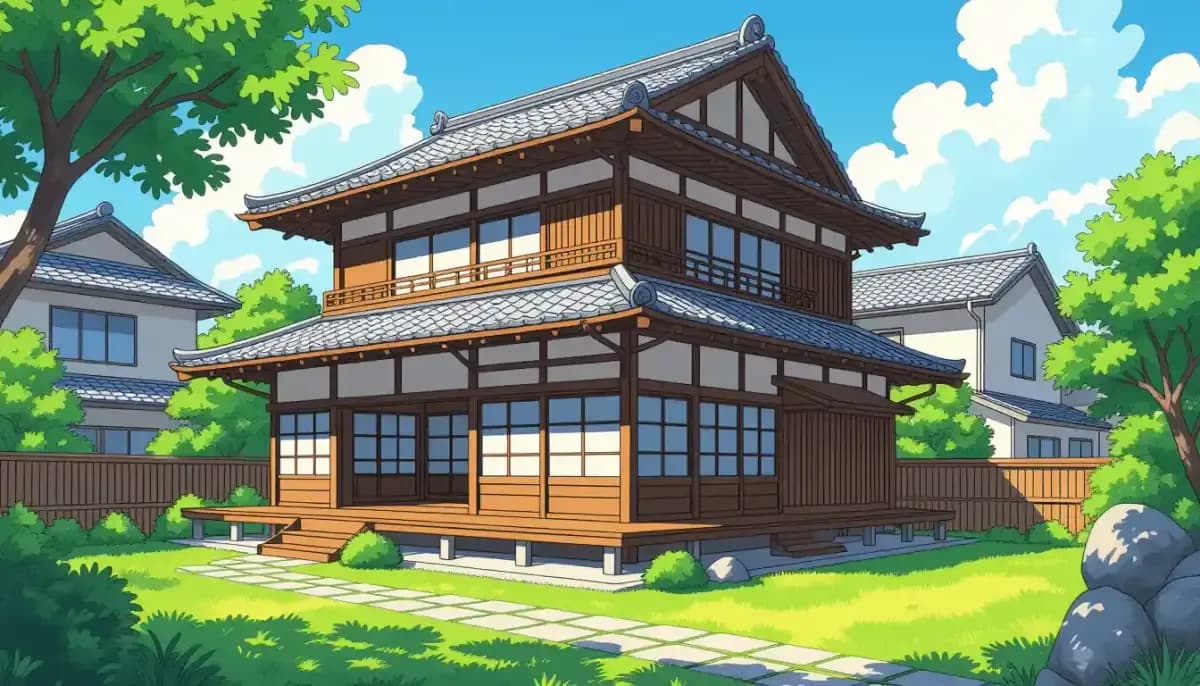
Everything foreigners need to know about buying an ikkodate detached house in Japan: prices from ¥20M-¥150M+, step-by-step process, mortgage options, legal rights, maintenance costs, and expert tips for 2025.
Ikkodate (Detached House) in Japan: Complete Buying Guide for Foreigners
If you dream of owning a home in Japan with your own garden, private parking, and no shared walls with neighbors, an ikkodate (一戸建て) — a standalone detached house — might be exactly what you're looking for. Unlike condominiums or apartments, ikkodate homes offer full ownership of both the building and the land beneath it, giving you unmatched freedom and privacy in Japan's real estate market.
This comprehensive guide walks you through everything foreigners need to know about buying an ikkodate in Japan: what it is, how much it costs, the step-by-step buying process, financing options, and the ongoing responsibilities of ownership.
For a broader overview of the entire purchasing journey, see our Complete Guide to Buying Property in Japan as a Foreigner.
What Is an Ikkodate? Understanding Japan's Detached House
The word ikkodate (一戸建て) literally means "one household building" — a standalone residential structure built on its own plot of land, not connected to any neighboring unit. When you buy an ikkodate, you typically own both the house and the land it sits on, which is the key distinction from a condominium (mansion), where you only own your individual unit within a shared building.
Types of Ikkodate Properties
There are several categories of detached houses in Japan that buyers should understand:
- Shinchiku ikkodate (新築一戸建て): Brand-new construction, often built by major housing developers like Daiwa House, Sekisui House, or Misawa Homes. These come with modern construction standards and warranties.
- Chuko ikkodate (中古一戸建て): Pre-owned or used detached houses. Japan has a large stock of aging housing, so chuko properties are widely available and often much more affordable.
- Akiya (空き家): Vacant or abandoned homes — Japan has millions of these due to its aging population and rural depopulation. Some can be purchased for surprisingly low prices, though they often require substantial renovation.
- Custom build (注文住宅): You purchase land separately and work with an architect or construction company to build a house to your specifications.
For a full overview of the different property types available in Japan, see Types of Properties Available in Japan: A Complete Guide.
Ikkodate Prices: How Much Does a Detached House Cost in Japan?
One of the most important considerations is cost. Prices vary enormously depending on location, property condition, lot size, and building age.
| Location | New Build (Shinchiku) | Used (Chuko) |
|---|---|---|
| Central Tokyo (Minato, Shibuya) | ¥80M–¥150M+ | ¥50M–¥100M+ |
| Greater Tokyo suburbs (Setagaya, Nerima) | ¥50M–¥80M | ¥30M–¥60M |
| Major regional cities (Osaka, Nagoya, Fukuoka) | ¥30M–¥55M | ¥15M–¥40M |
| Smaller cities and suburban areas | ¥20M–¥40M | ¥8M–¥25M |
| Rural areas and countryside | ¥10M–¥25M | ¥1M–¥10M |
Key price benchmarks:
- A new build nationwide averages ¥30–50 million (~$200,000–$330,000 USD)
- Tokyo metropolitan area new builds typically run ¥40–70 million+
- About 29% of Tokyo homes are single-family detached dwellings
- Rural akiya properties can be found for under ¥1 million (sometimes even ¥100,000), though renovation costs can be significant
Additionally, budget 6–10% of the purchase price for additional costs including:
- Real estate agent brokerage fee: 3% + ¥60,000 + consumption tax
- Registration and license tax: ¥300,000–¥500,000
- Real estate acquisition tax (不動産取得税)
- Judicial scrivener (司法書士) fees
- Home inspection for used properties: ¥50,000–¥150,000
- Stamp duty and insurance
For a complete breakdown of all fees, read our guide to Hidden Costs and Fees When Buying Property in Japan.
Can Foreigners Buy an Ikkodate in Japan? Legal Rights Explained
Yes — foreigners can freely purchase ikkodate properties in Japan. Japan imposes no nationality-based restrictions on property ownership. Whether you're an American, British, Australian, or any other nationality, you have the same legal rights to purchase and own real estate as a Japanese citizen.
Key legal points for foreign buyers:
- No visa requirement to purchase: You do not need to be living in Japan or hold a Japanese visa to buy property. However, owning property does not grant you any visa or residency rights.
- Foreign Exchange Law notification: Within 20 days of signing the purchase contract, foreign buyers must file a notification to Japan's Ministry of Finance under the Foreign Exchange and Foreign Trade Act. Your judicial scrivener or agent can assist with this.
- Non-resident tax representative: If you are not residing in Japan, you must designate a tax representative (納税管理人) for property tax purposes.
- Title registration: Ownership is registered in the Legal Affairs Bureau (法務局). You will need your registered seal (hanko) or signature, along with proper identification.
For more detail on the legal side, see Can Foreigners Buy Property in Japan? Legal Rights and Restrictions and our guide on Legal Procedures and Documentation for Japan Property Purchase.
More information on the foreigner buying process is available at Living in Nihon's property buying guide and Gaijin Buy House's ikkodate guide.
Step-by-Step Process: Buying an Ikkodate in Japan
The standard process for purchasing a detached house in Japan typically takes 1–3 months for straightforward transactions, and up to 6 months for complex deals or custom builds.
Step 1: Budget Setting and Property Search
Define your budget including the 6–10% additional costs. Use portals like SUUMO, HOME'S, or At Home to search for properties. Working with a bilingual real estate agent experienced with foreign buyers is strongly recommended.
Step 2: Property Viewing and Purchase Application
Visit properties in person when possible. Once you find one you want, submit a purchase application (申込書) to express your intent. Simultaneously, apply for mortgage pre-approval (事前審査) if you need financing.
Step 3: Important Matters Explanation (重要事項説明)
A licensed real estate agent explains all important details of the property: title status, zoning regulations, building inspection results, flood/earthquake risk, and any encumbrances. This document is legally required before the contract is signed.
Step 4: Sales Contract (売買契約)
Sign the sales contract and pay a deposit — typically 5–10% of the purchase price. This is a legally binding agreement.
Step 5: Final Loan Approval (本審査)
Your lender conducts a formal appraisal and issues final loan approval. This typically takes 2–4 weeks.
Step 6: Settlement and Registration (決済・引き渡し)
At your bank or the judicial scrivener's office, you complete payment of the remaining balance, pay all fees, and sign the title transfer documents. The judicial scrivener files for ownership registration.
Step 7: Move In and Address Registration
You receive the keys and take possession. Register your new address at the local ward or city office.
For a full walkthrough, see our Step-by-Step Home Buying Process in Japan for Foreigners. For general expat guidance on living in Japan including housing, visit For Work in Japan.
Mortgages and Financing for Foreign Buyers
Getting a home loan in Japan as a foreign national is possible, but the options depend heavily on your residency status.
With Permanent Residency (永住権)
If you hold Japanese permanent residency, you have access to nearly the same mortgage products as Japanese nationals:
- Major banks (Mizuho, MUFG, SMBC) will accept your application
- Loan-to-value ratios of 80–100% are available
- Current rates: approximately 0.7% variable or 1.9% fixed (35-year)
Without Permanent Residency
Options are more limited but do exist:
- SMBC Trust Bank (プレスティア) and Suruga Bank are among the few lenders specializing in non-PR foreign buyers
- Expect to make a 20–30% down payment
- Minimum annual income requirements: typically ¥3–5 million
- Having a Japanese spouse or co-borrower with PR significantly improves your options
Note: Approximately 60–70% of foreign property transactions in Tokyo are completed as all-cash purchases, so don't be discouraged if mortgage options are limited.
For a detailed guide to your financing options, see Mortgages and Home Loans for Foreigners in Japan. Additional research from Tokyo Relocation Guide's detached house overview provides helpful context on costs by area.
Pros and Cons of Buying an Ikkodate
Advantages
- Full land ownership: Unlike condominiums, you own the land, which tends to hold or appreciate in value even as buildings depreciate.
- Privacy and space: No shared walls, private garden, and often dedicated parking.
- Freedom to renovate: You can remodel, expand, or customize without approval from a homeowners association (though building regulations still apply).
- Pet-friendly: Detached houses are generally the most accommodating option for pets.
- Community living: Residential neighborhoods tend to have stronger community bonds.
Disadvantages
- Higher purchase price: Especially in urban areas, ikkodate properties are significantly more expensive than equivalent-sized apartments.
- Full maintenance responsibility: All exterior and interior maintenance is your responsibility — no management company to handle common areas.
- Location trade-offs: Affordable ikkodate properties are often located farther from train stations and city centers.
- Building depreciation: In Japan, wooden structures (木造) are typically valued at zero after 22 years under tax law, meaning the building itself depreciates rapidly. The land retains value.
- Energy efficiency: Older ikkodate homes often have poor insulation compared to newer builds or modern condominiums.
Ongoing Costs and Maintenance of an Ikkodate
Owning an ikkodate involves ongoing expenses beyond the mortgage. Budget carefully for:
| Cost Category | Annual Budget | Notes |
|---|---|---|
| Property tax (固定資産税) | ¥100,000–¥500,000+ | Based on assessed land and building value |
| City planning tax (都市計画税) | ¥20,000–¥100,000 | Applies in urban planning areas |
| Building insurance | ¥50,000–¥150,000 | Fire + earthquake coverage recommended |
| Routine maintenance | ¥100,000–¥200,000 | Gutters, garden, minor repairs |
| Annual total estimate | ¥240,000–¥360,000 | Does not include major works |
Major works to budget for:
- Exterior painting (外壁塗装): ¥800,000–¥1.5 million every 10–15 years
- Roof repairs/replacement: ¥500,000–¥2 million every 15–20 years
- Water heater replacement: ¥150,000–¥300,000 every 10–15 years
- Bathroom renovation: ¥1–2 million every 20–30 years
For a full breakdown of ownership costs, see our guide on Property Taxes and Annual Costs of Owning Property in Japan. You can also find useful statistics and market data at E-Housing's property buying guide.
Tips for Foreign Buyers: What to Check Before Purchasing
Before committing to an ikkodate purchase, make sure to investigate these critical factors:
1. Earthquake resistance standards Japan updated its building code in 1981 (新耐震基準). Homes built after this date must meet stricter earthquake resistance requirements. Always verify which standard the property was built to — pre-1981 homes may require expensive retrofitting.
2. Flood and hazard maps Check the local government's hazard maps (ハザードマップ) for flood risk, landslide risk, and liquefaction risk. This is especially important in coastal areas and near rivers.
3. Land title and ownership structure Confirm that the land is freehold (所有権) and not leasehold (借地権). Leasehold land means you don't own the land — you're essentially renting it from a third party.
4. Professional home inspection For used (chuko) properties, hire a certified home inspector (インスペクション). This costs ¥50,000–¥150,000 but can reveal costly hidden defects before you commit.
5. Setback and zoning regulations Check the property's zoning (用途地域), allowable floor area ratio (容積率), and building coverage ratio (建蔽率). These determine what you can build or rebuild on the site.
Is Buying an Ikkodate Right for You?
An ikkodate is the right choice if you:
- Plan to live in Japan long-term and want a permanent, stable home base
- Value privacy, outdoor space, and freedom to renovate
- Have a family with children or pets
- Are comfortable with higher upfront costs and ongoing maintenance responsibilities
- Prefer owning land rather than just a unit within a larger building
If you're considering different regions in Japan, explore our area-specific guides: Buying Property in Tokyo, Osaka, or Rural Japan.
Buying an ikkodate in Japan as a foreigner is absolutely achievable. The legal path is clear, the market is transparent, and with the right preparation — a bilingual agent, solid financial planning, and thorough due diligence — you can make your dream of owning a Japanese detached home a reality.

Originally from Vietnam, living in Japan for 16+ years. Graduated from Nagoya University, with 11 years of professional experience at Japanese and international companies. Sharing information about buying property in Japan for foreigners.
View Profile →Related Articles
Japan Property Grading: How Mansions and Buildings Are Evaluated
Understand Japan's property grading systems including seismic resistance grades (1-3), Housing Performance Indication (10 indicators), CASBEE, BELS, and building structure types RC/SRC — essential knowledge for foreign buyers of mansions and houses.
Read more →
Japan Building Age Categories: New Build vs Used Property Standards
Understand Japan's building age categories — kyu-taishin, shin-taishin, post-2000, and new build standards. Essential guide for foreigners buying property in Japan, covering seismic standards, depreciation, and what to check before buying.
Read more →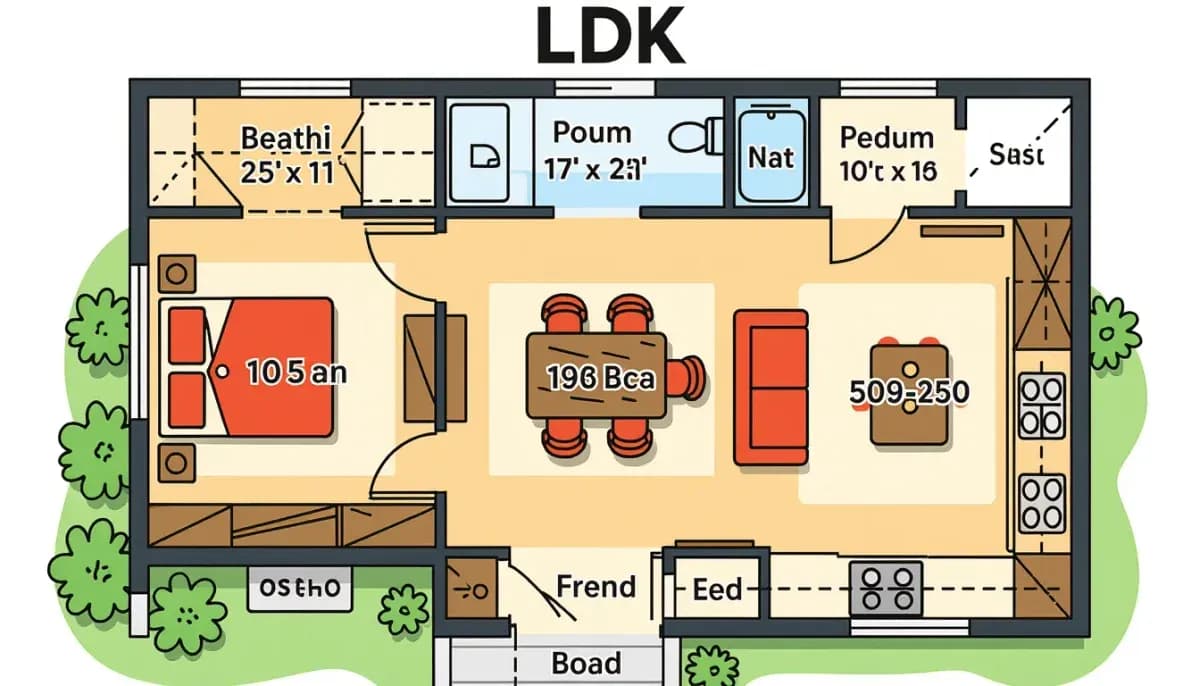
How to Read Japan Property Floor Plans: A Visual Guide
Learn to read Japanese property floor plans with confidence. Understand LDK notation, tatami measurements, floor plan symbols, and common room labels used in Japan real estate listings.
Read more →
Japan Mixed-Use Properties: Residential and Commercial Combined
Complete guide to buying mixed-use residential and commercial property in Japan as a foreigner. Covers zoning laws, financing, investment returns, and the step-by-step buying process.
Read more →
Japan Garage Houses: Properties for Car Enthusiasts
Everything foreign car enthusiasts need to know about buying a garage house in Japan — built-in garage types, tax benefits, costs, design features, and how foreigners can purchase property with full ownership rights.
Read more →
Japan Penthouse and Luxury Apartment Guide
Complete guide to buying or renting a penthouse or luxury apartment in Japan as a foreigner. Covers prices, locations, legal rules, guarantor requirements, and top buildings in Tokyo and beyond.
Read more →