
Japan Building Age Categories: New Build vs Used Property Standards

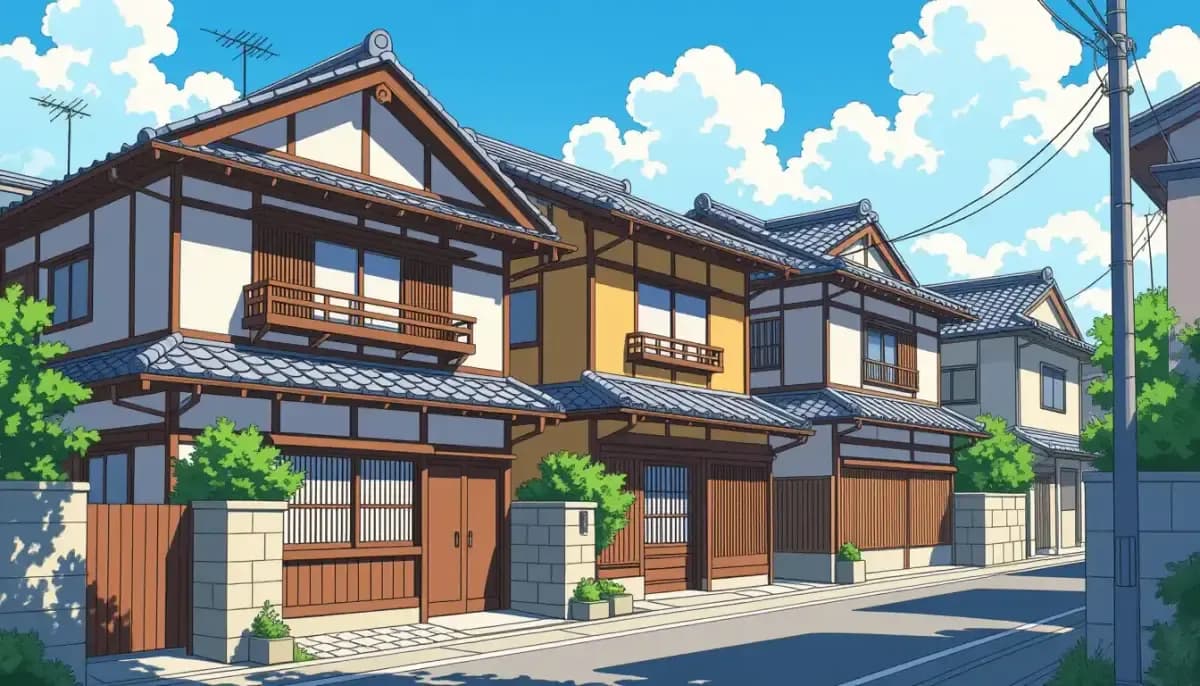
Understand Japan's building age categories — kyu-taishin, shin-taishin, post-2000, and new build standards. Essential guide for foreigners buying property in Japan, covering seismic standards, depreciation, and what to check before buying.
Japan Building Age Categories: New Build vs Used Property Standards
When buying property in Japan, one of the most important factors to understand is the building's age and which construction standards it was built under. Unlike many Western countries where old buildings are often considered charming and valuable, Japan's property market treats building age very differently — older structures can carry significant seismic risk, depreciate rapidly in value, and come with higher maintenance costs. This guide breaks down Japan's building age categories, explains the key construction standards, and helps you make an informed decision between new build and used property.
Understanding building age is not just a financial consideration — it's a safety one. Japan sits on one of the most seismically active regions on Earth, and the standards used to construct a building have a direct bearing on whether it will survive the next major earthquake.
The Three Key Eras of Japanese Building Standards
Japan's construction history is divided into distinct eras defined by major updates to the Building Standard Law (建築基準法). Knowing which era a property falls into is essential for any buyer.
Pre-1981: Kyu-Taishin (旧耐震) — Old Seismic Standard
Buildings that received their Construction Confirmation Certificate before June 1, 1981 were built under the old seismic standard, known as kyu-taishin (旧耐震). The term literally means "old earthquake resistance."
These buildings were designed primarily to withstand moderate earthquakes without collapse, but they were never engineered with today's seismic expectations in mind. The devastating 1995 Great Hanshin-Awaji Earthquake in Kobe exposed just how vulnerable kyu-taishin buildings were — the majority of structural collapses and fatalities occurred in buildings built before 1981.
Key characteristics of pre-1981 buildings:
- Lower seismic resistance, especially to major quakes
- Often structurally adequate for moderate earthquakes but not severe ones
- Significantly harder to sell in today's market
- More expensive to insure
- May qualify for government-subsidized seismic retrofitting programs
If you are considering a pre-1981 property, you should request documentation of any seismic retrofitting (耐震補強) that has been performed. Some owners have brought their properties up to modern standards, which can make them acceptable purchases.
Post-1981: Shin-Taishin (新耐震) — New Seismic Standard
The most significant dividing line in Japanese construction history is June 1, 1981. Buildings receiving their Construction Confirmation Certificate on or after this date are built under the new seismic standard, called shin-taishin (新耐震).
Shin-taishin buildings are designed to:
- Withstand moderate earthquakes (intensity 5 on the Japanese scale) without structural damage
- Survive major earthquakes (intensity 6-7) without collapsing, even if some structural damage occurs
The 1995 Kobe earthquake was a dramatic real-world test: over 70% of post-1981 buildings sustained only minor damage, while many pre-1981 structures suffered catastrophic failure. This validated the 1981 standard and it remains the minimum acceptable benchmark for most buyers and mortgage lenders.
Post-2000: Enhanced Wooden Structure Standards
After the Kobe earthquake, engineers and regulators continued refining the Building Standard Law. A further significant update took effect for wooden residential buildings whose Construction Confirmation Certificates were issued on or after June 1, 2000.
This revision addressed specific weaknesses in wooden construction identified after 1995, including:
- Improved joint and connection specifications
- More rigorous wall ratio calculations
- Better foundation design requirements
The result is that 86.2% of existing wooden residences built between 1981 and 2000 do not fully comply with post-2000 earthquake design standards, according to research by the Japanese Association for Strengthening Wooden Residences against Earthquakes. This is a striking statistic that highlights how post-2000 wooden homes represent a meaningful upgrade over their 1981-1999 counterparts.
Post-2025: New Energy Efficiency Requirements
Starting in 2025, all newly constructed homes in Japan must comply with updated energy-saving standards, including:
- Meeting Thermal Insulation Performance Grade 4 (断熱等性能等級4) as a minimum
- Satisfying primary energy consumption targets
- New permit requirements: as of April 2025, all two-story wooden buildings require a building permit regardless of size
This represents a major shift in Japan's construction industry, making modern new builds significantly more energy-efficient than even recent construction from the 2010s.
Building Age and Property Depreciation in Japan
One of the most striking differences between Japan and Western real estate markets is how quickly buildings lose their value.
| Building Type | Statutory Depreciation Period | Typical Market Behavior |
|---|---|---|
| Wooden house | 22 years | Loses ~50% value in 10 years |
| Light steel structure | 27 years | Moderate depreciation curve |
| Heavy steel structure | 34 years | Slower depreciation |
| Reinforced concrete (RC) | 47 years | Most durable value retention |
| Pre-1981 (any type) | Near zero residual value | Land value only in most cases |
In practice, the average Japanese wooden home loses roughly half its market value within 10 years of construction and is treated as nearly worthless after 25 years — with land being the only asset retaining significant value. This is why you will often see properties listed at prices that seem to reflect only the land, with the building described as a "free gift" (おまけ).
This depreciation pattern has real implications for buyers:
- New builds include consumption tax (10%) on the building portion
- Used homes over 25 years often sell at heavily discounted or land-only prices
- Reinforced concrete condominiums retain value longer than wooden single-family homes
- Properties with documented maintenance history and seismic retrofitting command premiums
For more on the financial side of property ownership, see our guide on Property Taxes and Annual Costs of Owning Property in Japan.
New Build vs. Used Property: A Practical Comparison
The choice between a new build and a used property involves trade-offs across price, location, condition, and long-term costs.
| Factor | New Build (新築) | Used Property (中古) |
|---|---|---|
| Seismic standard | Latest (post-2025) | Varies — check the year |
| Energy efficiency | Mandatory Grade 4+ | Often poor in older buildings |
| Price | Higher (includes consumption tax) | Lower purchase price |
| Location | Often suburban or new development areas | Established neighborhoods available |
| Interior condition | Brand new | Requires inspection |
| Hidden costs | Warranty included, lower initial maintenance | Possible renovation, pipe replacement |
| Value retention | Depreciates immediately | Already depreciated — land value stable |
| Customization | Limited (completed builds) or full (注文住宅) | Renovation possible |
When a New Build Makes Sense
A new build (新築) is the right choice when:
- Safety and modern seismic standards are your top priority
- You want the lowest possible maintenance costs in the near term
- Energy efficiency and insulation quality matter (critical for comfort in Japanese winters)
- You are buying primarily as a primary residence rather than an investment
- You prefer the certainty of buying from a developer with warranty protection
When a Used Property Makes Sense
A used property (中古物件) can be excellent value when:
- You want to buy in a well-established neighborhood with convenient access to schools, stations, and amenities
- The building was constructed after 1981 (shin-taishin compliant) and ideally after 2000
- You have budgeted for a thorough building inspection (ホームインスペクション)
- You are open to renovation to modernize the interior
- You are working with a limited budget and prioritize land value over building condition
For an overview of all property types available, see our guide on Types of Properties Available in Japan.
The Three Seismic Technologies to Know
When evaluating any property — new or used — understanding Japan's three main seismic engineering approaches helps you assess risk:
1. Taishin (耐震) — Basic Earthquake Resistance The walls, columns, and structural elements are reinforced to resist seismic shaking. This is the standard approach and is required by all post-1981 building codes. Most residential buildings use this method.
2. Seishin (制震) — Vibration Control Dampening devices (similar to shock absorbers) are installed within the building structure to absorb and dissipate seismic energy. This reduces the amount of energy transmitted to the building frame and is increasingly common in mid-to-high-rise residential towers.
3. Menshin (免震) — Base Isolation Isolation devices are placed between the building's foundation and the ground, physically separating the structure from seismic waves. This is the most advanced and expensive technology, typically found in premium high-rise condominiums and some modern detached homes. Buildings with menshin technology offer the highest level of earthquake protection.
When viewing a property listing, look for whether it specifies taishin, seishin, or menshin construction — this can be a significant factor in both safety and resale value.
How to Verify a Building's Age and Standards
For any property purchase in Japan, you should verify the construction date and applicable standards through these official channels:
- Construction Confirmation Certificate (確認済証) — Issued before construction begins; confirms the building plan complied with applicable laws at that time. The date on this document determines which seismic standard applies.
- Inspection Certificate (検査済証) — Issued after construction completion; confirms the finished building matches the approved plans. The absence of this document is a red flag.
- Building Register (建物登記) — Filed at the Legal Affairs Bureau (法務局); shows construction date, building type, and floor area.
- Seismic Diagnosis Report (耐震診断報告書) — For older buildings, this third-party assessment evaluates actual seismic performance and may recommend retrofitting.
- Home Inspection (ホームインスペクション) — A professional structural and condition survey that identifies defects, water damage, and maintenance issues. Highly recommended for any used property.
For detailed guidance on the legal documentation required when purchasing, see our article on Legal Procedures and Documentation for Japan Property Purchase.
Practical Tips for Foreign Buyers
Foreign buyers often face additional challenges navigating Japan's property market, particularly around language barriers and unfamiliar documentation. Here are practical points specific to building age:
- Ask your agent explicitly about the construction confirmation date — not just the year of construction. These can differ if documentation was delayed.
- Pre-1981 buildings and mortgage financing: Many Japanese banks will not provide mortgages for kyu-taishin properties that have not been seismically retrofitted. This affects your financing options significantly.
- Renovation budgets: Factor in ¥500,000 to ¥3,000,000+ for seismic retrofitting of older wooden homes if needed, plus any interior renovation costs.
- Condominium reserve funds: For older apartment buildings (マンション), always request the management association's financial reports to verify adequate reserves for future major repairs (大規模修繕).
- English-language support: Finding agents who can explain building documentation in English is valuable. Resources like Living in Nihon's property and mortgage guide and the For Work in Japan housing guide provide useful orientation for foreigners navigating Japanese real estate.
For those considering older properties in need of renovation, Gaijin Buy House's guide to used property and renovation covers the renovation process in detail.
You may also want to review our complete guide on Can Foreigners Buy Property in Japan? to understand the legal framework before proceeding.
Summary: Choosing the Right Era for Your Purchase
Japan's building age categories directly affect safety, value, running costs, and financing. Here is a quick decision framework:
| Your Priority | Recommended Era |
|---|---|
| Maximum earthquake safety | Post-2000 (wooden), Post-1981 (RC/steel) |
| Best energy efficiency | Post-2025 new build |
| Lowest purchase price | Pre-1981 land value / older used property |
| Best value balance | 2000–2020 used property in good condition |
| Long-term value retention | RC condominium, post-2000, in central location |
The key takeaway for foreign buyers is this: never buy a pre-1981 building without a current seismic assessment and documented retrofitting — and always engage a licensed home inspector for any used property, regardless of age. Japan's building market rewards informed buyers who understand the age categories and what they mean for safety and long-term ownership costs.
For the complete step-by-step process of purchasing property in Japan, see our guide on Step-by-Step Home Buying Process in Japan for Foreigners. For broader market context before you start searching, our Japan Real Estate Market Overview covers current trends and investment conditions.
Additional reading:
- Earthquake Building Codes and Technology in Japan — realestate.co.jp
- Japan Building Age: Why It Matters More Than Size — E-Housing
- Japan Housing Depreciation Guide — MailMate

Originally from Vietnam, living in Japan for 16+ years. Graduated from Nagoya University, with 11 years of professional experience at Japanese and international companies. Sharing information about buying property in Japan for foreigners.
View Profile →Related Articles
Japan Property Grading: How Mansions and Buildings Are Evaluated
Understand Japan's property grading systems including seismic resistance grades (1-3), Housing Performance Indication (10 indicators), CASBEE, BELS, and building structure types RC/SRC — essential knowledge for foreign buyers of mansions and houses.
Read more →
How to Read Japan Property Floor Plans: A Visual Guide
Learn to read Japanese property floor plans with confidence. Understand LDK notation, tatami measurements, floor plan symbols, and common room labels used in Japan real estate listings.
Read more →
Japan Mixed-Use Properties: Residential and Commercial Combined
Complete guide to buying mixed-use residential and commercial property in Japan as a foreigner. Covers zoning laws, financing, investment returns, and the step-by-step buying process.
Read more →
Japan Garage Houses: Properties for Car Enthusiasts
Everything foreign car enthusiasts need to know about buying a garage house in Japan — built-in garage types, tax benefits, costs, design features, and how foreigners can purchase property with full ownership rights.
Read more →
Japan Penthouse and Luxury Apartment Guide
Complete guide to buying or renting a penthouse or luxury apartment in Japan as a foreigner. Covers prices, locations, legal rules, guarantor requirements, and top buildings in Tokyo and beyond.
Read more →
Japan Family Apartment Size Guide: Understanding 2LDK, 3LDK Layouts
Confused by 2LDK and 3LDK in Japanese apartment listings? Our complete guide explains apartment sizes, tatami measurements, rent costs, and tips for foreigners renting a family apartment in Japan.
Read more →