
House vs Condo in Japan: Which Is Better for Foreign Buyers?

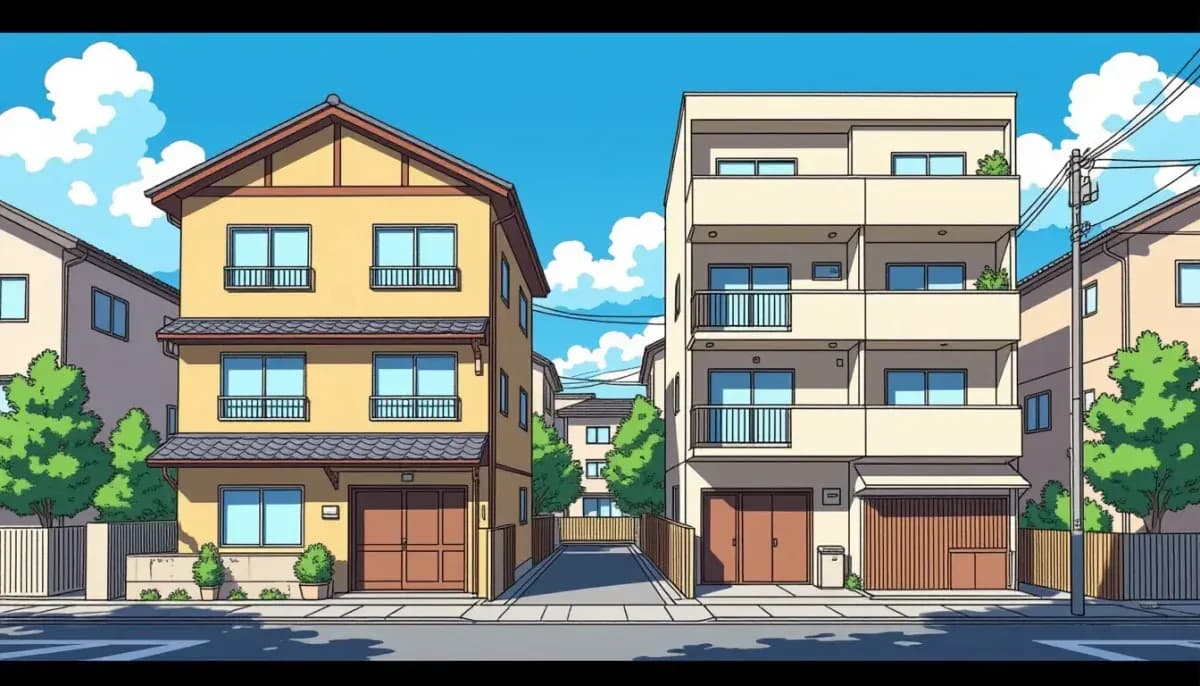
Compare buying a house vs condo in Japan as a foreigner. We break down costs, ownership rights, capital appreciation, maintenance, and which is right for your lifestyle and investment goals.
House vs Condo in Japan: Which Is Better for Foreign Buyers?
Choosing between a house and a condo in Japan is one of the most consequential decisions a foreign property buyer will make. Both options are fully open to foreigners — Japan imposes no nationality-based restrictions on property ownership — but the lifestyle implications, financial dynamics, maintenance responsibilities, and investment profiles differ dramatically. This guide breaks down every key factor so you can decide which property type fits your goals, budget, and lifestyle.
Whether you are relocating to Tokyo for work, planning a vacation retreat in Kyoto, or building a long-term investment portfolio in Osaka, understanding the house-versus-condo trade-off is essential. Let's examine each from the perspective of a foreign buyer navigating Japan's unique real estate market.
Understanding the Two Main Property Types in Japan
Before comparing them, it helps to understand exactly what "house" and "condo" mean in Japan's property market.
A detached house (一戸建て, ikkodate) is a standalone residential building on its own plot of land. You own both the structure and the land underneath it. Houses range from compact 80m² suburban homes to large custom-built residences with gardens and multiple stories. In Japan, most houses are wood-frame construction, though reinforced concrete (RC) buildings exist in the luxury segment.
A condominium (マンション, manshon) is an individually owned unit within a larger multi-unit building. You own your specific unit plus a proportional share of common areas (entrance lobbies, hallways, parking lots, rooftop). The land is shared collectively among all owners. Most Japanese condos are reinforced concrete construction, built to strict seismic standards.
There is also the apartment category (アパート, apāto), which typically refers to wood-frame or steel-frame rental units in smaller 2–3 story buildings — these are rarely sold as ownership properties and are not the focus of this guide.
For a broader overview of all property types available to foreigners, see our complete guide to property types in Japan.
Cost Comparison: Purchase Price and Ongoing Expenses
The financial picture for houses versus condos differs not just in purchase price, but in the ongoing cost structure throughout ownership.
Purchase Prices by Region
| Property Type | Tokyo (23 Wards) | Osaka | Fukuoka | Sapporo |
|---|---|---|---|---|
| 70m² Condo (new) | ¥70M – ¥150M | ¥35M – ¥60M | ¥25M – ¥45M | ¥20M – ¥35M |
| Detached House (new) | ¥50M – ¥90M+ (land) | ¥30M – ¥55M | ¥25M – ¥45M | ¥18M – ¥35M |
| Detached House (used) | ¥20M – ¥60M | ¥15M – ¥40M | ¥12M – ¥30M | ¥10M – ¥25M |
Note: Land costs dominate house pricing in central Tokyo, where a single 100m² plot can cost ¥50–100M+ alone.
Monthly Ongoing Costs
| Cost Category | Detached House | Condo |
|---|---|---|
| Management fees | None | ¥10,000 – ¥30,000/month |
| Repair reserve fund | Owner's savings | ¥5,000 – ¥20,000/month (mandatory) |
| Property tax | 1.4% assessed value/year | 1.4% assessed value/year |
| City planning tax | 0.3% assessed value/year | 0.3% assessed value/year |
| Insurance | ~¥50,000–100,000/year | ~¥10,000–30,000/year (unit only) |
| Major repairs | ¥1M – ¥2M every 10–15 years | Covered by reserve fund |
Condos charge mandatory monthly fees that house owners never pay — but house owners must self-fund all maintenance and repairs. Over a 30-year ownership period, a house owner who diligently saves ¥20,000–30,000 per month for maintenance will spend a comparable total amount.
For a full breakdown of taxes and annual costs, visit our property taxes and annual costs guide.
Ownership Rights: Land vs. Building Unit
This is one of the most fundamental differences for foreign buyers to understand.
House ownership gives you freehold title to both the land and the building. The land is yours indefinitely — it does not depreciate, cannot be taken away (except by eminent domain with compensation), and can be used as collateral for future financing. You can rebuild, renovate, demolish, or pass it to heirs with complete freedom. In Japan's property market, land retains value far better than buildings.
Condo ownership gives you title to your specific unit plus a proportional share (持分, mochibun) of the building's common areas and land. However, you cannot individually sell or subdivide your land share — decisions about the building and land require supermajority votes from the owners' association (管理組合, kanri kumiai). If the building reaches the end of its useful life and the association votes to demolish and rebuild, you are bound by that decision.
This distinction matters significantly for long-term planning. A house on well-located land in Tokyo can appreciate substantially over decades. A condo's value is more closely tied to the building's age and condition — though in prime urban locations, condos have shown strong appreciation too.
Capital Appreciation: Which Has Performed Better?
Japan's property market has produced a striking divergence in recent years:
- Used condominium prices have nearly doubled since 2013 in major cities
- Used detached house prices increased only approximately 1.3× in the same period
This gap reflects several structural factors. Central urban land is finite, and condos concentrate the most desirable locations. The post-2020 demand surge from remote work, low interest rates, and inbound foreign investment has disproportionately benefited urban condos.
In Tokyo's prime wards (Chiyoda, Shibuya, Minato), 20–40% of new apartment sales now go to foreign buyers, according to a March 2025 Mitsubishi UFJ Trust & Banking Corp survey — a testament to condo demand from international investors.
For long-term investors, urban condos in Tokyo and Osaka have been the stronger performers. For owner-occupiers prioritizing lifestyle over investment returns, a well-located house may still be the better choice.
For more on market trends, see our Japan real estate market overview.
Maintenance and Management: Who Does the Work?
One of the most practical considerations — particularly for foreigners who travel frequently or may not be in Japan full-time — is who handles maintenance.
Condos use a professional management company (管理会社, kanri gaisha) hired by the owners' association. The management company handles:
- Daily cleaning of common areas
- Building security and entrance systems
- Routine equipment maintenance (elevators, water pumps, fire systems)
- Coordination of major repair projects funded by the reserve
This hands-off model is ideal for busy professionals, investors managing property from overseas, or anyone who prefers not to deal with contractors and repair scheduling. The downside is you pay for this service whether you use it or not, and you have limited control over management quality.
House owners manage everything themselves. You hire contractors, schedule inspections, and pay all costs directly. This requires more involvement and Japanese-language capability (or a property manager) for finding reliable contractors. Major expenses to budget for include:
- Exterior painting: ¥800,000 – ¥1,500,000 every 10–15 years
- Roof repairs or replacement: ¥500,000 – ¥2,000,000
- Plumbing and water heater replacement: ¥300,000 – ¥800,000
- Termite treatment: ¥100,000 – ¥300,000
For foreigners not fluent in Japanese, the managed maintenance of a condo is a meaningful practical advantage.
For Work in Japan has useful community resources for foreigners navigating practical life challenges in Japan, including finding reliable local services.
Location Advantages: Urban Access vs. Space and Privacy
In major Japanese cities, condos dominate the most central, transit-connected neighborhoods. The land economics of Tokyo, Osaka, and Nagoya make standalone houses prohibitively expensive near train stations, so most affordable house options require a commute to suburban areas.
Condos tend to be located:
- Within walking distance (5–15 minutes) of major train stations
- In high-density urban neighborhoods with abundant shops, restaurants, and services
- In buildings with security, intercom systems, and often concierge services
Detached houses tend to be located:
- 20–40 minutes by train from major city centers (for affordable options)
- In quieter residential neighborhoods with more greenery
- With private parking, gardens, and significantly more interior space
For a family with children, the space and garden of a detached house may be worth the longer commute. For a professional with a demanding work schedule, a condo near the office saves hours per week.
Renovation and Customization Freedom
If you plan to customize your home to your taste — or if you have specific accessibility needs — the renovation rules differ substantially.
Detached house: You have essentially complete freedom to renovate, extend, or rebuild your house, subject to Japan's Building Standards Law. You can knock down walls, add a floor, install a foreign-standard kitchen, or rebuild the entire structure. The main constraints are building coverage ratio (建ぺい率) and floor area ratio (容積率), which limit the size and footprint of structures on a given plot.
Condo: Renovation freedom is significantly more restricted. You can modify the interior of your unit (flooring, walls, kitchen, bathroom fittings), but you cannot:
- Alter the building's exterior or structure
- Change window sizes or locations
- Modify load-bearing walls or columns
- Make changes that affect other units (plumbing routing, etc.)
All renovation plans must be submitted to the management association for approval. Some buildings have strict renovation rules, and in older buildings with strong associations, even minor renovations can require lengthy approval processes.
For buyers who want a home that truly reflects their personal style and needs, a detached house offers far greater latitude.
Financing: Mortgages for Foreign Buyers
Both house and condo purchases are eligible for mortgages in Japan, with similar terms for foreign buyers. The key variables are residency status and income.
Without Permanent Residency (PR):
- Down payment: typically 20–30% of purchase price
- Minimum income: ¥4M–¥5M annual income (lender-dependent)
- Employment tenure: 1–3 years required
- Available lenders: SMBC Trust Bank PRESTIA (¥5M+ income), Suruga Bank, some regional banks
With Permanent Residency:
- Loan-to-value: 80–100% available
- Terms nearly identical to Japanese nationals
- Wider range of lenders
The down payment requirement is the same for both property types. However, houses tend to have higher absolute purchase prices in desirable urban areas, meaning the yen amount required upfront is often larger for houses.
One important note: some older condominium buildings impose building-level restrictions on foreign buyer financing, particularly for non-resident purchases. Always verify with your real estate agent before making an offer.
See our comprehensive mortgage guide for foreigners in Japan for lender comparisons and application tips.
For additional guidance on the full purchase process, Living in Nihon's property buying guide provides a detailed walkthrough of the 7-step process from property search to closing.
Resale Value and Exit Strategy
Japan's property market treats houses and condos very differently when it comes to resale.
Wooden detached houses have a legal depreciation period of 22 years for tax purposes, meaning a 25-year-old wooden house may have near-zero assessed building value — you're essentially buying land with a free house. This creates interesting dynamics: very old houses can be surprisingly cheap, but they require significant renovation investment.
Reinforced concrete condos have a 47-year legal lifespan. Well-maintained condos in prime locations retain value significantly longer. The building's age, management quality, and reserve fund balance are all scrutinized by buyers and appraisers.
For foreign buyers planning to sell within 5 years, note the significant tax difference:
- Short-term capital gains (≤5 years): 39.63% total tax rate
- Long-term capital gains (>5 years): 20.315% total tax rate
If you're holding as investment, the 5-year threshold is a meaningful consideration in your exit planning.
For a deep dive into legal and documentation requirements, see our legal procedures guide for property purchase. Additionally, Housing Japan's expat buying guide provides practical advice on earnest money, contract language, and the purchase timeline.
Key Considerations Specific to Foreign Buyers
Foreign buyers face some unique considerations that affect the house-vs-condo decision:
Language barrier in condo associations: Owners' association meetings, notices, and communications are conducted in Japanese. Non-Japanese-speaking owners can find it difficult to participate in decisions about building management, repair projects, and rule changes. With a house, you deal with individual contractors and city hall — fewer ongoing Japanese-language obligations.
FEFTA reporting requirement: Both house and condo purchases require a notification to Japan's Ministry of Finance within 20 days of contract signing under the Foreign Exchange and Foreign Trade Act (FEFTA). This applies to all foreign buyers regardless of property type.
Some condos restrict foreign ownership: A small number of condominium buildings — particularly older ones or those in sensitive locations — have bylaws restricting sales to non-Japanese nationals. Always verify this before making an offer. Houses carry no such restrictions.
Property management when abroad: If you plan to spend significant time outside Japan, a condo's professional management is a substantial advantage. Managing a detached house remotely requires hiring a trusted local property manager.
For a complete overview of your legal rights as a foreign property buyer, see our foreigners' rights guide. For practical guidance from Gaijin Buy House on buying condos and buying detached houses, these resources provide detailed checklists tailored to foreign buyers.
Which Is Right for You? A Decision Framework
| Your Situation | Recommended Property Type |
|---|---|
| Urban professional, short commute priority | Condo |
| Family with children, need space and garden | Detached house |
| Investment focus, capital appreciation | Condo (prime urban) |
| Renovation/customization plans | Detached house |
| Frequently traveling or living abroad | Condo (managed) |
| Long-term family home, generational transfer | Detached house (with land) |
| Limited Japanese language ability | Condo (less contractor management) — but note association language issues |
| Rural or resort location (Niseko, Hakone) | Detached house or resort condo |
| Budget under ¥20M | Used detached house in suburban areas |
There is no universal right answer. A foreign investor buying in central Tokyo for rental income will likely favor a condo near a major station. A family relocating permanently to Fukuoka for work may find that a spacious detached house in a good school district fits their life far better.
The key is to align the property type with your actual use case, not just investment projections or space preferences. Think about your realistic maintenance capacity, how long you plan to stay, whether you'll be in Japan full-time, and what your exit strategy looks like.
Conclusion
Both houses and condos offer genuinely compelling propositions for foreign buyers in Japan. Condos deliver urban convenience, professional management, stronger recent capital appreciation, and lower individual maintenance burden — ideal for investors and city-dwelling professionals. Detached houses provide full land ownership, renovation freedom, greater space, privacy, and no ongoing management fees — ideal for families and long-term residents who want a true home.
Japan's liberal property ownership laws mean you have real options as a foreign buyer. With no nationality-based restrictions, full mortgage access (subject to income and residency requirements), and a deep inventory in both categories, the question is simply which type of property best serves your life in Japan.
Start your research by reviewing the complete guide to buying property in Japan as a foreigner, then dive into city-specific guides once you have narrowed down your preferred region.

Originally from Vietnam, living in Japan for 16+ years. Graduated from Nagoya University, with 11 years of professional experience at Japanese and international companies. Sharing information about buying property in Japan for foreigners.
View Profile →Related Articles
Privacy and Noise Insulation in Japanese Houses
A complete guide to privacy and noise insulation in Japanese houses for foreign buyers. Learn how RC, steel, and wood construction affects noise levels, plus practical soundproofing tips.
Read more →
Japan House Lifespan and Depreciation Explained
Learn how Japanese house depreciation works, statutory useful life by construction type, genka shoukyaku tax rules, and how to factor depreciation into buying property in Japan as a foreigner.
Read more →
Japan House Structure Types: Wood, Steel, and Reinforced Concrete
A complete guide to Japan house structure types for foreign buyers: wooden (木造), steel (鉄骨), and reinforced concrete (RC) construction — costs, earthquake safety, lifespan, and what to check when buying.
Read more →
Small House Design and Compact Living in Japan
Discover the principles of Japanese small house design and compact living. Learn space-saving techniques, Japanese design philosophy, and practical tips for foreigners living in small homes in Japan.
Read more →
Two-Family House (Nisetai Jutaku) in Japan Explained
Everything foreigners need to know about buying a nisetai jutaku (two-family house) in Japan — types, tax benefits, costs, and legal considerations for foreign buyers.
Read more →
Parking and Garage Requirements for Japan Houses
Learn Japan's parking and garage requirements for homeowners. Everything about the Shako Shomeisho certificate, types of residential parking, costs by region, and tips for foreigners buying property in Japan.
Read more →