
Custom-Built Homes in Japan: Order-Made (Chuumon Jutaku) Guide

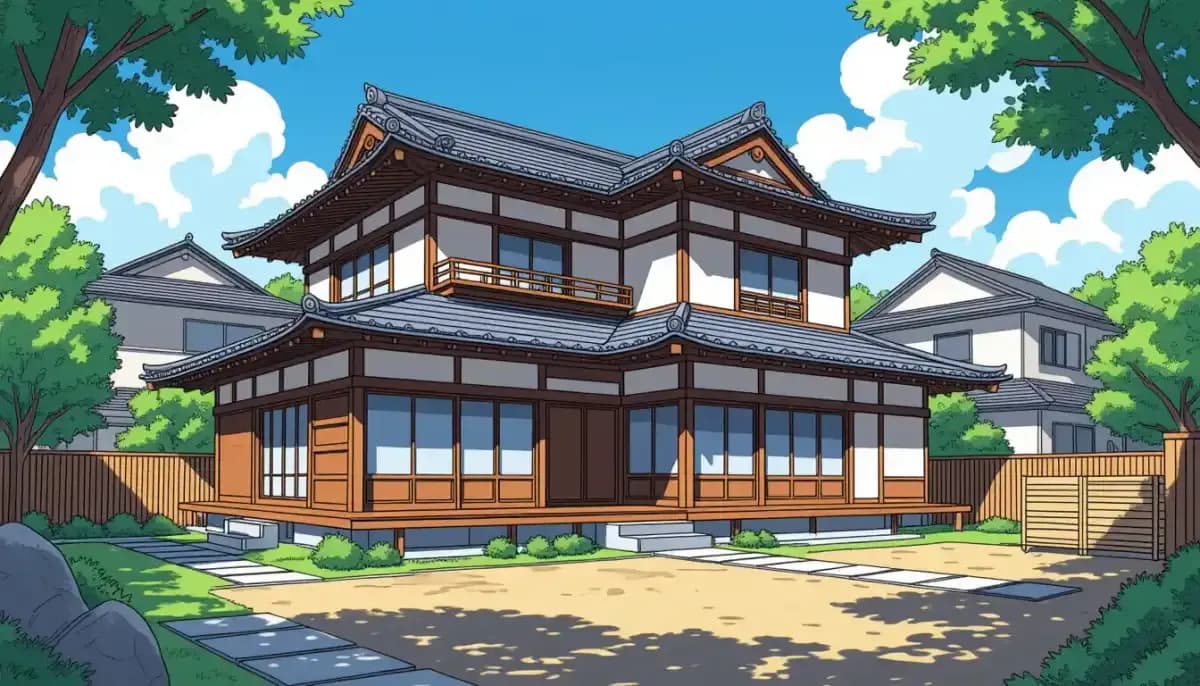
Everything foreigners need to know about building a custom home in Japan (chuumon jutaku): types, process timeline, costs, mortgage options, house-makers, and practical tips for expats.
Custom-Built Homes in Japan: Order-Made (Chuumon Jutaku) Complete Guide
Building your dream home from the ground up in Japan is an exciting possibility for foreigners. Known as 注文住宅 (chuumon jutaku), or "order-made" housing, these custom-built homes offer unparalleled flexibility to design a residence perfectly suited to your lifestyle, preferences, and the unique Japanese landscape. Whether you dream of a minimalist modern design, a traditional Japanese aesthetic, or a Western-style family home, chuumon jutaku gives you the freedom to create it — provided you understand the process, costs, and challenges involved.
This comprehensive guide walks you through everything you need to know about building a custom home in Japan as a foreigner: what chuumon jutaku actually means, how the process works, how much it costs, and how to navigate the unique challenges of the Japanese construction industry.
What is Chuumon Jutaku (注文住宅)?
Chuumon jutaku literally translates to "order housing" — a home built to the specific order and design of the buyer. Unlike pre-built homes (建売住宅, tate-uri jutaku) or condominiums, a chuumon jutaku is designed from scratch around your personal needs, the specific plot of land you own, and your aesthetic vision.
There are two main types of custom-built homes in Japan:
- Full Order (フルオーダー): You have complete control over every aspect — the layout, room sizes, materials, finishes, and architectural style. You work closely with an architect or design team to create a truly one-of-a-kind home.
- Semi-Order (セミオーダー): The builder provides a range of preset options and packages from which you select. You have customization within defined menus — for example, choosing from 10 kitchen layouts, 5 exterior styles, and 3 flooring options. This is more common than full order and is what most Japanese house-maker (ハウスメーカー, house-maker) companies offer.
It is worth noting that what is marketed as a "full order" home from a large house-maker is often closer to semi-order in practice — you are selecting from their catalog rather than designing something entirely custom. For true full-order flexibility, working with an independent architect is the better route.
The Step-by-Step Process of Building a Custom Home in Japan
The full journey from deciding to build to moving in typically takes 14 to 20 months. Here is a breakdown of each major phase:
1. Land Acquisition (土地購入)
If you do not already own land, finding and purchasing a plot is the first step. This can take several months depending on your location preferences. In urban areas like Tokyo, suitable land is scarce and expensive. In rural areas, land is far more affordable but may come with its own infrastructure challenges.
Engage a licensed real estate agent (不動産業者, fudosan gyosha) to assist with land searches. It is advisable to loop in your architect early, as they can evaluate the suitability of a plot for your intended design before you purchase.
2. Selecting Your Build Partner
You have two main options:
- House-Maker (ハウスメーカー): Large national companies like Sekisui House, Daiwa House, Panasonic Homes, or Misawa Homes. They offer standardized systems, faster build times, and nationwide warranty support. Customization is semi-order style.
- Independent Architect + Local Builder: For true design freedom, hire a registered architect (一級建築士, ikkyu kenchikushi) who will design your home and then select a local builder to construct it. This path offers maximum customization but requires more management.
3. Design Phase (設計)
The design phase takes approximately 4 to 7 months and includes:
- Basic design (基本設計, kihon sekkei): Developing floor plans, exterior concepts, and overall layout — roughly 2 to 3 months.
- Detailed design (実施設計, jisshi sekkei): Fine-tuning every detail, materials, electrical layouts, and obtaining building permits — another 2 to 3 months.
This is the most critical phase. Decisions made here determine your home's character, functionality, and long-term livability.
4. Construction (工事)
Construction typically takes 5 to 7+ months, depending on the size and complexity of the home. During this phase, staged disbursements from your housing loan are made to the builder. Regular site visits are recommended, and your architect (if you hired one) will supervise construction quality.
5. Inspection and Handover (引き渡し)
Before handover, a final inspection ensures everything meets building codes and your design specifications. Any defects or issues are noted and resolved before you receive the keys.
Cost Breakdown: How Much Does a Custom Home in Japan Cost?
Building costs in Japan vary significantly by region, materials, and build type. Here is a summary of national averages based on the Japan Housing Finance Agency survey:
| Item | National Average | Tokyo Metro Average |
|---|---|---|
| Land Cost | ¥14.36 million | ¥34.62 million |
| Construction Cost | ¥29.61 million | ¥26.48 million |
| Total | ¥43.97 million (~$290,000) | ¥61.1 million (~$400,000+) |
| Average Floor Area | 111.1 sq meters | 120.4 sq meters |
| Cost per sq meter (wood) | ~¥200,000 | ~¥220,000+ |
| Cost per sq meter (steel-framed) | ~¥300,000 | ~¥330,000+ |
Note: These figures are national averages as of 2020–2023. Prices have risen significantly since 2020 due to inflation, rising material costs, and supply chain issues post-pandemic.
Additional costs to budget for include:
- Site preparation: Leveling, retaining walls, utility connections — can add ¥1–5 million or more
- Design fees: Architects typically charge 10–15% of construction costs
- Registration and legal fees: Approximately ¥500,000–¥1 million
- Transaction taxes: 3% real estate acquisition tax on assessed value
- Furniture and appliances: Not included in construction costs
For a detailed breakdown of all fees involved, see our guide on Hidden Costs and Fees When Buying Property in Japan.
Can Foreigners Build a Custom Home in Japan?
Yes — absolutely. Japanese law places no nationality restrictions on property ownership or home construction. Foreign nationals, including those without permanent residency, can legally purchase land and build a custom home in Japan. There are no additional taxes or restrictions specifically targeting foreign buyers.
That said, there are practical considerations:
- Language barrier: Most house-makers and builders operate primarily in Japanese. You will need either strong Japanese language skills, a bilingual agent or consultant, or a firm that specifically serves international clients.
- Mortgage financing: This is the biggest practical hurdle. Most Japanese banks require permanent residency (永住権, *eijuken*) to approve a housing loan. Some banks — particularly international banks operating in Japan or select regional banks — may consider lending to long-term visa holders, but options are more limited. See our complete guide on Mortgages and Home Loans for Foreigners in Japan.
- Visa considerations: If you are building a home on a time-limited visa, consider how visa renewals, changes in employment, or potential relocation could affect your long-term situation. Read more about Visa and Residency Considerations for Property Buyers in Japan.
For a broader overview of your legal rights as a foreign buyer, see Can Foreigners Buy Property in Japan? Legal Rights and Restrictions.
Choosing a Japanese House-Maker: Key Players
Japan's housing industry is dominated by large, reputable house-maker companies. Here is a quick overview:
| House-Maker | Style | Estimated Price Range | Strength |
|---|---|---|---|
| Sekisui House | Modern/versatile | ¥25–45 million+ | Earthquake-resistant steel frame |
| Daiwa House | Modern | ¥25–40 million+ | Fast construction |
| Misawa Homes | Varied | ¥20–40 million+ | Timber-frame expertise |
| Panasonic Homes | Tech-forward | ¥28–50 million+ | Smart home features |
| Sumitomo Forestry | Natural/timber | ¥28–45 million+ | Eco-friendly wood design |
| Ichijo Komuten | Value-focused | ¥18–35 million+ | Energy efficiency |
Most house-makers offer model home showrooms (住宅展示場, jutaku tenji-jo) across Japan where you can tour full-scale examples of their designs. Visiting multiple showrooms before committing is strongly recommended.
Key Design Decisions You Must Get Right
Building a custom home is a once-in-a-generation decision. These are the design elements that Japanese homeowners — and experienced expats — consistently identify as most important:
Earthquake Resistance Level
Japanese building codes require all new homes to meet seismic standard 1 (耐震等級1). However, upgrading to Level 3 (the maximum) provides significantly better protection in major earthquakes and can lower your earthquake insurance premiums. Always request Level 3 unless there is a specific reason not to.
Insulation and Climate Control
Traditionally, Japanese homes have been poorly insulated — a historical design philosophy suited to hot, humid summers but miserable in winter. Modern high-performance homes now offer excellent insulation ratings. Look for homes certified under Japan's ZEH (Zero Energy House) standard, which includes superior insulation, solar panels, and energy management systems.
Storage Space
Japanese homes tend to prioritize living space over storage. Plan your storage needs carefully — walk-in closets, under-stair storage, and built-in cabinetry are worth investing in during the design phase, as adding them later is costly.
Floor Plan Flow
Think carefully about how you will actually move through the home day-to-day. Japanese floor plans often differ significantly from Western layouts. Consider traffic patterns between rooms, the location of bathrooms relative to bedrooms, and indoor-outdoor flow to gardens or terraces.
Outlet and Switch Placement
Electrical outlet and switch placement is fixed during construction. Plan the location of every piece of furniture and appliance before finalizing your electrical plans to avoid frustrating limitations later.
The Language Challenge: Building in Japan as a Non-Japanese Speaker
One of the most significant practical challenges for foreigners building a custom home is the language barrier. Construction contracts, building specifications, design documents, and government permits are all in Japanese. Miscommunications during this process can be costly.
Your options include:
- Using an English-speaking house-maker or architect: Some firms actively cater to international clients with bilingual staff. Japanese Architects (japanese-architects.com) is one example of an English-language service specifically for foreigners navigating the Japan construction process. See their step-by-step building process guide for detailed insights. HouseRep Tokyo also provides an excellent custom-built house guide covering common mistakes and decision points.
- Hiring a bilingual construction consultant: An independent consultant can review contracts, attend meetings, and flag misunderstandings.
- Improving your Japanese: Even N3-level Japanese skills will significantly improve your ability to communicate with builders and understand documents.
For more on navigating life in Japan as a foreigner, Living in Nihon provides practical guides on settling in and managing daily life in Japan.
Working with Real Estate Professionals
Building a custom home requires a team of professionals. Beyond your architect and builder, you will need:
- Licensed real estate agent for land acquisition
- Judicial scrivener (司法書士, *shiho shoshi*) for legal registration of land and property
- Tax advisor for understanding acquisition taxes and long-term property tax implications
- Banking specialist familiar with foreigner mortgage applications
For expats managing jobs and housing simultaneously, For Work in Japan offers guidance on navigating professional and residential life in Japan.
For a detailed look at the full property buying process, see our Step-by-Step Home Buying Process in Japan for Foreigners and the Complete Guide to Buying Property in Japan as a Foreigner.
Gaijin Buyers: Common Mistakes to Avoid
Based on the experiences of foreign homebuyers in Japan, here are the most common and costly mistakes to avoid:
- Rushing the land purchase without proper due diligence — zoning restrictions, soil quality, flood risk, and utility access can all create expensive surprises.
- Choosing the cheapest bid without understanding the quality differences between builders.
- Ignoring the semi-order limitation — expecting fully custom when in reality you are selecting from a menu.
- Underestimating the timeline — 14 to 20 months is a genuine minimum. Delays are common.
- Skipping Level 3 earthquake resistance to save costs.
- Not planning for future resale — Japanese custom homes have traditionally depreciated quickly, though market trends are beginning to shift.
For insights from foreign buyers who have navigated this process, Gaijin Buy House is a valuable community resource.
Is a Custom-Built Home Right for You?
| Factor | Custom Home (Chuumon Jutaku) | Pre-Built Home (Tate-uri Jutaku) |
|---|---|---|
| Design control | Very high (full/semi) | Low |
| Time to move in | 14–20 months | Immediate |
| Price | Higher (construction costs) | Often lower |
| Location flexibility | Wherever you find land | Limited to available units |
| Mortgage complexity | High for foreigners | High for foreigners |
| Resale value | Traditionally low | Traditionally low |
| Customization | Extensive | None |
A custom-built home makes most sense if you plan to live in Japan long-term, have found the right land, have secured financing, and value design that reflects your personal lifestyle. For those with shorter time horizons or less certainty, purchasing an existing home or condominium may be more practical. See our Types of Properties Available in Japan: A Complete Guide for a full comparison.
Final Thoughts: Building Your Dream Home in Japan
Building a chuumon jutaku in Japan is a deeply rewarding endeavor for those who approach it with proper preparation, realistic expectations, and the right professional team. The process is long, complex, and expensive — but the result is a home designed precisely for how you want to live, built to modern Japanese construction standards that prioritize earthquake safety, longevity, and quality.
As a foreigner, the path has additional hurdles — particularly around financing and language — but none of them are insurmountable. With the right support network, it is absolutely achievable to build your dream home in Japan, whether in a Tokyo suburb, a coastal city, or a peaceful rural setting.
Start with your vision, understand your budget, and take the process one step at a time. Japan's housing industry is well-organized and highly professional — and the finished result of a well-designed chuumon jutaku can be a genuine lifetime achievement.

Originally from Vietnam, living in Japan for 16+ years. Graduated from Nagoya University, with 11 years of professional experience at Japanese and international companies. Sharing information about buying property in Japan for foreigners.
View Profile →Related Articles
Privacy and Noise Insulation in Japanese Houses
A complete guide to privacy and noise insulation in Japanese houses for foreign buyers. Learn how RC, steel, and wood construction affects noise levels, plus practical soundproofing tips.
Read more →
Japan House Lifespan and Depreciation Explained
Learn how Japanese house depreciation works, statutory useful life by construction type, genka shoukyaku tax rules, and how to factor depreciation into buying property in Japan as a foreigner.
Read more →
Japan House Structure Types: Wood, Steel, and Reinforced Concrete
A complete guide to Japan house structure types for foreign buyers: wooden (木造), steel (鉄骨), and reinforced concrete (RC) construction — costs, earthquake safety, lifespan, and what to check when buying.
Read more →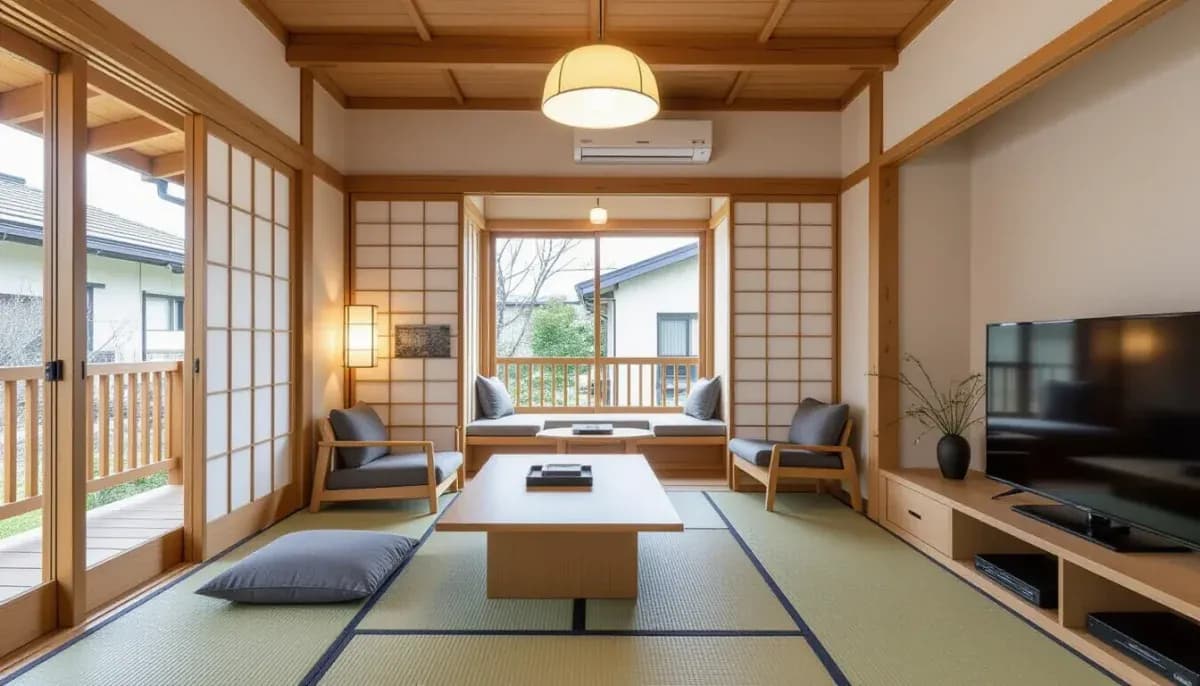
Small House Design and Compact Living in Japan
Discover the principles of Japanese small house design and compact living. Learn space-saving techniques, Japanese design philosophy, and practical tips for foreigners living in small homes in Japan.
Read more →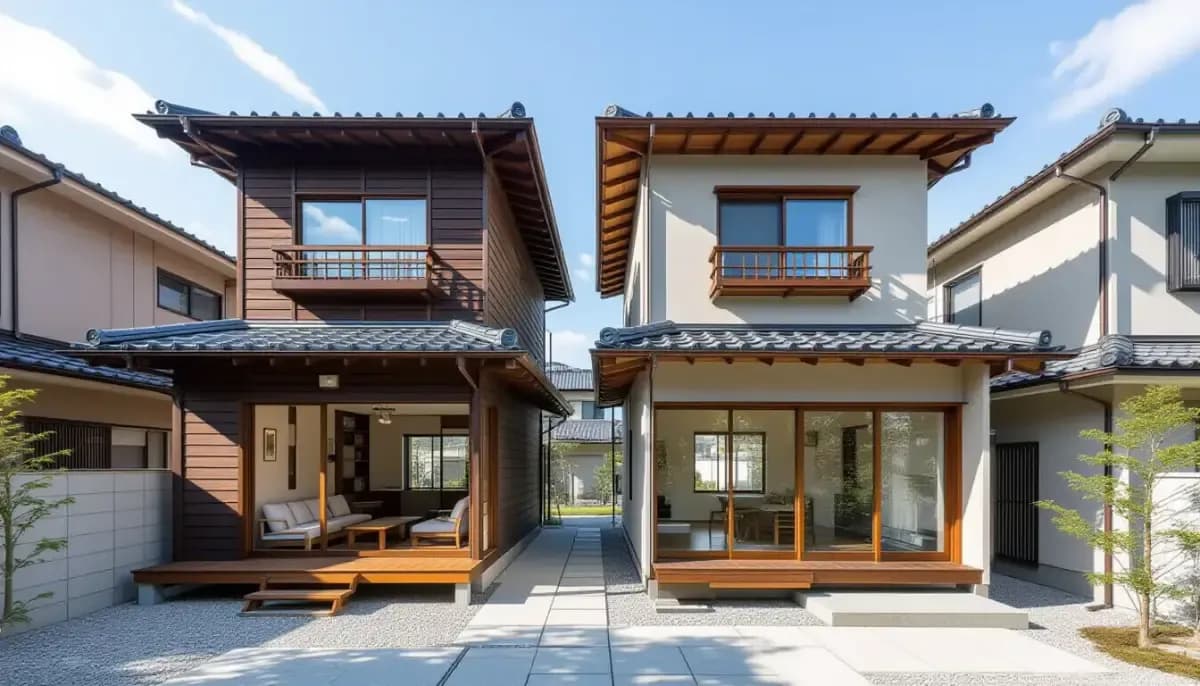
Two-Family House (Nisetai Jutaku) in Japan Explained
Everything foreigners need to know about buying a nisetai jutaku (two-family house) in Japan — types, tax benefits, costs, and legal considerations for foreign buyers.
Read more →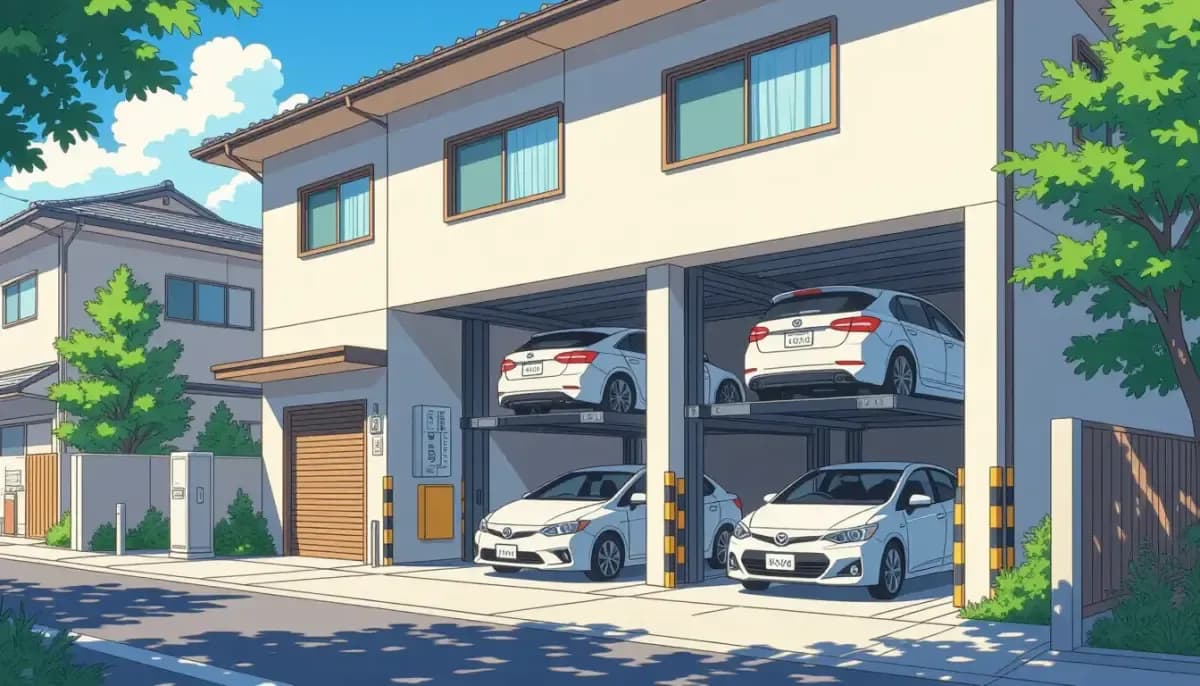
Parking and Garage Requirements for Japan Houses
Learn Japan's parking and garage requirements for homeowners. Everything about the Shako Shomeisho certificate, types of residential parking, costs by region, and tips for foreigners buying property in Japan.
Read more →