
Akiya Near Tokyo: Accessible Vacant Houses for Commuters

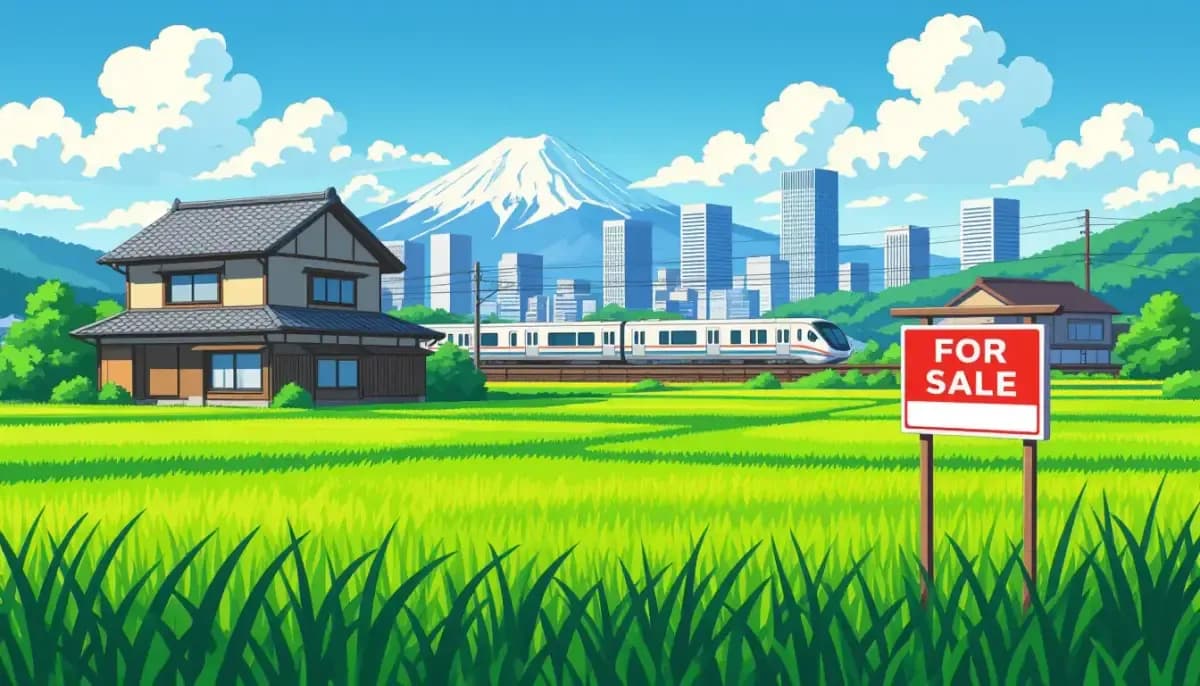
Find affordable akiya (vacant houses) within commuting distance of Tokyo. Covers best rail corridors in Saitama, Chiba, Kanagawa, Ibaraki, government subsidies, and tips for foreign buyers.
Akiya Near Tokyo: Accessible Vacant Houses for Commuters
For foreigners dreaming of owning a home in Japan without the astronomical price tags of central Tokyo, akiya — Japan's millions of vacant and abandoned houses — present a compelling opportunity. The most exciting twist? Many of these properties sit within easy commuting distance of Tokyo, offering a lifestyle that blends affordable countryside living with access to the world's most dynamic city. This guide breaks down everything you need to know about finding, buying, and living in akiya near Tokyo as a foreigner.
Why Akiya Near Tokyo Is a Real Option for Commuters
Japan currently has approximately 9 million vacant homes (akiya), representing a staggering 13.8% of the entire housing stock. While many of these properties are concentrated in deep rural areas, a significant number exist in suburbs and satellite cities within 30–90 minutes of central Tokyo. Prefectures like Saitama, Chiba, Kanagawa, Ibaraki, and Tochigi all have active akiya inventories — and each is well-connected to Tokyo by commuter rail.
The core appeal is price. Tokyo's 23 wards average around ¥113 million for a typical home, while suburban areas offer dramatically lower entry points:
| Prefecture/Area | Average Property Price | Example Commute Time to Tokyo |
|---|---|---|
| Saitama (Kawaguchi, Omiya) | ~¥48 million | 20–35 min (Keihin-Tohoku, Saikyo Line) |
| Chiba (Funabashi, Kashiwa, Nagareyama) | ~¥57 million | 25–45 min (Sobu, Joban Line) |
| Kanagawa (Yokohama, Kawasaki) | ~¥62 million | 20–40 min (Tokaido, Yokosuka Line) |
| Ibaraki (Toride, Moriya) | ~¥25–35 million | 40–60 min (Joban Line) |
| Tochigi (Oyama, Koga area) | ~¥15–25 million | 50–75 min (Shinkansen/Tohoku Line) |
| Akiya listings (older stock) | ¥500,000–¥5 million | Varies by location |
Akiya within these corridors can be found at prices orders of magnitude lower than regular market listings — sometimes for under ¥1 million — though renovation costs must be factored in.
For more context on the broader akiya landscape in Japan, see our full guide on Akiya (Vacant and Abandoned Houses) in Japan for Foreign Buyers.
How the Akiya Bank System Works
Over 1,000 municipalities across Japan operate "akiya banks" — government-run matching services that connect vacant house owners with prospective buyers. Many of the prefectures surrounding Tokyo have their own akiya bank portals. Here's how the system works in practice:
- Register with the municipal akiya bank — Most registration is free and open to anyone, including foreigners. You'll typically need a passport copy, residence card (if applicable), and contact information.
- Browse listings — Properties are listed with photos, condition notes, approximate renovation requirements, and asking prices. Prices can range from symbolic amounts (under ¥500,000) to several million yen depending on location and condition.
- Arrange viewings — Contact the municipality or listing agent directly. Many will facilitate viewings even without Japanese fluency if you bring a translator or use interpretation services.
- Make an offer and complete due diligence — Hiring a bilingual judicial scrivener (司法書士) is strongly recommended to handle contracts and title registration.
Important caveat: The akiya bank provides information only. Municipalities do not facilitate contracts or offer post-purchase support. You're largely responsible for arranging inspections, negotiations, and legal processes yourself — making professional help invaluable.
Foreigners can participate without permanent residency. Japan permits property ownership regardless of nationality, which is one of the most foreigner-friendly aspects of its real estate system. For a full breakdown of the legal landscape, visit Can Foreigners Buy Property in Japan? Legal Rights and Restrictions.
You can also find detailed guidance on the akiya bank program at Gaijin Buy House's Akiya Bank Guide.
Best Commuter Corridors for Akiya Hunters
Not all rail lines are equal when it comes to akiya availability and commute quality. Here are the most promising corridors for Tokyo commuters seeking affordable vacant houses:
Joban Line (常磐線) — Chiba and Ibaraki
The Joban Line runs northeast from Tokyo through Kashiwa, Abiko, and into Ibaraki Prefecture. Cities like Toride (about 45 minutes from Ueno) and Moriya have robust akiya inventories and relatively affordable renovation costs. The further you go into Ibaraki, the cheaper the properties — but the longer the commute.
Saikyo Line / Keihin-Tohoku Line — Saitama
Kawaguchi in Saitama sits directly adjacent to Tokyo and offers 30-minute access to Tokyo Station via the Keihin-Tohoku Line. It has a large foreign resident community, particularly from Chinese and Southeast Asian backgrounds, making it one of the most foreigner-friendly suburban options. Further north, areas around Omiya and Kumagaya have older housing stock with higher akiya potential.
Sobu Line / Musashino Line — Chiba
Nagareyama (served by the Tsukuba Express) is frequently cited as a hidden gem — about 30 minutes from Akihabara with nature-surrounded family living. Matsudo and Kashiwa on the Joban Line are also popular with young families seeking space. Akiya are more available in the older neighborhoods away from station hubs.
Tobu Nikko Line / Tobu Isesaki Line — Saitama and Tochigi
These lines extend deep into northern Saitama and Tochigi Prefecture. Properties in areas like Koga or Oyama can be remarkably cheap, and some municipalities actively recruit new residents with akiya subsidy packages. For those working remotely or willing to do a longer commute 2–3 days per week, this corridor offers some of the best value in Greater Tokyo.
For more detailed guidance on buying in the broader region, explore our guide on Buying Property in Tokyo as a Foreigner and Rural and Countryside Properties in Japan for Foreign Buyers. The Gaijin Buy House guide to Tokyo vs. suburban hidden gem areas is also a highly recommended comparison resource.
Government Subsidies and Support Programs for Akiya Buyers
One of the most under-discussed advantages of buying akiya near Tokyo is the availability of government subsidies. Both national and local programs exist to incentivize new residents — especially those willing to move from central Tokyo.
National Rural Relocation Support (地方創生移住支援事業):
- Households relocating from Tokyo's 23 wards: up to ¥1,000,000
- Single persons relocating from Tokyo: up to ¥600,000
- Additional child allowance: up to ¥1,000,000 per minor child
- Startup support: up to ¥2,000,000 (for those starting businesses)
- Requirement: Must have lived in Tokyo 23 wards for at least 1 year (5+ years in greater Tokyo area over the past decade) and commit to staying in the destination area for 5+ years.
Municipal Akiya Renovation Grants: Individual municipalities offer renovation assistance ranging from ¥500,000 to ¥2,000,000, depending on the property and location. Some municipalities also offer free or heavily discounted properties in exchange for renovation commitments and residency requirements.
Eligibility for Foreigners: Foreign nationals with valid residency status may qualify for relocation support programs, though technical intern trainees and certain visa categories face restrictions. Permanent residents typically access programs under the same conditions as Japanese citizens. Always verify eligibility with the specific municipality before committing.
For comprehensive details on relocation support programs, the For Work in Japan guide on Rural Relocation Support Programs is an excellent resource. Additional area-specific guides can be found at Living in Nihon's guide to the best areas for foreigners in Tokyo.
What to Expect: Condition, Renovation, and Realistic Costs
Akiya are not turnkey properties. The vast majority come with significant challenges:
- Age: About 70% of akiya were built before 1980, meaning they pre-date Japan's current earthquake resistance standards (enforced since 1981). Older properties should be inspected by a certified structural engineer before purchase.
- Condition: Approximately 60% of akiya are inherited properties that have been left vacant for years, sometimes decades. Mold, pest damage, roof leaks, and deteriorated plumbing are common.
- Renovation costs: Budget realistically. Minor cosmetic renovation of a 3LDK (three-bedroom) house might cost ¥3–8 million. Full structural renovation can run ¥10–25 million or more.
Seismic retrofitting is an important consideration for pre-1981 properties. Municipalities sometimes offer additional subsidies specifically for earthquake reinforcement works. Factor this into your overall budget from the start.
Despite these challenges, many foreigners have successfully renovated akiya into beautiful homes at a fraction of what comparable space in Tokyo would cost. The key is thorough due diligence and a realistic renovation budget.
For detailed guidance on the renovation process, visit our article on Home Renovation and Remodeling in Japan for Foreign Owners. Also see our full breakdown on Traditional Japanese Houses (Kominka and Machiya) for Foreigners for tips on older architectural styles.
Additional resources on affordable property listings can be found at Gaijin Buy House: Ultra-Cheap Properties Under One Million Yen in Japan.
Practical Tips for Foreign Buyers Targeting Commuter Akiya
Buying akiya as a Tokyo commuter comes with a specific set of practical considerations beyond the standard property purchase process:
1. Prioritize train station proximity. An akiya 15 minutes from a station by bicycle is far more practical for daily commuting than one requiring a car. Factor in how you'll get from home to the station every day.
2. Test the commute before committing. Ride the train during peak hours from the target area to your workplace. Some lines become uncomfortably crowded, and long commutes on packed trains erode quality of life quickly.
3. Engage a bilingual real estate agent or consultant. Most akiya banks operate in Japanese only. Working with a bilingual agent who specializes in rural or suburban properties will save enormous time and prevent misunderstandings.
4. Visit the municipal office early. Local government offices (役場) are usually your first stop for akiya inquiries. Bring business cards, a brief introduction letter in Japanese, and a clear description of your requirements. Many municipalities actively welcome foreign residents.
5. Investigate broadband internet access. For those working remotely on some days, fiber broadband availability is non-negotiable. Verify before purchasing — some older suburbs and semi-rural areas lack high-speed connectivity.
6. Budget for a car. Even in commuter corridors, life in suburban Japan without a car can be limiting. Factor in vehicle purchase, insurance, and parking into your overall cost of living calculation.
For the complete home buying process overview, visit our Step-by-Step Home Buying Process in Japan for Foreigners guide. For financing options, see our Mortgages and Home Loans for Foreigners in Japan article.
Is Akiya Near Tokyo Right for You?
Akiya hunting in Tokyo's commuter belt is not for everyone. It requires patience, willingness to navigate Japanese bureaucracy, tolerance for renovation projects, and a realistic understanding that "cheap to buy" does not mean "cheap overall." But for the right buyer — particularly remote workers, families seeking space, or long-term Japan residents ready to put down roots — the combination of low purchase prices, government subsidies, and genuine country-meets-city living is genuinely compelling.
The sweet spot for most buyers is in the 30–60 minute commute zone from central Tokyo, in prefectures like Saitama, Chiba, and Ibaraki, where property prices drop significantly but rail access remains strong. With Japan's akiya problem only deepening and municipalities increasingly motivated to attract new residents, buyers who do their research now are positioned to find exceptional value.
Start with your target commuter corridor, register with the relevant municipal akiya banks, and engage a bilingual real estate professional early. The process is complex but navigable — and the rewards can be a spacious, characterful Japanese home at a price that would be unthinkable anywhere near the center of Tokyo.

Originally from Vietnam, living in Japan for 16+ years. Graduated from Nagoya University, with 11 years of professional experience at Japanese and international companies. Sharing information about buying property in Japan for foreigners.
View Profile →Related Articles
Can You Turn an Akiya into a Rental Property in Japan?
Foreigners can convert akiya (vacant Japanese homes) into rental properties. Learn the legal requirements, rental models, renovation costs, and tax rules for akiya rental investment in Japan.
Read more →
Kominka (Traditional Farmhouse) Akiya: Buying and Renovating
Complete guide to buying and renovating a kominka (traditional Japanese farmhouse) as a foreigner. Covers costs, subsidies, finding properties, renovation tips, and the buying process.
Read more →
Akiya Success Stories: Foreigners Who Bought Vacant Houses in Japan
Real success stories of foreigners who successfully bought akiya (vacant houses) in Japan. Learn what they paid, how they did it, and how to replicate their success with practical tips and lessons learned.
Read more →
Foreign Buyer Akiya Purchase Process Step by Step
Complete step-by-step guide to buying an akiya (vacant house) in Japan as a foreign buyer. Covers property search, due diligence, contracts, payment, title registration, and mandatory reporting requirements.
Read more →
Akiya Legal Issues and Title Problems to Watch Out For
Discover the critical akiya legal issues and title problems foreign buyers face in Japan: unregistered ownership, multiple heirs, zoning problems, and new 2024-2025 laws. Essential due diligence guide.
Read more →
Japan Akiya Subsidy and Grant Programs for Buyers
Complete guide to Japan akiya subsidy and grant programs for foreign buyers in 2025. Learn renovation grants up to 2 million yen, relocation incentives, eligibility requirements for foreigners, and how to apply before renovations begin.
Read more →