
How to Read Japan Property Floor Plans: A Visual Guide

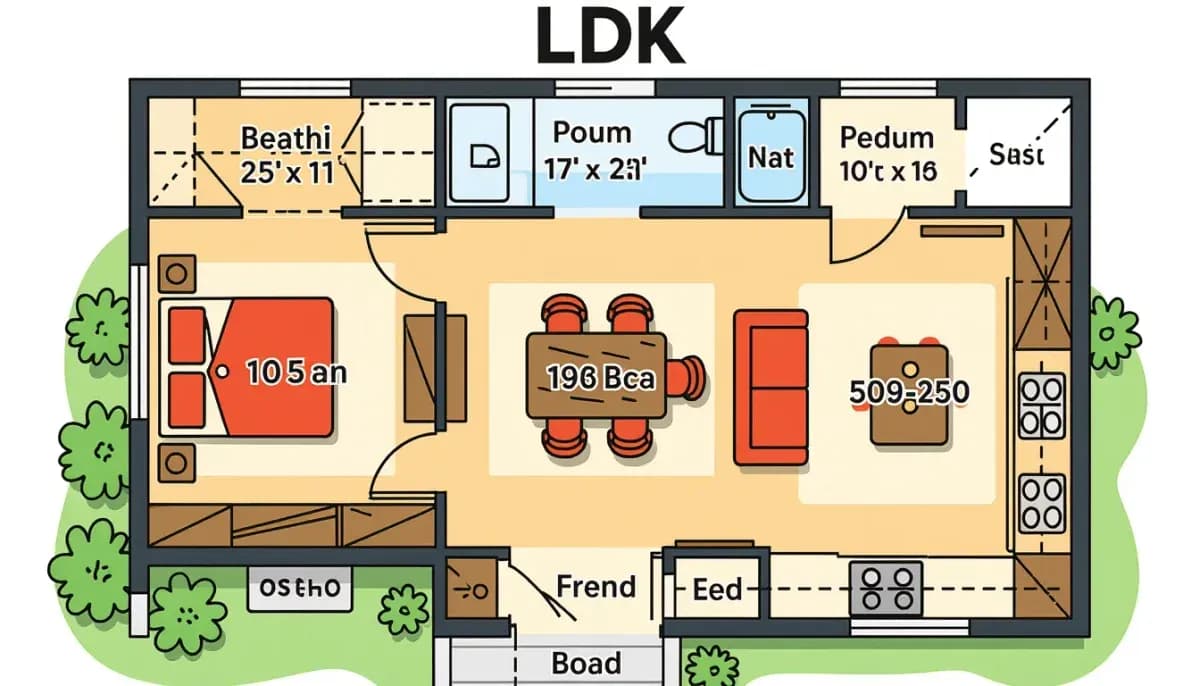
Learn to read Japanese property floor plans with confidence. Understand LDK notation, tatami measurements, floor plan symbols, and common room labels used in Japan real estate listings.
How to Read Japan Property Floor Plans: A Visual Guide
If you have ever browsed Japanese real estate listings and felt completely baffled by abbreviations like "2LDK" or symbols that look nothing like what you would find in a Western floor plan, you are not alone. Japan has its own unique system for describing and drawing property layouts, and once you understand the logic behind it, reading floor plans becomes straightforward. This guide will walk you through everything you need to know about reading Japanese property floor plans, from the famous LDK notation to traditional tatami measurements and common architectural symbols.
Whether you are renting an apartment in Tokyo or buying property in Japan as a foreigner, understanding floor plans is an essential skill that will help you make confident decisions and avoid costly mistakes.
Understanding the LDK Notation System
The most important thing to grasp about Japanese floor plans is the LDK notation system. This system was established by Japan's Ministry of Construction back in 1951 and remains unique to Japan. You will see it everywhere in real estate listings.
Here is how it breaks down:
- Number = The number of bedrooms or multipurpose rooms (excluding kitchen and living areas)
- L = Living room (a dedicated family/sitting space)
- D = Dining room (eating area)
- K = Kitchen (cooking space)
- DK = Combined dining and kitchen area
- LDK = Combined living, dining, and kitchen area
So when you see "2LDK," it means the property has two separate bedrooms plus one combined living, dining, and kitchen area. A "3LDK" has three bedrooms and a combined living/dining/kitchen space.
Additional letters you may encounter:
- S = Service Room or Storage (a room that does not meet Japan's legal requirements for a full bedroom)
- R = Room (a single multipurpose space, typically used in studio-style properties)
For example, a "2SLDK" has two bedrooms, one service room, and a living/dining/kitchen area.
Japanese Measurement Systems: Jo, Tatami, and Tsubo
Japan uses measurement systems that may feel unfamiliar to foreigners. Here is a quick guide:
| Unit | Abbreviation | Size | Typical Use |
|---|---|---|---|
| Jo / Tatami mat | 帖 or 畳 | ~1.62㎡ (Tokyo) | Room size in apartments |
| Square meter | ㎡ | 1㎡ | Total apartment size |
| Tsubo | 坪 | ~3.3㎡ | Land measurement |
Jo (帖): One jo is equivalent to one tatami mat, approximately 1.62 square meters in Tokyo. Note that tatami sizes vary slightly by region: Tokyo mats are 1.62㎡, Nagoya mats are 1.65㎡, and Kyoto mats are approximately 1.82㎡. A room listed as "6帖" has an area equivalent to six tatami mats, roughly 9.72 square meters.
Tsubo (坪): Primarily used for land measurement rather than apartment size. One tsubo equals approximately 3.3 square meters (or two tatami mats).
Square meters (㎡): Used for total apartment area and is the most straightforward measurement. Note that the listed square meterage often includes walls, balcony space, and closets, so the actual livable interior can be slightly smaller.
For a deeper dive into property types and what to look for when buying, check out our guide to types of properties in Japan.
What Each Room Label Means
| Symbol | Full Name | Description |
|---|---|---|
| LDK | Living/Dining/Kitchen | Combined shared living space |
| DK | Dining/Kitchen | Dining and cooking combined, no separate living room |
| K | Kitchen | Kitchen only |
| R | Room | Single multipurpose room (studio style) |
| S | Service Room | Room not meeting legal bedroom standards |
| WIC / WTC | Walk-in Closet / Walk-through Closet | Storage room you can enter |
| UB | Unit Bath | Prefab modular bathroom (tub, sink, toilet combined) |
| WC | Water Closet | Toilet-only room (separate from bath) |
| SB / SCL | Shoe Box / Shoe Closet | Entryway shoe storage |
| CF | Cushioned Flooring | Vinyl or cushioned floor type |
| PS | Pipe Space | Space for utility pipes (not usable) |
| MB | Meter Box | Utility meter access panel |
The Service Room (S) Explained
The "S" label is one of the most commonly misunderstood symbols on Japanese floor plans. A service room is a space that does not meet Japan's legal requirements for a full bedroom. For a room to be classified as a proper bedroom, it must satisfy three criteria:
- Window daylighting must equal at least 1/7 of the floor area
- Ventilation window must be at least 1/20 of the floor area
- Ceiling height must be a minimum of 2.1 meters
If a room fails any of these requirements, it cannot be marketed as a bedroom and is instead labeled S, Den, or Service Room. In practice, many people use these rooms as studies, home offices, or children's rooms. When evaluating a property, always check service rooms in person to see if they meet your needs.
Common Floor Plan Symbols and How to Read Them
Beyond the room labels, Japanese floor plans use a variety of symbols to indicate structural and architectural features. Here is what to look for:
Orientation: Japanese floor plans typically place south at the bottom of the diagram — the opposite of Western convention. This reflects the Japanese preference for south-facing rooms that receive maximum sunlight. Look for the compass arrow (N mark) to orient yourself.
Walls: Thick solid lines represent walls and structural elements. External walls are drawn thicker than interior partition walls.
Doors: Regular hinged doors appear as a quarter-circle arc indicating the direction of swing. Pay attention to which way a door opens, as this affects furniture placement.
Sliding doors (引き戸, hikido): Shown as rectangles with parallel lines. Sliding doors are very common in Japanese homes, especially for closets, because they save floor space.
Windows: Thin lines with a narrow rectangle indicate windows. Their position and size affect natural light and ventilation — very important factors given Japan's humid summers.
Balcony (バルコニー / ベランダ): Usually indicated as an extended area outside the main floor plan. Balconies are often used for laundry drying.
Washing machine space (洗濯機置き場): Often indicated with a square symbol or the notation "洗" near the bathroom.
Refrigerator space (冷蔵庫置き場): May be shown near the kitchen with a small rectangle labeled "冷."
For practical advice on what to check during a property visit, see our Japan property viewing tips for foreign buyers.
How to Assess a Floor Plan Layout
Once you can decode the symbols, the next step is evaluating whether a floor plan suits your lifestyle. Here are key things to consider:
Natural light and ventilation: In Japan, the ideal orientation is south-facing (南向き, minamimuki). Check which rooms face south and whether the floor plan shows windows on multiple sides for cross-ventilation. This matters greatly during Japan's rainy season and hot summers.
Room flow and privacy: Japanese floor plans often separate private zones (bedrooms) from social zones (LDK). Look at how you would move from the entrance through the property and whether bedroom doors open off a hallway rather than directly into the living room.
Storage: Japan's smaller living spaces compensate with efficient storage. Count the number of closets (押し入れ, oshi-ire), walk-in closets (WIC), and shoe storage areas (SB). A lack of storage is a common complaint in older Japanese apartments.
Bathroom layout: Japan typically separates the toilet (WC) from the bathroom/shower. Older properties may have a unit bath (UB) combining everything, while newer builds often have fully separate toilet, sink, and bathing spaces. This is a matter of personal preference and budget.
The entrance (玄関, genkan): Japan's traditional step-up entrance area is always shown at the front of the floor plan. The genkan is where you remove your shoes, and its size affects daily convenience.
Comparing Layout Types: Which LDK is Right for You?
| Layout | Ideal For | Typical Size |
|---|---|---|
| 1R / Studio | Singles, students | 20–30㎡ |
| 1K | Singles, young professionals | 25–40㎡ |
| 1DK | Singles or couples who cook often | 30–45㎡ |
| 1LDK | Couples, those needing a home office | 40–55㎡ |
| 2LDK | Small families, couples with guests | 55–75㎡ |
| 3LDK | Families with children | 70–100㎡ |
| 4LDK+ | Larger families | 90㎡+ |
1R vs 1K: A 1R (Room) is a pure studio where the kitchen, living, and sleeping area are all in one open space. A 1K has a separate kitchen of at least 4.5 tatami mats. If you cook regularly, the 1K gives you more separation from cooking smells.
1DK vs 1LDK: The DK (dining-kitchen) implies a space without a dedicated sitting area. An LDK adds that living room component, giving you more space to relax separately from cooking and eating. For couples or anyone spending significant time at home, an LDK is usually more comfortable.
For more details on the home buying process in Japan, including how to evaluate properties and make offers, see our complete step-by-step guide.
Special Features Unique to Japanese Floor Plans
Tatami Rooms (和室, washitsu)
Traditional tatami rooms appear frequently in older properties and some newer builds that retain Japanese design elements. On floor plans, these rooms are often shaded differently or labeled "和室." Tatami rooms have straw-and-rush grass flooring, slightly raised wooden borders (框, kamachi), and often include a tokonoma (decorative alcove) and built-in fusuma sliding doors.
If you are considering a property with tatami rooms, check their condition carefully — tatami mats need periodic replacement (every 5–10 years) and are sensitive to moisture.
Unit Bath (UB) vs Separate Bathroom
A unit bath (UB) is a fully prefabricated modular bathroom where the tub, shower, sink, and sometimes toilet are all in one sealed plastic unit. They are easy to clean and maintain but can feel compact. Many foreigners prefer the newer-style separate bath (セパレート, separate), where the toilet, vanity, and bath/shower are in different rooms.
Pipe Space (PS)
You will sometimes see a small area labeled "PS" (Pipe Space) on floor plans. This is not usable living space — it houses plumbing and utility pipes. Do not count it toward your usable area.
Practical Tools and Resources
Reading floor plans gets easier with practice. Several excellent resources can help you study Japanese real estate listings:
- PLAZA HOMES Floor Plan Guide — A bilingual reference for Japanese floor plan terminology
- Smart Relocate Floor Plan Glossary — Detailed breakdown of measurements and room types
- GaijinPot Apartment Layout Guide — Practical guide for foreign renters
- A-Realty Japanese Floor Plan Guide — 2025 updated layouts and pricing reference
For comprehensive housing information for foreigners in Japan, the Living in Nihon housing guide and For Work in Japan's housing infrastructure guide are excellent starting points.
If you are specifically looking at properties to purchase and want guidance on what to check before signing, Gaijin Buy House's property viewing checklist is highly recommended.
Key Takeaways for Reading Japanese Floor Plans
Understanding Japanese floor plans comes down to a few core concepts:
- LDK notation tells you the number of bedrooms and the configuration of shared living space
- Jo (帖) is the traditional room size unit — approximately 1.62㎡ per mat in Tokyo
- Service rooms (S) are spaces that do not meet legal bedroom standards but can still be functional
- South-facing layouts are preferred for light and warmth — check orientation carefully
- Separate toilet and bathroom is a desirable feature in modern Japanese properties
- Symbols for doors, windows, closets, and utilities follow standardized conventions
Before finalizing any purchase, review our Japan property buying checklist for foreign buyers to make sure you have covered all your bases. Understanding the floor plan is just one part of a thorough property evaluation — but it is a crucial one.
With this knowledge in hand, you will be able to browse Japanese real estate listings with confidence, accurately assess whether a property meets your needs, and communicate effectively with real estate agents even before visiting in person.

Originally from Vietnam, living in Japan for 16+ years. Graduated from Nagoya University, with 11 years of professional experience at Japanese and international companies. Sharing information about buying property in Japan for foreigners.
View Profile →Related Articles
Japan Property Grading: How Mansions and Buildings Are Evaluated
Understand Japan's property grading systems including seismic resistance grades (1-3), Housing Performance Indication (10 indicators), CASBEE, BELS, and building structure types RC/SRC — essential knowledge for foreign buyers of mansions and houses.
Read more →
Japan Building Age Categories: New Build vs Used Property Standards
Understand Japan's building age categories — kyu-taishin, shin-taishin, post-2000, and new build standards. Essential guide for foreigners buying property in Japan, covering seismic standards, depreciation, and what to check before buying.
Read more →
Japan Mixed-Use Properties: Residential and Commercial Combined
Complete guide to buying mixed-use residential and commercial property in Japan as a foreigner. Covers zoning laws, financing, investment returns, and the step-by-step buying process.
Read more →
Japan Garage Houses: Properties for Car Enthusiasts
Everything foreign car enthusiasts need to know about buying a garage house in Japan — built-in garage types, tax benefits, costs, design features, and how foreigners can purchase property with full ownership rights.
Read more →
Japan Penthouse and Luxury Apartment Guide
Complete guide to buying or renting a penthouse or luxury apartment in Japan as a foreigner. Covers prices, locations, legal rules, guarantor requirements, and top buildings in Tokyo and beyond.
Read more →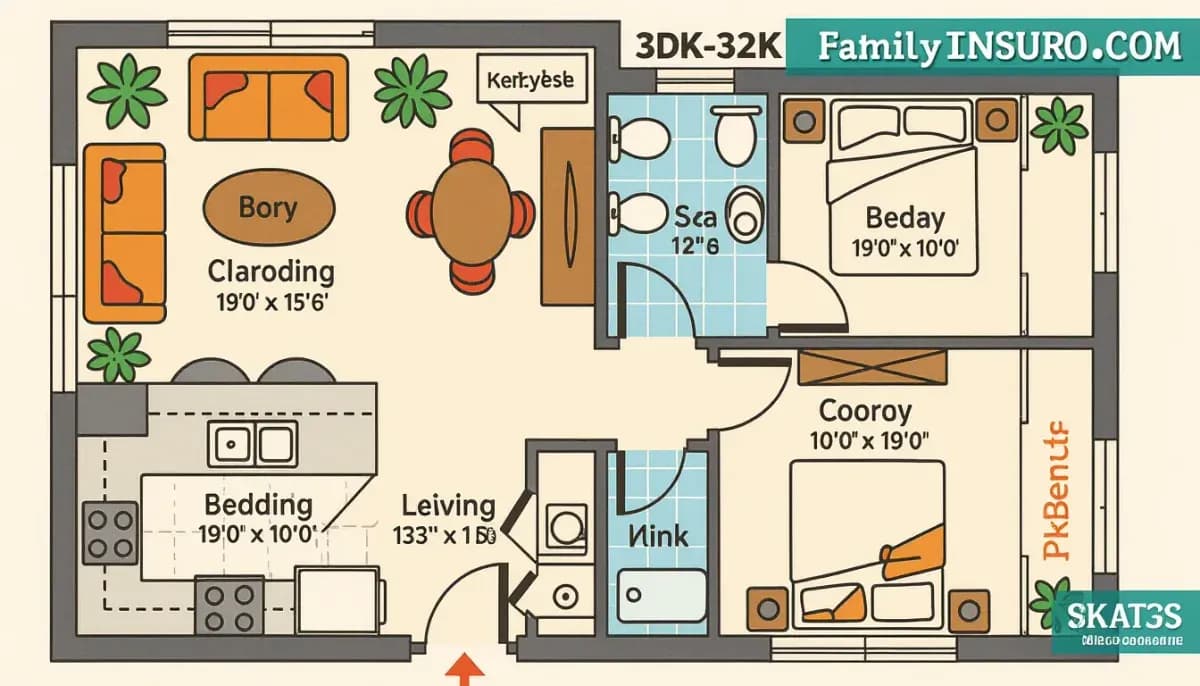
Japan Family Apartment Size Guide: Understanding 2LDK, 3LDK Layouts
Confused by 2LDK and 3LDK in Japanese apartment listings? Our complete guide explains apartment sizes, tatami measurements, rent costs, and tips for foreigners renting a family apartment in Japan.
Read more →