
Terrace Houses and Townhouses in Japan

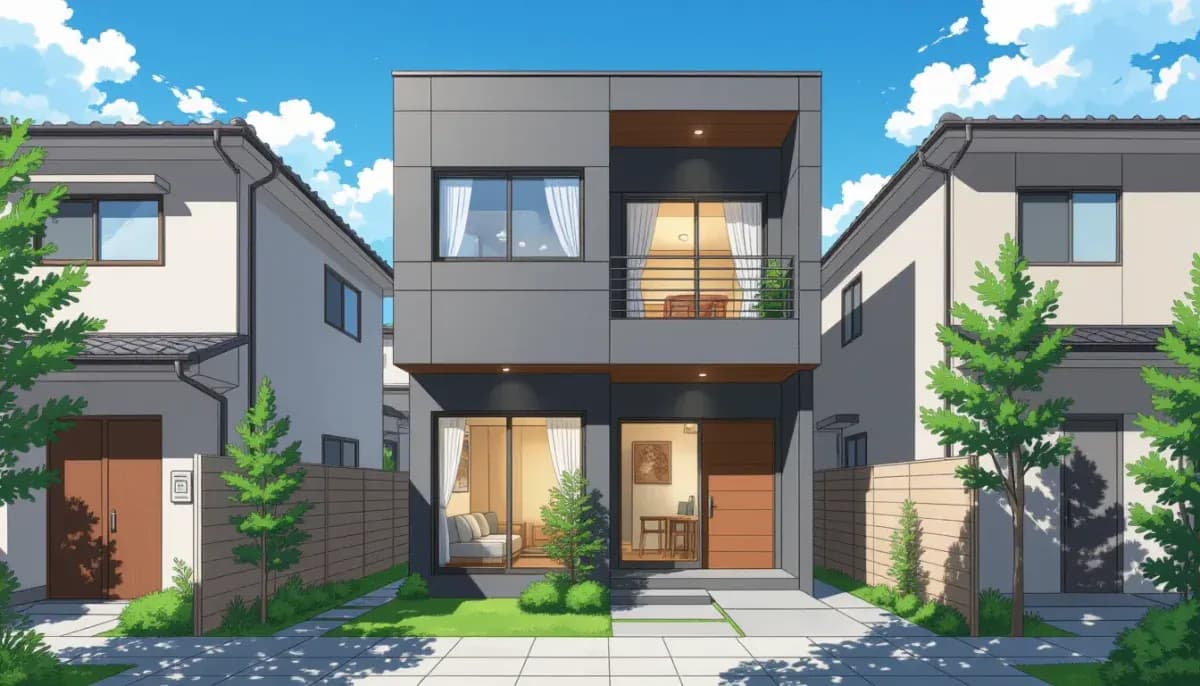
Complete guide to terrace houses and townhouses in Japan for foreigners. Learn about costs, buying vs renting, nagaya history, pros/cons, and tips for expats seeking Japanese row house living.
Terrace Houses and Townhouses in Japan: A Complete Guide for Foreigners
If you've been browsing Japanese real estate listings and stumbled across the term "terrace house" (テラスハウス), you may be wondering what makes it different from an apartment or a standard detached house. This guide covers everything foreigners and expats need to know about terrace houses and townhouses in Japan — from what they are and where to find them, to the pros, cons, costs, and how to buy or rent one as a non-Japanese resident.
What Is a Terrace House in Japan?
A terrace house (テラスハウス, terasu hausu) in Japan is a row of two or more housing units that share side walls but each have their own independent entrance directly from the street. Unlike apartment buildings (マンション or アパート), terrace houses have no shared staircases or common hallways — each home is truly self-contained.
Japan's official Statistics Bureau defines terrace houses as: "Buildings which consist of two or more dwelling units connected by walls but each having an independent entrance to the street." This classification separates them clearly from apartments, where residents share interior common spaces.
A townhouse (タウンハウス, taunhausu) is a similar concept but often refers to slightly larger, purpose-built multi-story row houses — common in new residential developments in suburban areas. In practice, Japanese real estate agents use the two terms somewhat interchangeably, though "terrace house" tends to describe older or smaller units and "townhouse" suggests a more modern development.
The traditional Japanese predecessor to both is the nagaya (長屋), a style of wooden row house from the Edo period. Nagaya were built as affordable multi-unit dwellings sharing walls, wells, and toilet facilities. While most were destroyed over the centuries by fires, earthquakes, and wartime bombing, surviving examples in neighborhoods like Yanaka (Tokyo), Osaka's Shimanouchi, and Kyoto are now treasured as cultural heritage — often converted into cafés, studios, or renovated rental units fetching ¥60,000–¥100,000 per month.
How Common Are Terrace Houses in Japan?
Terrace houses are notably rare compared to apartments and detached houses. According to Statista data derived from Tokyo Metropolitan Government surveys, only approximately 1% of Tokyo households lived in a terrace house as of 2015. Japan's overall housing stock is dominated by detached houses (~29.3 million units) and apartment-style buildings (~25 million units), with terrace and row houses forming a very small residual category.
This scarcity has two practical implications for foreigners:
- Availability is limited — you will not find as many listings as for standard apartments
- Prices can be relatively high for rent, though purchase prices vary greatly depending on age and location
For an in-depth look at how terrace houses fit into the broader Japanese property landscape, see our guide on Types of Properties Available in Japan.
Terrace House vs. Apartment vs. Detached House: Key Differences
| Feature | Terrace House / Townhouse | Apartment (Mansion/Apart) | Detached House (Ikkodate) |
|---|---|---|---|
| Shared walls | Yes (sides only) | Yes (all sides, floors, ceiling) | No |
| Private entrance | Yes (direct from street) | No (shared lobby/stairs) | Yes |
| Garden/outdoor space | Often a small patio or garden | Rare (balcony only) | Usually yes |
| Vertical neighbors | No | Yes (above and below) | No |
| Noise (vertical) | Very low | High concern | None |
| Noise (horizontal) | Moderate (shared side walls) | Moderate | None |
| Typical floors | 2–3 | 1 per unit | 2–3 |
| Pet-friendliness | More flexible | Often restricted | Most flexible |
| Supply in Tokyo | Very limited | Abundant | Limited (land prices) |
| Typical rent (Tokyo) | ¥150,000–¥400,000+/month | ¥80,000–¥250,000/month | ¥200,000–¥500,000+/month |
Terrace House Rental Prices in Japan
Renting a terrace house in Japan costs more than an equivalent-sized apartment, largely because of the added privacy and amenities. Here is a breakdown of typical monthly rents across major regions:
| Location | Monthly Rent Range |
|---|---|
| Central Tokyo (Shibuya, Shinjuku, Minato) | ¥250,000–¥400,000+ |
| Tokyo Mid-Ring (Nakano, Suginami, Meguro) | ¥150,000–¥250,000 |
| Tokyo Suburbs (Saitama, Chiba, Kanagawa) | ¥100,000–¥200,000 |
| Osaka (central areas) | ¥120,000–¥250,000 |
| Nagoya, Fukuoka, Sapporo | ¥80,000–¥180,000 |
| Rural / smaller cities | ¥40,000–¥100,000 |
Note that in addition to monthly rent, you should expect to pay:
- Key money (reikin): 0–2 months' rent (non-refundable gift to landlord)
- Deposit (shikikin): 1–2 months' rent (refundable minus cleaning/damage)
- Agency fee: 0.5–1 month's rent plus tax
- Guarantor / guarantee company fee: Around ¥10,000–¥30,000 initially
For a detailed breakdown of all upfront costs, refer to our article on Hidden Costs and Fees When Buying Property in Japan.
Buying a Terrace House in Japan as a Foreigner
One of the most important facts for foreign buyers: Japan imposes no nationality-based restrictions on property ownership. As a foreigner, you have exactly the same legal right to purchase a terrace house as a Japanese national. You do not need permanent residency or even a Japanese visa to buy real estate here.
Active listings on sites such as Real Estate Japan show a range of options, including:
- Nakano-ku, Tokyo — ¥14,800,000 / 44.59 m² / 2LDK / built 1981 / rental yield 7.90%
- Nakano-ku, Tokyo — ¥22,800,000 / 42.83 m² / 2DK / built 1982
- Taito-ku (Ueno), Tokyo — ¥797,250,000 / 53.87 m² / full building / newly built 2025
Older terrace houses (築古物件, chikufuru bukken) from the 1970s–1980s can be purchased at surprisingly low prices in central Tokyo — sometimes under ¥15 million — because of Japan's unique depreciation rules where wooden structures lose most legal value after 20–25 years. However, structural maintenance and earthquake-proofing (耐震補強, taishin hoko) should be investigated carefully for buildings pre-dating the 1981 earthquake code revision.
For the full process of purchasing property in Japan, see our Step-by-Step Home Buying Process for Foreigners. If you need financing, our guide on Mortgages and Home Loans for Foreigners in Japan explains your options.
Pros and Cons of Living in a Japanese Terrace House
Advantages
Privacy and independence Each unit has its own direct street entrance. There are no shared lobbies, elevator banks, or common corridors — you enter and leave your home just like in a fully detached house.
No vertical neighbors Unlike apartments where noise from the unit above is one of the most common complaints among Japan residents, a terrace house gives you full control over your floor and ceiling space. No footsteps at 3am, no ceiling vibrations.
Outdoor space Many terrace houses — especially those in residential neighborhoods or suburban developments — include a small front garden, rear patio, or rooftop terrace. Outdoor space is a rare luxury in Japanese urban living.
Family-friendly layout Multi-story terrace houses allow natural separation of space: living areas on the ground floor, bedrooms upstairs. This suits families with children or those working from home who need a dedicated study.
Pet flexibility Landlords of terrace houses tend to be more accommodating about pets than those of apartment buildings, where pet bans are common.
Disadvantages
Limited supply With terrace houses making up a tiny fraction of Japan's housing stock, you will have far fewer options to choose from compared to apartments. In some cities outside Tokyo and Osaka, dedicated terrace house listings may be nearly nonexistent.
Moisture and mold risk Ground-floor living in Japan's humid summers requires active moisture management. Keep interior humidity below 60% using dehumidifiers (除湿機), maintain at least 5–10 cm gaps between furniture and exterior walls, and ensure good ventilation.
Lateral sound transmission Shared side walls mean you can hear neighbors through the wall — especially in older wooden-frame buildings. Modern reinforced concrete townhouses perform better for sound insulation.
Fewer on-site amenities Large apartment complexes (マンション) often come with auto-locking security systems, parcel lockers, bike storage, and concierge services. Most terrace houses offer none of these.
Tips for Foreigners Renting or Buying a Terrace House
- Work with a specialist agency: Agencies like A-Realty specialize in helping English-speaking clients navigate contracts and negotiations. This is especially important because standard Japanese lease agreements are dense legal documents.
- Check earthquake compliance: Confirm whether the building meets the post-1981 earthquake-resistance standards (新耐震基準, shin taishin kijun). Older terrace houses built before this date may require structural retrofitting.
- Inspect for moisture: Before signing any lease or purchase contract, inspect corners, closets, and exterior-facing walls for mold or moisture stains — particularly on the north-facing sides.
- Negotiate key money: Key money (礼金) is sometimes negotiable or waived entirely, especially in areas with higher vacancy rates or for longer lease commitments.
- Understand the land situation: When buying, you may be purchasing only the building, not the land (借地権, shakuchiken — leasehold). Confirm whether the transaction includes land ownership (所有権, shoyuken) or leasehold rights, as this significantly affects resale value.
For guidance on the legal side of purchasing, see our article on Legal Procedures and Documentation for Japan Property Purchase. For visa-related considerations, see Visa and Residency Considerations for Property Buyers in Japan.
Traditional Nagaya: Japan's Heritage Row Houses
For those who love Japanese history and architecture, renovated nagaya (長屋) offer a unique living experience. These Edo-period row houses — typically single-story wooden structures with individual units of 9–15 m² — were the urban housing solution of their time, housing craftspeople, merchants, and laborers in cities like Edo (modern Tokyo), Osaka, and Kyoto.
Today, surviving nagaya clusters can be found in:
- Yanaka, Tokyo — one of the few Tokyo neighborhoods that survived WWII bombing largely intact
- Shimanouchi, Osaka — a pocket of preserved wooden townscape near the city center
- Nishiki-koji, Kyoto — heritage machiya and nagaya lining old mercantile streets
Renovated nagaya units available for rent typically range from ¥60,000–¥100,000/month and are popular among artists, designers, and foreigners seeking an authentic Japanese experience. Some are listed through platforms like Tokyo Portfolio which documents heritage housing types.
Where to Search for Terrace Houses in Japan
Here are the main platforms for finding terrace house listings:
- SUUMO (suumo.jp) — Japan's largest real estate portal; filter by 「テラスハウス」 in the property type field
- HOMES (homes.co.jp) — Similar to SUUMO with strong nationwide coverage
- Real Estate Japan (realestate.co.jp) — English-language platform with dedicated terrace house filters
- LIFULL (lifull.com) — Good for suburban and regional listings
For additional guidance on the Japanese property market and where foreigners can find the best opportunities, see:
- Living in Nihon — Comprehensive expat living guides for Japan
- For Work in Japan — Resources for foreigners building a life in Japan
- Gaijin Buy House — Dedicated resource for foreigners buying property in Japan
Final Thoughts
Terrace houses and townhouses occupy a fascinating niche in Japan's real estate landscape. They are rare enough to feel special, but common enough to remain accessible — especially in older urban neighborhoods and suburban developments. For foreigners who want the privacy of a house without the full cost and commitment of a large detached property, a terrace house can be an excellent middle ground.
The key challenges are supply constraints and the need to navigate Japanese-language contracts, but with the right agent and preparation, a terrace house in Japan is absolutely achievable for a foreign resident or buyer. Use the resources and guides linked throughout this article to build your knowledge before making any commitment.
For a broader overview of all property types available to foreigners in Japan, start with our Complete Guide to Buying Property in Japan as a Foreigner.

Originally from Vietnam, living in Japan for 16+ years. Graduated from Nagoya University, with 11 years of professional experience at Japanese and international companies. Sharing information about buying property in Japan for foreigners.
View Profile →Related Articles
Japan Property Grading: How Mansions and Buildings Are Evaluated
Understand Japan's property grading systems including seismic resistance grades (1-3), Housing Performance Indication (10 indicators), CASBEE, BELS, and building structure types RC/SRC — essential knowledge for foreign buyers of mansions and houses.
Read more →
Japan Building Age Categories: New Build vs Used Property Standards
Understand Japan's building age categories — kyu-taishin, shin-taishin, post-2000, and new build standards. Essential guide for foreigners buying property in Japan, covering seismic standards, depreciation, and what to check before buying.
Read more →
How to Read Japan Property Floor Plans: A Visual Guide
Learn to read Japanese property floor plans with confidence. Understand LDK notation, tatami measurements, floor plan symbols, and common room labels used in Japan real estate listings.
Read more →
Japan Mixed-Use Properties: Residential and Commercial Combined
Complete guide to buying mixed-use residential and commercial property in Japan as a foreigner. Covers zoning laws, financing, investment returns, and the step-by-step buying process.
Read more →
Japan Garage Houses: Properties for Car Enthusiasts
Everything foreign car enthusiasts need to know about buying a garage house in Japan — built-in garage types, tax benefits, costs, design features, and how foreigners can purchase property with full ownership rights.
Read more →
Japan Penthouse and Luxury Apartment Guide
Complete guide to buying or renting a penthouse or luxury apartment in Japan as a foreigner. Covers prices, locations, legal rules, guarantor requirements, and top buildings in Tokyo and beyond.
Read more →