
Shonan Area Beach Properties for Foreign Buyers

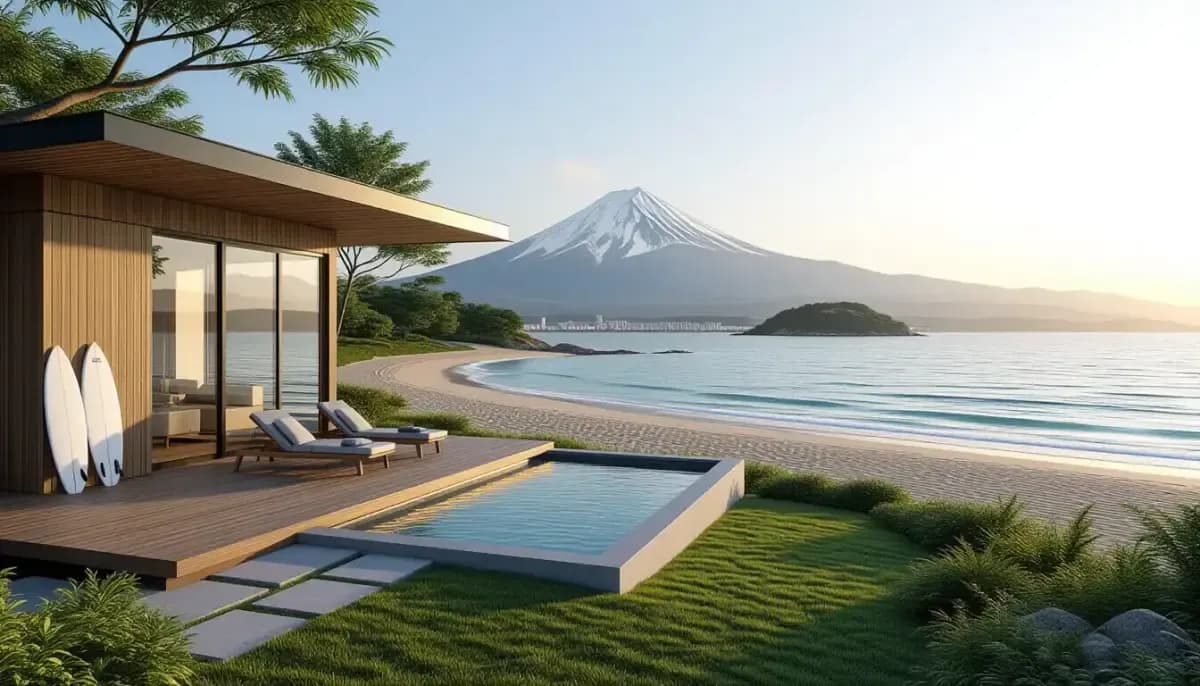
Everything foreign buyers need to know about purchasing beach property in Japan's Shonan coast — Kamakura, Hayama, Chigasaki, Fujisawa, Zushi. Prices, mortgages, process, and key tips.
Shonan Area Beach Properties for Foreign Buyers: Your Complete Guide
The Shonan coastline stretches along Sagami Bay in Kanagawa Prefecture, offering one of Japan's most coveted beachside lifestyles just an hour from central Tokyo. For foreign buyers, this region — spanning sun-soaked Chigasaki, historic Kamakura, prestigious Hayama, and laid-back Zushi — represents a rare opportunity: ocean views, mountain backdrops, world-class surf, and a genuine community feel, all within striking distance of the capital.
This guide covers everything you need to know about buying beach property in Shonan as a foreigner, from legal rights and neighborhood breakdowns to pricing data, mortgage options, and the step-by-step purchase process.
Can Foreigners Buy Property in Shonan?
Yes — and without any special restrictions. Japan imposes no nationality or residency requirements on real estate purchases. Foreigners enjoy identical freehold ownership rights to Japanese nationals for residential land, houses, and condominiums. No special permit or government approval is needed for standard coastal properties.
There is one caveat: properties adjacent to designated military zones or classified as agricultural/forestry land may require separate government approval before sale. These edge cases are uncommon in the Shonan market, but your agent or judicial scrivener should confirm during due diligence.
Purchasing property also does not grant a visa or residency status. Japan has no "golden visa" linked to real estate investment. Foreign buyers must independently maintain valid visa status. If you are a non-resident, you are also required to report the purchase to the Bank of Japan within 20 days of completing the transaction.
For a full breakdown of the legal framework, see our guide: Can Foreigners Buy Property in Japan? Legal Rights Explained.
Understanding the Shonan Region: Neighborhoods at a Glance
"Shonan" is a lifestyle concept as much as a geographic term. The area runs along Sagami Bay from Ōiso in the west to Hayama in the east, encompassing several cities and towns with distinct characters:
- Chigasaki — Japan's surf capital and Honolulu's sister city. Casual, laid-back vibe, beloved by creative freelancers and surfers. Strong expat community. More affordable than eastern Shonan.
- Fujisawa / Enoshima — Gateway to Enoshima Island. Excellent transport links (Odakyu line, Shonan-Shinjuku line). Japan's most liveable city in multiple quality-of-life rankings. Good mix of family homes and condos.
- Kamakura — Japan's "Coastal Kyoto." Ancient temples, the Great Buddha, and charming narrow streets just minutes from the beach. High demand, limited supply, strong price appreciation. Very popular with international buyers and Tokyo-based expats.
- Zushi — Quieter, cleaner waters, more residential. Strong US military community presence (near Yokosuka Naval Base). Solid value compared to Kamakura.
- Hayama — The most exclusive address on the Shonan coast. Home to the Imperial Family's seaside villa. Minimal commercial development, exceptional privacy, high-end housing stock. Highest per-m² appreciation in the entire region.
Shonan Property Prices: What to Expect in 2025
Prices in Shonan's coastal towns trade at a significant premium to the Kanagawa prefectural average (approximately ¥280,400/m²), reflecting strong demand and limited beachfront supply.
| Area | Land Price (¥/m²) | 5-Year Change | Best For |
|---|---|---|---|
| Kamakura City | ¥500,000 | +31.9% | Historic charm, global buyers |
| Fujisawa City | ¥500,000 | +19.2% | Families, daily convenience |
| Hayama Town | ¥478,787 | +48.3% | Prestige, privacy, ocean views |
| Zushi City | ¥412,500 | +20.9% | Value, US expat community |
| Hiratsuka City | ~¥260,000 | ~+10% | Budget-friendly, local feel |
| Chigasaki City | ~¥320,000 | ~+15% | Surf lifestyle, creative scene |
| Kanagawa Avg. | ¥280,400 | — | Reference |
Hayama's 48.3% land price increase over five years is the strongest in the entire Shonan area, driven by its ultra-limited inventory and consistent demand from Tokyo's wealthy. Kamakura and Fujisawa have also significantly outpaced inflation.
For broader context on regional pricing across Japan, see: Japan Real Estate Market Overview and Trends for Foreigners.
Types of Properties Available in Shonan
The Shonan market offers a diverse mix of property types, though supply is limited and quality varies widely:
Detached Houses (Ikkodate) — The most sought-after category, especially post-pandemic as remote workers seek garden space and larger interiors. Older wooden houses (1970s–1990s) can be found at lower prices but require earthquake compliance checks and potential renovation. Modern builds command ¥60–150M+ depending on size and proximity to the beach.
Vacation Homes / Villas — Shonan has a strong tradition of vacation properties (bessō). Some older villas in Hayama and Zushi come to market infrequently; condition varies greatly. These are less suited as primary residences but represent lifestyle assets.
Condominiums (Manshon) — More common in Fujisawa and near Kamakura Station. New builds near the sea or with ocean views can reach ¥80–120M. Older buildings offer better value but require scrutiny of repair fund reserves and building management quality.
Akiya (Vacant Homes) — A small number of older, unmaintained properties exist in less-central parts of Shonan. These can be acquired cheaply but require substantial renovation budgets and may have seismic compliance issues.
For a full overview of property categories in Japan, visit: Types of Properties Available in Japan: A Complete Guide.
Mortgages and Financing for Foreign Buyers
Financing is often the most complex part of the purchase process for foreigners in Japan. Here is what to expect:
Permanent residents (eijūsha): Treated nearly identically to Japanese nationals. Access to most major banks (MUFG, SMBC, Mizuho), Japan Housing Finance Agency's Flat 35, and regional banks. Down payments typically 10–20%.
Long-term visa holders (work visa, spouse visa, etc.): Access to select lenders. Suruga Bank is the most commonly used option for non-PR foreigners. SBI Shinseibank and some regional Kanagawa banks also lend to qualified applicants. Down payments typically 20–30%; minimum 1–3 years of residency in Japan often required.
Non-residents / overseas buyers: Domestic mortgage financing is effectively unavailable. Cash purchase is the standard route. Some international banks with Japan operations (Citibank, HSBC) have historically assisted high-net-worth clients.
The government-backed Flat 35 scheme, offered through Japan Housing Finance Agency, provides long-term fixed-rate mortgages up to 35 years. Eligibility for foreigners depends on income, visa status, and property condition (must meet modern seismic standards and size requirements).
For a detailed guide on financing options, see: Mortgages and Home Loans for Foreigners in Japan.
Transaction Costs: What You'll Pay Beyond the Asking Price
Budget an additional 8–12% of the purchase price for transaction costs. Here is a breakdown:
| Cost Item | Amount |
|---|---|
| Real estate agent commission | 3% of price + ¥60,000 + 10% consumption tax |
| Real Estate Acquisition Tax | 1.5–4% of assessed value (paid ~6 months after purchase) |
| Registration & License Tax | ~1.5–2% of assessed value |
| Judicial Scrivener fees | ¥100,000–¥200,000 |
| Stamp duty (on contract) | ¥5,000–¥600,000 (amount depends on price) |
| Building inspection | ¥50,000–¥100,000 (recommended) |
| Moving & misc. | ¥100,000–¥300,000 |
Ongoing annual costs include:
- Fixed Asset Tax (koteishisanzei): 1.4% of assessed value/year
- City Planning Tax (toshi keikakuzei): 0.3% of assessed value/year
- Condo fees (if applicable): Management ¥15,000–¥40,000/month + repair fund contributions
See full details in our guide: Hidden Costs and Fees When Buying Property in Japan and Property Taxes and Annual Costs of Owning Property in Japan.
The Buying Process: Step by Step
The end-to-end purchase process typically takes 60–90 days:
- Find a bilingual real estate agent — Essential for navigating Japanese-language documentation. Firms like KOKUA Real Estate (kokuarealestate.com) specialize in Shonan and are experienced with foreign buyers.
- Mortgage pre-approval (if financing) — Obtain a pre-approval letter from your target lender before making offers to strengthen your position.
- Property search and viewings — Work with your agent to identify suitable properties. Be prepared to move quickly in competitive areas like Kamakura and Hayama.
- Submit Letter of Intent (mōshikomi-sho) — Signals serious interest; not legally binding.
- Review Article 35 Important Matters Disclosure — Your agent must provide this document before contracts are signed. It covers all material facts about the property, legal restrictions, and condo rules. Have it translated.
- Sign the Sales Purchase Contract (baibai keiyaku-sho) — Pay 5–10% earnest money deposit. Contracts are in Japanese; translations are for reference only.
- Final loan approval (if financing)
- Closing (kessai) — Pay remaining balance. Ownership is transferred and registered at the Legal Affairs Bureau by a judicial scrivener.
For the complete step-by-step walkthrough, see: Step-by-Step Home Buying Process in Japan for Foreigners.
Key Due Diligence Points for Shonan Beach Properties
Seismic compliance: Japan revised its building code in June 1981 (and again with enhanced standards in 2000). Any building constructed before June 1981 must be verified against the "new seismic standard" (shin taishin kijun). Non-compliant buildings are typically unlendable by Japanese banks and may require costly retrofitting. This is especially relevant for older beach houses and vacation villas common in Shonan.
Coastal zone regulations: Properties within designated coastal preservation zones may have restrictions on reconstruction, extension, or modification. Confirm with your agent or municipal planning office whether any coastal setback rules apply.
Informal "gaijin ban" clauses: A small number of older condominium buildings have informal rules restricting resale to non-Japanese nationals. These are increasingly rare and legally questionable, but confirm with your agent before proceeding.
Flood and erosion risk: Low-lying areas near Chigasaki and Hiratsuka carry some flood risk. Check the municipal hazard map (hazan-zu), available from each city's official website.
Why Foreigners Choose Shonan
Beyond investment fundamentals, Shonan offers a lifestyle that is genuinely hard to replicate elsewhere:
- 1 hour from Tokyo by Shonan-Shinjuku or Tokaido lines — ideal for hybrid workers
- World-class surfing at Chigasaki, Kugenuma, and Katase beaches
- Mount Fuji views from Enoshima, Kamakura, and coastal roads on clear days
- Strong international community — particularly in Zushi (near Yokosuka Base), Kamakura, and Fujisawa
- Year-round outdoor lifestyle — beach in summer, hiking Kamakura's trails in autumn and spring
Post-pandemic, Shonan has emerged as one of Japan's fastest-appreciating residential markets precisely because this combination of accessibility and lifestyle quality is rare. As remote work normalizes, the "1 hour is fine" threshold continues to attract buyers who previously only considered inner Tokyo.
For more on buying in the greater Yokohama and Kanagawa region, read: Buying Property in Yokohama and Kanagawa as a Foreigner.
Useful Resources for Foreign Buyers
- Living in Nihon — Expat Life in Japan — Practical advice on settling in Japan, from housing to daily life
- For Work in Japan — Employment and Relocation — Guidance for working expats navigating Japan's job market and housing
- Gaijin Buy House — Buying Real Estate in Japan as a Foreigner — Community resource for foreign property buyers in Japan
- Housing Japan — Expat Buyer Resources — Bilingual agency blog with practical purchase guides
- Japan Handbook — Complete Property Buying Guide — Comprehensive overview of the legal and procedural framework
Final Thoughts
Shonan is one of the few places in the world where you can watch the sun rise over the Pacific from your deck, surf before work, and be in central Tokyo for a meeting by 9am. For foreign buyers who qualify financially and are committed to Japan for the long term, the Shonan coast represents an exceptional combination of lifestyle value, investment appreciation, and genuine community.
The legal framework is favorable, the process is manageable with the right advisors, and demand shows no signs of slowing. Start with a clear budget, engage a bilingual specialist agent, and give yourself the time to find the right property — because in Shonan, the right one is very much worth waiting for.
For legal procedures and documentation requirements, see: Legal Procedures and Documentation for Japan Property Purchase.

Originally from Vietnam, living in Japan for 16+ years. Graduated from Nagoya University, with 11 years of professional experience at Japanese and international companies. Sharing information about buying property in Japan for foreigners.
View Profile →Related Articles
Kanagawa New Development Projects and Infrastructure Guide
A complete guide to Kanagawa's new development projects and infrastructure for foreign property buyers. Covers Minatomirai, Kawasaki Arena City, Musashi-Kosugi, Kannai redevelopment, rail expansion, and property value outlook through 2030.
Read more →
Yokohama Rental Property Investment Analysis
Complete analysis of Yokohama rental property investment for foreign buyers. Covers district yields (4–6.5%), vacancy rates, rental benchmarks, financing requirements, and risk factors with data-driven comparisons to Tokyo and other Japanese cities.
Read more →
Hakone Resort Property Investment Guide for Foreigners
Complete guide to buying resort property in Hakone as a foreigner. Covers prices, legal rights, buying process, taxes, financing, and key due diligence tips for this popular Japanese mountain resort town.
Read more →
Kawasaki Property Guide: Commuter Town Between Tokyo and Yokohama
Complete guide to buying property in Kawasaki, Japan as a foreigner. Covers neighborhoods like Musashi-Kosugi, property prices, mortgage options, and step-by-step buying process.
Read more →
Yokohama Chinatown Area Property Guide
Complete guide to buying property in Yokohama's Chinatown area for foreigners. Covers neighborhood overview, property prices, rental yields, purchase process, and practical tips for foreign buyers in 2025.
Read more →
Kanagawa Suburban Property Guide for Foreign Families
Complete guide to buying suburban property in Kanagawa as a foreigner. Covers top family-friendly areas like Fujisawa, Aoba Ward, Atsugi, and Sagamihara, plus costs, mortgages, and the full purchase process.
Read more →