
Hakone Resort Property Investment Guide for Foreigners

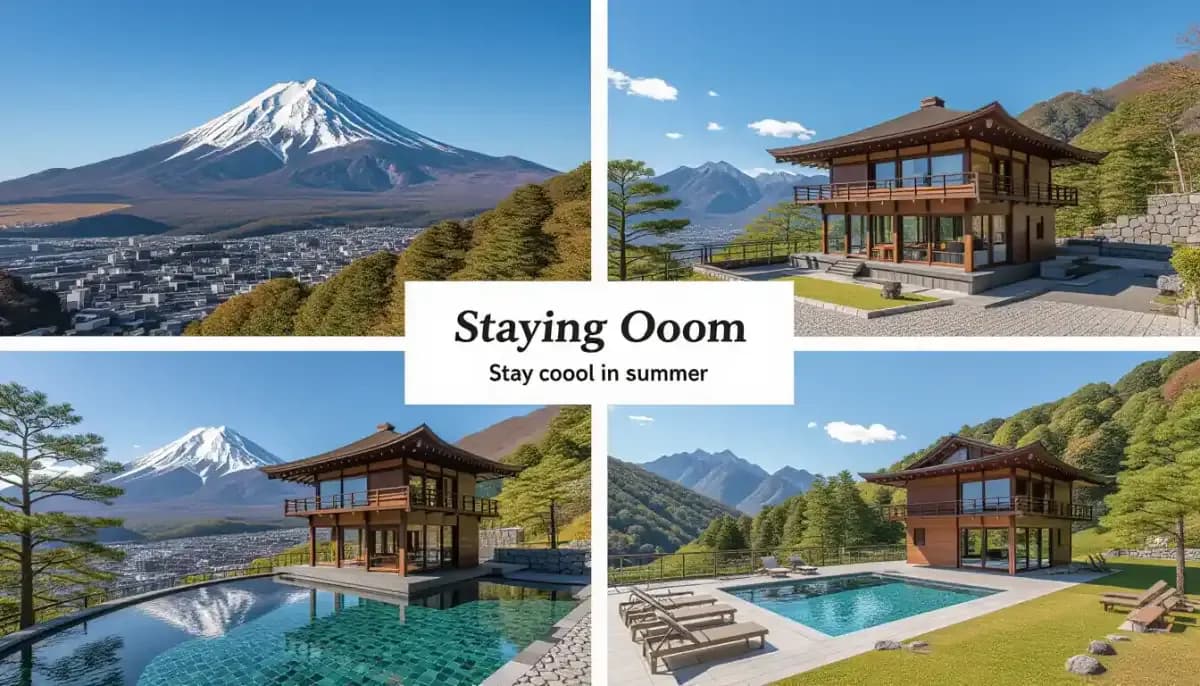
Complete guide to buying resort property in Hakone as a foreigner. Covers prices, legal rights, buying process, taxes, financing, and key due diligence tips for this popular Japanese mountain resort town.
Hakone Resort Property Investment Guide for Foreigners
Nestled in the mountains of Kanagawa Prefecture, just 90 minutes from Tokyo, Hakone is one of Japan's most beloved resort destinations. Famous for its therapeutic hot springs, sweeping views of Mount Fuji, Lake Ashi, and world-class open-air museums, Hakone attracts millions of visitors each year. For foreign investors, this popularity makes Hakone a compelling market for vacation home ownership and resort property investment. With no restrictions on foreign ownership and a surging interest from international buyers driven by the weak yen, now is an excellent time to understand how the Hakone property market works and what it takes to buy in as a foreigner.
This guide covers everything you need to know: market conditions, property types, pricing, the buying process, taxes, financing, and key due diligence points specific to resort areas.
Why Hakone? The Investment Case for Foreign Buyers
Hakone's appeal as an investment destination comes down to a combination of location, lifestyle value, and growing global demand.
Strong tourism fundamentals: Hakone is one of Japan's top domestic and international tourism destinations. The area draws visitors year-round — cherry blossoms in spring, cool mountain air in summer, autumn foliage, and winter snow views over Mt. Fuji. This consistent demand creates opportunities for short-term vacation rentals (within Japan's Minpaku regulations) as well as traditional long-term rentals.
Proximity to Tokyo: Located within the Greater Tokyo metropolitan area, Hakone is accessible via the Romancecar express train from Shinjuku in approximately 85 minutes, or by car via the Tomei Expressway. This makes it an easy weekend escape for Tokyo residents and an attractive market for second-home buyers based in the city.
Favorable exchange rates: The historically weak Japanese yen (as of 2024-2025) makes Hakone properties exceptionally affordable by international standards. Entry-level vacation cottages start around ¥6.8 million (approximately $45,000 USD), while even well-located properties with mountain views can be acquired for well under ¥50 million compared to equivalent resort markets elsewhere in Asia or Europe.
Rising land values: Japan's land prices rose for the third consecutive year in 2024, including in resort areas driven by surging tourism and foreign buyer interest. Foreign interest in Japanese resort properties is rising sharply, with the weak yen and booming inbound tourism cited as primary drivers.
For a comprehensive overview of the Japanese property market before focusing on Hakone, read our Complete Guide to Buying Property in Japan as a Foreigner.
Legal Rights: Can Foreigners Buy Property in Hakone?
Yes — and on exactly the same terms as Japanese citizens.
Japan imposes no restrictions on foreign ownership of real estate. There are no ownership quotas, no minimum purchase thresholds, no government approvals required based on nationality, and no requirement to have a visa or residency status. A non-resident foreigner can purchase land and buildings in Hakone with full freehold title.
Key legal points to understand:
- You will receive full ownership rights — freehold title to both land and buildings
- No residency or visa is required to purchase
- Property ownership in Japan does not grant you any visa, residency status, or path to permanent residency
- You will need a Japanese tax identification number (Individual Number/My Number) if you are a resident, or register for tax purposes through a tax representative if you are a non-resident
- Transactions over ¥30 million require notification under the Foreign Exchange and Foreign Trade Act (FEFTA) within 10 days of transfer
For a deeper look at the legal framework, see our guide on Foreigner Property Ownership Rights in Japan and Foreign Property Ownership Laws in Japan.
Additional background from Living in Nihon covers the everyday realities of living and owning property in Japan as a foreigner.
Hakone Property Market: Prices and Property Types
The Hakone market consists primarily of detached houses (kodate), holiday cottages (bessō), condominiums (mansion), and occasionally commercial properties such as ryokan, guesthouses, and small hotels.
Current Price Ranges
| Property Type | Location | Price (JPY) | Approx. USD | Size |
|---|---|---|---|---|
| 2LDK Holiday House | Ninotaira | ¥6,800,000 | ~$45,000 | 72.85 m² |
| 2LDK Apartment | Ninotaira | ¥12,800,000 | ~$85,000 | 80.89 m² |
| 2LDK Holiday House | Ninotaira | ¥10,800,000 | ~$72,000 | 69.53 m² |
| 3LDK House | Miyagino | ¥14,800,000 | ~$99,000 | 107.64 m² |
| 2LDK House | Ashinoyu | ¥15,000,000 | ~$100,000 | 72.87 m² |
| 2LDK New Build | Miyagino | ¥72,000,000–¥77,770,000 | ~$480,000–520,000 | 103 m² |
| 7LDK Large House | Sengokuhara | ¥52,500,000+ | ~$350,000+ | varies |
| Hotel/Ryokan | Sengokuhara | ¥240,000,000 | ~$1.6M | 424.92 m² |
| Luxury Villa | Gora | ¥290,000,000 | ~$1.9M | 297.82 m² |
Exchange rates approximate. USD figures based on ¥150/USD.
Popular neighborhoods within Hakone include:
- Hakone-Yumoto: The main gateway, well-connected by train, higher demand for rentals
- Gora: Elevated location, traditional ryokan district, premium prices
- Sengokuhara: More rural, larger plots, popular with international buyers
- Ninotaira: Quieter, more affordable, mix of holiday cottages and condos
- Ashinoyu: Near Lake Ashi, known for onsen and mountain views
Browse live listings on Real Estate Japan – Hakone to get a current picture of available properties and pricing.
The Buying Process Step-by-Step
Purchasing property in Hakone as a foreigner follows the standard Japanese real estate transaction process. Here is what to expect:
Step 1: Define Your Goals and Budget
Before searching, clarify your purpose: personal vacation home, rental investment, or both? This affects which areas and property types make sense, and whether you can obtain Japanese financing.
Step 2: Find a Bilingual Real Estate Agent
All property documents in Japan are in Japanese, and negotiations with sellers and their agents are conducted in Japanese. A bilingual agent who understands the resort market is essential. Look for agents with experience handling foreign buyer transactions in the Kanagawa/Hakone area.
Our guide to How to Find a Real Estate Agent in Japan as a Foreigner covers what to look for and how to evaluate candidates. The team at For Work in Japan also provides resources for foreigners navigating life in Japan.
Step 3: Property Search and Viewings
Your agent will identify properties matching your criteria. In Hakone, many older holiday houses (from the 1970s–1990s) are on the market — often at attractive prices, but requiring careful structural assessment. Pay attention to build date: properties built before 1981 may not meet modern seismic standards.
Step 4: Offer and Explanation of Important Matters
Once you find a property, submit a purchase offer. If accepted, the seller's agent prepares the Jūyō Jikō Setsumei-sho (Explanation of Important Matters) — a mandatory disclosure document covering legal status, zoning, encumbrances, building compliance, and more. Your agent reviews and explains this document before you sign.
Step 5: Contract and Earnest Money
Sign the Purchase and Sale Agreement and pay an earnest money deposit, typically 5–10% of the purchase price. This deposit is non-refundable if you withdraw without contractual cause.
Step 6: Due Diligence
Verify at the Legal Affairs Bureau (Hōmukyoku) that the title is clear of liens. Confirm zoning permissions, especially if planning short-term rentals. Consider commissioning a structural inspection for older properties.
Step 7: Closing and Registration
Transfer the remaining balance, pay closing costs, and register ownership at the Legal Affairs Bureau. Your judicial scrivener (shiho shoshi) handles the registration. Typical timeline from offer to closing: 8–10 weeks.
For more on the registration system, see Japan Property Registration System (Touki Seido) Explained.
Costs of Buying: What to Budget
Total closing costs in Japan typically run 8–12% of the purchase price on top of the property price itself.
| Cost Item | Rate / Amount |
|---|---|
| Real estate agent commission | 3% of price + ¥60,000 + 10% consumption tax |
| Judicial scrivener (registration) | ¥50,000–¥150,000 |
| Stamp duty on purchase contract | ¥10,000–¥60,000 (reduced rate through March 2027) |
| Registration & license tax (land) | 1.5% of assessed value (reduced to 1.5%) |
| Registration & license tax (building) | 2.0% of assessed value (reduced to 0.3%) |
| Property acquisition tax | 3% of assessed value (reduced, applicable within 3 years) |
| Building inspection (optional) | ¥50,000–¥150,000 |
Annual ownership costs:
- Fixed Asset Tax (Kotei Shisanzei): 1.4% of assessed value annually — see our detailed guide on Fixed Asset Tax in Japan Explained for Foreign Property Owners
- City Planning Tax (Toshi Keikaku Zei): up to 0.3% of assessed value (applies in urban planning zones)
- Condo/apartment management fees: ¥10,000–¥40,000+/month where applicable
For more detail on agent fees, read Real Estate Agent Commission in Japan: How Much and When.
Financing Options for Foreign Buyers
Financing is the most challenging aspect of buying Japanese real estate as a non-resident foreigner. Most major Japanese banks require permanent residency for mortgage eligibility. However, options exist:
Foreign-friendly lenders:
- SMBC Trust Bank PRESTIA: Offers mortgages to non-residents with income documentation
- Tokyo Star Bank: Has programs for foreign nationals
- Suruga Bank: Sometimes accessible with strong income documentation
- Flat 35: Government-backed fixed-rate program — generally requires residency but accessible with PR
Typical mortgage terms:
- Variable rate: 0.6–1.5% per annum
- Fixed rate: 1.5–3.0% per annum
- Term: up to 35 years
- Income requirement: typically ¥4 million–¥7 million annual income minimum
- Loan-to-value: 70–80% typical for foreign buyers
All-cash purchase: By far the simplest route for non-residents. Many foreign buyers of Hakone vacation properties purchase outright, particularly at entry-level price points.
For a detailed breakdown, see Japan Mortgage Requirements for Foreigners: Complete Guide.
Gaijin Buy House at gaijinbuyhouse.com offers resources specifically for foreigners navigating the Japanese property buying process.
Rental Income and Tax Considerations
Short-Term Rentals (Minpaku)
Japan's Minpaku Law (2018) allows short-term vacation rentals but caps them at 180 days per year nationally. Additional local regulations apply — Hakone (Ashigarashimo-gun) has its own rules that may be more restrictive. Crucially, many condominium buildings prohibit Minpaku entirely in their house rules.
If you plan to use your Hakone property as a vacation rental on platforms like Airbnb, verify:
- Municipal rules for the specific address
- Building management rules (for condos/apartments)
- Registration requirements (Minpaku registration must be obtained)
Rental Income Tax (Non-Residents)
- When corporate tenants pay rent to a non-resident landlord, 20.42% is withheld at source
- Individual tenants paying under ¥1.5 million/year are exempt from withholding
- Non-resident landlords must file a Japanese tax return to reconcile actual tax due
Capital Gains Tax
| Holding Period | Tax Rate |
|---|---|
| 5 years or less (short-term) | 39.63% |
| More than 5 years (long-term) | 20.315% |
Non-resident sellers face 10.21% withholding at closing, applied to the gross sale price (unless the seller files for exemption based on the gain). This withholding is reconciled on a final Japanese tax return.
For comprehensive tax planning, consult a Japanese tax accountant experienced with non-resident real estate investors. The Japan Visa Types for Property Buyers Guide also covers how your residency status affects your tax obligations.
Due Diligence: Resort Property Red Flags
Resort properties in Hakone have specific risks worth checking:
Seismic certification: Japan updated its Building Standards Act seismic requirements in 1981. Properties built before June 1981 may not meet modern earthquake safety standards. Always verify compliance, particularly for wooden structures (mokuzō) common in older Hakone holiday cottages.
Zoning and Minpaku permissions: Land use zoning in national park areas is complex. Confirm the property's zoning classification and what uses are permitted. Hakone falls within the Fuji-Hakone-Izu National Park, which imposes additional restrictions on renovation and new construction.
Leasehold (shakuchi-ken) properties: Some Hakone properties involve land leasehold arrangements — you own the building but lease the land. Carefully review remaining lease term, ground rent (chidai), and renewal conditions before purchasing.
Vacancy and akiya status: Older holiday cottages that have been unoccupied for years may have maintenance issues, pest problems, or unreported structural damage. Commission a professional inspection. Sites like Akiya Mart Hakone list vacant properties at discounted prices, which can represent value if condition issues are understood.
Inheritance tax exposure: Japan's inheritance tax applies to Japan-situs assets — including real estate — even for non-resident foreign nationals. Proper estate planning before purchase is advisable.
For broader research on Japan resort property investment trends, see Foreign Investment in Japan's Ski and Resort Properties and Is Japanese Real Estate a Good Investment?.
Is Hakone Right for You?
Hakone resort property suits foreign buyers who:
- Want a vacation home within easy reach of Tokyo
- Are interested in Japan's onsen culture and natural scenery
- Seek affordable entry into Japan real estate compared to global resort markets
- Are comfortable with long-term hold strategies (hold 5+ years to benefit from lower capital gains rates)
- Have either cash or existing financing relationships
It may be less suitable for buyers primarily seeking yield-driven rental investment, as Minpaku restrictions limit short-term rental days and professional property management in resort areas adds to costs.
That said, the combination of lifestyle value, strong tourism fundamentals, affordable pricing in international terms, and the weak yen make Hakone one of the most compelling resort property markets in Asia for foreign buyers in 2025.
For more reading on the broader Kanagawa market, see our related guide on the Best Neighborhoods in Yokohama for Foreign Property Buyers, and check the Japan Housing Market Forecast 2026 for macro trends affecting your investment timeline.

Originally from Vietnam, living in Japan for 16+ years. Graduated from Nagoya University, with 11 years of professional experience at Japanese and international companies. Sharing information about buying property in Japan for foreigners.
View Profile →Related Articles

Kanagawa New Development Projects and Infrastructure Guide
A complete guide to Kanagawa's new development projects and infrastructure for foreign property buyers. Covers Minatomirai, Kawasaki Arena City, Musashi-Kosugi, Kannai redevelopment, rail expansion, and property value outlook through 2030.
Read more →
Yokohama Rental Property Investment Analysis
Complete analysis of Yokohama rental property investment for foreign buyers. Covers district yields (4–6.5%), vacancy rates, rental benchmarks, financing requirements, and risk factors with data-driven comparisons to Tokyo and other Japanese cities.
Read more →
Shonan Area Beach Properties for Foreign Buyers
Everything foreign buyers need to know about purchasing beach property in Japan's Shonan coast — Kamakura, Hayama, Chigasaki, Fujisawa, Zushi. Prices, mortgages, process, and key tips.
Read more →
Kawasaki Property Guide: Commuter Town Between Tokyo and Yokohama
Complete guide to buying property in Kawasaki, Japan as a foreigner. Covers neighborhoods like Musashi-Kosugi, property prices, mortgage options, and step-by-step buying process.
Read more →
Yokohama Chinatown Area Property Guide
Complete guide to buying property in Yokohama's Chinatown area for foreigners. Covers neighborhood overview, property prices, rental yields, purchase process, and practical tips for foreign buyers in 2025.
Read more →
Kanagawa Suburban Property Guide for Foreign Families
Complete guide to buying suburban property in Kanagawa as a foreigner. Covers top family-friendly areas like Fujisawa, Aoba Ward, Atsugi, and Sagamihara, plus costs, mortgages, and the full purchase process.
Read more →