
Share House Investment in Japan: Opportunity and Guide

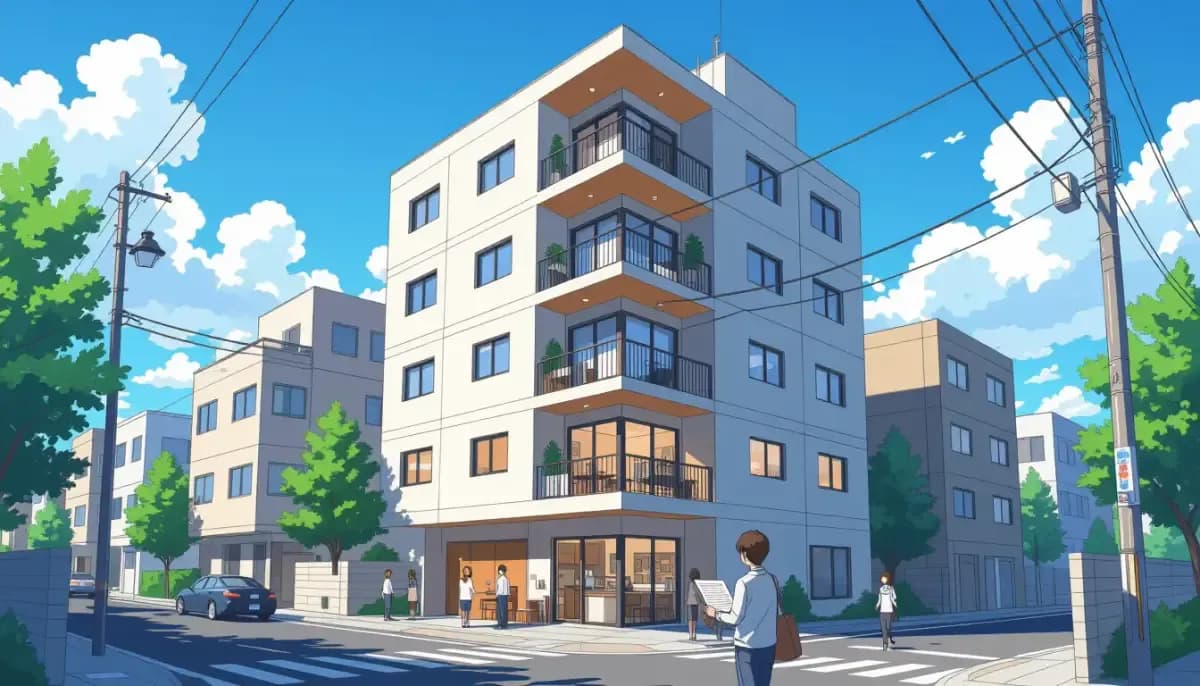
Learn how to invest in Japanese share houses as a foreigner. Covers yields (4–6% net), legal framework, buying process, management, and key risks — with 2025 market data.
Share House Investment in Japan: Opportunity and Guide for Foreign Investors
Japan's co-living market has caught the attention of institutional investors worldwide. In April 2025, global private equity giant Warburg Pincus acquired Tokyo Beta — Japan's largest share house portfolio — comprising 1,195 properties and 16,192 rooms with an occupancy rate exceeding 97%. If that level of institutional validation tells you anything, it's that share house investment in Japan is no longer a niche play. For foreign investors seeking steady rental income in one of the world's most stable property markets, share houses offer a compelling entry point.
This guide covers everything you need to know: what share house investment means, why demand is surging, how yields compare to conventional rentals, the legal framework for foreign buyers, and a step-by-step process for getting started.
What Is a Share House Investment?
A share house (シェアハウス, shea hausu) is a residential property where multiple tenants each rent a private room and share communal spaces — kitchen, bathrooms, living room, and often laundry facilities. As an investor, you own the building and collect rent from each room individually.
This is fundamentally different from a standard single-tenant rental:
| Feature | Standard Rental | Share House |
|---|---|---|
| Tenants per property | 1 household | 5–20+ individuals |
| Rental income | 1 rent payment | Aggregate of all rooms |
| Vacancy risk | All-or-nothing | Partial vacancy possible |
| Management complexity | Low | Higher (multiple tenants) |
| Typical gross yield | 3%–4% | 4%–6%+ |
| Utilities included | No | Yes (usually) |
| Initial tenant costs | High (key money, guarantor) | Low (¥0–¥50,000) |
| Target tenant | Long-term families | Young professionals, expats |
The share house model thrives in urban Japan where housing costs are high and demand for affordable, flexible accommodation is strong. For investors, the multi-tenant structure means a single vacancy does not eliminate income — if one of ten rooms sits empty, nine are still generating revenue.
Why Demand for Share Houses Is Growing
The supply-demand fundamentals behind share house investment are robust and multi-layered.
Affordability pressure in Tokyo and Osaka. In Tokyo's central wards (Minato, Shibuya, Chiyoda), a private room in a share house runs ¥60,000–¥100,000 per month, utilities included. A comparable 1R apartment in the same area easily costs ¥120,000–¥180,000 per month, plus separate utility bills. The initial cost gap is even more dramatic: moving into a Tokyo share house costs approximately ¥72,000 on average, versus ¥479,500 for a standard 1R apartment (including key money, deposit, and agency fees). That is a savings of over ¥407,000 — a figure that drives significant demand, especially from young workers and international residents.
The foreign worker and expat segment. Japan's workforce demographics are shifting. The country added record numbers of foreign workers in 2023 and 2024, many arriving without Japanese credit history, a guarantor, or the upfront capital required for traditional apartment leasing. Share houses require none of these — no guarantor, no key money, no agency fee — making them the default choice for newly arrived foreigners. As Japan continues to expand its visa programs to attract skilled foreign labor, this demand pool will only grow. For expat housing guidance, resources like Living in Nihon and For Work in Japan detail the practical challenges that push expats toward share houses.
Rising rents across Japan. Japan's residential rental market has seen rents climb roughly 5% annually over the past three years — a significant shift for a market historically known for flat or declining rents. This trend benefits existing share house investors immediately: as market rents rise, landlords can gradually adjust room rates, improving yield on properties acquired at lower price points.
Institutional validation. Warburg Pincus's acquisition of Tokyo Beta is not an isolated event — it signals that sophisticated institutional capital views Japan's share house market as a scalable, high-occupancy asset class. Retail investors benefit from the same underlying dynamics that attracted a global private equity fund.
Rental Yields: What to Expect
Understanding yield is critical before committing capital. Japan's real estate listings typically advertise gross yields — the annual rental income divided by the purchase price, before any expenses. Net yield, after property taxes, management fees, repairs, insurance, and vacancy, is what actually hits your bank account.
For share houses in major cities:
| City/Ward | Room Rate (private) | Gross Yield Estimate | Net Yield Estimate |
|---|---|---|---|
| Tokyo Central (Minato, Shibuya) | ¥70,000–¥100,000/room | 4.5%–6% | 3%–4% |
| Tokyo Mid-Ring (Shinjuku, Setagaya) | ¥55,000–¥85,000/room | 4%–5.5% | 2.8%–3.8% |
| Tokyo Outer Wards (Adachi, Nerima) | ¥45,000–¥68,000/room | 5%–7% | 3.5%–5% |
| Osaka | ¥40,000–¥75,000/room | 5%–7.5% | 3.5%–5.5% |
| Fukuoka | ¥35,000–¥60,000/room | 5.5%–8% | 4%–5.5% |
Worked example (from Wagaya Japan): A ¥50M property with 10 rooms renting at ¥120,000/month each, at 85% occupancy, produces gross annual income of approximately ¥12.24M — a gross yield of ~24.5% (this is an aggregate figure). After applying a conservative 30% expense ratio (management fees, taxes, repairs, insurance), net income falls to ~¥8.57M, or a net yield of approximately 4.15%. This remains competitive relative to Tokyo standard residential yields of 3.4%–5.4% for conventional units.
The key takeaway: always model net yield, not gross. Budget approximately 25%–35% of gross rental income for ongoing expenses.
For a broader view of Japan's investment landscape, Housing Japan's Real Estate Investment Guide is an excellent starting reference. You can also compare gross rental yields across Japan at Global Property Guide.
Legal Framework for Foreign Investors
Japan has one of the most foreigner-friendly property ownership frameworks in Asia.
No nationality restrictions. Any foreign national, regardless of visa status or country of origin, can legally purchase real estate in Japan. There is no reciprocity requirement. Property ownership does not grant residency rights, but it also does not require them.
Financing options. Non-resident investors typically cannot access Japanese bank mortgages and must purchase with cash. Residents with stable income may qualify for mortgages through Prestia (SMBC Trust Bank), Tokyo Star Bank, or AEON Bank — though lenders require 20%–50% down payment and proof of income. Without permanent residency, expect limited mortgage access.
Acquisition costs. Budget 6%–10% of the purchase price for total acquisition costs:
- Real estate agent commission: 3% of purchase price + ¥60,000 + consumption tax
- Real estate acquisition tax: 3%–4% of assessed value (payable a few months after purchase)
- Registration and license tax: ~0.4%–2%
- Judicial scrivener (司法書士) fee: ¥100,000–¥200,000
- Stamp duty, administrative fees: relatively minor
Annual holding costs. Once you own the property:
- Fixed asset tax (固定資産税): ~1.4% of assessed value annually
- City planning tax (都市計画税): ~0.3% in designated urban areas
- Building insurance: varies; earthquake insurance recommended given Japan's seismic risk
Tax on rental income. Non-resident investors pay a flat 20.42% withholding tax on gross Japanese-source rental income. Residents pay progressive income tax rates. Japan has tax treaties with many countries to prevent double taxation — consult a tax professional in your home country before investing.
2026 registry update. From April 2026, new property owners must disclose nationality in the real estate registry. This is a transparency measure only — it imposes no additional restrictions on purchase or ownership rights.
For detailed guidance on the buying process, see our complete guide: Step-by-Step Home Buying Process in Japan for Foreigners and the full overview of Legal Procedures and Documentation for Japan Property Purchase.
Step-by-Step Guide to Buying a Share House as an Investment
Step 1: Define your investment parameters. Set your budget, target yield, and preferred city. Tokyo offers liquidity and strong demand but higher entry prices. Osaka and Fukuoka offer better gross yields with slightly higher vacancy risk. Decide whether you want to self-manage remotely or hire a property management company.
Step 2: Engage a bilingual real estate agent. For foreign investors, a bilingual agent is not optional — it is essential. Look for agents experienced with investment properties and with foreign clients. The standard commission is 3% of purchase price + ¥60,000 + tax, paid at closing. Get unofficial pre-approval from any lender before making offers, even if you plan to pay cash.
Step 3: Identify target properties. Search for existing share houses already operating with tenants in place — these come with verified occupancy data. Alternatively, identify a suitable building and convert it to a share house model (requires renovation and licensing knowledge). Evaluate the number of rooms, current occupancy, rent roll, location relative to transit, building age, and structure type (wood vs. concrete).
Step 4: Due diligence. Review the rent roll in detail. Calculate net yield using your actual expense estimates, not the seller's projections. Check building inspection reports, confirm no major repairs are pending, and verify property tax records. Engage a judicial scrivener for title verification.
Step 5: Make an offer and sign the purchase agreement. Offers are typically accompanied by a ¥100,000–¥500,000 earnest deposit. Once accepted, you sign a purchase agreement and pay 10%–20% of the purchase price as a deposit.
Step 6: Close the transaction. Settlement typically occurs 60–90 days after the purchase agreement. The judicial scrivener handles title transfer registration. Final payment, all fees, and taxes are settled at this stage.
Step 7: Set up management. Unless you are based in Japan, hire a property management company. Management fees range from 5%–15% of collected rent. For share houses, specialized operators exist — they handle tenant screening, contract administration, shared space maintenance, and turnover. This is a non-negotiable expense for overseas investors.
For an overview of property management options, see our guide: Property Management for Overseas Owners in Japan.
Risks and How to Mitigate Them
Occupancy risk. Share houses in Tokyo and Osaka (particularly near train stations) maintain strong occupancy. Tokyo Beta's 97%+ rate is exceptional but achievable at the portfolio level. Individual properties in outer areas or regional cities carry higher vacancy risk. Mitigate by targeting properties within a 10-minute walk of major train stations.
Net vs. gross yield gap. The difference between advertised and actual yield is often 30%–40% of gross income. Never rely solely on seller-provided yield figures. Build your own model using verified rent rolls and conservative expense assumptions.
Management complexity. Multiple tenants mean multiple points of friction — turnover, disputes, maintenance requests. Professional management is the solution, but it costs 8%–15% of rental income. Factor this in from the start.
Building depreciation. Most share houses are 2-story wooden detached buildings (木造). In Japan, wooden buildings depreciate to zero over 22 years for tax purposes — though the underlying land retains value. Older buildings may carry deferred maintenance costs. Concrete/RC buildings depreciate over 47 years and are more durable but command higher purchase prices.
Currency risk. For non-JPY investors, the weak yen has been a tailwind for foreign buyers in recent years. It also means rental income, when repatriated, is subject to currency fluctuation. If you are holding for the long term, this effect smooths out; if you need to repatriate income regularly, budget for hedging costs or volatility.
Regulatory change. Japan's real estate regulations for foreign owners have been stable. The 2026 registry disclosure requirement is the most recent change and is administrative only. Monitor policy developments, particularly any future restrictions on short-term rentals that might affect adjacent investment strategies. For related context, see our guide on Short-Term Rentals and Airbnb (Minpaku) in Japan for Foreigners.
Share Houses vs. Other Japan Investment Options
If you are weighing share house investment against other strategies:
| Strategy | Yield Potential | Entry Cost | Complexity | Liquidity |
|---|---|---|---|---|
| Share house | 4%–6% net | ¥20M–¥80M | High | Moderate |
| Standard rental apartment | 3%–5% net | ¥15M–¥60M | Low | Moderate |
| Short-term rental (Minpaku) | 5%–10% gross | ¥10M–¥40M | Very high | Moderate |
| J-REIT (indirect) | 3%–5% dividend | ¥1,000+ | Very low | High |
| Commercial property | 4%–7% net | ¥50M+ | High | Low |
J-REITs (Japanese Real Estate Investment Trusts) offer the lowest barrier to entry and highest liquidity — you can buy shares on the Tokyo Stock Exchange starting from about ¥1,000. Japan has approximately 58 listed J-REITs with roughly ¥22.8 trillion in AUM. They are a useful way to gain Japan real estate exposure before committing to direct ownership. See our guide: J-REITs and Indirect Real Estate Investment in Japan for Foreigners.
For overseas investors who prefer a hands-off approach, Gaijin Buy House provides practical guidance on property purchase and management for foreigners.
For broader investment context, see our complete overview of Japan Real Estate Investment for Foreigners and our article on Rental Property Investment in Japan for Foreign Landlords.
Getting Started: Key Resources
Foreign investment in Japan's real estate market hit JPY 2.3 trillion ($15.7B USD) in 2024 — up 12% year-over-year — with foreigners now accounting for 27% of all property transactions. The share house segment, with its institutional-grade occupancy rates and multiple tenant income streams, is increasingly central to that activity.
If you are serious about share house investment in Japan, your first steps should be:
- Research the market in your target city (Tokyo, Osaka, Fukuoka are most accessible for foreign investors)
- Engage a bilingual real estate agent with investment property experience
- Consult a Japanese tax advisor before committing capital
- Model net yield carefully — gross yield figures are for reference only
- Budget 6%–10% for acquisition costs and 25%–35% of gross rent for ongoing expenses
- Plan for professional property management from day one
The combination of strong tenant demand, rising rents, no nationality restrictions, and growing institutional interest makes Japan's share house market one of the more compelling alternative residential investment opportunities available to foreign buyers today.
For a comprehensive introduction to property ownership in Japan, start with our guide: Complete Guide to Buying Property in Japan as a Foreigner.
Sources: Warburg Pincus — Tokyo Beta Acquisition (April 2025) | Wagaya Japan — Gross vs. Net Yield | Realestate.co.jp — Share House vs. Apartment Cost Comparison | Global Property Guide — Japan Rental Yields

Originally from Vietnam, living in Japan for 16+ years. Graduated from Nagoya University, with 11 years of professional experience at Japanese and international companies. Sharing information about buying property in Japan for foreigners.
View Profile →Related Articles

Japan Rental Market Trends and Forecast for Investors
Comprehensive analysis of Japan rental market trends for foreign investors: occupancy rates, rental yields by city, 2025-2026 forecasts, and investment strategies for foreign landlords.
Read more →
Insurance Guide for Rental Property Owners in Japan
Complete insurance guide for rental property owners in Japan. Learn about fire insurance, earthquake coverage, landlord liability, and how to protect your investment as a foreign landlord.
Read more →
Corporate Rental Demand in Japan: A Strategy for Investors
Discover how corporate rental demand in Japan creates stable, high-yield investment opportunities. Learn where demand concentrates, realistic yields, and how to attract corporate tenants.
Read more →
Rental Property Maintenance Obligations for Japan Landlords
A complete guide to landlord maintenance obligations in Japan, covering the Civil Code, Genjyo Kaifuku rules, tenant vs landlord responsibilities, and practical tips for foreign property owners.
Read more →
Japan Rental Property Vacancy Rate Analysis by Area
Comprehensive analysis of Japan's rental property vacancy rates by region. Compare Tokyo's 3% vacancy vs rural Japan's 21%. Essential data for foreign renters and investors in 2025.
Read more →
Japan Rent Guarantee Company System Explained
Understand Japan's rent guarantee company (hoshogaisha) system — how it works, fees, top companies for foreign tenants, and what every foreign landlord needs to know to protect rental income.
Read more →