
Seismic Retrofitting Options for Older Homes in Japan

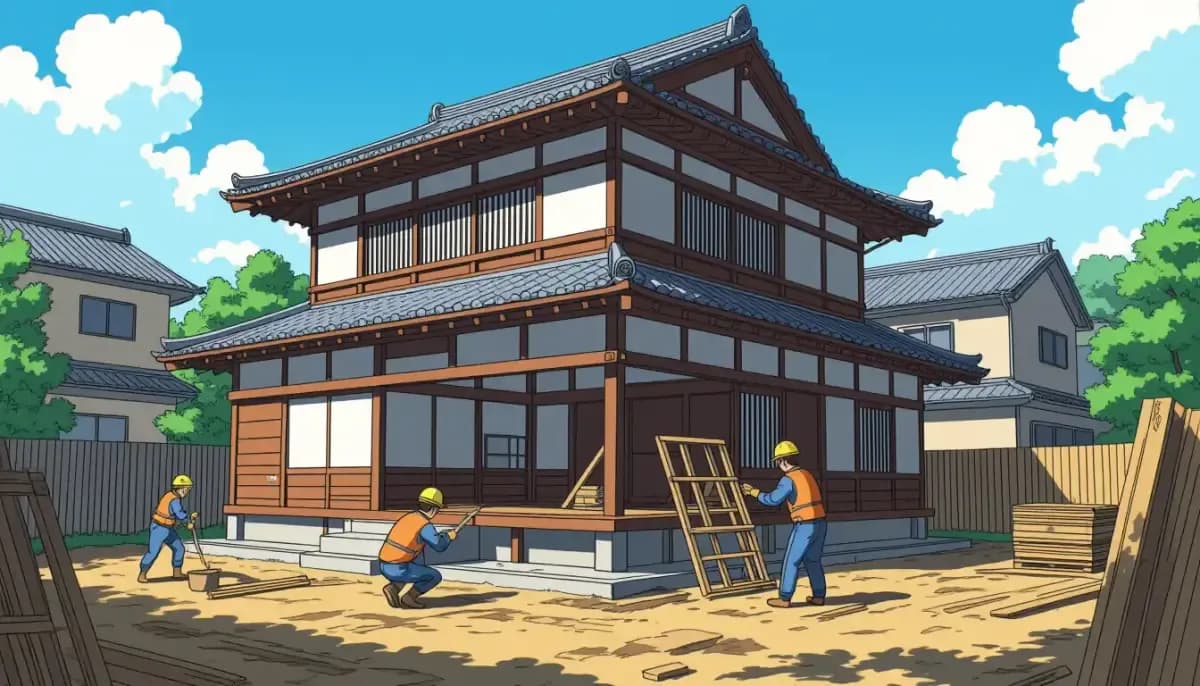
Learn about seismic retrofitting options for older homes in Japan: costs, government subsidies up to ¥3M, tax incentives, and step-by-step process for foreign buyers.
Seismic Retrofitting Options for Older Homes in Japan: A Complete Guide for Foreign Buyers
Japan is one of the most seismically active countries in the world, experiencing thousands of earthquakes every year. For foreigners buying older Japanese properties — whether an akiya vacant home, a kominka farmhouse, or a pre-1981 urban house — understanding seismic retrofitting is not just smart; it could be life-saving.
This guide explains what seismic retrofitting is, why it matters for older homes, what your options are, how much it costs, and what government subsidies are available to help you cover the expense.
Why Seismic Retrofitting Matters for Older Homes in Japan
Japan's modern earthquake resistance building codes were dramatically strengthened in 1981 (and again in 2000). Homes built before these revisions are referred to as kyuutaishin (旧耐震 — old seismic standards) properties. These older structures were not designed to withstand the magnitude and frequency of earthquakes that modern buildings must endure.
The data speaks for itself. During the devastating 2016 Kumamoto Earthquake, structural collapse rates varied sharply by construction era:
| Construction Era | Approximate Collapse Rate |
|---|---|
| Pre-1981 (old standards) | 28.2% |
| 1981–2000 (new standards) | 8.7% |
| Post-2000 (enhanced standards) | 2.2% |
| Highest seismic grade buildings | Only 12.5% damaged |
If you are purchasing or already own an older Japanese home, retrofitting is one of the most important investments you can make. The Japanese government has set an ambitious national target: 95% earthquake resistance nationwide by 2025 and the elimination of insufficient housing stock by 2030.
For a deeper overview of Japan's earthquake preparedness culture and what it means for homeowners, see our Earthquake Preparedness Guide for Japan Homeowners.
Understanding Japan's Seismic Building Standards
Before diving into retrofitting options, it helps to understand Japan's three key building code eras:
Pre-1981: Old Seismic Standards (旧耐震)
Homes built before June 1, 1981, were constructed under old codes that required only moderate resistance to moderate earthquakes. These buildings are the primary candidates for retrofitting.
1981–2000: New Seismic Standards (新耐震)
The revised Building Standards Law enacted in 1981 required structures to withstand a major earthquake without collapsing. However, connection details between structural elements were still relatively weak.
Post-2000: Enhanced Standards (2000年基準)
A further revision in 2000 addressed the weaknesses found after the 1995 Great Hanshin Earthquake, particularly improving foundation design and the way structural joints are fastened.
When buying any used property in Japan, always check which era it falls into. For more on comparing new vs. used properties, see our Japan New Build vs Used Property: Complete Comparison Guide.
Types of Seismic Retrofitting Methods
There is no single solution for seismic retrofitting. The right approach depends on your property type, budget, and structural condition. Here are the main methods used in Japan:
1. Internal Bracing (内部補強)
The most common method for wooden homes involves adding diagonal bracing (筋交い — sujimai) inside walls. Workers open up wall sections, add new structural members, and then re-close the wall. This strengthens the building's resistance to lateral forces during an earthquake.
Cost estimate: ¥500,000 – ¥3,000,000 depending on scope
2. External Steel Frame Retrofitting (外付け鉄骨フレーム)
An external steel frame is attached to the building's exterior without needing to disturb interior living spaces. This is popular for occupied homes or properties where internal renovation is not practical.
Cost estimate: ¥2,000,000 – ¥6,000,000
3. Foundation Reinforcement (基礎補強)
Many pre-1981 homes lack adequate concrete foundations or have foundations that have deteriorated. Reinforcing or replacing the foundation is often a prerequisite to other retrofitting work.
Cost estimate: ¥1,000,000 – ¥4,000,000
4. Base Isolation Systems (免震装置)
Dampers and isolation devices are installed between the building and its foundation, allowing the structure to move independently of ground shaking. This is more common in apartment buildings but can be applied to detached homes.
Cost estimate: ¥5,000,000 – ¥15,000,000+
5. Seismic Dampers (制振装置)
Damping devices installed within walls absorb and dissipate earthquake energy, reducing structural movement. These can be combined with internal bracing for enhanced protection.
Cost estimate: ¥1,500,000 – ¥5,000,000
6. Plywood Sheathing (合板耐力壁)
A cost-effective technique for wooden homes: plywood panels are nailed to the structural frame to create shear walls. Research has shown that plywood and common nails can achieve equivalent performance to specialist steel connectors in low-rise timber frame construction.
Cost estimate: ¥300,000 – ¥1,500,000
For context on renovation budgets more broadly, refer to our Japan Home Renovation Cost Guide: What to Budget For.
Government Subsidies and Financial Incentives
Japan's national and municipal governments actively subsidize seismic retrofitting. Available support varies by location, but the programs are widely accessible even to foreign homeowners.
National-Level Support
The Act on Promotion of Seismic Retrofit of Buildings (enacted 1995, revised multiple times) is the legal foundation for Japan's retrofitting promotion. Under national frameworks:
- Income Tax Deduction: Up to 10% of construction costs, capped at ¥250,000 per year, can be deducted from income tax for certified seismic retrofitting work.
- Fixed Property Tax Reduction: Homes that undergo qualifying retrofitting work receive a temporary reduction in fixed asset tax. This is typically a 50% reduction for 1 year after completion.
- Earthquake Insurance Discount: Retrofitted homes often qualify for reduced premiums on earthquake insurance (jishin hoken).
Municipal Subsidy Programs
Most Japanese cities and towns offer subsidy programs for seismic diagnosis and retrofitting:
| Support Type | Typical Coverage |
|---|---|
| Seismic Diagnosis Subsidy | 2/3 of diagnosis cost (cap ~¥60,000) |
| Retrofitting Subsidy | Up to 50% of work cost |
| Maximum Grant Amount | ¥1,000,000 – ¥3,000,000 |
| Eligible Work | Structural reinforcement, foundation, roof |
From 2025, wooden homes built using traditional post-and-beam (木造軸組) construction between June 1981 and May 2000 are newly eligible for these subsidies — expanding the pool of properties that qualify.
For more on property taxes and annual costs, see our guide on Fixed Asset Tax in Japan Explained for Foreign Property Owners.
Real-World Cost Example: Kyo-Machiya Seismic Retrofit
A practical example comes from a seismic retrofitting project on a Kyoto-style machiya townhouse (京町家). See our Kyoto Machiya (Traditional Townhouse) Buying Guide for Foreigners for more on these historic properties.
The financial plan for the project broke down as follows:
| Funding Source | Amount |
|---|---|
| "Machi no Takumi Jigyo" Municipal Subsidy | ¥1,200,000 |
| Japan Housing Finance Agency (JHF) Renovation Loan | ¥8,000,000 |
| Owner's Personal Funds | ¥800,000 |
| Total Project Cost | ¥10,000,000 |
The JHF renovation loan came with an interest rate of 1.13% annually over 20 years, resulting in a monthly repayment of approximately ¥37,257 — a manageable amount for a comprehensive seismic renovation of a historic home.
For homeowners aged 60 or older, the JHF also offers a special repayment scheme where only interest is paid monthly (at approximately ¥5,200/month at 0.78% interest), with the principal repaid as a lump sum by heirs.
You can find more details on available mortgage and loan options in our Japan Mortgage Requirements for Foreigners: Complete Eligibility Guide.
The Retrofitting Process: Step by Step
If you decide to proceed with seismic retrofitting, here is what to expect:
Step 1: Seismic Diagnosis (耐震診断)
Before any work begins, hire a licensed architect or structural engineer to conduct a seismic diagnosis. This assessment identifies your home's vulnerabilities and recommends what work is needed. Apply for a municipal diagnosis subsidy to offset this cost.
Step 2: Subsidy Application
Submit your subsidy application to your municipal office before starting work. Most programs require pre-approval. Gather your ownership documents, the diagnosis report, and contractor estimates.
Step 3: Contractor Selection
Select a contractor with experience in seismic retrofitting, ideally one registered with your local government's approved contractor list. Get at least three quotes.
Step 4: Construction
Work typically takes between 1 week and several months depending on scope. Many types of retrofitting (such as external steel frames) can be done while you continue living in the home.
Step 5: Inspection and Disbursement
After completion, a government inspector will verify the work meets standards. Subsidy funds are typically disbursed after this inspection is complete.
Step 6: Tax Benefit Application
File for income tax deductions and property tax reductions with the appropriate documentation from your contractor and municipality.
Can Foreigners Access Seismic Retrofitting Subsidies?
Yes — in most cases, foreigners who legally own property in Japan are eligible for the same municipal subsidies as Japanese citizens. Japan imposes no nationality-based restrictions on property ownership or renovation subsidies. The key requirement is legal ownership of the property.
For a full overview of foreign property ownership rights, see our Foreigner Property Ownership Rights in Japan Explained guide.
That said, the application process involves Japanese-language documents. Working with a bilingual architect, real estate agent, or administrative scrivener (gyosei shoshi) is strongly recommended for non-Japanese speakers.
Retrofitting vs. Demolish and Rebuild: Which Is Right for You?
Sometimes, retrofitting an older home is not the most economical path. A full demolition and rebuild may be worth considering when:
- The structure has significant wood rot, termite damage, or foundation failure
- Retrofitting costs exceed 50-60% of a new build cost
- You want a fully modern home with energy efficiency and modern layout
However, for properties with historical significance, unique architectural character — such as a kominka farmhouse or Kyoto machiya — or when preserving the original feel matters, retrofitting is almost always the preferred choice. See our What Is a Kominka? Guide to Japan's Traditional Farmhouses for more on these special properties.
Helpful External Resources
For more information on seismic retrofitting and buying older homes in Japan, these resources are valuable:
- Living in Nihon – Japan Property Buying Guide: Comprehensive guidance on buying property in Japan as a foreigner, including renovation considerations.
- Gaijin Buy House – Used Property and Renovation Guide: Detailed guide to purchasing and renovating used properties in Japan as a foreign buyer.
- Old Houses Japan – Grants and Subsidies for Renovating Old Homes (2025): Up-to-date guide to renovation subsidies available across Japan.
- Arrows Realty – Seismic Retrofitting Financial Plan Example: Real-world cost example with subsidy and loan breakdown.
- PLAZA HOMES – Earthquake Countermeasures in Japan: Overview of earthquake countermeasures and building safety standards in Japan.
- For Work in Japan: Practical guides for foreigners living and working in Japan, including housing and lifestyle topics.
Conclusion
Seismic retrofitting is one of the most important considerations when buying or renovating an older home in Japan. With government subsidies covering up to 50% of costs, favorable loan programs from institutions like the Japan Housing Finance Agency, and meaningful tax incentives, the financial burden is more manageable than many foreign buyers expect.
Whether you are buying a charming akiya in the countryside or renovating a pre-war machiya in Kyoto, understanding your seismic retrofitting options will help you make safer, smarter decisions — and protect your investment for decades to come.
For a full overview of the home buying process from start to finish, visit our Step-by-Step Home Buying Process in Japan for Foreigners guide.

Originally from Vietnam, living in Japan for 16+ years. Graduated from Nagoya University, with 11 years of professional experience at Japanese and international companies. Sharing information about buying property in Japan for foreigners.
View Profile →Related Articles

Climate Change Impact on Japan Property Risk Assessment
Learn how climate change affects Japan property risk—flood zones, earthquake hazards, typhoon exposure—and how foreign buyers can assess risk using Japan's hazard maps and mandatory disclosure rules.
Read more →
Disaster Rebuilding and Insurance Claims Process in Japan
Learn how Japan's earthquake insurance and disaster rebuilding process works for foreign homeowners. Covers claims steps, payout tiers, premiums, and practical tips for expats.
Read more →
How to Read and Use Japan Hazard Maps for Property Purchase
Learn how to read and use Japan's official hazard maps before buying property. Understand flood, earthquake, and tsunami risk zones with this step-by-step guide for foreign buyers.
Read more →
Emergency Supplies and Kit Guide for Japan Homeowners
Build the perfect emergency kit for your Japan home. Essential bosai bag checklist, where to buy supplies, and special tips for foreign homeowners in earthquake-prone Japan.
Read more →
Creating a Disaster Evacuation Plan for Your Japan Home
Learn how to create a disaster evacuation plan for your Japan home as a foreign homeowner. Covers Japan's alert systems, hazard maps, emergency kits, shelter locations, and post-disaster rights for foreigners.
Read more →
Japan Earthquake-Resistant Building Standards Explained
Understand Japan's earthquake-resistant building standards (Shin-Taishin, 1981, 2000 codes), taishin/seishin/menshin systems, seismic grades, and how to verify compliance when buying property in Japan.
Read more →