
Creating a Disaster Evacuation Plan for Your Japan Home

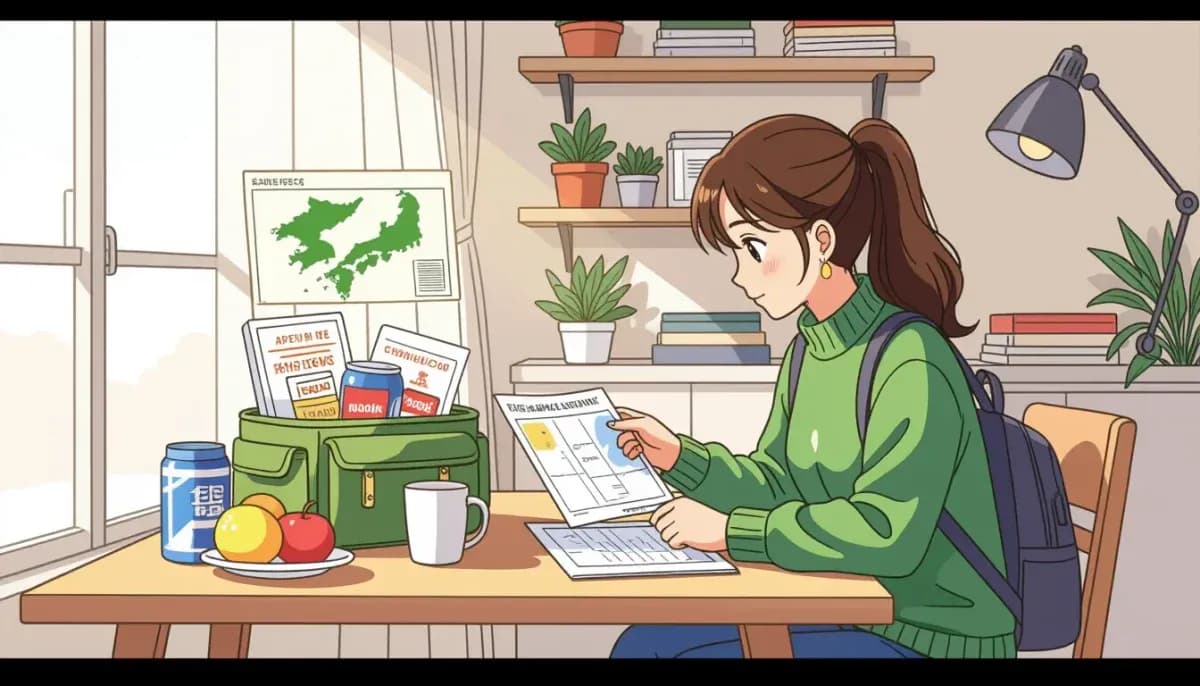
Learn how to create a disaster evacuation plan for your Japan home as a foreign homeowner. Covers Japan's alert systems, hazard maps, emergency kits, shelter locations, and post-disaster rights for foreigners.
Creating a Disaster Evacuation Plan for Your Japan Home
Japan is one of the most earthquake-prone countries on Earth, accounting for roughly 20% of all magnitude 6.0+ earthquakes worldwide despite covering just 0.25% of the planet's land surface. As a foreign homeowner in Japan, having a well-prepared disaster evacuation plan is not a luxury — it is an essential part of responsible property ownership. Whether you've just purchased your first home in Tokyo or you're settling into a countryside property in rural Japan, the time to plan is before a disaster strikes, not during.
This guide walks you through every step of building a robust disaster evacuation plan tailored for foreign homeowners in Japan, from understanding Japan's alert systems to preparing emergency kits, locating evacuation shelters, and communicating with family members across language barriers.
Understanding Japan's Disaster Risk Landscape
Before creating your evacuation plan, you need to understand what you're planning for. Japan faces a wide range of natural disasters, and each requires a different response strategy.
Earthquakes are the most frequent threat. In 2024 alone, Japan recorded 1,563 earthquakes of magnitude 4.0 or higher. The 2024 Noto Peninsula earthquake (magnitude 7.5) damaged between 76,000 and 100,000 housing units, many of which were older structures. The Japan Meteorological Agency estimates a 70–80% probability of a major Nankai Trough earthquake occurring within the next 30 years — one of the most significant known seismic risks in the world.
Tsunamis follow major offshore earthquakes along Japan's extensive coastline. Coastal homeowners need a separate tsunami evacuation route in addition to a general earthquake plan.
Typhoons and heavy rain strike multiple times per year, especially from June through October, causing flooding, landslides, and storm damage across many regions.
Volcanic activity affects properties near active volcanoes, including areas around Mt. Fuji, Sakurajima in Kagoshima, and Aso in Kumamoto.
| Disaster Type | Primary Risk Areas | Warning System | Typical Warning Time |
|---|---|---|---|
| Earthquake | Nationwide | J-Alert + smartphone push | 0–60 seconds before shaking |
| Tsunami | All coastal areas | J-Alert + sirens | 3–30 minutes after quake |
| Typhoon | Nationwide, esp. south & coast | Weather Agency forecasts | 24–72 hours |
| Flood/Landslide | River basins, hillsides | Municipal evacuation alerts | Hours to days |
| Volcanic eruption | Near active volcanoes | JMA volcano advisories | Hours to weeks |
Understanding these risks lets you build a plan that covers multiple scenarios rather than just one.
Japan's Evacuation Alert Level System Explained
Japan's government operates a 5-level evacuation alert system. Every homeowner — Japanese or foreign — must understand these levels and know their triggers. Alerts are broadcast via the J-Alert system, local loudspeakers, mobile phone push notifications, and TV emergency broadcasts.
Level 1 – Prepare for Disaster: Be aware of weather conditions and check local news. No action required yet, but review your plan.
Level 2 – Avoid Dangerous Behavior: Heavy rain or wind is increasing. Avoid unnecessary outdoor activity. Check on family members.
Level 3 – Evacuation Recommended for Elderly and Vulnerable Persons: People with mobility limitations, elderly residents, those with disabilities, and families with infants should begin evacuating to designated shelters.
Level 4 – Mandatory Evacuation for All Residents: This is the critical threshold. All residents, regardless of nationality, must evacuate immediately. Do not wait for more information. Leave now.
Level 5 – Life-Saving Actions Only: Disaster has already begun. If you have not evacuated, take immediate shelter in the highest point of your building, away from windows. Do not try to evacuate outdoors at this level.
Foreign homeowners often miss Level 3 and 4 alerts because they come in Japanese via municipal loudspeaker systems. Download the Safety Tips app (available in English, Chinese, Korean, Spanish, and other languages), which receives J-Alert notifications in real time with English translations.
For comprehensive guidance on navigating Japan's emergency systems as a foreigner, see Living in Nihon's Japan Disaster Preparedness Guide for Foreigners.
Reading Your Hazard Map (ハザードマップ)
Under Japanese law, real estate agencies are legally required to disclose hazard maps to property buyers before completing a purchase. If you've already bought your home, you may not have reviewed the map in detail. Now is the time.
A hazard map (ハザードマップ, hazard mappu) shows your property's risk level for:
- Flooding from rivers and storm surge
- Landslide and steep slope collapse zones
- Liquefaction risk (where the ground may turn semi-liquid during a major earthquake)
- Tsunami inundation zones
To find your official hazard map:
- Visit the national government's Disaster Prevention Portal: https://disaportal.gsi.go.jp/
- Enter your address to see an overlay map with all risk categories
- Visit your local city or ward office (shiyakusho/kuyakusho) for printed, area-specific versions in multiple languages
- Many municipalities also have English-language hazard map PDFs available on their official websites
Once you understand your property's specific risks, tailor your evacuation plan to address those risks first. A home in a river flood zone needs a different primary route and timing than a home in a landslide risk area.
Learn more about property safety considerations at Gaijin Buy House's guide on public services available to foreigners.
Building Your Home Emergency Kit
A well-stocked emergency kit is the foundation of your disaster plan. Japanese emergency management guidelines recommend a minimum of 3 days' supply, with many experts now recommending 7 days following the 2024 Noto earthquake experience.
Water: 3 liters per person per day. For a family of three, that is 63 liters for a 7-day supply. Store water in dedicated emergency water containers, rotate every 6–12 months, and keep a water purification method (tablets or filter) as backup.
Food: Non-perishable items with at least a 2-year shelf life. Include calorie-dense options such as instant rice, retort curry pouches, crackers, nuts, and canned goods. Don't forget a manual can opener. If you have dietary restrictions or allergies, stock accordingly and note this information in Japanese for shelter staff.
Foreign-resident essentials that many standard emergency kit guides omit:
- Copies of your passport and residence card (stored separately from the originals)
- Your embassy's emergency contact number written on paper
- An offline translation app (e.g., iTranslate downloaded for Japanese) on your phone
- Medical history, current prescriptions, and known allergies written in Japanese
- Cash in small denominations (ATMs often go offline after disasters)
| Item | Quantity (per person) | Notes |
|---|---|---|
| Water | 3–4.5 liters/day | 7-day minimum recommended |
| Emergency food | 3 meals/day | Retort pouches, instant rice |
| First aid kit | 1 per household | Include prescription medications |
| Flashlight + batteries | 1 per person | Solar or hand-crank backup |
| Portable radio | 1 per household | Receives NHK emergency broadcasts |
| Dust masks (N95) | 5+ per person | Essential after earthquake |
| Work gloves | 1 pair per person | For debris clearing |
| Emergency blanket | 1 per person | Mylar type, compact |
| Portable charger | 1 per person | Pre-charged, solar is ideal |
| Whistle | 1 per person | Signal for rescue if trapped |
| Copies of key documents | 1 set | Sealed in waterproof bag |
| Japanese emergency phrasebook | 1 | Or offline app alternative |
For broader context on managing your Japan property, see our guide on property management for overseas owners in Japan and insurance for property owners in Japan.
Locating Your Designated Evacuation Shelters
Japan's municipalities designate three types of evacuation locations, and it's important to know the difference:
Temporary Assembly Points (一時集合場所): Nearby parks or open spaces where residents initially gather to account for everyone and assess the situation. These are not full shelters; they have no food, water, or facilities.
Designated Evacuation Sites (指定緊急避難場所): Large open spaces such as parks and school grounds designated as safe areas during a disaster in progress. For earthquake and fire, these are your primary outdoor refuge. For floods, you need an elevated indoor location instead.
Designated Shelter Facilities (指定避難所): Usually school gymnasiums and community centers where displaced residents can stay for days or weeks. These provide sleeping space, water, food distribution, and basic sanitation. Tokyo alone has approximately 3,000 such facilities.
Action steps:
- Identify your nearest shelter facility using your municipality's emergency website or the YURUTTO app
- Walk the route to your shelter in advance, noting any hazards (narrow alleys, slopes, river crossings)
- Identify an alternative route in case your primary path is blocked
- Confirm if your shelter has multilingual staff or printed multilingual guides (many large urban shelters do)
For broader living considerations in Japan, For Work in Japan provides useful context on public services and municipal resources available to foreign residents.
Creating Your Family Evacuation Communication Plan
During a major earthquake, phone networks will quickly become congested. Standard calls and text messages may fail to go through for hours. You must prepare backup communication methods in advance.
Disaster Message Dial 171: Japan's NTT operates a dedicated disaster messaging service. By dialing 171, anyone can record a voice message tied to a phone number, and anyone who knows that number can retrieve it. Practice using this service — NTT opens it for free testing drills on the 1st and 15th of each month, and throughout designated Disaster Prevention Week (August 30–September 5).
Priority communication checklist:
- Choose a designated meeting point near your home if phones don't work
- Choose a secondary meeting point near your workplace or your children's school
- Designate an out-of-area contact person (a relative abroad often works better than a local contact, as their phone lines are less congested)
- Write all contact information on a laminated card kept in each family member's go-bag
- Register your children with their school's safety confirmation system
If you have young children, rehearse evacuation procedures as a family. Schools in Japan conduct regular earthquake drills (hinan kunren), so children may already know the basics. Coordinate with their school to understand the school's protocols for releasing children during a disaster — in many cases, schools will shelter children until a parent can confirm receipt.
Home Safety Measures Before Disaster Strikes
Preparation is not only about kits and routes — it starts with your home itself. The single most effective safety measure you can take is securing furniture and appliances.
Research consistently shows that 80% of earthquake deaths are caused by falling objects or structural collapse, not by the ground shaking itself. A falling bookshelf or refrigerator is the most common cause of injury and death inside homes during Japanese earthquakes.
Furniture securing priorities:
- Bookshelves, wardrobes, and tall cabinets → anchor to wall with L-shaped brackets (tenjo tsuppari pole-type is also effective)
- Refrigerator → attach anti-tip strap and anti-walk pad beneath
- Water heater (outdoor unit) → check that anti-seismic bracing is in place (legally required for new installations)
- Television → use anti-slip mat and strap to the TV stand
- Beds → position away from windows and heavy hanging items
Structural safety assessment: Homes built before 1981 in Japan do not meet the modern seismic standards introduced after the 1978 Miyagi earthquake. If your home was built before 1981, consider hiring a certified taishin diagnosis inspector to assess the structure. Many municipalities offer free or subsidized seismic inspection programs for pre-1981 homes.
For homeowners considering renovation or structural upgrades, see our related guide: Home Renovation and Remodeling in Japan for Foreign Owners.
Rights and Support for Foreign Homeowners After a Disaster
One concern many foreign homeowners have is whether they will receive the same post-disaster support as Japanese nationals. The answer is yes — Japan's disaster recovery support system is nationality-neutral.
Foreign homeowners and renters are eligible for:
- Disaster damage certificates (罹災証明書, *risai shōmeisho*): Official documentation of property damage, required for insurance claims and government assistance applications. Apply at your city or ward office.
- Condolence payments and reconstruction support grants under the Disaster Relief Act and Act for Support for Livelihood Recovery of Disaster Victims
- Temporary housing assistance (public temporary housing or rental subsidies)
- Disaster recovery loans at reduced interest rates through municipal programs
To exercise these rights, you will need: your residence card (zairyu card), your disaster damage certificate, proof of property ownership or tenancy, and your individual number (My Number) for some programs. Keep copies of all these documents in your emergency kit.
For detailed information on your rights and obligations as a foreign property owner, see our comprehensive guide: Can Foreigners Buy Property in Japan? Legal Rights and Restrictions.
Practical Next Steps: Building Your Plan Today
Don't let planning perfection become the enemy of planning progress. Here is a simple action list you can complete this week:
- Today: Download the Safety Tips app and confirm it's receiving J-Alert notifications with English translations
- This week: Locate your hazard map at disaportal.gsi.go.jp and identify your property's risk categories
- This week: Identify your nearest designated shelter and walk the route
- This month: Assemble or purchase an emergency kit for every household member
- This month: Secure the top three highest-risk furniture items in your home
- This month: Create a laminated family communication card with meeting points and contact numbers
- Every 6 months: Rotate water supplies, check food expiration dates, and review the plan with all household members
For a deeper look at the property-related aspects of disaster preparedness, Japan Remotely's Natural Disaster Planning Resource Guide and Japan Living Guide's evacuation guide are excellent free resources.
Owning property in Japan means accepting that natural disasters are a part of life — but it does not mean accepting undue risk. A well-prepared foreign homeowner who understands Japan's systems, knows their evacuation routes, and has practiced their plan with their family is in a far stronger position than one who relies on improvisation in the moment. Start building your plan today.
For more on owning property safely and successfully in Japan, explore our Complete Guide to Buying Property in Japan as a Foreigner and our guide on Natural Disaster Preparedness for Homeowners in Japan.

Originally from Vietnam, living in Japan for 16+ years. Graduated from Nagoya University, with 11 years of professional experience at Japanese and international companies. Sharing information about buying property in Japan for foreigners.
View Profile →Related Articles

Climate Change Impact on Japan Property Risk Assessment
Learn how climate change affects Japan property risk—flood zones, earthquake hazards, typhoon exposure—and how foreign buyers can assess risk using Japan's hazard maps and mandatory disclosure rules.
Read more →
Disaster Rebuilding and Insurance Claims Process in Japan
Learn how Japan's earthquake insurance and disaster rebuilding process works for foreign homeowners. Covers claims steps, payout tiers, premiums, and practical tips for expats.
Read more →
How to Read and Use Japan Hazard Maps for Property Purchase
Learn how to read and use Japan's official hazard maps before buying property. Understand flood, earthquake, and tsunami risk zones with this step-by-step guide for foreign buyers.
Read more →
Emergency Supplies and Kit Guide for Japan Homeowners
Build the perfect emergency kit for your Japan home. Essential bosai bag checklist, where to buy supplies, and special tips for foreign homeowners in earthquake-prone Japan.
Read more →
Seismic Retrofitting Options for Older Homes in Japan
Learn about seismic retrofitting options for older homes in Japan: costs, government subsidies up to ¥3M, tax incentives, and step-by-step process for foreign buyers.
Read more →
Japan Earthquake-Resistant Building Standards Explained
Understand Japan's earthquake-resistant building standards (Shin-Taishin, 1981, 2000 codes), taishin/seishin/menshin systems, seismic grades, and how to verify compliance when buying property in Japan.
Read more →