
Pet-Friendly Condominiums in Japan: How to Find Them


Discover how to find pet-friendly condominiums in Japan as a foreigner. Learn about property categories (ペット可), costs, restrictions, legal requirements, and proven tips for securing a pet-welcoming home in Japan.
Pet-Friendly Condominiums in Japan: How to Find Them
Finding a home in Japan is already challenging for foreigners — but finding one that also welcomes your furry companion adds another layer of complexity. With only 15-20% of all rental properties in Japan allowing pets, the search for pet-friendly condominiums requires strategy, patience, and the right knowledge. This guide covers everything you need to know to find a pet-welcoming home in Japan, from understanding property categories to navigating legal requirements and managing costs.

Understanding Pet-Friendly Property Categories in Japan
Before you begin your search, it's essential to understand how Japanese real estate listings categorize pet-friendly properties. There are three main designations you'll encounter:
| Category | Japanese | Meaning | What to Expect |
|---|---|---|---|
| Pet-Allowed | ペット可 | Pets explicitly permitted | Specific conditions apply (size/number limits) |
| Pet-Consultation | ペット相談 | Negotiable with landlord | Case-by-case approval required |
| Pet-Coexistence | ペット共生型 | Purpose-built for pets | Premium amenities, higher rent |
ペット可 (Pet-Allowed) properties have explicit permission for pets but come with strict conditions. Common restrictions include dogs weighing under 10kg, a limit of one to two pets, and prohibitions on certain breeds. Cats may be restricted even in dog-friendly properties due to concerns about scratching and odor.
ペット相談 (Pet-Consultation) properties require you to negotiate directly with the landlord. This can work in your favor if you present your case well — providing proof of responsible pet ownership, offering a higher deposit, or showing willingness to pay for professional cleaning upon departure.
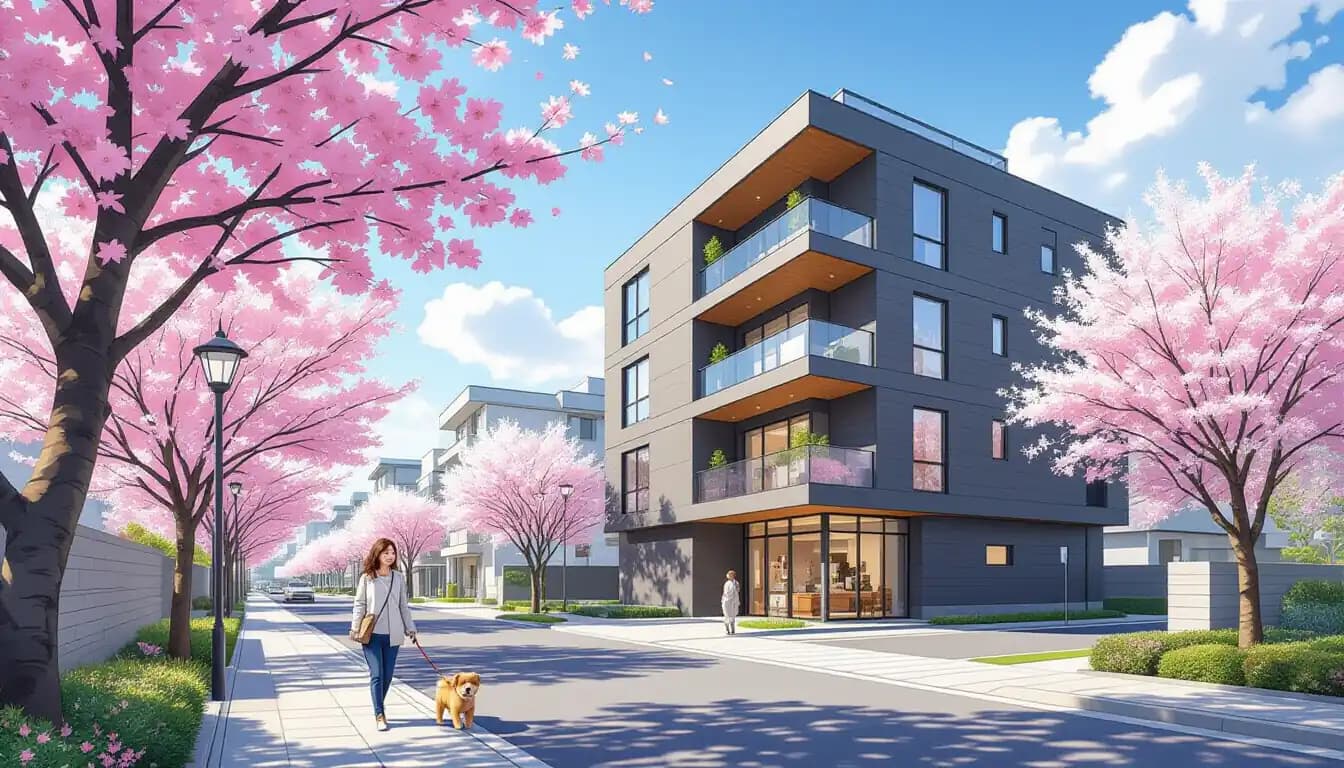
ペット共生型 (Pet-Coexistence) buildings are purpose-built for pet owners. These premium properties feature amenities like rooftop dog runs, foot-washing stations at the entrance, dedicated pet lanes in shared spaces, and even indoor pet gyms. Expect higher rents, primarily in upscale Tokyo neighborhoods like Azabu, Ark Hills, and Shibuya.
How Many Pet-Friendly Properties Are Available in Japan?
The reality of the Japanese rental market is that pet-friendly options are genuinely scarce. Research shows that only 15-20% of all rental properties in Japan allow pets. In central Tokyo's 7 core wards, only about 588 of 3,784 listed properties (approximately 15.5%) accommodate pets.
Availability varies significantly by location:
| Region | Pet-Friendly Availability |
|---|---|
| Central Tokyo (7 wards) | ~10-15% |
| Tokyo suburbs | ~15-20% |
| Regional cities (Osaka, Nagoya, Fukuoka) | ~20-30% |
| Rural areas | ~25-35% |
Japan's ongoing "pet boom" (ペットブーム) is gradually improving the situation. With approximately 8.5 million dogs and 9.6 million cats kept as pets across the country, and roughly one-third of Japanese households owning a pet, demand for pet-friendly housing is rising. More landlords and developers are responding by designating properties as pet-friendly or building new pet-coexistence complexes.
For more context on Japan's broader real estate landscape, see our guide on Types of Properties Available in Japan and the Japan Real Estate Market Overview and Trends.
What Does Pet-Friendly Housing Cost in Japan?
Be prepared for significantly higher costs when renting with a pet. The financial impact extends beyond monthly rent to initial move-in fees and potential exit costs.
Monthly Rent Premium
Pet-friendly properties typically charge 10-20% more than equivalent non-pet units. Some landlords add a fixed monthly pet fee of ¥5,000-¥20,000 on top of base rent.
Initial Move-In Costs Comparison
| Cost Item | Standard Apartment | Pet-Friendly Apartment |
|---|---|---|
| Rent (example) | ¥80,000/month | ¥80,000-¥96,000/month |
| Security deposit | 1-2 months (¥80,000-¥160,000) | 2 months (¥160,000) |
| Pet deposit | None | ~¥80,000 (1 month's rent) |
| Key money (礼金) | ¥80,000 | ¥80,000 |
| Pet key money | None | ~¥40,000 |
| Agency fee | ¥80,000 | ¥80,000 |
| Estimated Total | ~¥398,000 | ~¥603,000 |
Move-Out Costs
Upon departure, expect professional cleaning fees of ¥20,000-¥100,000 or more depending on room size and the extent of pet-related damage (scratches, odors, stains). This will be deducted from your security deposit, with additional charges if damage exceeds the deposit amount.
Understanding all ownership costs is important — review our detailed guide on Hidden Costs and Fees When Buying Property in Japan and Property Taxes and Annual Costs of Owning Property for the full financial picture.
Where and How to Search for Pet-Friendly Condominiums
Online Search Platforms
Several platforms are particularly useful for finding pet-friendly rentals in Japan:
- SUUMO (suumo.jp) and HOME'S (homes.co.jp): Japan's largest real estate portals. Filter using the ペット可 checkbox. Japanese language only, so use a translation tool.
- GaijinPot Apartments: English-language platform with a "Pets Negotiable" filter, designed specifically for foreigners. See GaijinPot's pet-friendly guide for tips.
- YOLO HOME: Foreigner-friendly English platform with strong pet-friendly inventory.
- wagaya Japan: Another foreigner-focused platform with bilingual listings.
- Best-Estate: Useful for finding unique or niche properties.
Best Timing for Your Search
Timing matters enormously in Japan's rental market:
- Best seasons: May-July and October-December. These periods fall outside the peak moving season (February-April), so competition is lower and landlords are more willing to negotiate terms.
- Avoid: February to April, when the market is most competitive and landlords have little incentive to accommodate special requests like pets.
Working with Real Estate Agents
Real estate agents (不動産屋, fudōsanya) charge one month's rent as a commission fee, but they can be invaluable for foreigners navigating the language barrier. A good agent can negotiate with landlords on your behalf, explain specific pet conditions, and access off-market pet-friendly listings not shown online.
For comprehensive advice on navigating the real estate process as a foreigner, see our Complete Guide to Buying Property in Japan as a Foreigner.
For additional guidance on living in Japan as an expat, Living in Nihon offers practical insights on navigating daily life and housing in Japan.
Common Pet Restrictions in Japanese Condominiums
Even in pet-allowed buildings, strict rules apply. Understanding these in advance can save you from rejection and help you prepare your application.
Size and Breed Restrictions
- Dogs: Most commonly, only dogs under 10kg are permitted. Some buildings allow up to two dogs. Large breeds (German Shepherds, Rottweilers, Huskies) are frequently prohibited regardless of individual temperament.
- Cats: Often permitted but with restrictions. Landlords may require cats to be indoor-only and may ask for evidence of spaying/neutering.
- Small caged animals: Hamsters, birds, and fish usually require advance permission but are more commonly approved than dogs and cats.
- Rabbits: Surprisingly difficult — many landlords group them with dogs and cats for restriction purposes.
Building Etiquette Rules
- Pets must travel in carriers or on leashes in hallways, elevators, and shared spaces
- Some buildings require use of back entrances or freight elevators
- Noise complaints (barking) can result in lease termination
- Pets must not be left unattended for extended periods in many buildings
For foreigners considering property ownership rather than renting, see our guide on Can Foreigners Buy Property in Japan? Legal Rights and Restrictions.
Legal Requirements for Pet Owners in Japan
Owning a pet in Japan comes with legal obligations. Violations can result in fines and, in extreme cases, forced lease termination.
For Dog Owners
- City registration: Dogs must be registered with your local city or ward office within 30 days of acquiring the dog. Bring vaccination records and pay the registration fee (approximately ¥3,000).
- Annual rabies vaccination: Required by law. Failure to vaccinate can result in fines up to ¥200,000.
- Microchipping: As of June 2022, microchipping is mandatory for dogs and cats sold by breeders and pet shops, and strongly encouraged for all pets.
For Cat Owners
- Free registration: Recommended at your local city office, though not legally mandated in most areas.
- No legal vaccination requirement: However, veterinarians strongly recommend standard vaccines.
Lease Documentation
When signing a pet-friendly lease, you will typically be asked to sign a separate "Memorandum about Having a Pet Animal" (ペット飼育に関する覚書). This document commits you to:
- Preventing disturbances to neighbors
- Paying for all pet-related damages upon departure
- Not increasing the number of pets without permission
- Covering full restoration costs for odors, stains, and scratches
For comprehensive information on legal procedures and documentation when purchasing property, see our guide on Legal Procedures and Documentation for Japan Property Purchase.
Bringing Pets to Japan from Abroad
If you're relocating to Japan from another country with a pet, the process is demanding and expensive. Japan has strict biosecurity laws to prevent the introduction of rabies.
- Minimum timeline: 7 months from start to entry, assuming your home country is already rabies-free
- Requirements: Microchip, rabies vaccinations (minimum 2 doses), rabies antibody test, waiting period, advance notification, and inspection at Japan's designated animal quarantine service
- Costs: ¥250,000-¥800,000 depending on country of origin, veterinary fees, and whether your pet needs to stay in quarantine upon arrival
For detailed information on the process, visit the For Work in Japan housing and relocation guide and the Gaijin Buy House resources section.
For context on visa and residency aspects of relocating to Japan, see our guide on Visa and Residency Considerations for Property Buyers in Japan.
Tips for Successfully Securing a Pet-Friendly Condominium
Securing a pet-friendly apartment as a foreigner in Japan requires more than just finding the right listing. Here's how to give yourself the best chance of approval:
- Create a "pet resume": A one-page document in Japanese introducing your pet with a photo, vaccination records, temperament notes, and confirmation that the animal is neutered/spayed. Landlords appreciate this level of preparation.
- Offer a higher deposit upfront: Proactively offer an additional deposit equal to one or two months' rent to address landlord concerns about damage.
- Get a guarantor or use a guarantor company: Many landlords in Japan require a Japanese guarantor. Foreigners can use licensed guarantor companies (保証会社) if they lack personal connections.
- Consider older buildings: Newer buildings often have stricter rules. Older properties built before 1990 sometimes have more flexible landlords.
- Use a specialized foreigner-friendly agent: Agencies that specialize in helping foreigners navigate Japan's rental market — such as those found through GTN's complete guide for foreign residents — have existing relationships with pet-friendly landlords.
- Be honest and transparent: Never attempt to hide a pet. Violations of no-pet clauses are grounds for immediate lease termination and can result in significant financial penalties.
For the complete step-by-step process of securing property in Japan, refer to our Step-by-Step Home Buying Process in Japan for Foreigners.
Conclusion
Finding a pet-friendly condominium in Japan as a foreigner is challenging but entirely achievable with the right approach. The key steps are: understanding the three property categories (ペット可, ペット相談, ペット共生型), budgeting for the significant cost premium, timing your search wisely outside peak season, preparing thorough documentation for your pet, and using the right online platforms and agents.
Japan's pet housing market is gradually improving as demand grows, with more developers building dedicated pet-coexistence complexes in major cities. By doing your research in advance and approaching landlords professionally, you can find a comfortable home for both yourself and your companion.
For broader guidance on navigating Japan's real estate market as a foreigner, explore our Japan Real Estate Market Overview and Trends and connect with expat communities through resources like Tokyo Portfolio's apartment guide.

Originally from Vietnam, living in Japan for 16+ years. Graduated from Nagoya University, with 11 years of professional experience at Japanese and international companies. Sharing information about buying property in Japan for foreigners.
View Profile →Related Articles

Japan Condo Resale Value: Key Factors That Affect Price
Discover the key factors that affect Japan condo resale value — from station proximity and building age to management quality and market timing. Essential guide for foreign buyers.
Read more →
Luxury and Branded Condominiums in Japan
Complete guide to buying luxury and branded condominiums in Japan as a foreigner. Covers Aman Residences, Ritz-Carlton, tower mansions, prices, costs, and investment potential in Tokyo and beyond.
Read more →
Rental Rules and Regulations for Japan Condominiums
Complete guide to Japan condominium rental rules for foreigners: lease agreements, deposits (shikikin/reikin), house rules, noise policies, pet restrictions, subletting laws, move-out obligations, and tenant rights explained.
Read more →
Japan Condo Building Inspection: What to Check Before Buying
Complete guide to condo building inspections in Japan for foreign buyers. Learn inspection types, costs (¥40,000–¥150,000), seismic standards, and critical documents to review before signing.
Read more →
Earthquake Safety Concerns in Older Japan Condominiums
Buying an older condo in Japan? Learn about the critical 1981 seismic code, risks of pre-1981 buildings, retrofitting options, and how to protect yourself as a foreign buyer.
Read more →
Japan Condo Common Facilities and Amenities Guide
Discover what common facilities to expect in Japanese condominiums — from auto-lock entrances and parcel lockers to gyms and concierge services. Learn about management fees, what to inspect, and what foreign buyers should know before purchasing.
Read more →