
Kyoto Guesthouse and Inn Investment Guide for Foreigners

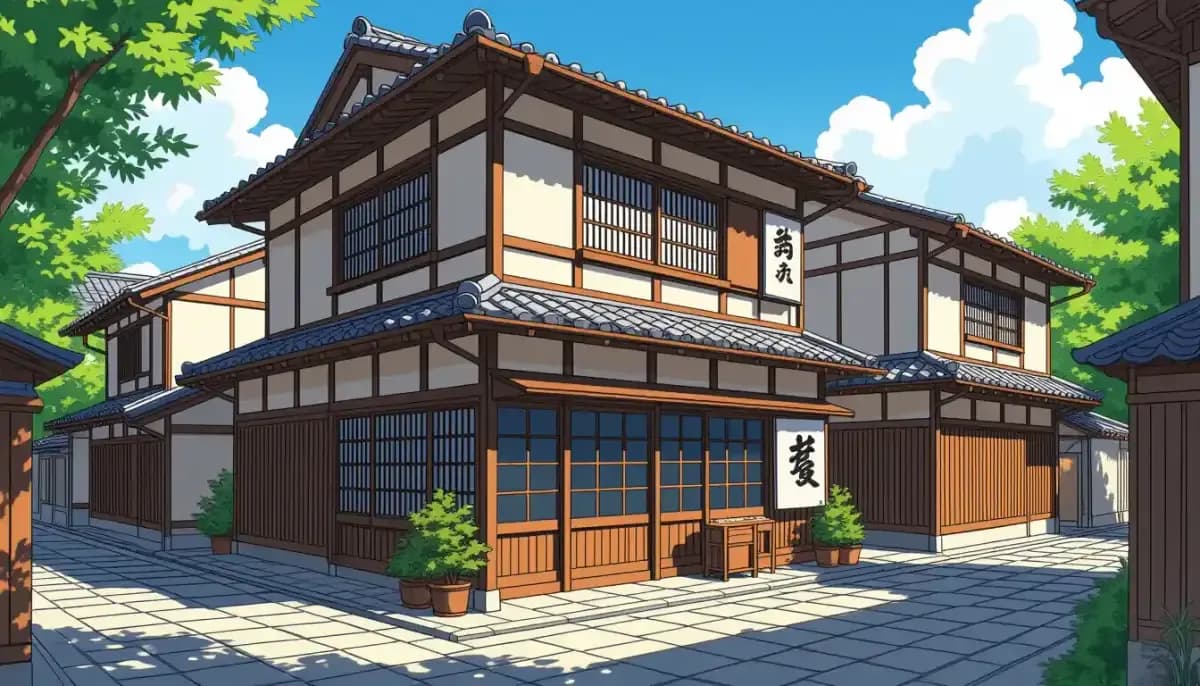
A complete guide to investing in a Kyoto guesthouse or inn as a foreigner. Covers licensing (ryokan gyoho vs minpaku), machiya properties, financing, costs, and how to operate legally from abroad.
Kyoto Guesthouse and Inn Investment Guide for Foreigners
Kyoto stands as Japan's cultural crown jewel — a city where ancient temples, geisha districts, and traditional machiya townhouses attract millions of tourists every year. For foreign investors, this tourism-driven demand creates a compelling opportunity: investing in a guesthouse or inn in Kyoto. With hotel average daily rates hitting a record-high 20,195 yen and occupancy rates at 78.5% in 2024, the accommodation market has rarely looked better.
This guide walks you through everything you need to know about investing in a Kyoto guesthouse or inn as a foreigner — from licensing frameworks and property types to financing, management, and the unique regulations that apply in this heritage city.
Why Invest in a Kyoto Guesthouse or Inn?
Kyoto consistently ranks among the world's most visited cities. International and domestic tourists flood the city year-round, creating sustained demand for authentic, character-rich accommodation. Here's why the numbers make sense:
- Record ADR: Kyoto hotels averaged 20,195 yen per night in 2024 — the highest ever recorded.
- Strong occupancy: Overall hotel occupancy reached 78.5% in 2024; ryokan (traditional inn) occupancy is expected to hit 90% in peak months like October 2025.
- Authentic demand: Travelers increasingly prefer boutique guesthouses and traditional machiya experiences over generic hotels.
- Weak yen effect: Foreign tourists benefit from favorable exchange rates, boosting spending and nightly rates in foreign currency terms.
- UNESCO heritage tourism: Kyoto's 17 UNESCO World Heritage sites ensure enduring tourism appeal, unlike cities dependent on trends.
For foreign investors who want to combine cultural passion with a business opportunity, a Kyoto guesthouse investment can be both personally meaningful and financially rewarding.
For a broader overview of property investment in Japan, see our guide on Japan Real Estate Investment for Foreigners.
Understanding the Licensing Framework
Before purchasing any property for guesthouse or inn use in Kyoto, you must understand which license applies to your business model. There are three main frameworks:
1. Ryokan Gyoho (旅館業法) — Full Inn License
The Ryokan Business Act governs traditional inns (ryokan), business hotels, and guesthouses (簡易宿所 — simplified lodging facilities). This is the most common license for a commercial guesthouse operation.
Key features:
- No cap on nights of operation (operate 365 days a year)
- Requires compliance with fire safety regulations, sanitation standards, and minimum room size requirements
- Front desk or management presence requirements apply
- Permits serving food and drinks if additional food business licenses are obtained
- Best suited for properties with multiple rooms targeting consistent occupancy
Requirements for simplified lodging (簡易宿所):
- Floor space per guest (typically 3.3 sqm minimum)
- Adequate ventilation, lighting, and sanitation facilities
- Fire extinguishers, emergency exits, and smoke detectors
- Posted house rules and emergency procedures
2. Minpaku (民泊) — Short-Term Rental License
The 2018 Minpaku Law (住宅宿泊事業法) created a national framework for home-sharing (Airbnb-style) rentals.
Key limitations in Kyoto:
- Maximum 180 nights of rental per year nationally
- Kyoto is one of Japan's most restrictive cities for minpaku. The city limits minpaku operations to specific commercial and tourist zones. Residential areas are largely off-limits.
- Neighboring residents can object to minpaku operations
- Owner or designated management company must be registered
Bottom line: Minpaku is generally not viable for a serious investment in Kyoto due to the 180-night cap and strict zoning. Most serious investors pursue a full ryokan gyoho license instead.
3. Special Zone Minpaku
Certain designated "special economic zones" allow relaxed short-term rental rules. However, Kyoto City does not have such a zone, so this route is not available locally.
| License Type | Annual Cap | Zoning | Best For |
|---|---|---|---|
| Ryokan Gyoho (Simplified) | None | Commercial/Hotel zones | Serious guesthouse operators |
| Minpaku Law | 180 nights | Limited zones only | Part-time home-share |
| Special Zone Minpaku | None | Special zones only | Not available in Kyoto City |
For details on licensing and legal procedures, see our Legal Procedures and Documentation for Japan Property Purchase guide.
Property Types for Guesthouse Investment in Kyoto
Machiya (町家) — Traditional Kyoto Townhouses
Machiya are the iconic wooden townhouses of Kyoto, often described as "eel's bed houses" for their narrow frontage and deep interior layout. These properties are among the most prized assets for guesthouse investment because they:
- Offer an authentic Kyoto cultural experience that modern hotels cannot replicate
- Are eligible for renovation grants from Kyoto City
- Command premium nightly rates from experience-seeking travelers
- Attract significant media and press coverage
Challenges with machiya:
- Many are aging structures requiring substantial renovation (¥10–30 million or more)
- Kyoto City requires that heritage machiya be restored to their originally registered size during renovation — you cannot significantly expand the building
- Structural requirements for fire safety can be expensive to implement in traditional wooden structures
- Some properties are subject to cultural protection restrictions limiting alterations
Converted Kominka (古民家) — Old Farmhouses
While more common outside Kyoto's urban core, some rural and peri-urban areas offer kominka properties suitable for boutique inn conversion. These tend to be larger with more land, allowing for garden features popular with high-end travelers.
Modern Properties in Tourist Zones
Standard apartments or small buildings in Kyoto's tourist zones (Higashiyama, Gion, Fushimi) can also be licensed as simplified lodging facilities. These are often easier to bring into compliance with modern safety standards but lack the character premium of machiya.
For more on property types available in Japan, see our Types of Properties Available in Japan: A Complete Guide.
Can Foreigners Own and Operate a Guesthouse in Kyoto?
Property Ownership
Yes — foreigners can legally purchase real estate in Japan without restrictions based on nationality. This applies equally to guesthouses and inns. There are no foreign ownership caps, no special approval processes, and no requirement to have residency status to own property.
However, some heritage properties in Kyoto are subject to cultural protection orders that restrict how they can be modified or used. Always verify the legal status of a property with a judicial scrivener (司法書士) before purchase.
For a detailed overview of ownership rights, see Can Foreigners Buy Property in Japan? Legal Rights and Restrictions.
Operating a Guesthouse Business as a Foreigner
This is where it gets more complex. Operating a guesthouse as a registered business in Japan typically requires:
Option 1: Resident Foreigner If you hold a valid Japanese residence visa (PR, spouse, work visa, etc.), you can register as a sole proprietor or company director and apply for the required licenses directly.
Option 2: Non-Resident Foreign Investor If you live outside Japan, you need to:
- Incorporate a Japanese company (KK or GK) to hold the business license
- Appoint a resident director (can be Japanese or a foreign resident)
- Hire a licensed local management company to handle day-to-day operations
- Obtain a Business Manager Visa if you intend to relocate to Japan to operate the business — from 2025, this requires approximately ¥30 million in capital, a fixed office, and employee allocation
The most common approach for non-resident foreign investors is to establish a Godo Kaisha (GK, similar to an LLC), appoint a resident director or use a management company, and remain a silent investment partner.
For visa-related considerations, see our Visa and Residency Considerations for Property Buyers guide.
Financing Your Kyoto Guesthouse Investment
Financing is one of the biggest hurdles for foreign investors. Japanese banks are conservative and typically require several years of domestic residency and income before extending mortgage loans.
Options for Non-Resident Foreigners
| Financing Method | LTV | Interest Rate | Term | Notes |
|---|---|---|---|---|
| Japanese regional bank | 50–70% | 1.5–3.5% | 20–35 years | Usually requires PR or long residency |
| International bank (HSBC, Bank of China) | 60–70% | 3–4% | 25–30 years | Available to non-residents with bank relationship |
| Japanese company incorporation loan | 60–70% | 3–4% | 20–25 years | Business loan, requires detailed business plan |
| Cash purchase | 100% | N/A | N/A | Most common for foreign non-residents |
Many non-resident foreign investors purchase outright with cash (especially for properties under ¥50–100 million) or incorporate a Japanese company to access business loans.
If you plan to take the incorporation route, you'll need:
- A detailed business plan showing projected occupancy rates and revenue
- Proof of sufficient capital (typically ¥20 million+ minimum loan)
- A Japanese partner or advisor is strongly recommended
For mortgage guidance, see our comprehensive Mortgages and Home Loans for Foreigners in Japan guide.
Costs of Investing in a Kyoto Guesthouse
Understanding your full cost picture is essential. Here's a breakdown:
Acquisition Costs
| Cost Item | Typical Range |
|---|---|
| Property purchase price (machiya) | ¥30M–¥150M+ |
| Renovation (machiya to guesthouse standard) | ¥10M–¥30M+ |
| Agent commission (仲介手数料) | 3% + ¥60,000 + tax |
| Registration taxes | 2–3% of assessed value |
| Stamp duty | ¥10,000–¥600,000 |
| Judicial scrivener fees | ¥100,000–¥300,000 |
Ongoing Operational Costs
| Cost Item | Annual Estimate |
|---|---|
| Property tax (固定資産税) | 1.4% of assessed value |
| City planning tax (都市計画税) | 0.3% of assessed value |
| Building maintenance | ¥500,000–¥2M |
| Management company fee | 15–30% of revenue |
| Insurance (fire + liability) | ¥200,000–¥500,000 |
| Utilities (if included in rate) | Variable |
For a full breakdown of ownership costs, see Property Taxes and Annual Costs of Owning Property in Japan.
Finding the Right Location in Kyoto
Not all Kyoto neighborhoods are equally suitable for guesthouse investment. Zoning laws and tourist traffic vary significantly:
Top guesthouse investment areas:
- Higashiyama (東山): Close to Kiyomizudera and the Gion geisha district. High foot traffic, premium rates, but strict machiya preservation rules.
- Fushimi (伏見): Growing area near Fushimi Inari shrine. More affordable entry prices with strong inbound tourist flow.
- Nishijin (西陣): Traditional weaving district with authentic machiya stock. Less touristy feel — appeals to culturally curious travelers.
- Arashiyama (嵐山): Bamboo grove area in western Kyoto. Scenic location with strong demand; larger properties available.
- Downtown / Kawaramachi: Central location with easy transit access. Mix of modern and traditional properties.
Always verify the zoning classification (commercial zone, quasi-residential zone, etc.) before purchase, as minpaku and even simplified lodging licenses require commercial or hotel zone designation in many parts of Kyoto.
For more on navigating Kyoto's property market, see our full guide on Buying Property in Kyoto as a Foreigner.
Working with Professionals
Given the complexity of Kyoto's regulatory environment, assembling the right team is critical:
- Real estate agent (不動産業者): Find one with experience in machiya transactions and guesthouse licensing. Specialist agents familiar with Kyoto's heritage rules are invaluable.
- Judicial scrivener (司法書士): Handles title registration and ownership transfer.
- Administrative scrivener (行政書士): Handles ryokan business license applications and compliance documentation.
- Architect (建築士): Essential for renovation projects, especially machiya where structural assessments and compliance upgrades are needed.
- Tax accountant (税理士): Manages business income, depreciation, and tax obligations for your guesthouse operation.
- Property management company: Required if you are a non-resident; manages bookings, guest services, cleaning, and maintenance.
For guidance on working with agents, see our Working with Japanese Real Estate Agents as a Foreigner guide.
Also see:
- Living in Nihon — Resources for Foreigners in Japan
- For Work in Japan — Visa and Business Guidance
- Gaijin Buy House — Japan Property Buying Resource
- Heritage Homes Japan — Kyoto Property Investment Guide
- Financing Guest Houses in Japan — PLAZA HOMES
Key Takeaways for Foreign Investors
Investing in a Kyoto guesthouse or inn offers genuine opportunity — tourism demand is strong, the city's appeal is enduring, and authentic accommodation commands premium pricing. But this is not a passive investment you can set up from abroad without professional support.
The essentials to remember:
- Choose the right license: Ryokan gyoho (simplified lodging) is the right framework for most serious investors; minpaku is too restricted in Kyoto.
- Understand the property: Machiya are desirable but come with heritage obligations and renovation costs.
- Plan your ownership structure: Non-residents need a Japanese company and local management company.
- Budget fully: Factor in renovation, licensing, and management fees alongside acquisition costs.
- Work with specialists: Kyoto's regulations are complex — invest in the right professional team from day one.
With the right approach, a Kyoto guesthouse can be a rewarding investment that generates consistent income while preserving one of Japan's most important cultural landscapes.

Originally from Vietnam, living in Japan for 16+ years. Graduated from Nagoya University, with 11 years of professional experience at Japanese and international companies. Sharing information about buying property in Japan for foreigners.
View Profile →Related Articles
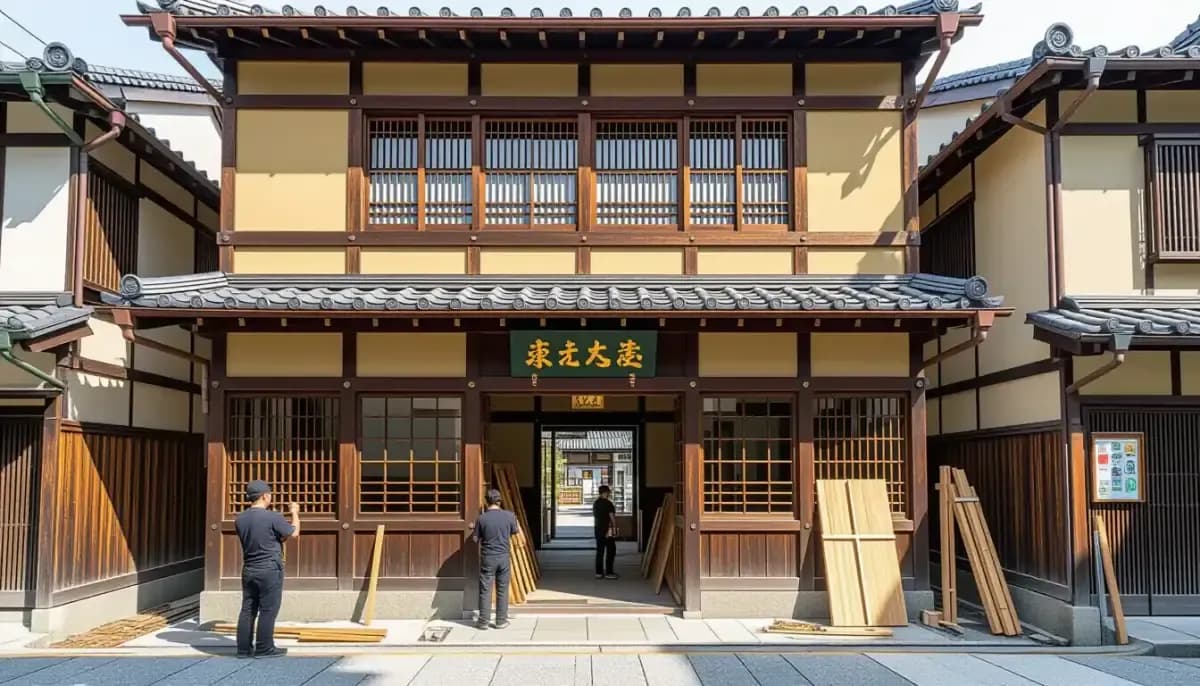
Renovating a Traditional House in Kyoto: Guide for Foreign Owners
Complete guide for foreigners renovating a traditional kyo-machiya townhouse in Kyoto. Covers costs (¥2M–¥20M+), preservation regulations, subsidies, financing, and how to find specialist contractors.
Read more →
Northern Kyoto: Affordable Property Options for Foreigners
Discover affordable property options in northern Kyoto for foreigners. Kita Ward machiya from ¥20.8M, Sakyo Ward university rentals, akiya properties, and buying tips for expats.
Read more →
Higashiyama Area Property Guide for Foreign Buyers
Complete guide to buying property in Higashiyama, Kyoto as a foreigner. Covers price ranges (¥12.8M–¥250M+), machiya townhouses, preservation regulations, investment yields, and step-by-step buying process.
Read more →
Arashiyama Area Property Guide for Foreign Buyers
Complete guide to buying property in Arashiyama as a foreigner. Covers property prices (¥5M–¥500M+), short-term rental rules, machiya ownership, mortgage access, and the full purchase process in Kyoto's iconic bamboo grove district.
Read more →
Kyoto vs Osaka Property Investment Comparison
Compare Kyoto and Osaka property investment for foreign buyers. Rental yields (4.26% vs 3-4%), prices, regulations, capital growth, and which city suits your investment goals.
Read more →
Kyoto Student Rental Investment Near Universities
Complete guide to investing in Kyoto student rental properties near universities for foreigners. Covers best areas, rental yields of 4-6%, legal requirements, financing, and management tips.
Read more →