
Arashiyama Area Property Guide for Foreign Buyers


Complete guide to buying property in Arashiyama as a foreigner. Covers property prices (¥5M–¥500M+), short-term rental rules, machiya ownership, mortgage access, and the full purchase process in Kyoto's iconic bamboo grove district.
Arashiyama Area Property Guide for Foreign Buyers
Arashiyama is one of Kyoto's most iconic districts — a place where bamboo groves tower overhead, temple gates frame mountain views, and the Oi River reflects centuries of history. For foreign buyers drawn to Japan's cultural heartland, owning property here represents something far beyond a real estate investment. It is a chance to embed oneself in the Japan that most visitors only glimpse from tourist buses.
This guide covers everything foreigners need to know about buying property in Arashiyama: realistic price ranges, legal considerations, the short-term rental landscape, machiya townhouse ownership, mortgage access, and the step-by-step purchase process. Whether you are looking for a personal residence, a renovation project, or an investment property, Arashiyama offers a unique and complex market worth understanding deeply before you buy.
Understanding Arashiyama: Location, Wards, and Neighborhoods
Arashiyama straddles two administrative wards: the northern part sits in Ukyo-ku and the southern portion belongs to Nishikyo-ku. The district is anchored by Tenryuji temple and the famous bamboo grove, with the Oi River (also called Hozu River in its upper reaches) forming a natural boundary.
Within the broader Arashiyama area, several sub-neighborhoods attract property buyers:
- Sagano — The quiet northern zone behind the bamboo grove, characterized by narrow lanes, traditional machiya, and dense temple grounds. This is the most sought-after area for buyers wanting authentic Kyoto living.
- Matsuo/Nishikyo-ku — The southern residential zone along the Katsura River tributary, more suburban in character with modern housing alongside older stock.
- Uzumasa — Technically east of Arashiyama proper but often grouped together, home to Toei Kyoto Studio Park and a mix of residential and commercial property.
The area is served by two train lines: the Hankyu Arashiyama Line (Arashiyama Station) and the JR Sagano/San-in Line (Saga-Arashiyama Station). This dual access provides connectivity to central Kyoto in 20–30 minutes and to Osaka in under an hour — unusually convenient for a district that feels so removed from urban life.
Arashiyama Property Prices: What to Expect in 2025–2026
Arashiyama's property market spans an extraordinarily wide range. At the affordable end, aging structures on the outskirts trade at akiya-equivalent prices. At the luxury end, historic properties with river views and established gardens command prices that rival Tokyo's most prestigious addresses.
Current Price Ranges by Property Type
| Property Type | Size Range | Typical Price Range (¥) | Notes |
|---|---|---|---|
| Older house (pre-1980) | 50–80 m² | ¥5M – ¥15M | Renovation required; possible akiya status |
| Standard modern house (2000s) | 80–120 m² | ¥25M – ¥45M | Ready to occupy; suburban feel |
| New build (2020+) | 90–110 m² | ¥45M – ¥65M | 3LDK/4LDK; near Saga-Arashiyama Station |
| Machiya townhouse | 80–200 m² | ¥30M – ¥150M | Wide range based on condition |
| Traditional estate / ryokan | 150–300+ m² | ¥150M – ¥500M+ | Often sold with business license |
| Ultra-luxury (historic, garden) | 300+ m² | ¥500M – ¥1.5B+ | Rare; generational assets |
Recent live listings near Arashiyama Station and Saga-Arashiyama Station confirm this spread. A 2022-built 95 m² 3LDK house near Saga-Arashiyama was listed at ¥57.8 million; a 2024-built 101 m² 4LDK came in at ¥45.98 million. At the lower end, a 1968-built 51 m² 3DK traded near ¥5.99 million — squarely in akiya territory for a buyer willing to renovate.
Traditional Japanese properties with ryokan or guesthouse potential — a 76.5 m² hotel-licensed building built in 2022 was listed at ¥72.8 million — occupy a distinct niche relevant to buyers who plan to operate accommodation businesses under appropriate commercial licenses.
For broader Kyoto context and neighborhood comparison, see our guide on best neighborhoods in Kyoto for foreign buyers.
Can Foreigners Buy Property in Arashiyama? Legal Framework
Japan imposes no nationality, residency, or visa restrictions on property ownership. Foreigners hold identical freehold rights to Japanese nationals when purchasing land and buildings. There is no minimum stay requirement, no government approval process for most purchases, and no cap on the number of properties a foreign person can own.
The key legal considerations specific to non-Japanese buyers:
Foreign Exchange and Foreign Trade Act (FEFTA) Reporting: Non-resident foreigners must report real estate purchases to the Bank of Japan within 20 days of completing the transaction. This is an administrative notification, not an approval process — it cannot block or delay a purchase. Residents (those registered at a Japanese address under the Jūminhyō system) are generally exempt.
Agricultural and Forest Land: Purchases of farmland or forest parcels require prior approval from agricultural committees or prefectural governments. This is unlikely to apply to standard Arashiyama residential or commercial property, but it is relevant if you are considering rural land or former agricultural parcels on the Kyoto periphery.
Machiya and Kyoto Landscape Regulations: While not a foreign-buyer-specific rule, Kyoto's cityscape protection ordinances apply strongly in historic districts including Arashiyama. Any exterior renovation — changing roof lines, wall colors, signage, or structural appearance — requires advance approval from Kyoto City. The review process can take months.
For the foundational legal overview, read our complete guide on foreigner property ownership rights in Japan and foreign property ownership laws in Japan.
The Short-Term Rental Challenge in Arashiyama
This is the most important section for any buyer considering Arashiyama as an investment property.
Kyoto has Japan's most restrictive minpaku regulations. Under rules that apply to most residential zones, short-term rental (Airbnb-style) operation is limited to a window of January 15 through March 15 only — approximately 60 days per year. This effectively eliminates short-term rental as a viable income strategy in residential-zoned properties across most of Kyoto, including Arashiyama's residential neighborhoods.
The irony is significant: Arashiyama ranks among Japan's top tourist destinations, drawing millions of visitors annually to the bamboo grove, Tenryuji temple, and Iwatayama Monkey Park. The tourist demand is enormous. The legal window for capturing that demand through short-term rental is minimal.
Additional Context (2026):
- Kyoto City implemented a lodging tax increase to ¥10,000 per night (for stays over ¥50,000) effective March 1, 2026, adding further cost pressure for guests at high-end properties.
- Commercially zoned properties — hotels, traditional inns (ryokan), registered guesthouses — operate under different rules and are not subject to the minpaku residential cap. Buyers seeking year-round accommodation income should target properties with existing commercial licenses or appropriate commercial zoning.
- Long-term rental (6-month or 1-year lease agreements) remains fully viable and provides stable, predictable income without operational restrictions.
If you are buying primarily for personal use with occasional short-term rental during visits, the 60-day cap may be workable. If you are buying as an investment vehicle expecting Airbnb-level occupancy, recalibrate your model before proceeding.
For insight into how visa status affects your purchase options, see Japan visa types for property buyers.
Machiya Townhouses: Arashiyama's Signature Property Type
The machiya — Kyoto's traditional wooden townhouse, characterized by narrow frontage, deep floor plans, interior courtyards (tsuboniwa), and distinctive latticework facades — is the architectural signature of historic Arashiyama. For foreign buyers attracted to authentic Japanese aesthetics, machiya represent both an opportunity and a substantial commitment.
What Machiya Ownership Involves
Structural Condition: Most machiya predate modern building codes. Post-1981 seismic standards (Shin Taishin) do not apply to structures built before that date unless retrofitted. Many older machiya require seismic reinforcement (taishin kōji) to meet current standards — budgeting ¥2M–¥10M for structural upgrades is common.
Renovation Costs: Interior renovation of a machiya to modern living standards typically runs ¥2M–¥5M per tsubo (approximately 3.3 m²). A 100 m² machiya could require ¥60M–¥150M in renovation investment on top of purchase price. Kyoto City offers renovation subsidies for machiya that meet preservation standards, partially offsetting these costs.
Exterior Modification Restrictions: Arashiyama sits within Kyoto's scenic district designation. All exterior changes — roof tiles, wall surfaces, window frames, signage — require prior approval. The city's review process is rigorous and non-negotiable. Buyers must account for this in renovation timelines.
Demolition Notification: Kyoto City requires advance notification before demolishing a registered machiya. In some cases, the city may intervene to prevent demolition of historically significant structures.
Leasehold Land (Shakuchi-ken): Some machiya sit on leasehold land rather than freehold. The building is owned outright, but the land is rented under a long-term lease agreement. Ground rent (jidai) is typically low (¥10,000–¥50,000/month), but lease terms vary. Always verify land tenure before purchase.
For guidance on Japan's property registration system, see our article on Japan property registration system (touki) explained.
Financing Options for Foreign Buyers in Arashiyama
Mortgage access for foreign buyers varies significantly based on residency status, income, and lender.
Mortgage Eligibility by Residency Status
| Residency Status | Typical Down Payment | Typical Interest Rate | Key Requirements |
|---|---|---|---|
| Permanent Resident (PR) | 10–20% | 0.5–2.0% | Standard Japanese mortgage terms |
| Long-term Visa (Work/Spouse) | 20–30% | 1.5–3.5% | 2+ years Japan residency; ¥3M+ annual income |
| Non-resident (overseas buyer) | 30–50%+ | 2.5–4.5% | Higher scrutiny; limited lender options |
Banks that have historically worked with non-PR foreign buyers include Aeon Bank, Suruga Bank, Tokyo Star Bank, SMBC Trust Bank PRESTIA, and Flat 35 (government-backed mortgage program). Each has different eligibility criteria, and lending conditions change — consulting a bilingual mortgage broker familiar with the current market is strongly advised.
Important note for Arashiyama specifically: Properties over ¥50M may face additional scrutiny, as some lenders apply stricter underwriting to high-value purchases from non-PR buyers. Machiya in need of renovation may also be more difficult to finance, as some banks are reluctant to lend against properties requiring significant structural work.
For complete mortgage eligibility details, read our Japan mortgage requirements for foreigners guide. For document preparation guidance, Gaijin Buy House has a detailed foreigner mortgage application document guide covering exactly what Japanese banks require from foreign applicants.
Acquisition Costs and Taxes: Full Budget Breakdown
Beyond the purchase price, buying in Arashiyama requires budgeting for a standard set of acquisition costs that typically add 8–12% to the total outlay.
One-Time Acquisition Costs
| Cost Item | Amount | Notes |
|---|---|---|
| Agent commission | 3% of price + ¥60,000 + 10% CT | Capped by law; paid by buyer and seller |
| Registration license tax (land) | 1.5% of assessed value | Reduced rate (standard 2%) |
| Registration license tax (building) | 0.3% of assessed value | Reduced rate (standard 2%) |
| Stamp duty | ¥10,000 – ¥60,000 | Based on contract value |
| Judicial scrivener (shiho shoshi) | ¥50,000 – ¥150,000 | Handles registration transfer |
| Property acquisition tax | ~3% of assessed value | Payable ~6 months post-purchase |
| Home inspection fee | ¥50,000 – ¥100,000 | Optional but strongly recommended for machiya |
| Translation/bilingual agent fees | Variable | Factor in if using specialized services |
Annual Holding Costs
- Fixed asset tax (koteishisanzei): 1.4% of assessed value annually
- City planning tax (toshi keikakuzei): Up to 0.3% of assessed value
- Management fees (for condos/mansions): Variable; not applicable for standalone houses
For a full breakdown of how fixed asset tax is calculated, see fixed asset tax in Japan explained for foreigners.
The Purchase Process: Step-by-Step
The Arashiyama property purchase process follows Japan's standard real estate transaction framework, typically taking 1–3 months from initial offer to ownership registration.
Step 1 — Engage a Bilingual Real Estate Agent Finding a Japan-registered agent (宅地建物取引士 qualified) with English-language capability is the critical first step. Not all Kyoto agencies work with foreign buyers. Specialist agencies with Kansai expertise are preferable. See our guide on how to find a real estate agent in Japan as a foreigner.
Step 2 — Property Search and Viewings Properties are listed on REINS (restricted to agents), Suumo, At Home, and Real Estate Japan. Arashiyama machiya often circulate through agent networks before public listing.
Step 3 — Offer and Earnest Money Submit a written purchase offer (買付証明書). Upon acceptance, pay earnest money (手付金) of 5–10% of the purchase price. This becomes forfeit if you withdraw without cause.
Step 4 — Important Matters Explanation (Jyūyō Jikō Setsumeisho) The selling agent must provide a legally mandated disclosure document in Japanese. Ensure you have a qualified translator review this document — it covers zoning, legal encumbrances, building code compliance, and any known defects.
Step 5 — Sales Contract Signing Both parties sign the 売買契約書 (purchase contract). The remaining balance (typically 90–95% of price) is paid at this stage or at closing.
Step 6 — Mortgage Underwriting (if applicable) Banks require 2–6 weeks for underwriting, property appraisal, and approval. Non-PR buyers should expect the longer end of this range.
Step 7 — Closing and Registration Final payment is made, and a judicial scrivener files the ownership transfer at the Legal Affairs Bureau (法務局). The new title is confirmed in the property registry (touki). Non-resident buyers must submit the Bank of Japan FEFTA report within 20 days.
For general guidance on the full process, Living in Nihon and For Work in Japan provide ongoing resources for foreigners navigating life and finance in Japan.
Is Arashiyama Right for You? Buyer Profiles
Best fit for:
- Buyers seeking long-term primary or secondary residence in a culturally rich environment
- Machiya restoration enthusiasts with renovation budgets and patience for regulatory processes
- Buyers comfortable with long-term rental income rather than short-term Airbnb revenue
- Buyers targeting commercially-licensed accommodation properties for hospitality business
Consider alternatives if:
- Your investment model depends on high-occupancy short-term rental income
- You need immediate rental income without renovation downtime
- You prefer urban walkability over scenic tranquility
- You want a more international community (central Kyoto or Osaka may suit better)
For comparison across Kyoto's neighborhoods, our best neighborhoods in Kyoto for foreign buyers guide covers Fushimi, Higashiyama, Nishijin, Kiyamachi, and other districts in detail.
Additional research resources on Kyoto property investment are available at Bamboo Routes and PropertyAccess, both of which provide market context for the Kansai region.
Key Takeaways
Arashiyama is not a typical expat property market. It rewards buyers who do their homework, engage specialist advisors, and enter with realistic expectations about costs, renovation timelines, and rental restrictions. For those who do — and who are drawn to the specific character of this place — it offers a property ownership experience genuinely unlike anywhere else in Japan.
The legal framework is accessible: foreigners can buy freely, hold freehold title, and sell without restriction. The financial framework requires careful planning: acquisition costs are substantial, mortgage access depends heavily on residency status, and capital gains taxes penalize short-term holds. The regulatory framework is demanding: Kyoto's historic district rules and minpaku restrictions require buyers to understand what they can and cannot do with their property before signing.
Get those fundamentals right, and Arashiyama's property market is one of the most compelling in Japan.

Originally from Vietnam, living in Japan for 16+ years. Graduated from Nagoya University, with 11 years of professional experience at Japanese and international companies. Sharing information about buying property in Japan for foreigners.
View Profile →Related Articles
Renovating a Traditional House in Kyoto: Guide for Foreign Owners
Complete guide for foreigners renovating a traditional kyo-machiya townhouse in Kyoto. Covers costs (¥2M–¥20M+), preservation regulations, subsidies, financing, and how to find specialist contractors.
Read more →
Northern Kyoto: Affordable Property Options for Foreigners
Discover affordable property options in northern Kyoto for foreigners. Kita Ward machiya from ¥20.8M, Sakyo Ward university rentals, akiya properties, and buying tips for expats.
Read more →
Higashiyama Area Property Guide for Foreign Buyers
Complete guide to buying property in Higashiyama, Kyoto as a foreigner. Covers price ranges (¥12.8M–¥250M+), machiya townhouses, preservation regulations, investment yields, and step-by-step buying process.
Read more →
Kyoto vs Osaka Property Investment Comparison
Compare Kyoto and Osaka property investment for foreign buyers. Rental yields (4.26% vs 3-4%), prices, regulations, capital growth, and which city suits your investment goals.
Read more →
Kyoto Student Rental Investment Near Universities
Complete guide to investing in Kyoto student rental properties near universities for foreigners. Covers best areas, rental yields of 4-6%, legal requirements, financing, and management tips.
Read more →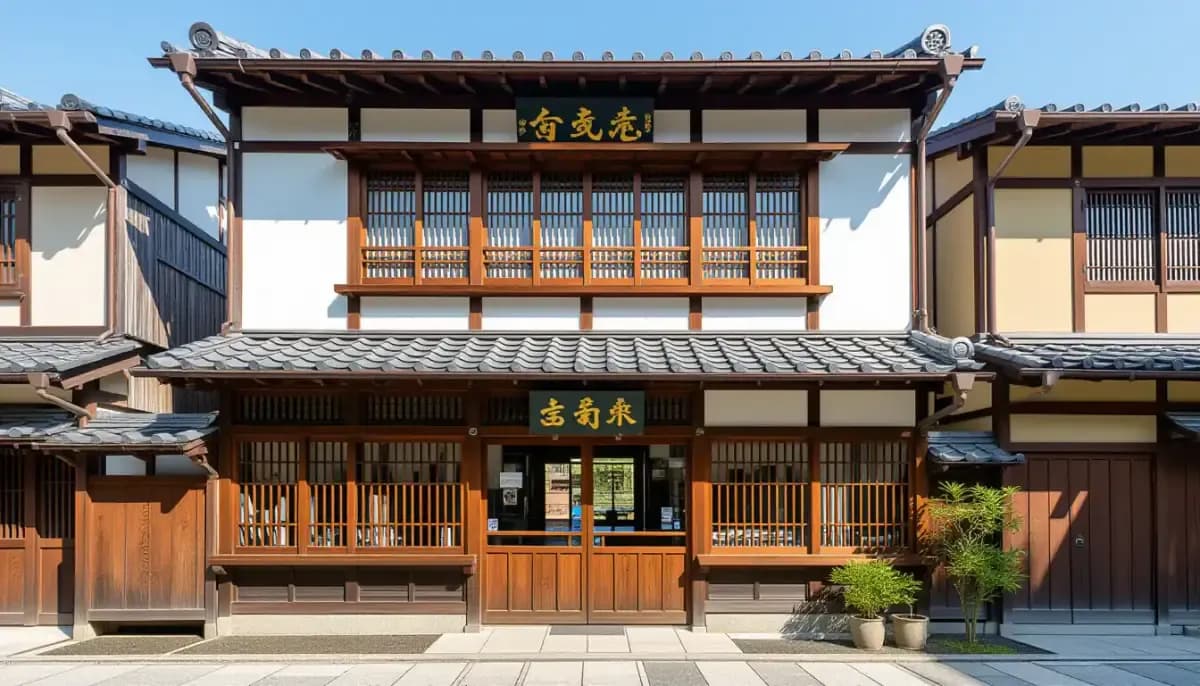
Kyoto Historic Preservation Areas and Property Rules
Understand Kyoto's strict historic preservation rules before buying property. Learn about machiya renovation restrictions, rebuilding-prohibited land, height limits, and what foreigners must know about purchasing in Kyoto's heritage districts.
Read more →