
How Japan's Population Decline Impacts the Housing Market

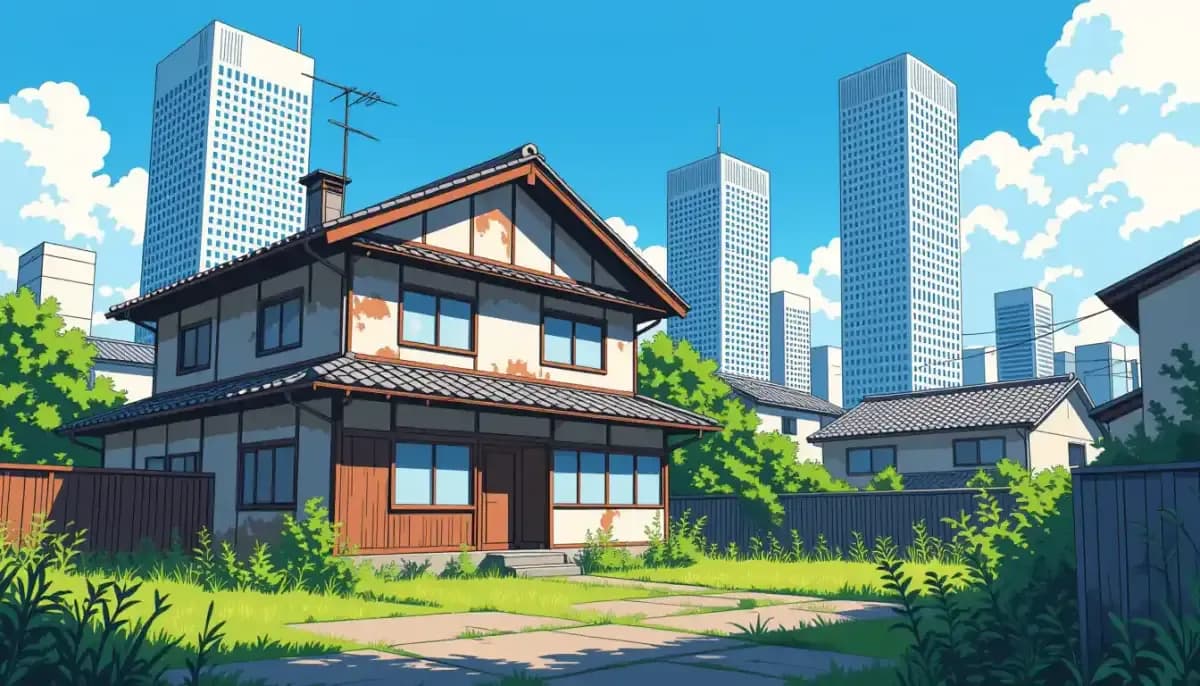
Japan's population decline is reshaping the real estate market, creating a 9-million akiya vacancy crisis and bifurcated prices. Learn how demographic trends create both risks and opportunities for foreign property buyers in Japan.
How Japan's Population Decline Impacts the Housing Market
Japan is experiencing one of the most dramatic demographic shifts of any developed nation, and the consequences for the housing market are profound. With a shrinking population, aging society, and a glut of vacant homes spreading from rural prefectures to even the outskirts of major cities, the Japanese real estate landscape is being fundamentally reshaped. For foreign buyers and investors, understanding how population decline affects property values, supply, and opportunity is essential before making any purchase decision.
This guide breaks down the mechanisms behind Japan's demographic crisis, how it creates both risks and remarkable opportunities in the housing market, and what savvy foreign buyers need to know to navigate this unique environment.
The Scale of Japan's Population Decline
Japan's population has been declining for 16 consecutive years. In 2024 alone, the population fell by approximately 550,000 people to 123.8 million — a drop equivalent to losing the entire population of a mid-sized city every year. The country's total fertility rate stands at just 1.32, far below the 2.1 replacement level needed to maintain a stable population.
Projections are stark. Japan's population is expected to shrink from around 125 million to just 87 million within 50 years. The "2025 Problem" — the year when all post-war baby boomers (born 1947–1949) became 75 or older — marks a critical inflection point. Over 18% of Japan's population is now classified as late-stage elderly, creating enormous pressure on healthcare, social services, and housing demand patterns.
The generational shift in homeownership tells the story clearly. Homeownership among 30–34 year-olds has collapsed from 45.7% in 1983 to just 26.3% in 2018, while senior-owned homes have surged from 2.46 million to 15.33 million over the same period. As these elderly homeowners pass away, an unprecedented number of properties will enter (or sit vacant in) the market.
For broader context on how these trends affect real estate investment in Japan, see the Japan Real Estate Market Overview and Trends.
The Akiya (Vacant House) Crisis
Perhaps the most visible consequence of population decline is Japan's massive — and growing — akiya problem. "Akiya" (空き家) literally means "empty house," and there are approximately 9 million of them across Japan. The vacancy rate already stood at 13.6% of all housing stock in 2018. By 2033, analysts project that vacant properties could represent one-third of Japan's entire housing stock.
Even Tokyo is not immune: one in eight houses in Japan's capital currently sits empty. In rural prefectures like Wakayama, Kochi, and Tokushima, vacancy rates exceed 20%, with entire neighborhoods falling silent as younger generations migrate to urban centers.
| Region | Approximate Vacancy Rate | Trend |
|---|---|---|
| Tokyo (central wards) | ~5-8% | Stable/rising prices |
| Greater Tokyo suburbs | ~12-15% | Gradual increase |
| Osaka/Nagoya metro | ~10-13% | Mixed |
| Rural prefectures | 18-25%+ | Accelerating |
| Depopulating towns | 30-50%+ | Severe |
The akiya crisis is not simply an aesthetic problem — it represents a structural mismatch between where housing exists and where people want to live. For foreign buyers, this creates extraordinary bargains in rural areas, but requires careful due diligence on marketability, renovation costs, and long-term liquidity.
For more on this specific opportunity, see our guide on Rural and Countryside Properties in Japan for Foreign Buyers.
How Population Loss Distorts Property Prices
A landmark IMF Working Paper (No. 2020/200) on demographics and Japan's housing market established a crucial and counterintuitive finding: the decline in housing prices associated with population loss is larger than the price rise associated with population gains. This asymmetry exists because housing is durable — homes don't disappear when their occupants move away, so supply remains while demand evaporates.
The research found that a 1% increase in population correlates with approximately a 5 percentage point rise in house prices. Applied in reverse, this means sustained population decline exerts persistent downward pressure on prices in affected areas. Worse, falling prices can trigger a negative feedback loop: declining property values push remaining residents out, further accelerating depopulation.
This dynamic plays out starkly across Japan today:
- Tokyo: Condo prices rose 64% over four years. Used condominium prices hit ¥44.51 million in April 2025, up 28.3% annually. Tokyo's 12.62% year-on-year price growth (as of mid-2025) reflects continued domestic and international demand concentrated in urban cores.
- Rural Japan: Many regional markets have experienced decade-long price stagnation or decline, with some properties available for as little as ¥1 million (or even free through akiya banks) due to negative demand.
This bifurcation — a booming urban core alongside a depressed periphery — is the defining feature of Japan's population-influenced housing market.
For an in-depth look at urban opportunities, see Buying Property in Tokyo as a Foreigner: Complete Area Guide.
Foreign Investment: Filling the Demographic Gap
As domestic demand softens due to population decline, foreign investors have stepped in with increasing force. Foreign buyers now account for over 27% of all Japanese real estate purchases, up from 21% just five years ago. In premium central Tokyo wards — Chiyoda, Shibuya, and Minato — foreigners account for up to 40% of new condominium sales.
Several factors drive this trend:
- Currency advantage: The yen's 35%+ decline against the USD since 1994 makes Japanese properties dramatically cheaper for foreign buyers. A ¥50 million apartment in Tokyo translates to roughly $330,000 USD at 2025 exchange rates — a fraction of equivalent-quality property in comparable global cities.
- No ownership restrictions: Unlike many countries, Japan imposes no legal restrictions on foreign property ownership. Foreigners can buy land, buildings, and condominiums on the same terms as Japanese nationals.
- Price discovery in the akiya market: As the government actively promotes akiya banks and rural revitalization subsidies, foreign buyers are pioneering purchases in areas where domestic buyers have largely retreated.
- Relative stability: Despite demographic headwinds, Japan's urban real estate has outperformed many global markets. Foreign investment in Japanese real estate reached $10.2 billion in 2023, with a 45% increase in foreign investment flows in Q1 2024.
For practical guidance on accessing the market, Living in Nihon's guide to buying property in Japan provides an excellent overview of the legal framework and mortgage conditions for foreigners.
Housing Starts at Historic Lows: What It Means for Buyers
One consequence of demographic decline is a significant slowdown in new construction. Annual housing starts fell 3.35% year-on-year in 2024 to just 792,195 units — the first time in 15 years that new construction fell below 800,000 units annually. In April 2025 alone, housing starts plunged 26.6% year-on-year.
This contraction in new supply has several implications for buyers:
- Used properties gain relative value: As new construction contracts, the used property market becomes proportionally more important. Well-located used properties in urban areas are increasingly competitive with new builds.
- Quality variation increases: With fewer new homes being built, the age and condition of Japan's housing stock is deteriorating overall, making inspection and due diligence more important than ever.
- Regional construction collapse: In declining rural areas, contractors and architects are consolidating into urban centers, making renovation projects in depopulating areas more expensive and logistically challenging.
For more details on new vs. used property dynamics, see our guide on New Construction vs Used Properties in Japan: Buyer's Guide.
Senior Housing Demand: A Structural Shift in Urban Markets
The "2025 Problem" has triggered a structural shift in what type of housing is in demand. As all post-war baby boomers cross the 75-year threshold, several urban housing trends are emerging:
- Barrier-free retrofitting: Demand is surging for properties with accessibility features — wider doorways, grab bars, no-step entrances, and elevator access. Properties that lack these features in senior-heavy neighborhoods face growing obsolescence.
- Proximity to healthcare: Urban neighborhoods near major hospitals and elderly care facilities are becoming premium locations. This is reshaping demand patterns in cities like Tokyo, Osaka, and Nagoya.
- Downsizing wave: As elderly homeowners pass away or enter care facilities, their suburban single-family homes — often in areas with declining transport links and aging infrastructure — are entering the market in growing numbers.
For foreign buyers interested in the investment angle, this shift creates both a challenge (suburban properties in some areas face structural oversupply) and an opportunity (urban apartments near medical and transit hubs remain in high demand). Gaijin Buy House's analysis of Japan's real estate market trends provides an expert forecast of where this urban concentration is heading.
Government Responses and Policy Opportunities for Foreign Buyers
The Japanese government is acutely aware of the akiya crisis and demographic pressure on housing. Several policy responses create direct opportunities for foreign buyers:
| Policy | Description | Benefit for Foreign Buyers |
|---|---|---|
| Akiya Banks | Municipal databases of vacant homes available for purchase or rent | Access to deeply discounted properties with official municipal support |
| Renovation Subsidies | National and prefectural grants for renovating vacant homes | Can cover 50-100% of renovation costs in some programs |
| Inaka Gurashi Programs | "Rural living" programs offering relocation grants of up to ¥1 million per child | Financial support for families moving to depopulating areas |
| Special Zones | Designated areas with streamlined purchase processes and development incentives | Reduced bureaucratic friction for foreign investors |
| Minpaku (Airbnb) Licensing | Simplified short-term rental licensing in some designated zones | Revenue potential to offset purchase costs |
These programs are specifically designed to attract buyers — including foreigners — to areas where population decline has created property oversupply. However, eligibility criteria, subsidy availability, and local conditions vary significantly by municipality. Working with a real estate agent experienced in akiya transactions and government programs is essential.
For housing guidance aimed at foreigners living and working in Japan, For Work in Japan's housing guide covers practical aspects including the challenges and solutions available in the current market.
Risk Factors: What Population Decline Means for Long-Term Value
Population decline is not just an opportunity — it carries real risks that foreign buyers must understand:
Liquidity risk in declining areas: Property in depopulating municipalities may be nearly impossible to resell in 10–20 years. Even properties purchased at steep discounts can become worthless if the local population falls below a critical threshold for services and infrastructure.
Infrastructure withdrawal: As populations decline, local governments may withdraw or reduce services — schools, hospitals, bus routes, post offices — creating a spiral of desirability decline that further depresses property values.
Inheritance complexities: Japan's complex inheritance system, combined with population decline, has created a large stock of properties with unclear or multiple ownership claims. Conducting thorough title searches is non-negotiable.
Renovation costs: Many akiya have been vacant for years or decades, with deferred maintenance, pest infestations, and structural deterioration. Renovation costs in rural areas can easily exceed the purchase price.
Agricultural land restrictions: Properties in rural areas may come with attached agricultural land subject to separate legal restrictions, complicating ownership and development plans.
For a complete understanding of the legal framework around purchasing, see our guide on Legal Procedures and Documentation for Japan Property Purchase.
The Bottom Line: Navigating a Bifurcated Market
Japan's population decline has created a housing market of dramatic contrasts. In central Tokyo and major urban cores, international demand, limited supply, and continued economic activity are driving prices to record highs — making these markets competitive and expensive even by global standards. Meanwhile, vast swathes of regional Japan are experiencing the economic consequences of demographic contraction, with cheap or free properties available to buyers willing to take on the challenges of rural ownership.
For foreign buyers, the strategic question is not whether population decline affects the market — it clearly does — but which segment of the market aligns with your goals:
- Capital appreciation and liquidity: Focus on central Tokyo, Osaka, or Fukuoka urban cores where international demand offsets demographic pressure.
- Rental income: Mid-tier urban areas with strong employment bases offer the best risk-adjusted yields.
- Lifestyle and value: Rural akiya offer extraordinary value for buyers willing to renovate and accept limited liquidity.
- Speculative opportunity: Areas on the periphery of growing cities, or towns benefiting from government incentives, offer potential upside at lower entry prices.
For more on the full spectrum of Japan's real estate market for foreign investors, see the Japan Real Estate Investment Guide for Foreigners and the comprehensive Japan Real Estate Market Overview.
For further data-driven analysis of Japan's demographic housing dynamics, the IMF Working Paper on demographics and Japan's housing market and Capital.com's 2025 Japan housing market analysis provide rigorous academic and market perspectives.
Japan's population decline is reshaping its housing market in ways that will continue to accelerate over the coming decades. Understanding this transformation is not just background knowledge — it is the foundation of any sound real estate strategy in Japan.

Originally from Vietnam, living in Japan for 16+ years. Graduated from Nagoya University, with 11 years of professional experience at Japanese and international companies. Sharing information about buying property in Japan for foreigners.
View Profile →Related Articles
Weak Yen Impact on Japan Property Investment for Foreigners
Learn how Japan's weak yen creates major buying advantages for foreign property investors. Discover real savings, rental yields, legal framework, and key risks to navigate in 2025.
Read more →
Japan vs Other Asian Countries: Real Estate Market Comparison
Compare Japan's real estate market against Hong Kong, Singapore, Thailand and other Asian countries. Full analysis of prices, ownership rights, yields, and transaction costs for foreign buyers in 2025.
Read more →
Japan Construction Industry Trends and New Home Development
Understand Japan's construction industry trends, new home development statistics, prefab housing growth, labor challenges, and what it means for foreign buyers planning to purchase or build in Japan.
Read more →
Best Cities to Invest in Japan Real Estate in 2026
Discover the top Japanese cities for real estate investment in 2026. Compare Tokyo, Osaka, Fukuoka, Sapporo rental yields, prices, and tips for foreign buyers entering the market.
Read more →
Japan Property Market Bubble History: Lessons for Today's Buyers
Learn from Japan's 1991 property bubble collapse — when prices fell 90% — and apply those hard-won lessons to buying property in Japan as a foreigner in 2025's rising market.
Read more →
Japan Luxury Real Estate Market Trends for High-Net-Worth Buyers
Discover Japan's luxury real estate market trends for 2026. Tokyo prices, Niseko resort properties, foreign buyer rules, financing tips, and strategic insights for high-net-worth buyers.
Read more →