
Flood Risk and Hazard Maps for Japan Property Buyers

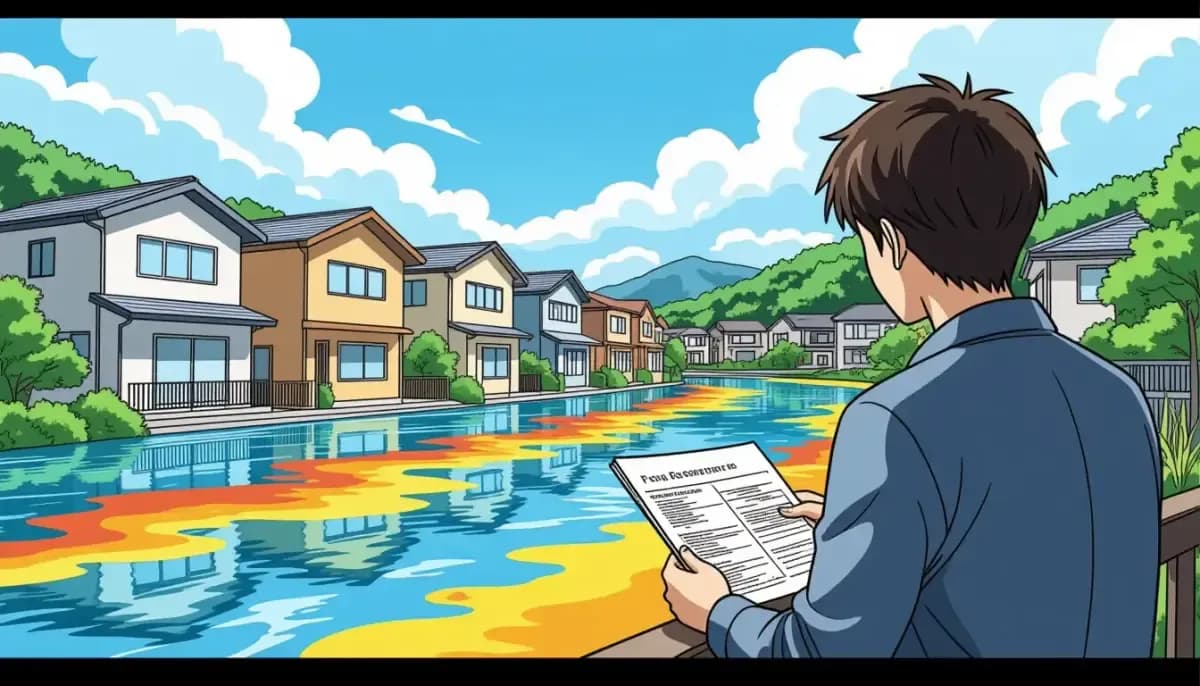
Learn how to read Japan's flood hazard maps (ハザードマップ) before buying property. Find risk zones, access the MLIT portal, and understand how flood risk affects property prices in Tokyo and across Japan.
Flood Risk and Hazard Maps for Japan Property Buyers: The Complete Guide
Buying property in Japan is an exciting opportunity — but one that carries a unique risk profile that many foreign buyers overlook: natural disaster exposure, and specifically flood risk. Japan's geography, climate, and aging infrastructure mean that flooding is one of the most common and financially damaging disasters homeowners face. The good news is that Japan has one of the most detailed and accessible flood hazard mapping systems in the world, and since 2020, sellers are legally required to disclose a property's flood risk designation.
This guide explains everything you need to know about flood hazard maps (ハザードマップ, hazard map) as a foreign property buyer in Japan — how to read them, where to find them, how flood risk affects property prices, and how to factor disaster risk into your purchasing decision.
For a broader overview of the property purchase process, see our Complete Guide to Buying Property in Japan as a Foreigner and our guide on Natural Disaster Preparedness for Homeowners in Japan.
What Is a Japanese Hazard Map (ハザードマップ)?
A hazard map (hazard map / ハザードマップ) is an official government-produced map that identifies areas at elevated risk from specific natural disasters. In Japan, these maps are created at the municipal level — each city, town, or ward produces its own — and are compiled nationally by the Ministry of Land, Infrastructure, Transport and Tourism (MLIT).
For property buyers, there are four primary types of flood-related hazard maps to understand:
| Map Type | Japanese Term | What It Shows |
|---|---|---|
| River overflow flood | 洪水 (kozui) | Areas inundated when rivers burst their banks |
| Inland flooding | 内水 (naisui) | Urban flooding from drainage overwhelm |
| Storm surge | 高潮 (takashio) | Coastal flooding from typhoon-driven high seas |
| Landslide | 土砂災害 (doshasaigai) | Areas at risk from slope failure and debris flows |
Each map uses color-coded inundation depth zones to show how high water is expected to rise in a worst-case scenario. Color schemes vary slightly by municipality, but generally range from pale yellow (shallow, under 0.5 meters) through orange to deep red or purple (5 meters or more, the most dangerous zones).
These are not theoretical exercises. Japan experiences roughly six typhoons per year that make landfall or bring severe rainfall, and torrential downpours exceeding 50mm per hour have roughly doubled since the late 1970s as the climate intensifies.
How to Read a Japanese Flood Hazard Map
Understanding the map is straightforward once you know the three key data points to check for any property:
1. Inundation Depth (浸水深, Shinsui-shin)
This tells you how deep floodwaters are expected to reach in the modeled worst-case event. This is the single most important figure:
- Under 0.5m: Manageable for an apartment above the first floor; ground floor and parking at risk
- 0.5m – 1.0m: Standard car doors open with difficulty; first floors at serious risk
- 1.0m – 2.0m: Most household furniture and fittings are submerged; structural damage likely
- 3.0m+: Catastrophic — most single-story homes would be fully inundated; evacuation impossible once flooding begins
For apartment buyers, an inundation depth of 1–3 meters may be acceptable if you're purchasing a 3rd-floor or higher unit. For detached house buyers, any significant inundation depth is a serious concern because vertical evacuation within the building may be insufficient.
2. Flood Duration (浸水継続時間, Shinsui-keizoku-jikan)
How long water will remain after the peak flooding matters enormously for habitability and structural damage. Some zones may see flooding that drains within hours; others — particularly low-lying reclaimed land in eastern Tokyo — may remain inundated for days or weeks after a major rainfall event. Extended flooding dramatically increases the risk of mold, structural weakening, and uninhabitability.
3. Building Collapse Risk Zones
Some areas near rivers and on steep slopes are marked as zones where the structure itself may collapse due to floodwater pressure or debris flows, not merely become inundated. These zones require a fundamentally different assessment — even vertical evacuation may not be safe.
Where to Access Flood Hazard Maps in Japan
National MLIT Hazard Map Portal (Recommended First Step)
The most powerful tool for property buyers is the national 重ねるハザードマップ (Kasaneru Hazard Map / Overlay Hazard Map), operated by MLIT via the Geospatial Information Authority of Japan. This free online tool allows you to:
- Enter any address in Japan and view all overlapping risk layers simultaneously
- Toggle between flood, landslide, tsunami, storm surge, and liquefaction maps
- View base elevation data to understand natural terrain elevation
Access it at: https://disaportal.gsi.go.jp/
For real-time risk during active weather events, the Japan Meteorological Agency's KIKIKURU real-time risk map (https://www.jma.go.jp/bosai/en_risk/) shows current flood risk based on live rainfall data.
Municipal Hazard Maps
Every city, town, and ward in Japan is required to produce and publish its own hazard maps. These can be:
- Downloaded from the municipal government website (search:
[ward name] 水害ハザードマップ) - Obtained in physical form at the city or ward office (市区町村役場)
- Often available in multiple languages for wards with large foreign populations — Tokyo wards including Shinjuku, Shibuya, Chuo, Chiyoda, and Minato have English-language versions
For a useful overview of reading hazard maps in Tokyo, the Tokyo Tsunagari multilingual guide to flood hazard maps provides clear English explanations of the four map types and what each element means.
During the Property Transaction
Since August 2020, Japanese real estate law requires sellers and agents to legally disclose a property's flood hazard map designation as part of the transaction process. This is mandatory under the amended Real Estate Transactions Act. You should receive a formal explanation of the property's hazard map status during the juyo jiko setsumei (important matters explanation) step.
However, real estate professionals strongly advise proactively requesting the hazard map information at the property viewing stage — before you've become emotionally attached to a property. Do not wait for the legal disclosure step.
For more on the legal procedures involved, see our guide to Legal Procedures and Documentation for Japan Property Purchase.
How Flood Risk Affects Property Prices in Japan
Understanding the price impact of flood risk is essential for making a financially sound decision — both for your purchase price and for long-term value preservation.
Research has quantified the relationship between hazard map designations and property values in Japan:
| Finding | Impact |
|---|---|
| House prices in Tokyo | ~4.2% lower per meter of expected inundation depth |
| Apartment prices in Tokyo | ~1.4% lower per meter (residents can use upper floors) |
| Zero-risk zone premium | 10%+ higher than comparable flood-zone properties |
| Post-Typhoon Hagibis (2019) | Properties in flooded areas fell ~6% in transaction price |
| Kanda River Basin (Tokyo) | Floodplain properties priced ~16.2% below non-floodplain equivalents |
| Nagoya (2010 study) | Publication of flood risk maps caused further devaluation in affected zones |
Sources: E-Housing market research; Bank of Japan Working Paper 2022; Frontiers in Water (Nagoya study); ScienceDirect (Typhoon Hagibis study)
The critical takeaway for buyers: flood-zone properties appear cheaper upfront, but carry structural financial risks — lower liquidity when selling, steeper long-term depreciation as climate risks become better understood, and higher insurance costs. Despite being legally required to disclose, approximately 60% of Tokyo residents remain unaware of their home's flood risk — which means current pricing may not fully reflect emerging climate-adjusted values.
For additional context on property valuation factors, see Japan Real Estate Market Overview and Trends and our full breakdown of Hidden Costs and Fees When Buying Property in Japan.
Flood Risk Geography: Which Areas Are Safest?
Tokyo
Tokyo presents one of the most stark flood risk divides of any major city. The JR Keihin-Tohoku Line serves as a rough geographic boundary:
Higher-risk eastern lowlands (shitamachi):
- Adachi, Sumida, Koto, Edogawa, and Arakawa wards
- Low-lying, partially below sea level, near the Arakawa, Sumida, and Edogawa rivers
- Historically reclaimed or filled land with soft soil (also high liquefaction risk)
- Some areas could face 5+ meters of inundation in a worst-case levee failure scenario
Lower-risk elevated western zones (yamanote):
- Yamanote Plateau: Bunkyo (Koishikawa, Hakusan), Shibuya highlands (Daikanyama, Shoto), Minato (Roppongi, Azabu), Setagaya (Seijo), Suginami (Ogikubo, Asagaya)
- Musashino Plateau: Mitaka, Kichijoji (in Musashino City), western Suginami
- These areas sit 20–50+ meters above sea level; even catastrophic levee failure cannot inundate them
For a full guide to safe neighborhoods for foreign buyers in Tokyo, see Buying Property in Tokyo as a Foreigner.
Reading Place Names as a Quick Risk Indicator
Japanese kanji in neighborhood names offer a free, immediate terrain clue before you even open a hazard map:
Lower risk (elevated terrain indicators):
- 山 (yama) = mountain
- 台 (dai) = plateau/terrace
- 丘 (oka) = hill
- 上 (kami/jo) = upper
Higher risk (low terrain indicators):
- 川 (kawa) = river
- 橋 (hashi) = bridge
- 田 (ta) = paddy field
- 谷 (tani) = valley
- 浜 (hama) = beach/shore
- 沢 (sawa) = marsh/swamp
This is not a substitute for checking the actual hazard map, but it's a useful first filter when scanning property listings.
For regional guides covering Osaka, Nagoya, and other cities, see Buying Property in Osaka as a Foreigner and Buying Property in Nagoya and Chubu Region.
Practical Tips for Foreign Property Buyers
Before Viewing a Property
- Check the MLIT Overlay Hazard Map first (disaportal.gsi.go.jp) — enter the address and review all risk layers before traveling to a viewing. This takes under 5 minutes and can eliminate properties immediately.
- Check property elevation — use Google Maps terrain view or the MLIT portal's elevation function. Properties above 20–30 meters are generally outside major flood zones.
- Read the place name kanji for a quick terrain assessment (see table above).
During the Property Search
- Request hazard map information at viewing — don't wait for the legal disclosure step. Ask your real estate agent to show you the municipal hazard map for the specific address at the initial viewing.
- Check multiple map types — river overflow and inland flooding are separate maps. A property safe from river flooding may still be in a high-risk zone for drainage-overwhelm flooding during intense urban rainfall.
- Verify the flood duration — inundation depth alone doesn't tell you whether floodwaters drain in hours or days.
Evaluating the Risk
- Apartment vs. house matters — in moderate flood zones, apartments above the 3rd floor face limited personal risk, and price impacts are smaller (~1.4% per meter vs. 4.2% for houses). Ground-floor apartments in flood zones face the same risk as houses.
- Avoid pre-1982 buildings — older buildings pre-date modern seismic codes and typically lack modern flood resilience features.
- Be cautious with reclaimed land — properties on埋立地 (umetate-chi, reclaimed/landfill land) near water combine high flood risk with high liquefaction risk in earthquakes.
- Factor in insurance costs — flood risk affects property insurance premiums. Get insurance quotes before finalizing a purchase to understand the true cost of ownership.
For comprehensive insurance guidance, see Insurance for Property Owners in Japan.
Further Resources
For foreign buyers navigating Japan's property market, the following resources provide additional guidance:
- Living in Nihon — Japan Property and Mortgage Guide for Foreigners: Comprehensive overview of the purchase and mortgage process for foreigners
- Gaijin Buy House — Complete Guide to Buying Property in Japan: Covers legal requirements, the 8-step purchase process, and foreign buyer considerations including the 2025 Foreign Exchange Act disclosures
- REthink Tokyo — Hazard Maps for Buyers: Practical guide to reading Tokyo hazard maps, including earthquake and liquefaction overlays
- TIPS Tokyo Tsunagari — Flood Hazard Map Guide (English): Multilingual explanation of Japan's four flood map types
- E-Housing — Flood-Safe Areas of Tokyo for 2025: Current market analysis of flood risk and buyer behavior in Tokyo
- For Work in Japan — Living and Working in Japan: Broader guide for foreigners building a life in Japan
For a complete property-buying checklist that includes disaster risk assessment, see our Japan Property Buying Checklist for Foreign Buyers.
Summary
Japan's flood hazard mapping system is among the most detailed in the world, and foreign property buyers have free access to all the tools needed to assess any property's risk profile. The key steps are:
- Check the MLIT Overlay Hazard Map portal before visiting any property
- Understand inundation depth, flood duration, and building collapse risk — not just zone designation
- Request formal hazard map disclosure from your agent at the viewing stage
- Factor flood risk into both your purchase price negotiation and your long-term value assessment
- Prefer elevated terrain (Yamanote/Musashino Plateau in Tokyo, hillside locations elsewhere) if flood risk is a concern
Flood-zone properties may offer lower entry prices, but they carry real long-term financial and safety risks — risks that are only likely to grow as Japan's rainfall intensity continues to increase. A few minutes on the hazard map portal before each property viewing is one of the highest-value due diligence steps any buyer can take.
For related due diligence guides, see Common Mistakes and Scams to Avoid When Buying Property in Japan and our overview of Working with Japanese Real Estate Agents as a Foreigner.

Originally from Vietnam, living in Japan for 16+ years. Graduated from Nagoya University, with 11 years of professional experience at Japanese and international companies. Sharing information about buying property in Japan for foreigners.
View Profile →Related Articles
Climate Change Impact on Japan Property Risk Assessment
Learn how climate change affects Japan property risk—flood zones, earthquake hazards, typhoon exposure—and how foreign buyers can assess risk using Japan's hazard maps and mandatory disclosure rules.
Read more →
Disaster Rebuilding and Insurance Claims Process in Japan
Learn how Japan's earthquake insurance and disaster rebuilding process works for foreign homeowners. Covers claims steps, payout tiers, premiums, and practical tips for expats.
Read more →
How to Read and Use Japan Hazard Maps for Property Purchase
Learn how to read and use Japan's official hazard maps before buying property. Understand flood, earthquake, and tsunami risk zones with this step-by-step guide for foreign buyers.
Read more →
Emergency Supplies and Kit Guide for Japan Homeowners
Build the perfect emergency kit for your Japan home. Essential bosai bag checklist, where to buy supplies, and special tips for foreign homeowners in earthquake-prone Japan.
Read more →
Creating a Disaster Evacuation Plan for Your Japan Home
Learn how to create a disaster evacuation plan for your Japan home as a foreign homeowner. Covers Japan's alert systems, hazard maps, emergency kits, shelter locations, and post-disaster rights for foreigners.
Read more →
Seismic Retrofitting Options for Older Homes in Japan
Learn about seismic retrofitting options for older homes in Japan: costs, government subsidies up to ¥3M, tax incentives, and step-by-step process for foreign buyers.
Read more →