
Buying Agricultural and Farm Land in Japan as a Foreigner

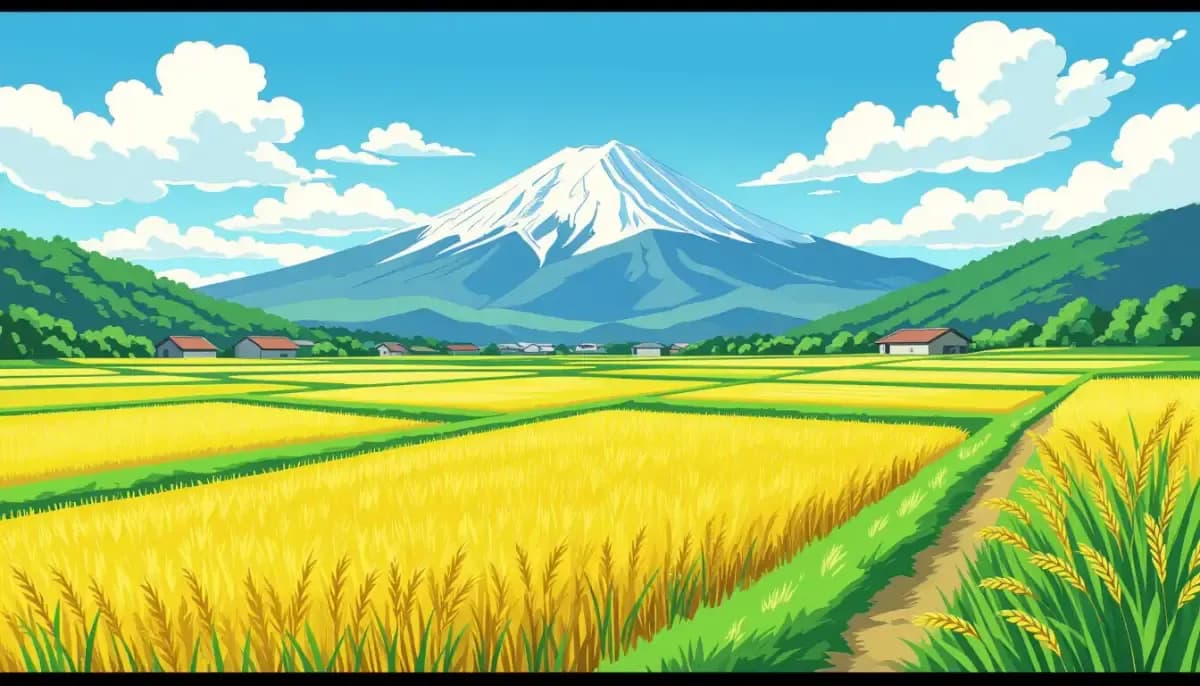
Can foreigners buy agricultural and farm land in Japan? Learn the Agricultural Land Act requirements, 2025 restrictions, application process, and alternative options for foreign buyers.
Buying Agricultural and Farm Land in Japan as a Foreigner
Japan's countryside is filled with breathtaking rice paddies, vegetable farms, and fruit orchards — and for many foreigners dreaming of a rural lifestyle or agricultural investment, the idea of owning a piece of this land is deeply appealing. But buying agricultural and farm land in Japan as a foreigner is one of the most complex real estate challenges you can attempt in this country. Unlike residential property, which foreigners can buy with relatively few restrictions, farmland is governed by a strict legal framework designed to protect Japan's food security and keep land in the hands of active farmers.
This guide explains the legal requirements, the application process, recent regulatory changes in 2025, and alternative pathways that may be more accessible for foreigners who want to pursue agricultural activities in Japan.
The Agricultural Land Act: Japan's Core Farmland Law
All farmland transactions in Japan are governed by the Agricultural Land Act (農地法, Nōchi Hō), enacted in 1952. This law requires that anyone — Japanese or foreign — who wants to buy or transfer agricultural land must obtain permission from the local Agricultural Commission (農業委員会, Nōgyō Iinkai) before the transaction takes place.
There are two key articles you need to understand:
- Article 3: Governs purchases of farmland where the land will continue to be used for farming. This is the article that applies to most would-be farmer buyers.
- Article 5: Governs cases where farmland will be converted to another use (e.g., building a house or a factory). This requires a different type of approval and is generally harder to obtain.
Importantly, the Agricultural Land Act does not explicitly ban foreigners from owning farmland. The Chambers & Partners Agribusiness 2025 guide confirms: "There are no regulations directly restricting the ownership of cropland by foreign nationals or foreign corporations." However, the practical requirements for approval create enormous barriers.
Japan has 1,696 Agricultural Commissions operating across its municipalities. Each commission operates independently, meaning approval standards, attitudes toward foreign buyers, and processing times vary dramatically from region to region. Some rural municipalities actively welcome new farmers; others are highly skeptical.
Who Qualifies to Buy Agricultural Land in Japan?
To receive an Article 3 permit, the buyer must meet strict farmer qualification criteria. These requirements apply equally to Japanese and foreign nationals, but in practice they are much harder for foreigners to satisfy.
Individual Buyers
A foreign individual residing in Japan can apply to purchase farmland directly, provided they meet all of the following requirements:
- Legal residence in Japan with a valid residency status and registered address in the area
- Full-time farming commitment: Agriculture must be the primary occupation, not a side activity
- Minimum 150 farming days per year: The applicant must be able to demonstrate they will work the land at least 150 days annually
- Minimum 3-year commitment: The buyer must maintain farming operations on the land for at least three years
- Farming business plan: A detailed plan including crop types, equipment, and financial projections must be submitted
- Equipment and resources: Evidence of access to farming machinery (owned or rented) and sufficient capital
The requirement that farming be a primary occupation is a significant hurdle. If you hold a salaried job in Japan, you generally cannot qualify. The commission expects the land to be actively and professionally farmed — not used as a weekend hobby garden.
Corporate Buyers
Foreign companies and investors who want to acquire farmland through a corporate structure face additional layers of requirements. Japan only allows a specially qualified entity called a "Corporation Qualified to Own Cropland" (農地所有適格法人, Nōchi Shoyū Tekikaku Hōjin) to hold agricultural land.
To qualify as such a corporation:
- Must be a non-public stock company, agricultural cooperative, or membership company (not publicly listed)
- Agriculture must represent the majority of the company's revenue
- Farmers must hold 75% or more of voting rights
- A majority of directors must regularly engage in farming operations
- Officers must perform farmwork for a minimum of 60 days annually
- Employees/shareholders who are farmers must work a minimum of 150 days per year on company land
These rules are specifically designed to prevent farmland from being held by passive investors or corporations with no genuine farming activity. An overseas-based foreign company cannot directly purchase cropland — they would need to establish and qualify a Japanese subsidiary under these criteria.
| Requirement | Individual Buyer | Corporate Buyer |
|---|---|---|
| Residency in Japan | Required | Required (for key officers) |
| Primary occupation | Must be farming | Agriculture must be main revenue |
| Farming days per year | 150+ days | Officers: 60+ days; workers: 150+ days |
| Minimum commitment | 3 years | Ongoing |
| Voting rights | N/A | Farmers must hold 75%+ |
| Agricultural Commission approval | Yes (Article 3) | Yes (Article 3) |
| Business plan required | Yes | Yes |
The Application Process: Step by Step
If you believe you can meet the qualification requirements, here is how the application process typically works:
Step 1: Identify the land and contact the Agricultural Commission Before anything else, contact the local Agricultural Commission in the municipality where the land is located. They can tell you if there are any special rules or barriers in that area. Contacting them early also signals good faith.
Step 2: Prepare documentation You will need to gather:
- Certificate of residence (住民票, jūminhyō) from your local city hall
- Copy of your residence card (在留カード)
- Farming business plan (作付計画書) detailing crops, schedule, equipment
- Financial statements or proof of income stability
- Information on farming equipment (purchase receipts or rental agreements)
- Disclosure of nationality and residency status (required since September 2023)
- Visa expiration date (required for disclosure since April 2025)
Step 3: Submit the Article 3 application The application is submitted to the Agricultural Commission. Processing times vary, but typically take 1–3 months. The commission may conduct interviews or site visits.
Step 4: Receive approval and complete the purchase If approved, you proceed with a standard real estate transaction — engaging a licensed real estate agent (宅建士), completing a purchase contract, and registering the title at the Legal Affairs Bureau (法務局).
For more on the general property purchase process in Japan, see our Complete Guide to Buying Property in Japan as a Foreigner.
2025 Regulatory Tightening: What Changed
April 2025 brought significant changes to how agricultural commissions evaluate foreign applicants. New rules now require commissions to reject applications from foreigners whose residency status will expire soon. The definition of "soon" is determined on a case-by-case basis, taking into account the typical harvest period for the crops in the business plan — if your visa will expire before you could complete a single harvest cycle, the application may be denied.
This change reflects growing concerns in Japan about food security and the risk that foreign buyers could acquire farmland, let it go fallow, and then depart — disrupting local agricultural production.
Additional requirements introduced in late 2025 include nationality disclosure for large land purchases across all real estate types. Japan's government has been studying farmland restriction models used by Canada, Germany, South Korea, and Taiwan, and further tightening of rules is expected by 2026–2027.
For context on how these changes fit into the broader picture of property restrictions for foreigners in Japan, see Can Foreigners Buy Property in Japan? Legal Rights and Restrictions.
These changes underscore the importance of having long-term stable residency in Japan before attempting to purchase farmland. Those on permanent residency (永住権) or spousal visas with long remaining validity are in a significantly stronger position.
For a detailed look at how visa and residency status affects property purchases of all types, visit Visa and Residency Considerations for Property Buyers in Japan.
Alternative Pathways: Easier Routes for Foreign Buyers
Given the strict requirements for purchasing agricultural land, many foreigners find that alternative approaches better suit their situation.
Leasing Farmland Instead of Buying
Japanese law allows farmland to be leased (賃貸) under Article 3 as well, though rental agreements for farmland also require agricultural commission approval. Leasing is often easier to obtain than purchasing and allows you to build a track record as a farmer before applying to buy. Many municipalities offer programs matching new farmers with land owners who want to lease unused fields.
Mountain and Forest Land (山林, Sanrin)
This is perhaps the most accessible option for foreigners interested in land-based rural living. Forest and mountain land is not subject to the Agricultural Land Act and can be purchased freely by foreigners without any farmer qualification requirements or agricultural commission approval. Some foreigners buy forested plots and use parts of them for vegetable gardens, orchards, or small-scale food production without technically engaging in "agriculture" under the law.
Gaijin Buy House provides an excellent overview of land purchase options including non-agricultural rural land that may suit foreigners looking for countryside properties.
Akiya (空き家) — Abandoned Properties with Land
Rural Japan has hundreds of thousands of abandoned properties, many with attached land. If that attached land is registered as zakkisochi (雑種地, miscellaneous land) or takuchi (宅地, residential land) rather than farmland, it can be purchased without agricultural commission approval. Some of these properties come with gardens or small plots suitable for subsistence farming. See our guide on Rural and Countryside Properties in Japan for Foreign Buyers.
Plant Factories and Protected Agriculture
Artificial-light farming facilities and greenhouses built on non-agricultural land (e.g., commercial or industrial zoned land) are entirely outside the Agricultural Land Act. This route is particularly relevant for foreign investors interested in high-tech agriculture, hydroponics, or vertical farming.
Solar Sharing (ソーラーシェアリング)
Japan allows "solar sharing" — dual-use installations where solar panels are erected above agricultural land, with crops grown underneath. These projects operate on 10-year temporary conversion permits. As of 2022, over 5,300 solar sharing projects covering more than 1,200 hectares had been approved. Foreign investors interested in renewable energy + agriculture may find this an intriguing niche.
Japan's Agricultural Land Market: Context for Foreign Buyers
Understanding the broader context helps explain both the restrictions and the opportunities:
| Metric | Data |
|---|---|
| Core farming workforce (2024) | ~1,114,000 people |
| Farmers aged 65 or older | 71.7% |
| Average farmer age | 69 years, 2 months |
| Farm operators in 2000 vs. 2024 | 2,367,000 → 883,000 |
| Foreign cropland owners in Japan (2022) | 114 entities / 154 hectares |
| Foreign cropland owners in Japan (2023) | 239 entities / 90 hectares |
| Forested land owned by foreigners | ~9,500 hectares |
| Agricultural exports 2024 | ¥981.8 billion (record high) |
Japan's farming sector is aging rapidly. With over 70% of farmers now past retirement age and the total number of farm operators dropping by more than 60% since 2000, there is genuine concern about who will work the land in coming decades. In theory, this creates an opportunity for committed foreign farmers — and some municipalities are actively trying to attract them. The challenge is threading the needle of the regulatory requirements while building the long-term residency stability that Japanese law now increasingly demands.
For information on the financial side of property ownership in Japan, including tax obligations and carrying costs, see Property Taxes and Annual Costs of Owning Property in Japan.
Practical Advice for Foreigners Considering Agricultural Land
If you are seriously considering buying or leasing farmland in Japan, here is a realistic roadmap:
- Secure long-term residency first: Permanent residency is ideal. Any visa with less than 3–5 years of remaining validity will significantly reduce your chances of approval under the new 2025 rules.
- Start with leasing, not buying: Contact local agricultural commissions or municipal agricultural promotion offices about leasing agreements for abandoned farmland. This builds your credibility as a farmer.
- Join a farming cooperative or regional farming program: Many prefectures run programs to attract new farmers (shinkinogyousha, 新規農業者) with subsidies, training, and land matching services. These programs can smooth the path toward eventual purchase.
- Consult an agricultural lawyer or certified administrative scrivener (行政書士): The application process is complex and municipality-specific. A professional familiar with local agricultural commission procedures is invaluable.
- Learn Japanese: The entire application process, all documentation, and all communications with the agricultural commission will be in Japanese. At minimum, you will need a reliable interpreter.
- Consider the alternatives seriously: Forest land, rural residential properties with gardens, and smart-agriculture on non-agricultural land may better fit your timeline, resources, and visa situation.
For detailed guidance on the broader property buying process in Japan, including working with agents and lawyers, see the Step-by-Step Home Buying Process in Japan for Foreigners.
Living in Nihon is an excellent resource for understanding everyday life as a foreign resident in Japan, including rural living considerations that complement the legal framework described here.
For those also considering employment options while pursuing a farming lifestyle, For Work in Japan provides guidance on working as a foreigner in Japan, including agricultural sector opportunities.
For more authoritative legal analysis on Japan's agricultural regulations, the Chambers & Partners Agribusiness 2025 Japan guide provides an excellent English-language overview.
Conclusion
Buying agricultural and farm land in Japan as a foreigner is genuinely possible — but it is far more difficult than purchasing a condominium or even a house in the countryside. The Agricultural Land Act creates a framework that requires buyers to be committed, qualified farmers with long-term residency, a detailed business plan, and approval from local authorities who have considerable discretion. Recent 2025 rule changes have made the visa situation even more critical.
For many foreigners, alternative options — leasing farmland, buying forest land, or finding rural properties with cultivatable gardens — may be more practical starting points. Japan's aging farming population and rural depopulation do create genuine openings for motivated foreign farmers willing to commit fully to agricultural life. But that commitment must be real, documented, and backed by stable legal residency.
If you are ready to invest the time, language skills, and long-term dedication that agricultural land ownership requires, Japan's countryside can offer extraordinary opportunities. Go in with clear eyes, the right professional support, and a realistic timeline.

Originally from Vietnam, living in Japan for 16+ years. Graduated from Nagoya University, with 11 years of professional experience at Japanese and international companies. Sharing information about buying property in Japan for foreigners.
View Profile →Related Articles
Japan Depopulation Areas: Opportunity vs Risk for Property Buyers
Explore the real opportunities and serious risks of buying property in Japan's depopulation zones. From ¥2M akiya prices to renovation costs, resale challenges, and which areas show genuine potential for foreign buyers.
Read more →
Access and Transportation in Rural Japan: What Property Buyers Should Know
Everything foreign property buyers need to know about access and transportation in rural Japan — car dependency, train coverage, license requirements, and how transport affects property values.
Read more →
Best Rural Prefectures in Japan for Foreign Buyers
Discover the best rural prefectures in Japan for foreign property buyers. Compare Nagano, Niigata, Tohoku, Oita, and more — with prices, subsidies, and practical tips for buying countryside property in Japan.
Read more →
Self-Sufficient Living in Rural Japan: A Foreigner's Guide
Discover how foreigners can build a self-sufficient lifestyle in rural Japan — from akiya housing and farming to community integration, relocation subsidies up to ¥3M, and remote work strategies.
Read more →
Renovating Old Houses in the Japanese Countryside
Everything foreigners need to know about renovating old houses in rural Japan: akiya renovation costs, government subsidies, finding contractors, community integration, and common mistakes to avoid.
Read more →
Integrating into Rural Japanese Communities as a Foreign Buyer
A complete guide for foreign buyers on integrating into rural Japanese communities: chonaikai participation, moving-in etiquette, waste rules, government relocation incentives, and how to build genuine relationships in inaka Japan.
Read more →