
Types of Rental Contracts in Japan Explained

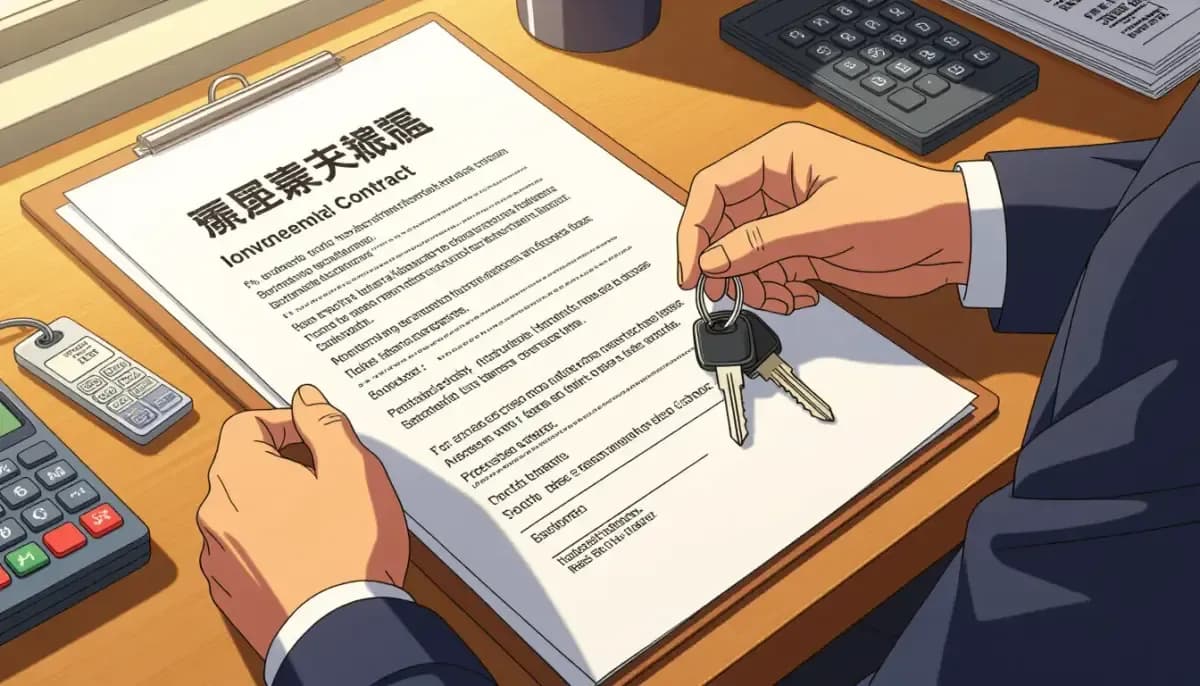
Understand every type of rental contract in Japan — ordinary lease, fixed-term lease, share houses, UR housing, and more. A complete guide for foreigners renting in Japan, with costs, rights, and practical tips.
Types of Rental Contracts in Japan Explained: A Complete Guide for Foreigners
Renting an apartment in Japan is a rewarding experience, but the rental contract system can feel confusing at first — especially for foreigners who may be encountering it for the very first time. Japan has a distinct set of rental contract types, each with its own rules about duration, renewal, cancellation, and costs. Understanding these differences before you sign anything is essential to protecting yourself and making the best choice for your situation.
This guide breaks down every type of rental contract you are likely to encounter in Japan, explains what they mean in plain English, and gives you the practical knowledge you need to navigate the rental market with confidence.
The Two Main Types of Rental Contracts in Japan
At the heart of Japan's rental system are two primary contract types established under the Land and Building Lease Law (借地借家法): the Ordinary Lease Contract (普通借家契約, futsū shakuya keiyaku) and the Fixed-Term Lease Contract (定期借家契約, teiki shakuya keiyaku). These are fundamentally different in how they handle renewal, termination, and tenant rights.
Ordinary Lease Contract (普通借家契約)
The ordinary lease is the most common type of rental contract in Japan. It typically runs for two years, and at the end of the term, it automatically renews — as long as the tenant wishes to continue living there and the landlord does not have a legally valid reason to refuse.
Key features of the ordinary lease:
- Standard term: 2 years (contracts under 1 year are treated as indefinite)
- Automatic renewal at the end of term unless either party objects
- Landlord must have substantial grounds to refuse renewal (e.g., personal use of the property)
- Tenant can terminate with 1 month's notice at any time
- Rent adjustments are possible by mutual agreement based on economic conditions
For most long-term renters in Japan, the ordinary lease contract offers strong tenant protections. Landlords cannot simply evict you at the end of a 2-year term without a legitimate reason recognized by law. This makes ordinary leases the preferred choice if you plan to stay in one place for an extended period.
Fixed-Term Lease Contract (定期借家契約)
The fixed-term lease is a contract with a set expiration date and no automatic renewal. When the term ends, so does your right to live in the property — unless the landlord agrees to a new contract. Fixed-term leases can be as short as a few months or as long as several years.
Key features of the fixed-term lease:
- Contract duration: any length agreed upon by both parties (no minimum)
- Must be in writing — verbal fixed-term leases are not valid
- Separate written notification explaining no-renewal is required at signing
- Rent is often 5–15% lower than comparable ordinary lease properties
- No automatic renewal rights for the tenant
Fixed-term leases are becoming increasingly popular in Japan's major cities. According to recent data, over 10% of rental properties in central Tokyo are now fixed-term leases, with Shibuya Ward reaching as high as 18.9% — a trend driven by landlords wanting to renegotiate rents as Tokyo's property market tightens.
For more detailed guidance on navigating the fixed-term vs. ordinary lease decision, see Living in Nihon's guide to rental contracts in Japan.
Comparison: Ordinary Lease vs. Fixed-Term Lease
| Feature | Ordinary Lease (普通借家契約) | Fixed-Term Lease (定期借家契約) |
|---|---|---|
| Typical Duration | 2 years | Flexible (months to years) |
| Automatic Renewal | Yes | No |
| Written Contract Required | No (verbal allowed) | Yes (mandatory) |
| Tenant Renewal Rights | Strong protection | No right to renew |
| Rent Adjustments | By mutual agreement | As per contract only |
| Early Termination by Tenant | 1 month notice | Conditions apply |
| Rent Level | Standard | Often 5–15% lower |
| Best For | Long-term residents | Temporary stays, short assignments |
Other Rental Contract Types in Japan
Beyond the two primary contracts, you may also encounter several other types of housing arrangements, each with its own contract structure:
Monthly Apartment (マンスリーマンション, Mansuri Manshon)
Monthly apartments are fully furnished, short-term rentals that typically run from one month to one year. They are popular with business travelers, people between homes, and foreigners who need temporary housing while searching for a permanent place.
Typical features:
- All furniture and appliances included
- Utilities often bundled into the monthly fee
- No key money (reikin), no agent fee, and often no guarantor required
- Higher per-month cost than standard apartments
- Contracts are fixed-term by nature
Monthly apartments use a simplified fixed-term lease structure and are designed for maximum flexibility. The tradeoff is price — you pay a significant premium for the convenience.
Share House (シェアハウス, Shea Hausu)
A share house is a form of co-living where tenants have private rooms but share common areas like the kitchen, bathroom, and living room. Share houses operate under a room use agreement (入居契約) rather than a standard apartment lease.
Key characteristics:
- Typically month-to-month or short fixed terms
- Low upfront costs — often just one month's deposit
- No guarantor required at most share houses
- All furniture and appliances provided
- Community living environment
Share houses are one of the most foreigner-friendly housing options in Japan. Many are managed by operators who speak English and specifically cater to international residents. They are an excellent choice for those just arriving in Japan who want to settle in without heavy upfront costs.
UR Rental Housing (UR賃貸住宅)
UR Housing, managed by the Urban Renaissance Agency (都市再生機構), offers a unique type of rental contract. UR properties require:
- No key money (礼金)
- No agent fees
- No personal guarantor
UR uses ordinary lease contracts but with a standardized, transparent application process. Tenants must meet income requirements (typically monthly income of 4x the rent or savings of 100x the monthly rent), but for those who qualify, UR apartments are an exceptional value — particularly in the greater Tokyo and Osaka areas.
For foreigners working in Japan, this can be a game-changer. Learn more about housing options for working expats at For Work in Japan's housing and infrastructure guide.
Corporate Housing / Company Apartment (社宅, Shataku)
If you are employed by a Japanese company, you may be offered company housing (社宅). The company leases the property and subleases it to you, often at a significantly discounted rate (the company may cover 50–80% of the rent as an employment benefit).
Corporate housing uses a contract between you and your employer, not directly with the landlord. The terms are set by your company, and if you leave the job, you typically must vacate the property within a set period.
Understanding Key Contract Terms and Costs
Regardless of which type of rental contract you sign, you will encounter several standard costs and terms in Japan:
Upfront Costs When Signing a Rental Contract
| Cost | Japanese Term | Amount | Refundable? |
|---|---|---|---|
| Security Deposit | 敷金 (Shikikin) | 1–2 months rent | Mostly yes (minus repairs) |
| Key Money | 礼金 (Reikin) | 0–2 months rent | No |
| Agent Fee | 仲介手数料 | 0.5–1 month rent | No |
| Guarantor Fee | 保証料 | 0.5–1 month rent | No |
| First Month's Rent | 前家賃 | 1 month | N/A |
| Fire Insurance | 火災保険 | ~¥15,000–20,000/2yr | No |
The total upfront cost when signing a Japanese rental contract is typically 3–5 months' rent. This is significantly higher than many other countries. Budget accordingly before you begin your apartment search.
Key money (礼金) is a non-refundable "gift" to the landlord — a custom unique to Japan. While it was once standard practice to pay 1–2 months as key money, many modern apartments (especially in areas outside Tokyo) now offer zero key money (礼金なし) options. UR Housing and many newer developments have moved away from key money entirely.
Guarantor Requirements
Most standard rental contracts in Japan require a guarantor (保証人, hoshounin) — someone who agrees to cover your rent if you fail to pay. Options include:
- Personal guarantor: A Japanese resident (family member or colleague) who agrees in writing
- Guarantee company (保証会社): A company that acts as your guarantor for a fee (usually 0.5–1 month rent upfront, plus annual renewal fees of around ¥10,000–20,000)
For foreigners who don't have a Japanese acquaintance willing to act as guarantor, guarantee companies are the standard solution. Most landlords now work with major guarantee companies, and many agencies will guide you through the process.
Renewal, Cancellation, and Your Rights as a Tenant
Renewing Your Lease
For ordinary leases, renewal is typically semi-automatic. You will receive a renewal notice 6 months before your contract ends. If you wish to continue, you sign a renewal agreement and often pay a renewal fee (更新料, koushinryou) of approximately 1 month's rent plus a small administrative fee. This is another Japan-specific custom — most other countries do not charge tenants to renew.
For fixed-term leases, there is no renewal right. If the landlord agrees to re-contract with you, it will be an entirely new contract with potentially different terms and rent. Many tenants find that rents are renegotiated significantly upward when re-contracting on a fixed-term lease, especially in tight urban markets.
Early Termination
For ordinary leases, tenants can exit with 1 month's notice at any time. Some contracts may require 2 months' notice — check your specific agreement. Leaving within the first 6–12 months sometimes triggers a short-term termination penalty specified in the contract.
For fixed-term leases on residential properties under 200m², the law gives tenants a special right to terminate early with 1 month's notice if they face unavoidable circumstances — such as a job transfer, illness, or family care needs. This protection does not automatically apply to larger units or commercial properties.
What Happens at Move-Out
Japan has detailed rules about the restoration of the property to its original condition (原状回復, genjou kaifuku) at move-out. Landlords may deduct from your security deposit for damage beyond normal wear and tear. The Ministry of Land, Infrastructure, Transport and Tourism (MLIT) has issued guidelines to prevent unfair charges, but disputes at move-out are common. Document the condition of your apartment thoroughly with photos when you move in.
For more context on property ownership and real estate decisions in Japan, Gaijin Buy House's comparison of selling vs. renting offers useful perspective for long-term residents.
Choosing the Right Rental Contract as a Foreigner
The best contract type depends on how long you plan to stay and your priorities:
| Your Situation | Recommended Contract Type |
|---|---|
| Staying 2+ years, want stability | Ordinary Lease |
| Temporary assignment, 6–18 months | Fixed-Term Lease or Monthly Apartment |
| Just arrived, need flexible housing | Share House |
| Want zero key money, no guarantor | UR Housing |
| Employed by Japanese company | Corporate Housing (Shataku) |
Practical tips for foreigners:
- Use a foreigner-friendly real estate agency — many major cities have agencies with English-speaking staff who specialize in helping international residents
- Request an English translation of your contract before signing — contracts are almost always in Japanese
- Bring an interpreter to the explanation session (重要事項説明) where a licensed agent explains the key terms
- Read the contract clause for key money and guarantor requirements before making an appointment to view a property — this saves time
- Check if the property accepts foreign nationals — some landlords still impose informal restrictions, though this is legally a gray area in Japan
The rental contract market in Japan is evolving. More foreigners than ever are successfully renting in Tokyo, Osaka, Kyoto, and other cities, thanks to growing numbers of foreigner-friendly agencies and landlords. Understanding the contract types puts you in a much stronger negotiating and decision-making position.
Related Reading
If you are considering buying rather than renting in Japan, our guide to buying property in Japan as a foreigner covers everything you need to know. You can also explore types of properties available in Japan and the step-by-step home buying process for a complete picture of the real estate landscape.
For those on a visa or considering residency, our visa and residency guide for property buyers explains how your visa status affects your housing options and rights.
For a broader look at market conditions and investment context, see Japan's real estate market overview and trends.
Additional external resources:
- Fixed-Term vs. Ordinary Lease: Key Differences (E-Housing)
- Fixed-Term Lease Contracts Increasing in Urban Japan (AI Kensetsu)
Understanding your rental contract is one of the most important steps you can take before moving to Japan. Take the time to read every clause, ask questions, and don't hesitate to seek professional help if something is unclear. Japan's rental system has its quirks, but once you understand how it works, finding the right home becomes much more manageable.

Originally from Vietnam, living in Japan for 16+ years. Graduated from Nagoya University, with 11 years of professional experience at Japanese and international companies. Sharing information about buying property in Japan for foreigners.
View Profile →Related Articles

Japan Rental Market Trends and Forecast for Investors
Comprehensive analysis of Japan rental market trends for foreign investors: occupancy rates, rental yields by city, 2025-2026 forecasts, and investment strategies for foreign landlords.
Read more →
Insurance Guide for Rental Property Owners in Japan
Complete insurance guide for rental property owners in Japan. Learn about fire insurance, earthquake coverage, landlord liability, and how to protect your investment as a foreign landlord.
Read more →
Share House Investment in Japan: Opportunity and Guide
Learn how to invest in Japanese share houses as a foreigner. Covers yields (4–6% net), legal framework, buying process, management, and key risks — with 2025 market data.
Read more →
Corporate Rental Demand in Japan: A Strategy for Investors
Discover how corporate rental demand in Japan creates stable, high-yield investment opportunities. Learn where demand concentrates, realistic yields, and how to attract corporate tenants.
Read more →
Rental Property Maintenance Obligations for Japan Landlords
A complete guide to landlord maintenance obligations in Japan, covering the Civil Code, Genjyo Kaifuku rules, tenant vs landlord responsibilities, and practical tips for foreign property owners.
Read more →
Japan Rental Property Vacancy Rate Analysis by Area
Comprehensive analysis of Japan's rental property vacancy rates by region. Compare Tokyo's 3% vacancy vs rural Japan's 21%. Essential data for foreign renters and investors in 2025.
Read more →