
How to Read and Use Japan Hazard Maps for Property Purchase

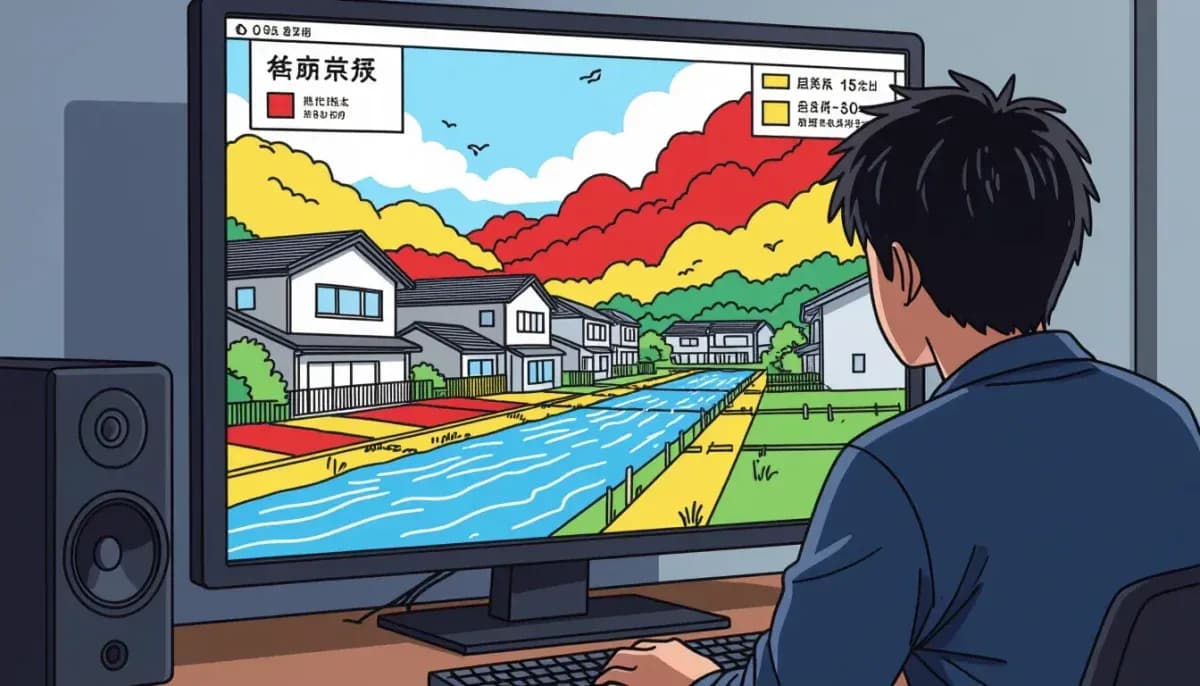
Learn how to read and use Japan's official hazard maps before buying property. Understand flood, earthquake, and tsunami risk zones with this step-by-step guide for foreign buyers.
How to Read and Use Japan Hazard Maps for Property Purchase
Buying property in Japan as a foreigner is an exciting opportunity — but one step many buyers overlook until it's too late is checking the local hazard map. Japan is one of the world's most disaster-prone countries, sitting on four tectonic plates, with frequent earthquakes, typhoons, floods, landslides, and tsunamis. Before signing any contract, understanding how to read and use Japan's official hazard maps (ハザードマップ, hazard mappu) can be the difference between a smart investment and a costly mistake.
This guide walks you through everything you need to know: what hazard maps show, where to access them (including English-language options), how to interpret the color codes and risk zones, and how to factor them into your property purchase decision.
What Are Japan Hazard Maps and Why Do They Matter?
Japan's hazard maps are government-published risk assessment documents that show areas vulnerable to specific types of natural disasters. They are produced by local municipalities and the national Ministry of Land, Infrastructure, Transport and Tourism (MLIT), and cover the entire country.
These maps are not just theoretical — they are used by emergency planners, insurance companies, real estate agents, and increasingly by savvy property buyers. Under Japan's real estate disclosure laws, agents are required to inform buyers if a property sits in a designated flood or disaster risk zone. However, knowing how to read the maps yourself gives you much more detailed insight.
About 49% of Japan's population and approximately 75% of its real estate sit on alluvial plains that are exposed to flooding risk. That means a majority of urban properties carry some level of documented hazard. The question is not whether a property has a risk rating — it's understanding what that rating means.
For a broader overview of purchasing property in Japan as a foreigner, see our Complete Guide to Buying Property in Japan as a Foreigner.
Types of Hazard Maps in Japan
Japan's hazard maps cover several distinct disaster categories. Most municipalities publish separate maps for each type, which means you'll want to check multiple maps for any given property address.
| Map Type | Japanese Term | Hazard Covered |
|---|---|---|
| Flood Map | 洪水ハザードマップ (Kozui) | River overflow into residential areas |
| Inland Flooding Map | 内水ハザードマップ (Naisui) | Rainwater accumulation on streets |
| Storm Surge Map | 高潮ハザードマップ (Takashio) | Ocean water pushed inland by typhoons |
| Landslide Map | 土砂災害ハザードマップ | Rain-triggered slope collapse |
| Tsunami Map | 津波ハザードマップ | Coastal inundation from seismic events |
| Earthquake/Liquefaction Map | 地震・液状化マップ | Ground shaking and soil liquefaction risk |
Key insight: A property may look safe on a flood map but appear in a high-risk zone on the liquefaction or landslide map. Always cross-reference all relevant map types for the same address before making a purchase decision.
Where to Access Japan Hazard Maps (Including English Options)
Japan offers several portals for accessing hazard map data, and some have English-language interfaces:
1. MLIT Hazard Map Portal Site (disaportal.gsi.go.jp)
This is the national centralized database maintained by the Ministry of Land, Infrastructure, Transport and Tourism. You can search by address or postal code and overlay multiple hazard types simultaneously. It covers flood, tsunami, landslide, storm surge, and more — all in one interface. While the primary interface is in Japanese, the maps themselves are visual and intuitive once you understand the color coding.
2. J-SHIS Seismic Hazard Portal (j-shis.bosai.go.jp/en)
The Japan Seismic Hazard Information Station provides an English-language interface showing 30-year earthquake probability by location. This is particularly useful for comparing earthquake risk across different cities and neighborhoods.
3. Japan Meteorological Agency — Real-Time Risk Map (jma.go.jp/bosai/en_risk)
The JMA provides an English-language real-time risk visualization, particularly useful for understanding current weather-related disaster threats, which also gives context for historical risk patterns.
4. Municipal Government Websites
Every city and ward maintains its own hazard maps tailored to local geography. When searching for a property in a specific area — say, Edogawa ward in Tokyo or a coastal city in Shizuoka — visiting the local municipal website will give you the most detailed and up-to-date maps.
5. In Person at the Municipal Office
Municipal offices (shiyakusho or kuyakusho) often have printed hazard maps and staff who can help explain them. Some larger cities in areas with high foreign populations provide multilingual assistance.
For help understanding broader property search strategies, see our guide on Buying Property in Tokyo as a Foreigner.
How to Read Hazard Map Color Codes
The color-coding system used in Japanese hazard maps follows a national standard, though exact shading may vary slightly by municipality. Here is the general guide:
Flood Depth Color Scale (Most Common)
| Color | Inundation Depth | What It Means |
|---|---|---|
| Dark purple / Dark red | Over 5 meters | Extreme danger; entire building may be submerged |
| Red / Orange-red | 3–5 meters | Upper floors reachable but first floor completely flooded |
| Orange | 1–3 meters | First floor will flood; major damage expected |
| Yellow | 0.5–1 meter | Knee-to-waist height flooding; evacuation strongly advised |
| Light yellow / Pale | Under 0.5 meters | Ankle-level flooding; risk of damage to furniture and electrics |
| No color / White | Minimal risk | Outside the estimated inundation zone |
Key Japanese Terms to Know
- 浸水深 (Shinsui-shin) — Inundation depth: how deep water is expected to reach at that location
- 浸水継続時間 (Shinsui-keizoku-jikan) — Flood duration: how long water will remain after the event
- 家屋倒壊等氾濫想定区域 (Kaoku-tokaitō-hanran-sōtei-kuiki) — Building collapse risk zone due to fast-moving floodwaters
- 土砂災害警戒区域 (Doshasaigai-keikai-kuiki) — Landslide warning zone
- 特別警戒区域 (Tokubetsu-keikai-kuiki) — Special warning zone (high risk; construction restrictions may apply)
Understanding these terms will allow you to extract much more precise risk data from any map. For a deeper look at all legal and documentation requirements when purchasing, see our Legal Procedures and Documentation for Japan Property Purchase guide.
Real-World Risk: What the Maps Reveal About Japan's Cities
To understand how to apply hazard maps in practice, it helps to look at some real examples across Japan's major cities.
Tokyo
Tokyo Metropolitan Government publishes earthquake risk maps (updated 2018), liquefaction risk maps (updated 2012), and flood risk maps for all 23 wards. The eastern lowland areas face greater exposure across all three hazard types.
- Edogawa Ward is designated a "Zero-Meter Zone" — hazard maps show essentially the entire ward potentially submerged in a catastrophic flood scenario involving the Tone and Edo rivers.
- Arakawa Ward carries the highest earthquake risk rating among all Tokyo wards.
- Sumida and Katsushika are built on former swampland, making them susceptible to liquefaction and structural collapse during major earthquakes.
- Bunkyo, Shibuya, Minato, and Chiyoda sit on elevated Musashino plateau ground with low flood risk and stable geology — generally among the safest wards.
After Typhoon Hagibis struck in October 2019, underground electrical switchboards in high-rise towers in Musashikosugi (Kawasaki) and Futagotamagawa (Tokyo) were flooded, leaving residents without power and water for extended periods. Property values in those riverside areas subsequently declined — a direct consequence of disaster risk materialized.
Chiba / Urayasu
Urayasu City in Chiba Prefecture is a striking case study: approximately 85% of the city was built on reclaimed land. When the 2011 Great East Japan Earthquake struck, around 42% of the city's area experienced soil liquefaction, causing roads to buckle and buildings to tilt. Hazard maps clearly flagged this risk beforehand — buyers who checked them would have known.
Pacific Coast Cities
The national seismic hazard data shows that Mito City (Ibaraki) carries the highest 30-year probability of a major earthquake at 81%. Tokushima and Kochi cities follow at 75% each. Cities along the Pacific coast face the additional risk of a Nankai Trough megaquake, estimated at a 70–80% probability of occurring within the next 30 years with a magnitude of 8.0–9.0.
For region-specific guidance, see our articles on Buying Property in Osaka and Buying Property in Fukuoka and Kyushu.
How to Incorporate Hazard Maps Into Your Property Due Diligence
Here is a practical step-by-step process for using hazard maps as part of your property research:
Step 1: Look up the address on the MLIT Hazard Map Portal Go to disaportal.gsi.go.jp and enter the property address or postal code. Toggle on multiple hazard overlays to see the composite risk picture.
Step 2: Check the municipal government hazard map Find the property's ward or city website and download the specific local hazard map PDF. These often contain more detailed local data than the national portal.
Step 3: Cross-reference seismic risk Use the J-SHIS portal at j-shis.bosai.go.jp/en to check the 30-year earthquake probability and liquefaction risk for the neighborhood.
Step 4: Evaluate the building's construction date Buildings built before the 1981 Building Standards Law Amendment (新耐震基準, shin-taishin kijun) were constructed to older, more lenient seismic codes and carry substantially higher earthquake vulnerability. Always confirm the construction year.
Step 5: Evaluate elevation Properties at 20 meters or more above sea level significantly reduce flood and tsunami risk. Areas below 5 meters, especially near rivers or coasts, carry very low flood protection in major events.
Step 6: Ask your real estate agent for the hazard map disclosure Agents are legally required to disclose if a property is in a designated flood or disaster risk zone. Ask them to walk you through the relevant maps for that specific address.
Step 7: Consult historical land use Comparing current maps with historical land-use maps from the Meiji era (1896–1909, available via the Geospatial Information Authority of Japan) can reveal whether a property sits on what was once farmland, marshland, or riverbed — all of which correlate with higher flood and liquefaction risk.
You can learn more about property taxes and annual costs — which can also be affected by disaster zone status — in our Property Taxes and Annual Costs in Japan guide.
Hazard Maps and Property Value: What Buyers Need to Know
There is a growing body of evidence that hazard map risk ratings affect property values in Japan. After high-profile disasters, properties in risk zones have seen price stagnation or decline, while comparable properties outside risk zones held their value or appreciated.
From an investment perspective, properties in clearly delineated high-risk zones may:
- Have lower initial purchase prices, reflecting the risk premium
- Face difficulty obtaining flood or earthquake insurance at standard rates
- Experience price depreciation following nearby disaster events
- Face community stigma or reduced buyer pools in the future
However, risk is not binary. A property in a "light yellow" zone (under 0.5m flood depth, rare return period) with a post-2000 reinforced concrete building is a very different risk profile from one in a "dark red" zone with a 1970s wooden structure. The maps give you the information to make that distinction.
For more on financing your purchase and understanding how risk factors affect loans, see our Mortgages and Home Loans for Foreigners in Japan guide.
Additional Resources for Foreigners
Understanding Japan's disaster preparedness system is important not just for property purchase but for daily life. Here are some additional resources:
- Living in Nihon offers guides on daily life and disaster preparedness for foreigners in Japan: Living in Nihon
- For Work in Japan provides practical relocation advice including safety and housing tips: For Work in Japan
- Gaijin Buy House specializes in helping foreigners navigate the Japanese real estate market: Gaijin Buy House
- REthink Tokyo has an excellent English-language breakdown of Tokyo hazard maps: Hazard Maps for Tokyo Natural Disasters
- Japan Remotely provides a comprehensive natural disaster planning resource guide: Japan Natural Disaster Planning Resource Guide
- For reading flood hazard maps specifically, the Tokyo Tsunagari multilingual guide is highly recommended: How to Read Flood Hazard Maps
Quick Reference: Japan Hazard Map Checklist for Property Buyers
Before finalizing any property purchase in Japan, verify the following:
- [ ] Checked flood hazard map — inundation depth under 0.5m or not in zone
- [ ] Checked storm surge map (for coastal/riverside properties)
- [ ] Checked landslide/sediment disaster map (for hillside properties)
- [ ] Checked tsunami hazard map (for coastal properties)
- [ ] Verified earthquake/liquefaction risk using J-SHIS portal
- [ ] Confirmed property is post-1981 construction (or post-2000 for modern seismic standards)
- [ ] Confirmed elevation above 5 meters (20m+ for coastal areas)
- [ ] Reviewed municipal government's detailed local hazard map
- [ ] Asked agent for mandatory hazard zone disclosure documents
- [ ] Checked historical land use to identify former wetland or reclaimed areas
Conclusion
Japan's hazard maps are among the most detailed and publicly accessible disaster risk tools in the world. As a foreign buyer, you have full access to the same data that Japanese buyers use — the challenge is knowing where to look and how to interpret what you find.
No property in Japan is entirely risk-free. The goal is informed decision-making: understanding exactly what risks exist, what severity level is realistic, and whether the building and location factors mitigate those risks adequately. A beautiful apartment in a flood-prone district may still be an excellent choice if it's on a high floor in a modern building with strong flood barriers — but only if you know that going in.
Use the tools, check the maps, and buy with confidence. For a full overview of the legal steps in purchasing Japanese real estate, read our Step-by-Step Home Buying Process in Japan for Foreigners.

Originally from Vietnam, living in Japan for 16+ years. Graduated from Nagoya University, with 11 years of professional experience at Japanese and international companies. Sharing information about buying property in Japan for foreigners.
View Profile →Related Articles
Climate Change Impact on Japan Property Risk Assessment
Learn how climate change affects Japan property risk—flood zones, earthquake hazards, typhoon exposure—and how foreign buyers can assess risk using Japan's hazard maps and mandatory disclosure rules.
Read more →
Disaster Rebuilding and Insurance Claims Process in Japan
Learn how Japan's earthquake insurance and disaster rebuilding process works for foreign homeowners. Covers claims steps, payout tiers, premiums, and practical tips for expats.
Read more →
Emergency Supplies and Kit Guide for Japan Homeowners
Build the perfect emergency kit for your Japan home. Essential bosai bag checklist, where to buy supplies, and special tips for foreign homeowners in earthquake-prone Japan.
Read more →
Creating a Disaster Evacuation Plan for Your Japan Home
Learn how to create a disaster evacuation plan for your Japan home as a foreign homeowner. Covers Japan's alert systems, hazard maps, emergency kits, shelter locations, and post-disaster rights for foreigners.
Read more →
Seismic Retrofitting Options for Older Homes in Japan
Learn about seismic retrofitting options for older homes in Japan: costs, government subsidies up to ¥3M, tax incentives, and step-by-step process for foreign buyers.
Read more →
Japan Earthquake-Resistant Building Standards Explained
Understand Japan's earthquake-resistant building standards (Shin-Taishin, 1981, 2000 codes), taishin/seishin/menshin systems, seismic grades, and how to verify compliance when buying property in Japan.
Read more →