
Japan Mansion (Condo) vs Apartment: Key Differences Explained

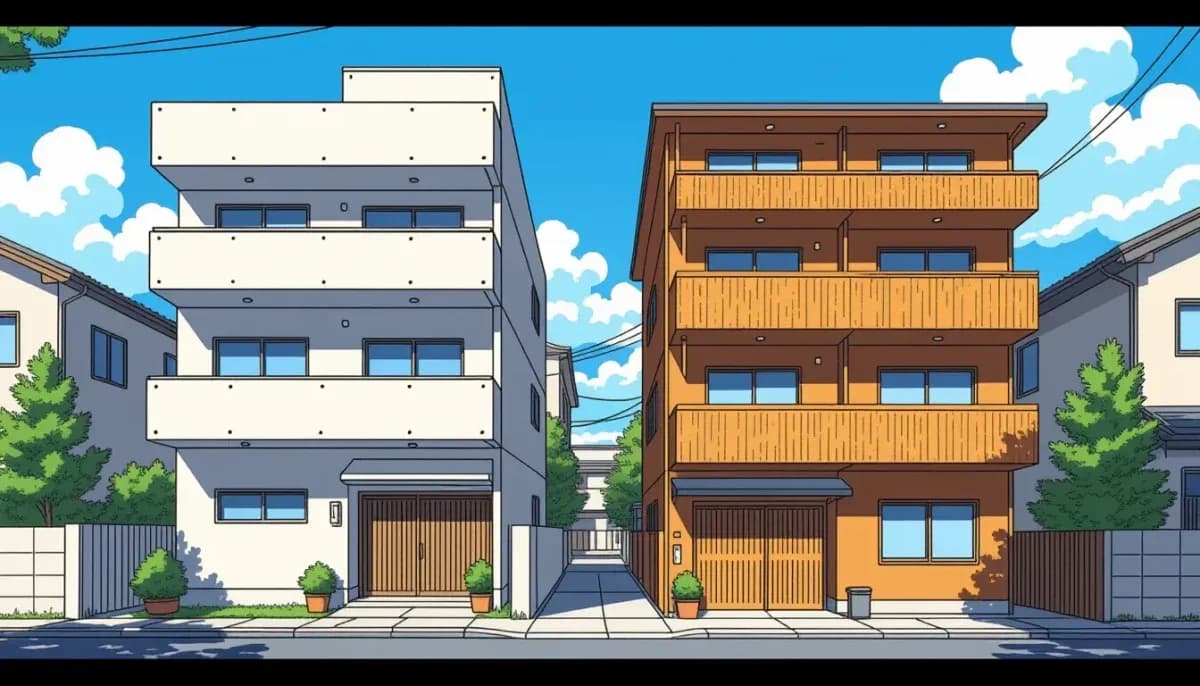
Learn the real difference between a Japanese mansion (manshon) and apartment (apaato) in Japan—construction, costs, noise, earthquake safety, and which to choose as a foreigner.
Japan Mansion (Condo) vs Apartment: Key Differences Explained
If you're searching for a place to rent or buy in Japan, you've probably noticed the terms "mansion" (マンション, manshon) and "apartment" (アパート, apaato) used everywhere. Confusingly for English speakers, a Japanese "mansion" has nothing to do with a grand estate—it simply refers to a concrete condominium-style unit. Understanding the real difference between these two property types is essential for making the right housing choice as a foreigner in Japan.
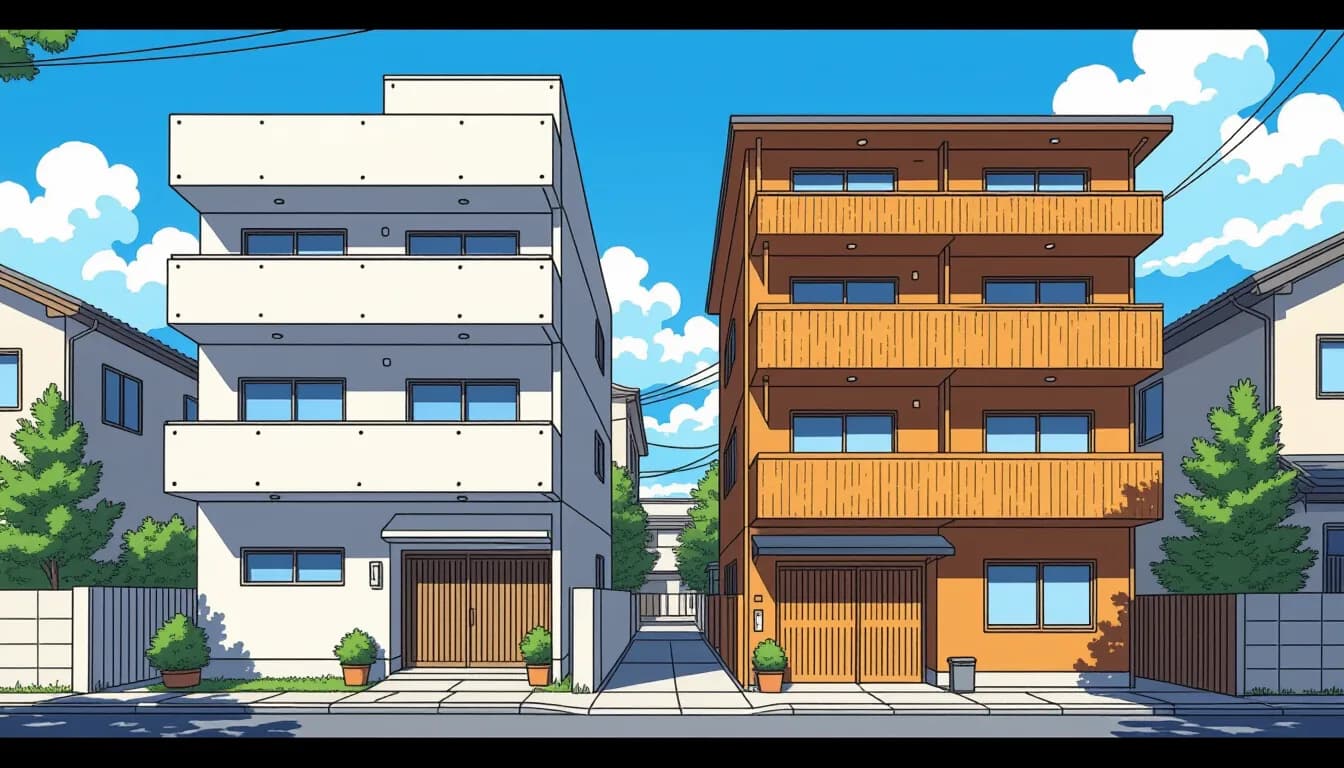
This guide breaks down everything you need to know: construction materials, costs, noise levels, earthquake safety, amenities, and how each type fits different budgets and lifestyles.
What Is a "Mansion" in Japan?
In Japanese real estate, a mansion (マンション) refers to a multi-unit residential building constructed from reinforced concrete (RC) or steel-reinforced concrete (SRC). Mansions are typically 3 or more stories tall and are the closest equivalent to what English speakers would call a "condominium" or "condo."
Key characteristics of a Japanese mansion:
- Construction: Reinforced concrete (RC) or steel-reinforced concrete (SRC)
- Height: 3+ floors, often mid-rise or high-rise
- Soundproofing: Superior, due to concrete's density
- Security features: Auto-lock entrances, security cameras, intercom systems
- Amenities: Elevators (standard for 5+ floors), parcel lockers, sometimes a concierge or caretaker
- Earthquake resistance: Generally stronger, especially if built post-1981 (new seismic standards)
- Cost: Higher rent and management fees
Tower mansions (タワーマンション) are a subcategory of high-rise mansions, typically 20+ floors, found in major urban areas like Tokyo, Osaka, and Yokohama. They usually feature premium facilities including gyms, lounges, and rooftop gardens.
For more on the process of purchasing a mansion, see our complete guide: Buying a Condominium (Mansion) in Japan as a Foreigner.
What Is an "Apartment" (Apaato) in Japan?
A Japanese apartment (アパート, *apaato*) is quite different from what the word suggests in English. In Japan, this term typically refers to a low-rise residential building made from wood or light steel frames.
Key characteristics of a Japanese apaato:
- Construction: Wood (木造, mokuzo) or light steel frame (軽量鉄骨, keiryō tekkotsu)
- Height: Usually 2–3 stories, rarely exceeds 3 floors
- Soundproofing: Poor to moderate—footsteps, voices, and even chair movements often transfer between units
- Security features: Basic—typically just a key lock on the front door
- Amenities: No elevator, no caretaker; sometimes a shared laundry area
- Earthquake resistance: Varies; post-2000 standards improved wooden structures significantly
- Cost: Lower rent and initial costs
Apartments are especially popular among students and young single workers on tight budgets. Many are located in quieter residential neighborhoods, and while they lack the prestige of a mansion, they can offer a cozy, affordable home.
Mansion vs Apartment: Side-by-Side Comparison
Here's a clear breakdown of the key differences:
| Feature | Mansion (マンション) | Apartment (アパート) |
|---|---|---|
| Construction | Reinforced concrete (RC/SRC) | Wood or light steel frame |
| Typical floors | 3+ (often mid/high-rise) | 2–3 stories |
| Soundproofing | Excellent | Poor to moderate |
| Earthquake resistance | High (especially post-1981) | Moderate (varies by age) |
| Insulation | Good (lower energy costs) | Poor (higher energy bills) |
| Security | Auto-lock, cameras, intercom | Basic key lock |
| Elevator | Yes (standard for 5+ floors) | Rarely present |
| Monthly management fee | ¥10,000–¥30,000/month | Usually none |
| Rent level | Higher | Lower |
| Initial move-in costs | Higher | Lower |
| Best for | Families, professionals, buyers | Students, budget-conscious renters |
Note: There is no strict legal definition separating mansions from apartments in Japan. Classification varies by real estate agency.
Cost Differences: Renting vs Buying
Renting
When renting, apartments (apaato) are noticeably cheaper than mansions in both monthly rent and upfront costs. Initial rental costs in Japan can total 5–6 months of rent, covering:
- Deposit (敷金, *shikikin*): 1–2 months' rent
- Key money (礼金, *reikin*): 0–2 months' rent (non-refundable)
- Agency fee: 0.5–1 month's rent
- Guarantee company fee: 30–50% of one month's rent
- Fire insurance: ¥15,000–¥20,000/year
Apartments tend to have lower or zero key money, making them appealing for those looking to minimize upfront expenses. Some zero-deposit/zero-key-money (rei-rei, 礼礼なし) properties also exist.
For comprehensive details on housing costs, visit Living in Nihon's complete housing guide.
Buying a Mansion (Condo)
If you're purchasing a condominium (mansion) in Japan, expect additional costs on top of the purchase price:
- Brokerage fee: 3% of price + ¥60,000 + consumption tax
- Registration and acquisition taxes: 0.4%–4% of assessed value
- Legal and insurance fees: ¥100,000–¥200,000+
- Total transaction costs: Approximately 6–10% of purchase price
Ongoing ownership costs include:
- Management fees: ¥10,000–¥30,000/month
- Reserve fund (修繕積立金, *shūzen tsumitatekin*): ¥5,000–¥20,000/month
- Property tax: 1.4% of assessed value annually
For a detailed overview of the financial side, see Hidden Costs and Fees When Buying Property in Japan and Property Taxes and Annual Costs of Owning Property in Japan.
Foreigners can legally purchase real estate in Japan with very few restrictions—regardless of nationality or visa status—which is considered globally rare. However, non-residents must report the purchase to Japan's Finance Ministry within 20 days and appoint a tax representative. See Can Foreigners Buy Property in Japan? for the full legal picture.
For a complete walkthrough of buying an apartment/condo, the Gaijin Buy House guide to buying a condo in Japan is an excellent resource.
Noise and Soundproofing: A Critical Factor
Noise is one of the most common complaints about Japanese housing—especially in apartments (apaato). Because wooden and light steel frame buildings have thinner walls and floors, sound travels easily between units. Footsteps from upstairs neighbors, conversations, and even the sound of chairs scraping can be disruptive.
Mansions perform significantly better for soundproofing. The density of reinforced concrete absorbs airborne noise and reduces impact sounds. That said, quality varies by building and the type of floor underlayment used between units.
Practical tip: If noise sensitivity is important to you, always ask about the floor material (フローリング vs carpet, and the underlayment type) when viewing a mansion unit. Even in concrete buildings, top-floor units are the quietest.
Earthquake Safety: Which Is Safer?
Japan is one of the world's most seismically active countries, so earthquake resistance is a major consideration.
Both apartment and mansion buildings built after the 1981 new seismic standard (新耐震基準, *shinseitaishinkijun*) must meet rigorous requirements. Buildings constructed before 1981 may not meet modern standards—always verify the construction year before signing any contract or purchase agreement.
The 2000 updated standards further strengthened requirements for wooden structures, meaning newer apartments (apaato) can also be quite safe.
Key tip: When evaluating any Japanese property, check:
- Construction date: Post-1981 for basic compliance; post-2000 for modern wooden buildings
- Building structure: RC/SRC (mansion) generally performs better in major quakes
- Certification: Some buildings carry seismic performance inspection certificates (taishinkijun tekigoshōsho)
For more information on the home buying process and safety checks, see our guide: Step-by-Step Home Buying Process in Japan for Foreigners.
Which Should You Choose?
Your ideal choice depends on your priorities:
Choose a Mansion (マンション) if you:
- Value quiet living and better soundproofing
- Want enhanced security (auto-lock, cameras)
- Plan to stay long-term or purchase the unit
- Need an elevator (important for families with young children or elderly residents)
- Prefer lower utility bills from better insulation
Choose an Apartment (アパート) if you:
- Are on a tight budget and want to minimize rent and upfront costs
- Plan to stay short- to medium-term (1–2 years)
- Don't mind more basic facilities
- Are a student or young professional in a quiet neighborhood
Also consider UR housing (Urban Renaissance Agency) as a third option—public rental housing available to foreigners that waives key money, deposits, and guarantor requirements. Learn more via Living in Nihon's housing guide.
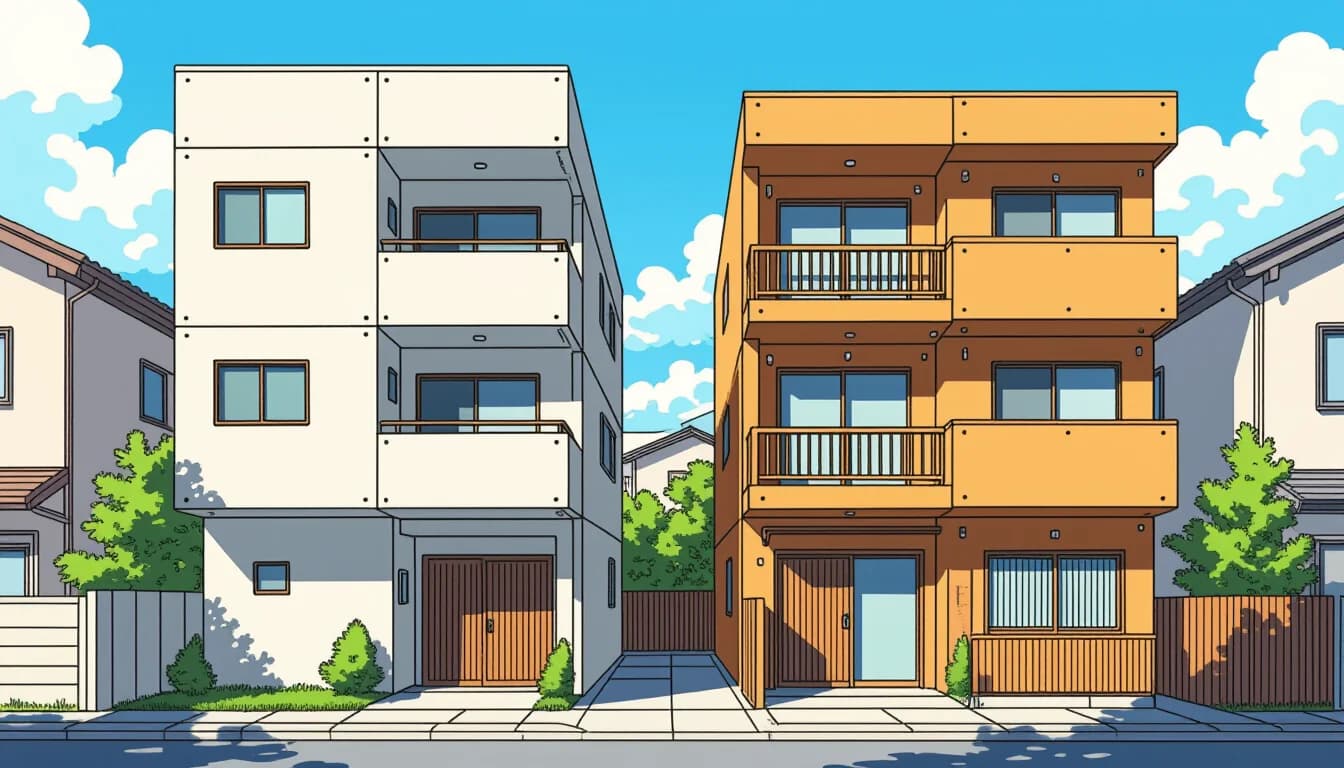
For broader guidance on all property types in Japan—including detached houses, akiya, and commercial properties—visit our pillar guide: Types of Properties Available in Japan: A Complete Guide.
Tips for Foreigners Searching for Housing in Japan
Finding housing as a foreigner in Japan can be challenging. Here are practical tips:
- Prepare your documents early: Residency card (zairūyuu kaado), passport, proof of income, employment certificate, and bank statements are essential.
- Use a guarantor company: Most properties require a co-guarantor (rentai hoshōnin). As a foreigner, a guarantee company (at 30–50% of monthly rent) is often your best option.
- Look for foreigner-friendly agencies: Some agencies specialize in helping foreign residents and can be invaluable.
- Check the construction date: Always confirm the building was constructed post-1981 for earthquake compliance.
- Ask about the building structure: RC = reinforced concrete (mansion); Wood = apaato.
- Consider management fees: For mansions, factor in the monthly management and reserve fund fees on top of rent.
- Visit in person: The For Work in Japan housing resources can help you understand what to look for during property viewings.
For a comprehensive overview of the real estate buying process, see Complete Guide to Buying Property in Japan as a Foreigner.
Conclusion
Understanding the difference between a Japanese mansion and an apartment is fundamental to navigating the housing market in Japan. While "mansion" sounds grand, it simply means a concrete multi-unit building with better soundproofing, security, and amenities—at a higher cost. "Apartment" (apaato) refers to a wood or light steel building that is more affordable but comes with trade-offs in noise and insulation.
For most long-term residents and buyers, a mansion offers better value in comfort and safety. For budget-conscious renters planning a shorter stay, an apartment can be a perfectly good choice.
Whatever you decide, always verify the construction date, check the building structure, and carefully review all associated fees before signing. With the right knowledge, finding your ideal home in Japan is absolutely achievable—even as a foreigner.
For more resources on property types and the home buying process in Japan, explore our complete guide: Types of Properties Available in Japan.
Further Reading:
- Japan Housing Types: Mansion vs Apartment vs House Explained — Japan Handbook
- Differences Between Mansions and Apartments in Japan — Village House Blog

Originally from Vietnam, living in Japan for 16+ years. Graduated from Nagoya University, with 11 years of professional experience at Japanese and international companies. Sharing information about buying property in Japan for foreigners.
View Profile →Related Articles
Japan Property Grading: How Mansions and Buildings Are Evaluated
Understand Japan's property grading systems including seismic resistance grades (1-3), Housing Performance Indication (10 indicators), CASBEE, BELS, and building structure types RC/SRC — essential knowledge for foreign buyers of mansions and houses.
Read more →
Japan Building Age Categories: New Build vs Used Property Standards
Understand Japan's building age categories — kyu-taishin, shin-taishin, post-2000, and new build standards. Essential guide for foreigners buying property in Japan, covering seismic standards, depreciation, and what to check before buying.
Read more →
How to Read Japan Property Floor Plans: A Visual Guide
Learn to read Japanese property floor plans with confidence. Understand LDK notation, tatami measurements, floor plan symbols, and common room labels used in Japan real estate listings.
Read more →
Japan Mixed-Use Properties: Residential and Commercial Combined
Complete guide to buying mixed-use residential and commercial property in Japan as a foreigner. Covers zoning laws, financing, investment returns, and the step-by-step buying process.
Read more →
Japan Garage Houses: Properties for Car Enthusiasts
Everything foreign car enthusiasts need to know about buying a garage house in Japan — built-in garage types, tax benefits, costs, design features, and how foreigners can purchase property with full ownership rights.
Read more →
Japan Penthouse and Luxury Apartment Guide
Complete guide to buying or renting a penthouse or luxury apartment in Japan as a foreigner. Covers prices, locations, legal rules, guarantor requirements, and top buildings in Tokyo and beyond.
Read more →